This site is supported by our readers. We may earn a commission, at no cost to you, if you purchase through links. This content is for general informational and educational purposes only and is not a substitute for professional medical, dermatological, or nutritional advice.
Your skin just went through a small battle. Every stroke of the razor lifts away dead cells, oil, and tiny hairs, leaving nerve endings exposed and the barrier thinner than it was an hour ago. Reach for a gritty scrub right now, and you’re grinding sandpaper over sunburn.
That’s why timing matters so much with a physical scrub after shaving. Wait too long, and dead skin builds up around each follicle, setting the stage for ingrown hairs and rough patches. Get the timing right, though, and exfoliation becomes your skin’s best friend rather than its enemy—here’s how to find that window.
Table Of Contents
- Key Takeaways
- Should You Scrub After Shaving?
- Why Post-Shave Scrubs Can Irritate
- When Physical Scrubs Are Helpful
- Safer Post-Shave Scrub Routine
- Better Alternatives After Shaving
- Frequently Asked Questions (FAQs)
- Is it okay to use a body scrub after shaving?
- What can I exfoliate with after shaving?
- How long does it take your pores to close after shaving?
- Is chemical exfoliation bad after shaving?
- Can you use a scrub on ingrown hairs already inflamed?
- How often should physical scrubs be used weekly overall?
- Can folliculitis be mistaken for normal post-shave irritation?
- Conclusion
Key Takeaways
- Wait 24 to 48 hours after shaving before using a physical scrub, giving your skin barrier time to calm down and micro-cuts to seal.
- Scrubbing too soon depletes protective lipids, increases water loss, and heightens nerve sensitivity, leading to stinging, redness, and razor burn.
- Once your skin has healed, use fine-grain scrubs with gentle pressure, rinse with cool water, and moisturize immediately to smooth skin without reopening irritation.
- Facial and pubic skin need extra caution due to thinner tissue and micro-tears, so save gritty scrubs for less sensitive areas like legs and arms.
Should You Scrub After Shaving?

That itch to smooth things out right after shaving? It’s worth pausing on before you grab a scrub. Let’s break down what your skin actually needs first, and when reaching for that scrub makes sense.
This guide on how to stop itching after shaving walks through the calming steps to take before any exfoliating tool touches your skin.
Short Answer
So, should you scrub right after shaving? Wait 24 to 48 hours first.
Skin needs time to calm down from friction and micro-cuts before it can handle physical exfoliation. Jumping in too soon raises your risk of irritation and stinging.
Once redness fades and skin feels calm again, gentle exfoliation becomes safe—giving you smoother results without the setback.
Why Skin Feels Sensitive
That waiting window matters because shaving disrupts your skin barrier, leaving nerve endings exposed and reactive.
This barrier disruption triggers real sensory irritation, sometimes causing:
- Stinging or burning sensations
- Redness that lingers
- Heightened reactivity to touch
Environmental triggers like sweat or rough fabric make it worse. Add an inflammatory condition like eczema, and nerve reactivity spikes further, setting the stage for razor burn. Using mild gentle cleansers can help prevent further irritation during your routine.
Micro-cuts and Friction
Blade drag leaves tiny nicks even under light pressure, and once skin’s barrier is compromised, friction from a scrub becomes shear force against raw tissue.
| Skin State | Friction Effect |
|---|---|
| Freshly shaved | High reactivity |
| Micro-cut, dry | Grippy, sharp sting |
| Micro-cut, moist | Repeated irritation |
| Healing (24hr+) | Lower sensitivity |
Physical exfoliation here risks microabrasions, delaying recovery and inviting razor burn.
Best Waiting Window
Give your skin 24 to 48 hours before reaching for a scrub. That’s how long micro-swelling and redness usually need to settle.
- Skin still warm or tender? Wait longer.
- Razor bumps present? Hold off.
- No stinging when touched? Good sign.
- Redness faded? You’re likely ready.
Watching these post-shave sensitivity cues protects your barrier and keeps irritation from lingering.
When Scrubbing is Unsafe
If your skin still stings, looks flushed, or shows active razor burn, skip the scrub entirely. Scrubbing over microabrasions worsens micro-cut aggravation and invites bacteria from unwashed loofahs straight into compromised skin.
Instead, wait until your skin fully calms down, then try one of these gentle homemade exfoliating scrub recipes designed to soothe rather than aggravate sensitive, freshly-shaved skin.
Fever, active bumps, or open irritation call for rest, not exfoliation. Your barrier needs recovery time before it can handle friction again.
Why Post-Shave Scrubs Can Irritate
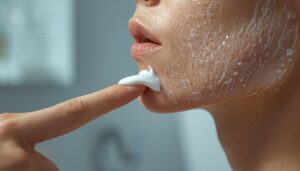
Fresh-shaven skin is more fragile than it looks, and reaching for a scrub too soon can work against you instead of for you. That freshly cleared surface is missing some of its natural protection, which makes it react fast to friction, product, or pressure it isn’t ready for. Here’s what’s actually happening beneath the surface when scrubbing goes wrong.
Fresh-shaven skin loses its natural protection, reacting fast to friction it isn’t ready for
Razor Burn Flare-ups
Razor burn shows up fast, often within minutes to a couple hours after your blade meets skin, and scrubbing on top of that inflammation only adds insult to injury.
Common triggers include:
- Shaving against the grain
- Dry shaving without lubrication
- Dull, dragging blades
- Fragrant, irritating products
Redness, stinging, and that hot sensation mean your skin needs calm, not more mechanical stress.
Barrier Damage
Underneath that surface irritation, your skin’s lipid layer takes the real hit. Scrubbing depletes protective lipids, driving up transepidermal water loss and leaving skin dehydrated.
Nerve sensitivity spikes as barrier cells release inflammatory signals, sparking microinflammation. This weakened moisture barrier can’t defend itself, making every touch or product application feel harsher than it should.
Stinging and Redness
That sharp, prickling pain right after a scrub? It’s your nerve sensitivity flaring up as skin barrier disruption lets ordinary stimuli feel intense.
Inflammation signals sensitize nerve fibers, so redness and stinging show up together.
- Heat sensitivity worsens discomfort
- Warmth plus rapid redness may signal infection indicators
- Thinner-skinned areas react more sharply
Watch for spreading redness—it’s your cue to stop scrubbing and reassess your postshave care.
Fragrance Sensitivity
That scented body scrub sitting in your shower? It might be causing more harm than good on freshly shaved skin.
Allergic contact dermatitis from fragrance often follows fragrance transfer routes—hands to face, product to neck. Watch sensitive skin zones like armpits closely.
| Common Site | Who’s Affected |
|---|---|
| Hands, face, neck | Women |
| Hands, face, lower legs | Men |
| Armpits | Both sexes |
| Perianal area | Both sexes |
Avoiding scented products helps prevent unexpected rash patterns during postshave care.
Over-exfoliation Risks
More scrubbing isn’t always better—sometimes it’s the opposite. Reaching for that scrub daily after shaving invites barrier disruption, chronic inflammation, and slower healing from microabrasions. Overworked skin loses moisture, stays reactive, and becomes a hyperpigmentation trigger, especially in already-irritated areas.
Your skin needs recovery time, not repetition. Give it space between sessions, and you’ll actually see smoother results instead of ongoing skin sensitivity and irritation.
When Physical Scrubs Are Helpful
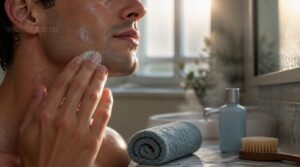
Now that we’ve covered the risks, let’s talk about when scrubbing actually earns its place in your routine. Done at the right time, physical exfoliation can genuinely support your skin instead of working against it. Here’s where it makes the biggest difference.
Preventing Ingrown Hairs
Think of exfoliation as follicle clearance: it clears the path so regrowing hairs exit straight instead of curling back under the skin.
- Shave with hair growth direction, not against it
- Keep blades sharp to reduce tugging
- Use short, even strokes without pressing
Combine that with keratin plug removal, and you’re tackling ingrown hairs from both angles—less irritation, smoother regrowth.
Smoothing Rough Skin
A good body scrub does more than clean—it works on texture refinement, smoothing surface irregularities left by keratin buildup. Once micro-cuts heal, gentle exfoliation restores smooth skin texture, especially on elbows, knees, or shins.
Think of it as polishing, not scraping. Slow, circular polishing techniques—not pressure—reveal smoother skin without reopening healing shaved areas.
Clearing Dead Skin
Once your skin’s ready, a body scrub earns its keep by clearing keratin plugs blocking pores and follicle openings. This helps with skin cell turnover and smoother hair emergence next shave.
- No more rough, bumpy patches catching on fabric
- Fewer clogged pores triggering breakouts
- Skin that finally feels as smooth as it looks
Regular exfoliation, timed right, keeps your skincare routine working with your skin, not against it.
Body Versus Face
Your legs and arms can often handle exfoliation sooner than your face, since body skin runs thicker with a tougher outer layer.
Facial skin is thinner, packed with more nerve endings and oil glands, so friction tolerance is lower.
That’s why the same scrub that smooths your shins can leave your cheeks red, stinging, and irritated.
Pubic Area Caution
If there’s one spot to slow down on, it’s the pubic area. This skin sits thinner than your legs, and shaving here creates micro-tears that scrubs can worsen.
Skip the same body scrub you’d use on your shins. Avoid the vaginal opening entirely, wear breathable cotton underwear afterward, and watch for redness, discharge, or odor, which signal infection entry risks needing medical attention.
Safer Post-Shave Scrub Routine
So scrubbing after a shave isn’t off-limits forever, but timing and technique matter more than you might think. Get those two things right, and you’ll smooth away rough patches without reopening any trouble. Here’s exactly how to build that routine, step by step.
Wait 24 to 48 Hours

Patience pays off here. Your skin barrier needs real recovery time, so hold off on any scrub for a full day or two.
Within that window, you’re:
- Letting micro-inflammation calm down
- Allowing tiny nicks to seal
- Reducing redness before adding friction
If your shave was close, lean toward 48 hours—it lowers your odds of triggering razor burn or follicle trauma.
Use Fine-grain Scrubs

Grab a scrub with tiny, uniform particles—think apricot kernel powder or spherical micro-grains—since smaller particle size means less scraping. That’s the whole goal of surface exfoliation: lifting dead cells without tearing into healing skin.
Skip anything gritty or irregular. Controlling friction intensity matters most right now, whether you’re doing a facial pass or a body scrub on freshly shaved legs.
Apply Gentle Pressure
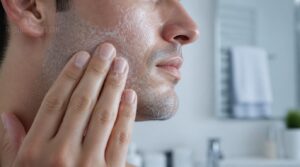
Pressure control makes or breaks this step. Let your palm skim the skin, feeling for glide rather than drag or catch.
Follow the grain in short, even strokes—stroke consistency prevents localized irritation. If any spot stings or reddens, ease off immediately. This kind of friction management protects freshly shaved skin from reopening micro-cuts while still delivering gentle resurfacing.
Rinse With Cool Water

Cool water is your reset button. Once you’ve finished scrubbing, rinse with water that’s noticeably cool—this triggers vascular constriction, calming redness and easing that post-shave heat.
It closes pores, interrupts skin inflammation before it builds, and rinses away residue without extra friction. Skip ice-cold water, though; you want soothing, not shock, to your freshly exfoliated skin.
Moisturize After Exfoliating

Skip this step and you’ll undo all that careful scrubbing. Exfoliation temporarily weakens your skin barrier, so apply moisturizer while skin’s still damp to lock in hydration and slow transepidermal water loss.
- Choose barrier-repair ingredients like ceramides or hyaluronic acid
- Pick emollient films for lasting comfort
- Apply body lotion promptly for faster recovery
Timing matters here—hydration replenishment works best immediately, not hours later.
Better Alternatives After Shaving

If a gritty scrub isn’t the right move just yet, that doesn’t mean your skin has to fend for itself. You’ve got a handful of gentler options that calm irritation while still keeping your skin smooth and clear. Here’s what we recommend reaching for instead.
Soothing Moisturizer
Reaching for a well-formulated moisturizer beats scrubbing every time your skin feels raw. Look for ceramide barrier support paired with humectants like hyaluronic acid, which lock in hydration replenishment.
Fragrance-free formulas prevent stinging, while botanicals like centella asiatica calm redness. Lightweight emollients such as squalane spread easily without added friction, giving compromised skin the comfort it needs post-shave.
Aloe Vera Gel
That same hunt for calm, non-abrasive care leads naturally to aloe. Its gel is roughly 99% water, but the remaining fraction packs aloe polysaccharides, acemannan, amino acids, vitamins, and bioactive compounds that support your skin barrier.
- Hydrates without friction
- Calms post-shave irritation
- Delivers acemannan benefits
- Fits any postshave routine
Pat a thin layer on—your skin barrier will thank you.
Fragrance-free Aftercare
Once aloe’s soaked in, check your labels — "fragrance-free" means no added perfume, though plant extracts can still carry a faint scent.
Look for alcohol-free formulas with barrier repair ingredients like ceramides or hyaluronic acid.
Patch test on a small area first, especially on sensitive skin zones.
Build this into your postshave routine as your go-to moisturizing product.
Chemical Exfoliant Timing
Once your skin’s fully calm, chemical exfoliation—AHAs or BHAs—can pick up where scrubs left off, but timing matters. Apply at night, letting barrier recovery windows work while you sleep, since acid exfoliants raise sun sensitivity.
Never layer active ingredients on shave day. Start with lower acid strength, adjusting gradually, and always follow with sunscreen the next morning to offset lingering irritation risk.
Electric Shaving Option
Sometimes the smartest fix is skipping the irritation altogether. Switching to electric shaving sidesteps blade friction entirely—sensor technology reads beard density and adjusts power automatically, while rotary or foil heads glide across skin with far less drag than a razor.
Higher cutting-action speeds mean fewer passes, and automated cleaning systems keep the head hygienic between shaves, protecting sensitized skin long-term.
Frequently Asked Questions (FAQs)
Is it okay to use a body scrub after shaving?
Give it a rest for 24 to 48 hours: shaving causes mechanical stress and microabrasions, so scrubbing too soon worsens post-shave redness and disrupts your skin barrier health, inviting irritation instead of smoothing anything.
What can I exfoliate with after shaving?
Picture soft, forgiving grains dissolving against calmed skin instead of scraping it raw.
Reach for a fine-grain sugar scrub (gentler than salt), a soft washcloth, or jojoba oil for light mechanical exfoliation once irritation settles—never right after shaving.
How long does it take your pores to close after shaving?
Your pores don’t actually "close," but the swollen, post-shave look usually fades within 1 to 3 hours. Cooling skin quickly and avoiding friction speeds recovery, while full skin recovery can take up to 24 hours.
Is chemical exfoliation bad after shaving?
Roughly 60% of people report acid stinging on freshly shaved skin.
Yes, alpha hydroxy acids and beta hydroxy acids can worsen skin irritation post-shave since your compromised barrier needs recovery time—wait 24 hours before reintroducing chemical exfoliation into your skincare routine.
Can you use a scrub on ingrown hairs already inflamed?
Hold off if the bump is sore, hot, or oozing — that’s a sign of possible folliculitis. Scrubbing there adds friction to already-inflamed skin, delaying healing. Wait until swelling calms, then use gentle exfoliation, not aggressive pressure.
How often should physical scrubs be used weekly overall?
Funny how more scrubbing rarely means better skin—it usually backfires. Aim for 1 to 3 sessions weekly, tailoring frequency to your skin type, watching for redness or stinging, and adjusting your exfoliation schedule before overuse damages your barrier.
Can folliculitis be mistaken for normal post-shave irritation?
Yes—pus-filled lesions, spreading bumps beyond the shaved area, or worsening inflammation days later signal folliculitis rather than simple irritation. If bumps multiply instead of fading, that escalation pattern (not just redness) is your cue to investigate infection.
Conclusion
Dermatologists note nearly 60% of shavers develop irritation from exfoliating too soon, a stat that should make you pause before grabbing that jar. Your skin isn’t being dramatic; it’s asking for time to heal.
A physical scrub after shaving works wonders, but only when patience leads the routine, not urgency. Wait the full window, keep pressure light, and moisturize like it’s non-negotiable. Smooth, bump-free skin stops feeling like luck and starts feeling like your standard.