This site is supported by our readers. We may earn a commission, at no cost to you, if you purchase through links. This content is for general informational and educational purposes only and is not a substitute for professional medical, dermatological, or nutritional advice.
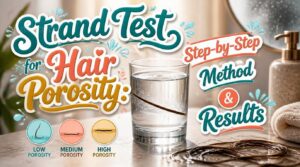
Drop a strand of hair in a glass of water and watch what happens. Some strands bob on the surface like a cork. Others sink straight to the bottom in seconds. That simple reaction tells you more about your hair than any product label ever will.
Porosity controls how well your hair absorbs and holds moisture, and guessing wrong means wasted money on products that just sit on your strands. The strand test hair porosity method gives you a clear, at-home answer in under a minute.
Grab a glass, pull a strand, and let’s get you real results you can actually use.
Table Of Contents
- Key Takeaways
- Prepare for The Hair Porosity Strand Test
- How to Do The Strand Test
- Interpret and Confirm Porosity Results
- Top 5 Hair Porosity Support Items
- Frequently Asked Questions (FAQs)
- How to do the strand test for porosity?
- Is a hair strand test accurate for porosity?
- What is the rarest hair porosity?
- Is it healthier to have high or low porosity hair?
- Can you test porosity on colored or dyed hair?
- How often should you retest your hairs porosity?
- Does porosity differ between scalp hair and body hair?
- Should wet or air-dried hair be used for retesting?
- Conclusion
Key Takeaways
- Prep your hair first by clarifying away product buildup and mineral deposits, since leftover residue can throw off your test results.
- Drop a clean, dry strand into room-temperature water and watch it for 60 seconds: floating means low porosity, drifting in the middle means medium, and sinking fast means high porosity.
- Test several strands from different spots on your head, like your crown, midshaft, and nape, since porosity can vary across your scalp.
- Back up your float test with a spray test, and build your hair care routine around whatever porosity type your results point to.
Prepare for The Hair Porosity Strand Test
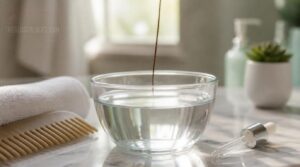
Before you drop a single strand in water, your hair needs to be ready for an honest test. Skip the prep, and you could end up chasing the wrong porosity type for months. Here’s what you need to check off first.
Make sure your strands are freshly washed and product-free, since leftover oils or styling residue can skew the results, especially if you’re prepping for a bold transformation like this guide to dyeing hair Narcissa Malfoy platinum blonde.
Clarify Away Product Buildup
Before you even wet a strand, clear the slate. Old product coats your hair, and that film throws off your strand test results.
Wash with a clarifying shampoo to strip buildup:
- Silicones
- Polymers
- Mineral oil
- Waxes
- Styling residue
Clean strands mean an accurate porosity read.
Remove Hard Water Minerals
Buildup isn’t the only thing that skews your strand test. If you live with hard water, calcium and magnesium coat the cuticle layer too, blocking real water absorption.
Try a Vinegar Rinse, Chelating Shampoo, Citric Acid Solution, Reverse Osmosis Filtration, or a Mineral Removing Spray first. Clear minerals now, so your hair porosity test reads true.
Use Clean, Dry Strands
Once minerals and buildup are gone, let hair air dry completely. Wet strands throw off buoyancy, so a dry test gives you the truest read.
Handle strands by the ends, using clean tweezers to avoid transferring oils. Clean strands free of lint or residue give your float test accurate results, strand after strand.
Test Under Moderate Humidity
Room air matters more than people think. Keep your space between 40 and 60 percent humidity before running the float test — this keeps water behavior steady and stops strands from clinging or bouncing at the surface.
Give it a 5 to 10 minute window. That’s enough time for honest strand movement tracking, without moisture retention or air currents skewing your results.
Sample Different Head Areas
Since porosity can shift across your scalp, one strand won’t tell the whole story. Try crown porosity comparison, hairline front testing, side temple sampling, midscalp back analysis, and nape occiput evaluation.
Pull a clean hair strand from each zone for your hair porosity test. Friction, heat, and oil patterns differ by area — sampling all five gives you an accurate hair porosity classification.
How to Do The Strand Test
Now that your hair’s prepped and ready, it’s time for the real test. This float test is simple, and you don’t need any fancy tools to do it. Here’s exactly how to run it, step by step.
Fill a Glass With Water

Grab a clear glass, ideally low-iron for easy viewing, and fill it with room temperature water, around 20°C to 22°C.
- Skip hot or icy water
- Use about 250 ml
- Pour gently, no splashing
- Center the glass for even fill
Steady pouring keeps the float test accurate and ready for your strand.
Add One Clean Strand
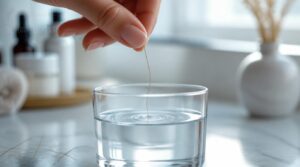
Before that strand touches water, check it closely. Pick a piece from the midlength region, away from the scalp, since it best reflects your hair’s true porosity. Skip any strand that’s split, chewed, or coated in product.
Use a fresh strand each time to avoid contamination from oils. Drop your clean strand gently into the glass, no dunking, just a light release.
Observe Movement for Minutes

Now comes the waiting game. Watch your hair strand for a full 60 seconds, no peeking away. Start timing the moment it touches the water.
Movement duration tracking matters here, sinking, floating, or hovering midwater all tell a different story. Room temperature water, between 20°C and 25°C, keeps results accurate and free from thermal drift.
Note Floating or Sinking

What did your hair actually do? Floating for 11 seconds or more means low porosity. Six to ten seconds points to medium porosity. Sinking fast, five seconds or less, signals high porosity, and dropping before the 2-second mark means very high porosity. Water temp, strand length, and hair condition all nudge these numbers slightly.
Repeat With Multiple Strands
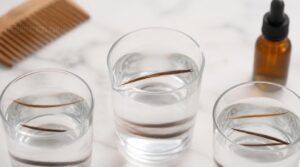
One strand tells a story. Five or seven tell the truth. Pull samples from your crown, midshaft, and nape for real regional porosity mapping, testing each independently for a true multi-strand reliability check.
One strand tells a story, but five or seven tell the truth
- Catching hidden dry patches before they turn brittle
- Spotting damage you can finally treat, not guess at
- Feeling confident in your hair porosity diagnosis
Interpret and Confirm Porosity Results
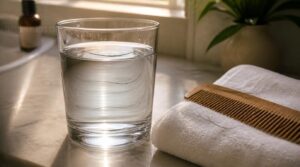
So your strand went in the water and did its thing. Now comes the part that actually matters: figuring out what that behavior tells you. Let’s break down each result, one by one.
Floating Indicates Low Porosity
If your strand just floats there, refusing to sink, you’re looking at low porosity. Tight cuticle sealing resists water entry, and surface tension keeps it buoyant in room temperature water.
| Sign | Meaning |
|---|---|
| Floats fast | Very low porosity |
| Floats slow | Low-moderate |
| Buildup present | False reading |
| Roots float | Regional variation |
| Ends sink slightly | Normal |
Low porosity hair is characterized by tightly packed cuticles that limit moisture absorption. Low porosity hair structure affects how products interact with the hair shaft.
Midwater Indicates Medium Porosity
Not floating, not sinking, just drifting in the middle? That’s midwater, and it means medium porosity. Your hair cuticle balance sits just right, some scales flat, some lifted, giving moderate moisture retention.
This strand buoyancy behavior shows a healthy water absorption rate. Cuticles let water in without soaking it up too fast, a solid sign of balanced keratin porosity.
Sinking Indicates High Porosity
Dropped straight to the bottom in under 10 seconds? That’s high porosity, wide cuticle gaps letting water rush in fast.
- Water absorption rate: ~0.5 mL/sec per cm
- Weight gain: 25% in 30 seconds
- Sink time: 8 sec (60% humidity)
- Cuticle gaps: 30% more than low porosity
Humidity and protein buildup can speed sinking too.
Confirm With Spray Testing
A sink or float only tells half the story. Grab a spray bottle and mist your strand for a spray test double-check.
| What to Watch | What It Means |
|---|---|
| Fast surface drying | Low porosity |
| Damp feel lingers | High porosity |
| Even wetting pattern | Uniform spray coverage confirmed |
| Spray drying time | Backs up your float result |
Avoid Common Testing Mistakes
Even a careful strand test can go sideways. Skipping clarifying shampoo leaves product buildup on the cuticle layer, throwing off your hair strand analysis. Inconsistent water temperature, bare-finger handling, and using damaged strands skew results too.
Testing in high humidity? Wait it out. Small errors, big misreads, so slow down and control your conditions before trusting your float test results.
Top 5 Hair Porosity Support Items
Now that you know your porosity type, it’s time to build your routine around it. The right tools make all the difference between guessing and getting real results. Here are five products worth adding to your hair care kit.
1. Josie Maran Pure Argan Oil
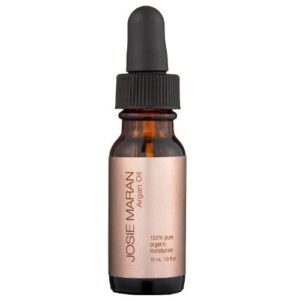
Once you know your porosity, Josie Maran Pure Argan Oil is worth having on hand. It’s 100% pure cold-pressed argan oil from Morocco, packed with fatty acids that moisturize without weighing hair down.
The amber glass bottle blocks light to keep the oil potent, and it’s free of added fragrance, parabens, and sulfates.
Warm a drop between your palms and smooth it through mid-lengths to ends on damp hair. Great for testing compatibility before committing to a full-size bottle.
| Best For | Anyone curious about Josie Maran Pure Argan Oil who wants to test how it works with their hair before buying the full-size bottle. |
|---|---|
| Product Type | Body Oil |
| Primary Use | Skin/Hair Oil |
| Hair Type Suited | All Types |
| Package Quantity | 1 Sample |
| Material | Organic Oil Blend |
| Portability | Travel-Friendly |
| Additional Features |
|
- Certified organic, 100% pure cold-pressed argan oil
- Deluxe sample size makes it easy to test compatibility
- Travel-friendly packaging for use on the go
- Small sample volume doesn’t go far
- Not enough product for long-term, regular use
- May need a follow-up purchase of the full-size bottle to keep using it
2. Mizani Moisture Fusion Hydrating Duo
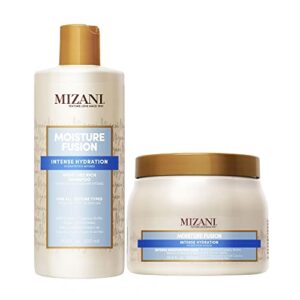
If your strand sinks, your hair’s drinking up moisture fast, and that’s where Mizani Moisture Mix Hydrating Duo earns its spot. This sulfate-free shampoo and conditioner pair targets dry, coarse, or chemically treated hair with glycerin and panthenol to restore what high porosity strands lose.
Shea and argan oils seal in that moisture, cutting frizz in humid weather. Use it every 2-3 days, and you’ll notice softer, more manageable hair with less tangling within the first wash or two.
| Best For | This duo is best for anyone with curly or coily hair looking to restore hydration, tame frizz, and get salon-quality results at home. |
|---|---|
| Product Type | Shampoo & Mask Duo |
| Primary Use | Hair Cleansing & Treatment |
| Hair Type Suited | Curly & Coily |
| Package Quantity | 2 Containers |
| Material | Argan Oil Formula |
| Portability | Salon-Quality At Home |
| Additional Features |
|
- Deeply hydrates and revives dry, dull curls without weighing hair down
- Gentle, sulfate-conscious cleansing that keeps natural oils intact
- Makes detangling easier with noticeably softer, more manageable hair
- The treatment mask requires a 15–20 minute wait with a plastic cap, which takes extra time
- Formulated specifically for curly and coily textures, so it may not suit straight or fine hair
- Comes only in a two-piece set, so you can’t buy the shampoo or mask separately
3. Vega Lane Shampoo Comb 1268
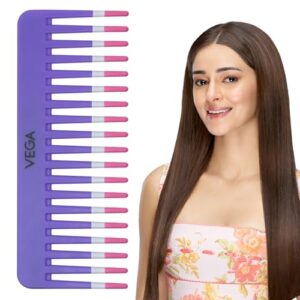
Detangling shouldn’t feel like a wrestling match, and that’s why the Vega Lane Shampoo Comb 1268 belongs in your porosity toolkit. Its wide, rounded teeth glide through wet strands with minimal pulling, which matters most for high porosity hair already prone to breakage.
Use it right after applying conditioner, working from ends to roots. The ergonomic grip stays steady even when your hands are wet, and gentle scalp massage from the spaced teeth adds a relaxing bonus to wash day.
| Best For | This comb is best for parents and anyone with thick, thin, or tangled hair looking for a gentle, everyday detangling tool that’s also safe to use on kids. |
|---|---|
| Product Type | Detangling Comb |
| Primary Use | Detangling |
| Hair Type Suited | Thick & Thin |
| Package Quantity | 1 Comb |
| Material | Plastic |
| Portability | Compact Grip |
| Additional Features |
|
- Detangles wet or dry hair with minimal pulling, reducing breakage by up to 75% compared to standard combs
- Fine round teeth are gentle on the scalp and even provide a light massage while detangling
- Ergonomic design offers a comfortable, secure grip during extended styling sessions
- Not the best fit for very coarse or curly hair that needs wider-spaced teeth
- Ends are less rounded than some competing brands, like Goody combs
- Only sold as a single unit, so there’s no multi-pack option if you want extras
4. Disposable Plastic Waterproof Shower Caps
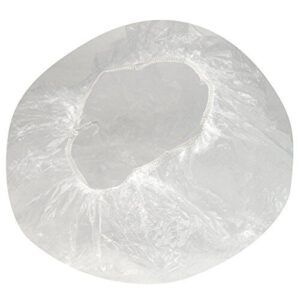
Ever notice how conditioner treatments work better when heat gets involved? A waterproof shower cap traps that warmth, helping high porosity hair absorb moisture-rich products fully.
Made from lightweight polythene, these caps create a barrier that keeps steam in and water out. Grab the elastic-band style for a snug, one-size fit.
They’re cheap, disposable, and great for deep conditioning sessions or protecting strands during Rogaine application. Just handle gently, thick hair can tear them.
| Best For | Anyone doing deep conditioning treatments, protecting hair during heat-based moisture routines, or applying topical scalp treatments like Rogaine at home or in a salon setting. |
|---|---|
| Product Type | Shower Cap |
| Primary Use | Hair Protection |
| Hair Type Suited | All Types |
| Package Quantity | 100 Pieces |
| Material | Polythene & Elastic |
| Portability | Lightweight |
| Additional Features |
|
- Traps heat and steam to help conditioning treatments absorb better into high porosity hair
- Lightweight, clear polythene design fits most adult heads with a secure elastic band
- Comes 100 to a pack, making it affordable and convenient for repeated use
- Can tear easily, especially with thick or long hair
- Elastic band may snap if stretched too much or on larger head sizes
- Some people find it uncomfortable or itchy during longer wear
5. Butterfly Hair Clips for Salon Styling
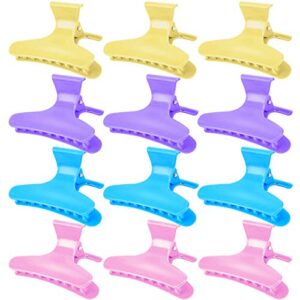
Sectioning matters just as much as testing when you’re working with porosity-prone hair. Butterfly clips use a spring-loaded claw to hold each section without slipping, so you can test strands or apply treatments zone by zone.
Look for smooth plastic or coated metal designs, they won’t snag fragile, high porosity strands. The hinge opens with one hand, making quick work of parting hair before your float test or product application.
| Best For | Anyone with fine to normal hair who wants an easy, affordable way to section strands for at-home color testing, styling, or porosity checks. |
|---|---|
| Product Type | Hair Clips |
| Primary Use | Hair Sectioning |
| Hair Type Suited | All Types |
| Package Quantity | 12 Clips |
| Material | Plastic & Springs |
| Portability | Lightweight |
| Additional Features |
|
- Spring-loaded claws grip firmly and open one-handed for quick sectioning
- Works well across hair types and conditions, including wet or dry hair
- Comes as a 12-piece set, so you’ll always have enough on hand for multi-zone work
- Springs can weaken with heavy, repeated use
- Struggles to hold thick ponytails or twisted sections securely
- Clips are prone to getting lost or breaking over time, especially with frequent handling
Frequently Asked Questions (FAQs)
How to do the strand test for porosity?
Funny how a single glass of water can reveal what pricey products can’t. Wash a clean strand, drop it in room-temperature water, and watch for 60 seconds. Floating means low porosity, sinking fast means high — simple as that.
Is a hair strand test accurate for porosity?
It’s a solid starting point, not a final verdict. Water temperature, strand length, and leftover product buildup can all skew results. Pair it with a spray test or moisture meter reading for real confidence in your porosity type.
What is the rarest hair porosity?
Like a rare gem hiding among common stones, low porosity is the rarest type, found in just 9% of people. It’s even scarcer in African descent hair, at only 4%.
Is it healthier to have high or low porosity hair?
Neither wins outright, but low porosity is generally healthier overall. It resists breakage better and holds moisture once absorbed. High porosity’s open cuticles invite frizz, dryness, and damage faster, so it usually needs more upkeep to stay strong.
Can you test porosity on colored or dyed hair?
Yes, but wash out buildup first. Dye can alter the cuticle, making strands sink faster or absorb unevenly. Test root to ends separately, since damage isn’t always uniform, and confirm with a spray test.
How often should you retest your hairs porosity?
Once isn’t enough. Porosity shifts with your routine and the seasons, so retest every 4 to 6 weeks during spring and fall, monthly in summer if you swim often, and every 8 weeks come winter.
Does porosity differ between scalp hair and body hair?
Absolutely, and by a wide margin. Scalp hair averages 2 porosity, absorbing 30% of its weight in water, while body hair sits lower at 6, soaking up just 12%. Thicker cuticles and a bigger medulla explain the gap.
Should wet or air-dried hair be used for retesting?
Think apples to apples, not apples to oranges. Always retest with air-dried strands, since wet hair starts pre-hydrated and skews results. Air-dried hair gives you a true baseline, showing porosity from the same starting point every single time.
Conclusion
Seeing is believing, and that glass of water just told you the truth about your strands.
The strand test hair porosity method strips away the guesswork, giving you a real starting point instead of a shot in the dark. Low, medium, or high, each result points you toward products that actually work for your hair.
Confirm it with a spray test, then build your routine around what your strands truly need.