This site is supported by our readers. We may earn a commission, at no cost to you, if you purchase through links. This content is for general informational and educational purposes only and is not a substitute for professional medical, dermatological, or nutritional advice.
Water hits your hair and rolls right off, beading up like rain on a freshly waxed car hood. Ten minutes later, your strands are still bone dry underneath, and that expensive leave-in you just applied is sitting on the surface doing nothing. This is the daily reality of low porosity hair, where tightly bound cuticles resist moisture even as they trap it once it finally gets in.
The fix isn’t more product. It’s the right combination of heat, humectants, and timing that coaxes those cuticles open long enough to let water in and seal it there. Master that sequence, and low porosity hair moisture retention stops being a guessing game and starts becoming a routine you can actually rely on.
Table Of Contents
- Key Takeaways
- Confirm Low Porosity Hair
- Improve Low Porosity Moisture Absorption
- Top 5 Moisture Retention Products
- Build a Moisture Retention Routine
- Frequently Asked Questions (FAQs)
- What ethnicity has low porosity hair?
- How to retain length on low porosity hair?
- What are the downsides of low porosity hair?
- Why is my hair not retaining moisture?
- How long does it take to fix low porosity hair?
- What causes low porosity hair in the first place?
- Is low porosity hair more prone to breakage?
- How does humidity affect low porosity hair differently?
- Conclusion
Key Takeaways
- Confirm low porosity hair with more than one test—like the shower absorption check and the float test—since cross-referencing results gives you a real answer instead of a guess.
- Moisture only gets past tightly sealed cuticles when you combine water-based humectants, gentle heat (like a diffuser or steam cap), and lightweight sealing oils in the right order.
- Consistency matters more than product quantity, so building a routine around pre-poo treatments, scheduled deep conditioning, and regular clarifying will do more for your hair than piling on more product.
- Protecting your progress overnight with satin instead of cotton, along with regular trims, keeps the moisture you’ve worked to lock in from slipping away between wash days.
Confirm Low Porosity Hair

Before you fix moisture retention, you need proof of what you’re working with, not a guess based on a bad hair day. Low porosity hair has a tight, closed cuticle structure, and confirming that takes a few simple checks rather than one quick glance.
The classic float test and a quick strand check can reveal whether your cuticles are sealed tight, and pairing that with proven tips for preventing moisture loss in natural hair helps you build a routine that actually works with your hair type.
Here are five ways to test your strands and read the results with confidence.
The Shower Absorption Test
Ever notice water sitting on your hair instead of soaking in? That’s your first clue. Step under warm water for 10-15 seconds and watch closely: water beading on the surface, paired with a noticeable saturation delay, signals tightly sealed cuticles.
Genuine low porosity hair resists moisture uptake until prolonged warm water exposure forces those cuticles open. For low porosity hair, using lightweight water-based products helps improve moisture absorption.
Float Test and Strand Buoyancy
Once the shower test hints at sealed cuticles, confirm it with the water float method. Shampoo a strand, dry it, and drop it into room-temperature water.
Strand buoyancy duration matters here: low porosity hair floats 2-3 minutes before sinking, thanks to an oily F-layer creating surface tension. Rapid sinking suggests cuticle damage instead.
Slip and Slide Test
The strand slide test adds a tactile layer your float results can’t offer. On clean, product-free hair, slide two fingers from tip to root; a smooth, resistance-free glide confirms tightly bound cuticles. Bumps or snagging signal lifted, damaged cuticles instead.
This cuticle texture check catches microscopic gaps water alone might miss, strengthening your overall hair porosity assessment.
Compare Results Across Tests
No single test tells the whole story. Cross-referencing results is what separates a guess from a genuine hair porosity assessment.
When your shower water absorption test and strand slide test both point to low porosity, trust that cross-test validation. The float test carries lower method reliability alone, since normal-porosity strands sometimes float too. Two matching results confirm real hair moisture retention ability, not coincidence.
Track Moisture and Product Changes
Why guess when data tells you more? Keep a simple product log tracking each moisturizer’s application time, then rate hair moisture content nightly on a 1-5 scale.
Add humidity tracking and environmental notes for rainfall or wind. Weekly review reveals whether product buildup or humectant balance imbalances are undermining your shower water absorption test results.
Improve Low Porosity Moisture Absorption
Once you’ve confirmed low porosity, the real work starts: getting moisture past that tightly sealed cuticle layer. Your strands aren’t rejecting hydration out of stubbornness, they just need the right combination of ingredients, heat, and technique to open up and let it in. Here’s exactly how to make that happen, step by step.
Low porosity hair isn’t stubborn, it just needs the right ingredients, heat, and technique to open up
Start With Water-Based Humectants

Think of your cuticle as a raincoat zipped shut, water needs a reason to get in. Water-based humectants like glycerin and propylene glycol lower surface tension, drawing moisture past sealed cuticles instead of sitting on top. Apply on damp hair, use daily, and rotate light oils after for sealing. This layering habit builds real moisture retention, not just surface shine.
Use Heat for Better Absorption

Because low porosity hair keeps its cuticles stubbornly shut, heat application is your key. Start with a warm water pre-soak, then apply conditioner and use a blow dryer’s diffuser on low for 10-15 minutes.
For deeper results, a heat cap or steam treatment (40-60°C) works best. Ideal heat temperature stays moderate. Skip harsh, prolonged heat.
Try The Greenhouse Method

A plastic cap turns your own body heat into a moisture engine while you sleep.
Section hair evenly, mist lightly, then layer a water-based moisturizer under a thin oil before capping. Overnight heat retention gradually lifts stubborn cuticles.
3 quick steps:
- Apply products
- Cap securely, no exposed skin
- Sleep 6-8 hours
Morning brings a cool rinse to seal everything in.
Seal With Lightweight Oils

A raincoat only works if it’s light enough to move with you. That’s the job of lightweight oils on low porosity hair.
Warm a few drops between your palms, then smooth over damp mid-lengths to ends. This cuticle sealing technique locks in moisture from your humectants without weighing down strands or leaving residue behind.
Balance Protein and Moisture
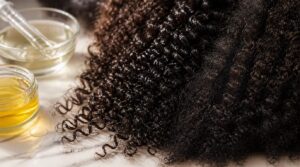
Stiff, brittle strands after a treatment? That’s protein overload, not strength.
Low porosity hair needs a careful moisture protein ratio:
- Protein every 4-6 weeks, not weekly
- Hydrolyzed proteins for tighter cuticles
- Pause treatments if dryness appears
Hydration builds flexibility; protein builds structure. Balance both, follow a clarifying shampoo afterward, and seal with lightweight oils to protect your moisture retention gains.
Top 5 Moisture Retention Products
Knowing your hair’s porosity is only half the equation—the right products close the gap between what your strands need and what they actually absorb. Formulation matters here.
Humectant placement, protein content, and even packaging can determine whether a product sits on your cuticle or works its way through it. Here are five tools worth adding to your routine, each addressing a different piece of the moisture puzzle.
1. Tgin Butter Cream Daily Moisturizer
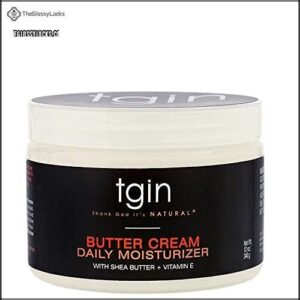
Tgin’s Butter Cream earns its spot here because it pairs shea and cocoa butter with a water-glycerin base, giving low porosity strands immediate surface hydration instead of sitting on top of the cuticle like a heavier balm would. Amodimethicone adds slip without buildup, and panthenol boosts sheen.
Apply to damp hair only. On dry strands it turns waxy fast, so timing matters more than quantity here.
| Best For | People with 3B–4C curls and coils, especially those with low-porosity hair, looking for a daily moisturizer that also works as a styler for twist-outs, braid-outs, and wash-and-go looks. |
|---|---|
| Model Number | QP-51204 |
| Hair Type Focus | Curly/Coily |
| Moisture Retention | High |
| Sulfate Free | Yes |
| Ease Of Use | Daily Use |
| Key Ingredient | Shea Butter |
| Additional Features |
|
- Delivers long-lasting, root-to-tip moisture while detangling and adding shine
- Free of parabens, sulfates, petrolatum, lanolin, and artificial colors
- Gentle enough for daily use on both adults and children
- Can feel thick or waxy if applied to dry rather than damp hair
- May turn sticky or cause buildup when layered with other products
- Some users aren’t fans of the scent, and it may not work as well on fine hair
2. Eleganty Soft Bonnet Hair Dryer Attachment
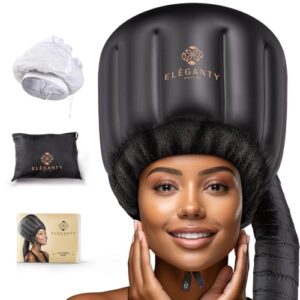
Moisture only works if it reaches the strand, and heat is what pries low porosity cuticles open enough to let it in. The Eleganty bonnet uses a 41-inch reinforced hose plus SmartFlow-style airflow to distribute warm air evenly, cutting drying time while keeping heat off your ears and neck.
Stick to low-to-medium settings. The adjustable headband and one-size hood fit most heads, though the chin strap can feel snug during longer sessions.
| Best For | Anyone with low porosity hair who wants faster, hands-free deep conditioning or curl-setting sessions without heat damage to their ears and neck. |
|---|---|
| Model Number | uwy4fha1y80 |
| Hair Type Focus | All Hair Types |
| Moisture Retention | Indirect (Protects Heat) |
| Sulfate Free | N/A |
| Ease Of Use | Hands-Free |
| Key Ingredient | N/A |
| Additional Features |
|
- SmartFlow-style airflow distributes heat evenly for up to 4× faster drying
- Adjustable headband shields the forehead, ears, and neck from heat while giving a customized fit
- Compact, travel-friendly design comes with a soft pouch for easy use at home, the gym, or the salon
- The chin strap can feel tight or uncomfortable during longer sessions, especially on higher airflow settings
- The non-elastic drawstring closure may create pressure points that lead to headaches over time
- The hose’s gummy-lined strap can slip off the dryer nozzle, requiring frequent readjustment
3. Cordless Deep Conditioning Heat Cap
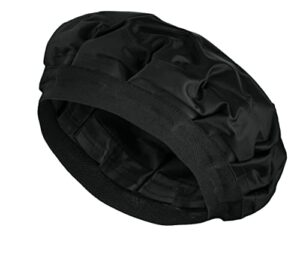
Airflow gets your cuticles primed, but sustained heat is what actually drives conditioner deep into the shaft. A cordless heat cap solves that: no outlet needed, so you can prep dinner while it works.
Gel or ceramic elements heat to roughly 60–70°C, distributing warmth evenly to avoid scalp hot spots. Battery life runs 20–30 minutes, matching the thermal window your strands need for real penetration.
| Best For | Anyone who wants to boost the results of deep conditioners, masks, oils, or hair dye with warm, hands-free treatment at home. |
|---|---|
| Model Number | 1906 |
| Hair Type Focus | All Hair Types |
| Moisture Retention | Enhances Absorption |
| Sulfate Free | N/A |
| Ease Of Use | Hands-Free |
| Key Ingredient | N/A |
| Additional Features |
|
- Microwave-heated gel keeps hair warm for up to 30–45 minutes without any cords or batteries
- Elastic trim keeps the cap snugly in place while the soft interior stays comfortable
- Frees up your hands so you can multitask while your treatment works
- Fixed one-size opening can feel tight if you have long or thick hair
- Warmed gel filling makes the cap noticeably heavier on your head
- Needs careful, short microwave intervals to avoid overheating, leaks, or fire risk
4. Curl Clarity Shampoo Coconut Amla
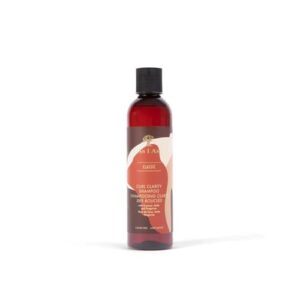
Once your cap comes off, clogged cuticles won’t matter much if buildup is sitting on top of them. Curl Clarity’s coconut amla formula uses a sulfate-free, biobased surfactant to lift residue without stripping oils your low porosity strands worked hard to absorb.
Coconut extract helps seal in moisture post-rinse, while amla balances scalp pH and cuts frizz. Massage in for 1-2 minutes, rinse thoroughly, and follow with a leave-in before it dries.
| Best For | Curly-haired folks with medium porosity who deal with product buildup from styling or braid takedowns and need an occasional deep-clean wash. |
|---|---|
| Model Number | AIA005 |
| Hair Type Focus | Curly/Medium Porosity |
| Moisture Retention | Retains While Cleansing |
| Sulfate Free | Yes |
| Ease Of Use | Every 6-8 Weeks |
| Key Ingredient | Coconut & Amla |
| Additional Features |
|
- Sulfate-free formula lifts residue while helping retain moisture
- Coconut, amla, and tangerine extracts nourish hair and balance scalp pH
- Significantly reduces detangling effort, with 62% less combing force and 78% easier curl detangling
- Can be too drying for low-porosity or 4c hair if used too often
- Not meant for daily use on curl types that need frequent moisture
- Overuse may strip natural oils, leading to more frizz or breakage
5. Maui Moisture Scalp Care Clarifying Shampoo
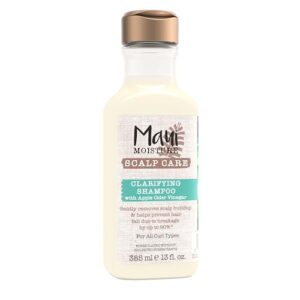
Apple cider vinegar earns its spot as the clarifying agent here, balancing scalp pH while aloe vera, listed first on the label, keeps cuticles from feeling stripped mid-wash.
Coconut water adds a hydration boost you won’t find in most clarifying formulas, and the sulfate-free base means you can reset buildup every 2-3 weeks without undoing your moisture work. Massage thoroughly into the scalp, rinse well, then follow with Maui’s Rejuvenating Conditioner to restore what clarifying temporarily lifts.
| Best For | People with wavy, curly, or coily hair who want a gentle way to clear away scalp build-up every few weeks without stripping their curls of moisture. |
|---|---|
| Model Number | N/A |
| Hair Type Focus | Wavy/Curly/Coily |
| Moisture Retention | Retains While Clarifying |
| Sulfate Free | Yes |
| Ease Of Use | Every 2-3 Weeks |
| Key Ingredient | Aloe Vera |
| Additional Features |
|
- Clarifies effectively while keeping curls hydrated, thanks to a formula that leads with 100% aloe vera
- Vegan and free of sulfates, silicones, parabens, gluten, and synthetic dyes
- Helps cut curl breakage by up to 90% when paired with conditioner
- Thick or high-density curls may need extra product to get full coverage
- The tea tree, spearmint, and eucalyptus blend can cause mild tingling on the scalp for some users
- Not meant for frequent washing—overuse can over-clarify and dry out fine hair
Build a Moisture Retention Routine
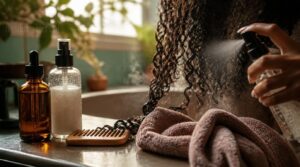
Products alone won’t fix low porosity hair—consistency will. Think of your routine like a set schedule your cuticles learn to trust, step by step, week after week. Here’s exactly how to structure that routine, from pre-wash to protection.
Pre-Poo Before Washing
Think of pre-poo as a raincoat for your strands, applied before shampoo ever touches them. Warm your oil mixture (coconut, jojoba, cupuaçu, argan) via double boiler, work it into damp, sectioned hair, then massage your scalp to boost circulation. Leave it overnight, or 30 minutes minimum, for real cuticle-softening penetration on low porosity hair.
Deep Condition on Schedule
Consistency beats intensity here. Deep condition every 10 to 14 days using a heat cap or steam treatment, since heat opens cuticles low porosity hair naturally resists.
Shift to a biweekly schedule in humid summer, weekly when winter heating dries indoor air.
Log sessions in a simple tracking log; patterns in frizz or elasticity reveal when your schedule needs adjusting.
Clarify Product Buildup Regularly
Sealed cuticles trap more than moisture, they trap residue. Clarify every 4-6 weeks with sulfate-free formulas to lift product buildup without stripping strands bare.
Hard water region? Cut that window to every 2 weeks using a chelating rinse. Apple cider vinegar, one tablespoon per cup of water, dissolves mineral film so your moisturizers can actually penetrate again.
Protect Moisture Overnight
Your pillow is either a moisture magnet or a moisture guardian, and cotton fails every time.
- Swap to a satin bonnet or satin hair scarf nightly
- Apply lightweight oil while hair’s still damp, not soaked
- Layer a satin pillowcase for backup protection
- Skip cotton pillowcases entirely, they absorb overnight hydration
- Wash silk pieces weekly with mild detergent, hand wash only
This nighttime moisture seal extends wash day results 2-3 days.
Trim and Handle Hair Gently
Split ends travel up the shaft and undo weeks of moisture work, so regular trims every 6-8 weeks matter as much as any conditioner.
Cut dry, at 45 degrees, with sharp shears.
| Habit | Why It Protects Moisture |
|---|---|
| Detangle with care, wet and conditioned | Reduces breakage |
| Trim on schedule | Stops split travel |
Frequently Asked Questions (FAQs)
What ethnicity has low porosity hair?
No single ethnicity owns this trait. Genetic prevalence runs up to 20% across all groups, though straight European and Asian hair (10-11 cuticle layers) shows it most, while coily African hair varies due to fewer cuticle layers overall.
How to retain length on low porosity hair?
Length retention hinges on low manipulation and consistent end sealing with lightweight oils. Prioritize protective styling, gentle nighttime routines, and scalp health, since reducing breakage matters more than growth rate for low porosity hair.
What are the downsides of low porosity hair?
Think of it as hair wearing a tightly sealed raincoat: slow water penetration, product buildup, heat sensitivity concerns, dryness after conditioning, and uneven moisture distribution all stem from a stubborn moisture resistant barrier that resists absorption.
Why is my hair not retaining moisture?
Your cuticle barrier lies too flat, blocking absorption. Add product buildup, skip water-based humectants, and use cool water instead of heat application, and moisture beads off instead of soaking in.
How long does it take to fix low porosity hair?
Expect 4 to 8 weeks of consistent effort, longer in dry climates. Weekly deep conditioning, steam treatments, and heat application speed cuticle absorption. Product trial and routine adjustment matter too; moisture retention improves gradually, not overnight, as your hair adapts.
What causes low porosity hair in the first place?
Blame your genes before your routine: genetic cuticle structure and tight keratin scale overlap cause it most. Straight natural hair type, product buildup, silicone residue, and heat or UV damage can mimic true low porosity hair, too.
Is low porosity hair more prone to breakage?
Not inherently. Breakage risk climbs when protein sensitivity, buildup, or dryness leave strands stiff. Mechanical stress, rough detangling, and heat damage matter more than porosity itself, so gentle handling and deep conditioning protect moisture retention ability far better than porosity type predicts.
How does humidity affect low porosity hair differently?
Humidity behaves like rain on a raincoat here: water sits on strands instead of soaking in, causing surface water beading, weight, and limpness, since sealed cuticles resist absorption without heat-assisted cuticle opening or a light protective oil barrier.
Conclusion
Those tightly shut cuticles were never your enemy, just a lock waiting for the right key. Heat opens the door, humectants pull moisture through, and oil seals it before it escapes. That’s the science behind low porosity hair moisture retention.
Follow the sequence, track your results, and adjust when strands feel dry. Consistency, not more product, builds the routine your hair trusts. Master this rhythm, and it stops feeling like guesswork. It becomes second nature.