This site is supported by our readers. We may earn a commission, at no cost to you, if you purchase through links. This content is for general informational and educational purposes only and is not a substitute for professional medical, dermatological, or nutritional advice.

Drop a strand of your hair in water, and if it floats for minutes without sinking, you’ve found your culprit. Low porosity hair has cuticles packed so tightly that moisture struggles to get in, no matter how much product you layer on. That’s why your leave-in sits on top of your strands instead of soaking in, leaving hair feeling coated, not conditioned.
Learning how to moisturize low porosity hair means working with those stubborn cuticles, not against them. Warm water, the right ingredients, and proper timing can lift what’s naturally closed, letting moisture actually reach the strand. Get the sequence right, and dry, product-resistant hair starts drinking in what it’s needed all along.
Table Of Contents
- Key Takeaways
- How to Moisturize Low Porosity Hair
- Choose Lightweight Products That Absorb
- Deep Condition With Gentle Heat
- Prevent Buildup and Moisture Loss
- How Often to Moisturize Low Porosity Hair
- Frequently Asked Questions (FAQs)
- What is the best moisturizer for low porosity hair?
- How often should low porosity hair be moisturized?
- What should I avoid if I have low porosity hair?
- How to fix dry frizzy low porosity hair?
- Can low porosity hair be color-treated safely?
- Why does my low porosity hair feel greasy fast?
- Is low porosity hair more prone to breakage?
- Does low porosity hair change with age or seasons?
- Conclusion
Key Takeaways
- Warm water opens up tight cuticles, so soaking hair before applying products makes a real difference in how much moisture actually gets absorbed instead of just sitting on top.
- Layering matters: a water-based leave-in with glycerin should go on damp hair first, followed by a light sealing oil like jojoba or grapeseed to lock that moisture in.
- Heavy proteins, thick butters, and oils can clog low porosity strands since their molecules are too big to pass through closed cuticles, leading to buildup instead of hydration.
- A steady rhythm helps most: refresh hair every 3 to 5 days, deep condition weekly with gentle heat, and clarify every 4 to 6 weeks to keep moisture flowing and buildup in check.
How to Moisturize Low Porosity Hair

Low porosity hair doesn’t reject moisture out of spite, it just needs the right approach to let it in. Tight, overlapping cuticles call for a specific sequence, not a random splash of product. Here’s exactly how to get water and moisture past that stubborn cuticle layer, step by step.
Pair this routine with consistent care habits, since understanding how to grow low porosity hair starts with mastering moisture retention at the cuticle level.
Low porosity hair doesn’t reject moisture out of spite, it just needs the right sequence to let it in
Confirm Your Hair Porosity
Before moisturizing, verify porosity with a hair porosity test. Drop a clean strand in room-temp water for 2-4 minutes: floating confirms low porosity. Cross-check with the slip and slide test, feeling for smooth cuticle resistance, and the shower absorption test, watching for beading water. Document results across all three. Consistent findings mean you’ve confirmed it.
Understanding your hair’s moisture retention is key to effective care.
Start With Warm Water
Once you’ve confirmed low porosity through the shower absorption test, warm water becomes your next move. Heat lifts the cuticle, allowing moisture and product to actually penetrate instead of sitting on the surface.
- Use warm, not hot, water
- Wet hair thoroughly before product application
- Keep water warm throughout the rinse
- Follow with cool water later to seal
- Prep hair before deep conditioning
Apply Water-Based Leave-In
With cuticles still lifted from that warm rinse, work in a water-based leave-in while hair stays damp, not dripping. Look for glycerin or propylene glycol on the label.
Distribute from mid-lengths to ends first, using fingers or a wide-tooth comb. A small amount goes further than you’d think, so build up only where dryness lingers.
Seal With Lightweight Oil
Once that leave-in sinks in, follow the water before oil rule: a thin layer locks moisture where it belongs. Reach for grapeseed or jojoba, since smaller molecules slip past tight cuticles instead of sitting on top. Apply while hair’s still warm, cuticles stay permeable, sealing works better. Too much oil blocks absorption, so less truly is more.
Try The Greenhouse Method
Turning up the heat works wonders when cuticles won’t budge on their own.
The Greenhouse Method traps body warmth under a plastic cap, pairing water-based humectants with lightweight oils for deep moisture retention. Apply serum section by section, cap for 15-20 minutes, or try an overnight treatment. Repeat five times weekly, detangle gently after, and watch stubborn strands finally drink up hydration.
Choose Lightweight Products That Absorb

Low porosity hair doesn’t need more product, it needs the right product. Once your cuticles stay stubbornly closed, every formula you reach for either sinks in or sits on top doing nothing. Here’s what actually earns a spot in your routine.
For a deeper dive into layering lightweight leave-ins and sealing oils correctly, this guide to moisturizing low porosity hair breaks down the exact order that helps product actually absorb.
Water-Based Moisturizers and Humectants
Water is your hair’s first love language, so lean into products where it’s ingredient number one. Water-based humectants like glycerin pull moisture straight into the shaft instead of sitting on top like heavy creams do.
Look for:
- Water or aqua listed first
- Glycerin or hyaluronic acid nearby
- Minimal oils or waxes
- pH between 4.5–5.5
Humidity boosts absorption naturally.
Lightweight Oils for Sealing
Once your leave-in soaks in, oil is what keeps it there. Jojoba, almond, and grapeseed absorb in under 15 minutes and mimic your scalp’s natural sebum, so they seal without weighing curls down.
Warm 1-2 drops between your palms, then smooth over mid-lengths and ends. This locks in moisture for hours without daily buildup.
If you’re curious about what else this lightweight oil can do, our guide to sunflower oil for hair covers everything from frizz control to scalp care.
PH-Balanced Hair Formulas
Grab pH strips before buying anything new. Your hair thrives at 4.5 to 5.5, so dip a strip into any product for 1-2 minutes, checking the label matches reality.
Correct pH keeps cuticles smooth and prevents frizz. Citric acid lowers pH; sodium hydroxide raises it.
Skip guessing, test the water phase, and you’ll moisturize low porosity hair without disrupting its natural acidity.
Using Verb Curl Cream Sparingly
More isn’t better here. Apply Verb Curl Cream to damp hair, mid-lengths and ends only, roots cream-free.
Fine, low porosity strands need pea-sized amounts; thicker curls tolerate a dime-sized dollop. Wait 1-2 minutes before layering gel, this cream-first protocol creates definition without softening your gel cast, balancing hold and bounce for hair that stays moisturized without going limp.
Avoid Heavy Proteins and Butters
Think of heavy proteins like keratin as furniture that’s too big for the door: molecules over 150 kDa simply can’t get through sealed cuticles, so they sit on top and block moisture.
- Limp, dull strands within days
- Flattened curl definition
- Reduced bounce
- Product buildup
Skip thick butters too. Choose lightweight oils, pH-balanced formulas, and clarify monthly to remove residue.
Deep Condition With Gentle Heat
Think of heat as the key that unlocks your cuticles, not just an extra step in your routine. Low porosity strands need that gentle push to let moisture in, and getting the process right matters as much as the products you use.
Here’s how to build a deep conditioning session that actually works for your hair type.
Develop a Pre-Poo Routine

Before any heat touches your strands, pre-poo sets the stage. Section hair into 2-4 parts, mist with a water-based mist, then work lightweight oils like jojoba or argan from ends to roots. Add rosemary oil during scalp massage for circulation.
Choose 30 minutes minimum, or go overnight with heavier oils for deeper cuticle lifting before shampooing.
Use Steam or Warm Towels

With oil worked through your strands, controlled warmth finishes the job. A hair steamer below 284°F, or a warm towel wrung to half-damp, lifts cuticles safely. Wrap towels under a plastic cap for 10-15 minutes; keep steamer nozzles 6-8 inches away.
Either method delivers thermal treatment without scorching resistant strands.
Condition for 15–20 Minutes

Once the towel or steamer comes off, don’t rush the clock. Leave your deep conditioner on for 15-20 minutes, the window where cuticles stay open enough for real absorption. Cycling warm to medium heat every five minutes keeps that opening steady.
Skip protein treatments past 20 minutes, since longer sits can actually pull moisture back out.
Rinse With Cool Water

Once the timer’s done, flip the faucet to cool, around 60-70°F, and rinse for a full 30-60 seconds. This seals your cuticles shut, locking in moisture instead of letting it evaporate as your hair dries.
Bonus: cool water slows mineral buildup from hard water, so your low porosity strands absorb what you just applied instead of blocking it out.
Adjust for Climate and Activity

Since low porosity hair reacts differently depending on your environment, your routine can’t stay static year-round.
- Dry winters: warm towel, 60% water-based, 40% oils
- Humid summers: cool rinses, 70% water-based humectants
- Workouts: apply lightweight oils pre-sweat, rinse cool after
Adjust Climate Humectant Balance and Protective Style Adjustments seasonally, that’s how you truly moisturize low porosity hair without guesswork.
Prevent Buildup and Moisture Loss

Low porosity hair holds onto product residue fast, and that buildup blocks moisture before it even has a chance to sink in. Prevention isn’t complicated, but it does require consistency in how you cleanse, clarify, and protect your strands day to day. Here’s what actually keeps buildup off your hair and moisture locked in.
Use Gentle Sulfate-Free Cleansers
What you wash with matters as much as what you wash away. Sulfates strip moisture fast, leaving low porosity hair tight and parched.
Choose a sulfate-free cleanser with a creamy, low-foam feel, check labels for SLS or SLES, and use gentle cleansing motions. Your scalp stays calm, your strands stay hydrated, and rinsing feels residue-free instead of squeaky.
Clarify Every Four to Six Weeks
Every four to six weeks, give low porosity hair a dedicated clarifying treatment using a sulfate-free clarifying shampoo, never a weekly habit. Prep with warm water and detangling.
In hard water areas, clarify every two weeks with chelating formulas. Follow with deep conditioning, cool rinse, and lightweight leave-in.
Aloe rinses or diluted ACV work as gentler alternatives between sessions.
Protect Hair With Satin
Cotton pillowcases pull moisture straight out of low porosity strands. Switch to satin: the low-friction weave lets hair glide instead of snag, locking in moisture retention overnight.
A satin bonnet, sleep cap, or scrunchie all work, just stay consistent. Machine-washable and budget-friendly, satin protects your hair shaft repair progress while you sleep, no matter your porosity type.
Choose Low-Tension Protective Styles
Not all protective styles protect. Tight box braids with micro sections concentrate weight on your edges, but knotless braids with a loose first knot and 1-inch-plus sections ease tension gradually.
Choose natural hair only installs for better moisture penetration, and demand parting that keeps scalp access open for cleansing, massage, and airflow between washes.
How Often to Moisturize Low Porosity Hair
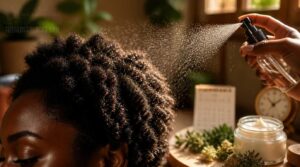
Moisturizing low porosity hair isn’t just about what you use, it’s about timing it right. Too often and you’re fighting buildup; too rarely and your strands stay thirsty. Here’s how to find that rhythm and keep your hair consistently hydrated.
Refresh Every Three to Five Days
Low porosity strands don’t hold moisture forever, they need small top-offs. Refresh every three to five days with a mid-week water spritz, coconut milk or rose water works well, applied to damp hair for better absorption. Reapply a lightweight leave-in with glycerin at the ends, then seal lightly. Wrap hair in satin before bed to lock everything in.
Deep Condition Weekly
Spritzing between washes only goes so far. Once a week, give strands a real reset with deep conditioning: warm towel or steam for 15-20 minutes, following a quick pre-poo, then rinse cool to seal cuticles.
- Warm towel wrap
- Water-based humectant conditioner
- Cool rinse finish
- Lightweight oil seal
- Greenhouse Method option
Monitor Dryness and Frizz
That deep condition only holds if you’re tracking results. Run a Daily Moisture Check: mist strands, watch for beading. Score frizz 1-10 each morning, log humidity too.
| Tool | What to Check | Signals Trouble |
|---|---|---|
| Frizz Severity Scoring | Morning frizz rating | Score rises past 6 |
| Humidity Impact Log | Daily % vs. frizz | Frizz spikes above 60% |
| Dryness Duration Tracking | Hours since moisture | Tangling under 12 hrs |
Adjust Your Washing Schedule
Your frizz log tells you when to act. Rising scores mean your schedule needs tweaking, not just your products.
- Humid weeks: add a wash
- Dry winters: stretch to 2-3 weeks
- Heavy sweat: wash daily
- Oily scalp: shorten to every 3-4 days
- Clarify every 4-6 weeks, biweekly if humid
Match washing frequency to your scalp oil and climate, not a fixed calendar.
Avoid Overloading Your Hair
Getting your schedule right solves half the battle. The other half is knowing when you’ve done too much.
Watch for moisture overload signs: gummy strands, instant absorption followed by fast dryness. That’s product buildup, not thirst. Stick to one protein product per routine, rinse with cool water, and let hair breathe between applications. Balance beats quantity every time.
Frequently Asked Questions (FAQs)
What is the best moisturizer for low porosity hair?
Like water finding cracks in stone, the right formula slips past sealed cuticles.
Look for water-based humectants, pH-balanced formulas, and protein-free conditioners, gel-based moisturizers and lightweight sealing oils layer hydration without triggering product buildup.
How often should low porosity hair be moisturized?
Aim for every 2 to 5 days, based on frizz or dryness signs, plus weekly deep conditioning. Let your moisture absorption rate, wash day frequency, and climate impact guide adjustments, since low porosity hair resists water but still dries out.
What should I avoid if I have low porosity hair?
Skip heavy oils, greasy creams, butters, and waxes, they coat instead of hydrate. Limit protein use, avoid harsh sulfates, silicones, and very hot water. These cause product buildup, stiffness, and protein sensitivity, blocking moisture your strands actually need.
How to fix dry frizzy low porosity hair?
Funny how frizz and dryness show up together, they’re the same root problem. Fix it with water-first moisture layering: warm water, water-based leave-in, lightweight oil seal, then clarify every four to six weeks to prevent buildup blocking absorption.
Can low porosity hair be color-treated safely?
Yes, with care. A clean strand test confirms cuticle condition first, then pair stronger developer, extra processing time, moderate heat, and gentle demi-permanent dyes for even, safe color uptake.
Why does my low porosity hair feel greasy fast?
Blame the cuticle barrier effect: sealed cuticles block absorption, so oils travel fast on smooth strands and sit as product buildup.
Low hair absorption rate plus sebum overproduction traps moisture beneath the surface, creating that quick, misleading greasy sheen.
Is low porosity hair more prone to breakage?
Picture dry cuticles clamped shut like tiny shields, blocking hydration. That stiffness lowers hair elasticity, so mechanical stress tangles and snapping increase, raising breakage risk factors unless moisture retention methods and consistent hydration keep strands flexible.
Does low porosity hair change with age or seasons?
Your hair porosity type stays the same, but seasonal moisture shifts, dry indoor air, humidity, aging, and hormones all change how hydrated your strands feel, affecting moisture retention and hydration layers even though the cuticle structure itself hasn’t shifted.
Conclusion
Low porosity hair is a locked door, not a wall, and the right key opens it every time. Mastering how to moisturize low porosity hair comes down to warm water, lightweight products, and patience with stubborn cuticles. Skip the heavy butters, stick to your refresh schedule, and clarify regularly. Your strands aren’t resistant, they’re particular. Give them what they actually need, and dryness stops being the default. That’s the real transformation.