This site is supported by our readers. We may earn a commission, at no cost to you, if you purchase through links. This content is for general informational and educational purposes only and is not a substitute for professional medical, dermatological, or nutritional advice.
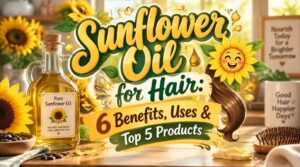
Your kitchen cabinet might already hold one of the most underrated hair ingredients around. Sunflower oil has quietly built a solid reputation in cosmetic formulation circles, mostly because its high linoleic acid content does something useful: it lays down lifted cuticle edges, fills microscopic surface gaps, and slows moisture loss from the outer shaft.
That matters if your hair frizzes in humidity, snaps during detangling, or feels rough after heat styling. These aren’t signs of hopeless damage. They’re often surface-level problems a well-chosen oil can actually address.
Here’s a clear look at what sunflower oil for hair can and can’t do, with honest product picks to match.
Table Of Contents
- Key Takeaways
- What is Sunflower Oil and How Does It Work on Hair?
- Benefits of Sunflower Oil for Hair and Scalp
- How to Use Sunflower Oil for Hair Safely
- Top 5 Sunflower Oil Products to Consider
- Frequently Asked Questions (FAQs)
- Is sunflower oil good for your hair?
- Which oil grows hair the fastest?
- What are the side effects of sunflower oil on hair loss?
- Can I use sunflower oil on my hair overnight?
- Can sunflower oil lighten or darken hair color?
- How long does sunflower oil last once opened?
- Can you use sunflower oil on your scalp overnight?
- Does sunflower oil help with heat styling protection?
- Can sunflower oil be used on color-treated hair?
- How does sunflower oil compare to argan oil?
- Conclusion
Key Takeaways
- Sunflower oil’s high linoleic acid content works mainly on the hair’s surface, coating strands to smooth lifted cuticles, reduce friction, and slow moisture loss—so it helps with frizz, shine, and breakage but won’t repair deep structural or chemical damage.
- Its benefits are temporary and surface-level: it forms a hydrophobic film that boosts shine and frizz control, works best applied to damp mid-lengths (not roots), and results vary with hair porosity.
- Safe use matters—patch test for 24–48 hours first, prefer rinse-out applications to avoid buildup, and use a weekly clarifying shampoo if you oil frequently, since allergic dermatitis or clogged follicles can worsen scalp issues.
- No oil, including sunflower oil, can make hair grow faster or replace a true heat protectant; its real value is reducing breakage and moisture loss, which supports length retention over time.
What is Sunflower Oil and How Does It Work on Hair?
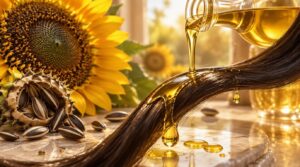
Sunflower oil comes from pressed sunflower seeds, and you’ll mostly find it sold as refined or unrefined oil. Its profile is dominated by unsaturated fatty acids, especially linoleic acid, one of the essential fatty acids your hair’s surface responds well to. Unrefined sunflower oil retains more of its natural nutrients, and cold-pressed unrefined sunflower oil tends to deliver a richer concentration of those fatty acids directly to the hair surface.
Its high linoleic acid content makes sunflower oil a standout base for DIY natural heat protectants for hair, offering lightweight moisture without the heavy residue.
So, how does it work? When you apply it, the oil spreads into a thin hydrophobic film over the hair shaft. That layer reduces friction between strands, which may make combing feel smoother. It also slows moisture evaporation from the outer cuticle, so your hair might hold up better in humid weather.
Keep expectations realistic. Sunflower oil coats rather than penetrates deeply, so it won’t rebuild keratin or permanently fix chemical damage. Results also depend on your hair’s porosity, since high-porosity strands tend to retain more of that surface coating.
Benefits of Sunflower Oil for Hair and Scalp
Sunflower oil can do more for your hair than most people expect. From your scalp down to your ends, its fatty acids and vitamin E may support several visible improvements. Here are the six key benefits you should know about.
Scalp Inflammation Relief
Containing high amounts of linoleic acid, sunflower oil for hair may help strengthen your scalp’s natural barrier. A healthy barrier is key to scalp health because it limits how much irritant can get through and trigger scalp inflammation. That barrier-strengthening effect is central to its scalp soothing appeal.
Clinical evidence is limited, but its anti-inflammatory properties may offer supportive comfort.
Enhanced Hair Shine
Beyond scalp care, sunflower oil may also boost hair shine by coating each strand with a thin film that smooths cuticle edges. Smoother surfaces scatter less light, creating noticeable hair luster. Temporary, but very real.
Get the most from it:
- Use sparingly
- Apply to damp hair
- Warm it between palms first
- Focus on mid-lengths
- Skip daily use to avoid build-up
Improved Smoothness
That shine you noticed? It’s closely connected to smoothness, too. Sunflower oil’s high linoleic acid content may fill microscopic cuticle gaps, building a more uniform surface along the hair shaft. Its fatty acid structure also closely mimics natural hair lipids, helping it integrate rather than just sit on top.
This lipid-mimicking quality extends beyond hair, as sunflower oil’s linoleic-rich profile makes it equally effective for skin—explore how it works as one of the top natural oils for extremely dry skin.
Research also shows that sunflower oil prevents heat damage caused by styling tools and color processing, making it a valuable protective treatment. The payoff is softer, more manageable hair with better moisture retention.
Frizz Reduction
Flyaways and frizz often trace back to cuticle friction and humidity. Sunflower oil’s fatty acids may spread across your hair shaft, laying down lifted cuticle edges to create a smoother surface.
That thin film can slow moisture from the air getting in, which limits swelling and puffiness. For frizz reduction on dry hair, this lightweight oil might be worth trying.
A lightweight hair oil for frizz can make this barrier effect even more noticeable on thicker or coarser hair types.
Moisture Retention
Because sunflower oil works through occlusion, it forms a moisture barrier on the cuticle surface. This slows water loss, which may help dry hair retain moisture for longer. Apply it on damp hair to boost moisture retention and support hair hydration:
- Coat mid-lengths first
- Skip the roots
- Use a small amount
- Press oil in gently
- Layer over a hair moisturizer
Reduced Hair Breakage
Think of each strand as a thread: once the surface frays, tension snaps it easily. Sunflower oil’s linoleic acid coats the cuticle, reducing friction during brushing and lowering evaporative loss at the ends. That temporary film limits the flex-related snapping that drives hair breakage.
Sunflower oil’s linoleic acid coats each strand like armor, curbing friction and breakage before they start
Apply it before detangling for the clearest benefit to your hair elasticity and hair damage repair.
How to Use Sunflower Oil for Hair Safely
Like layering too many serums at once, using oil without a plan can backfire. A patch test is your first step. Apply a small amount behind your ear and wait 24 to 48 hours before committing to fuller use. For a more structured patch test, skin patch test strips can help you track reactions with less guesswork than the behind-the-ear method alone.
- Start with lengths only, keeping sunflower oil for hair away from your scalp until you know how your skin reacts
- If you have low porosity hair, apply on damp strands so it absorbs rather than sits on the surface
- Rinse-out application reduces buildup risk far more than leave-in use
- Use a clarifying shampoo weekly if you oil frequently to prevent scalp congestion
Scalp irritation is easier to prevent than treat. Less product, applied less often, almost always works better than more.
Top 5 Sunflower Oil Products to Consider
Finding a quality sunflower oil product can feel overwhelming with so many options on the shelf.
The five picks below cover a range of formulas, from pure oils to blended treatments, so you can find what works for your hair type. Whether you prefer lightweight serums or rich conditioning oils, browsing sunflower oil hair treatments can help you spot the right match for your routine.
Each one brings sunflower oil’s benefits to the table in a slightly different way.
1. Pura DOr Anti Thinning Set
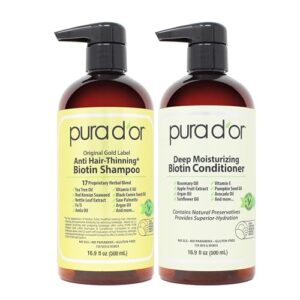
The Pura D’Or Anti-Thinning Set takes a system approach rather than relying on a single active ingredient. It pairs a biotin hair thickening shampoo with a deep moisturizing conditioner, both built on an organic aloe vera base instead of water.
The formula may help reduce the appearance of thinning through 17 key ingredients, including nettle extract, pumpkin seed, and saw palmetto, with sunflower oil serving as a gentle conditioning carrier. It’s sulfate- and paraben-free, and suitable for men and women.
| Best For | Men and women experiencing thinning hair who want a sulfate-free, multi-ingredient system that addresses both scalp health and hair volume with daily use. |
|---|---|
| Sunflower Oil | Yes |
| Sulfate-Free | Yes |
| Paraben-Free | Yes |
| Moisturizing | Yes |
| Sensitive-Friendly | Yes |
| Multi-Use | Yes |
| Additional Features |
|
- Combines 17 active ingredients — including biotin, saw palmetto, and nettle extract — in a two-step shampoo and conditioner system for a more comprehensive approach to thinning hair
- Built on an organic aloe vera base and free from sulfates, parabens, and synthetic preservatives, making it gentle enough for daily use
- Clinically tested formulation that aims to reduce breakage and improve volume while leaving hair feeling soft without excess weight
- Results are inconsistent — some users see no noticeable improvement in thickness or growth after months of regular use
- The shampoo has a thin, watery consistency that makes it easy to accidentally over-dispense
- Scent and moisture balance are polarizing, with some users finding it either too drying or too heavy and oily
2. Cosrx Ceramide Comfort Cream Balm
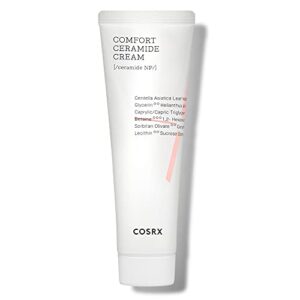
This balm was designed for sensitive skin, but its ceramide barrier support translates well to dry, stressed scalps. The formula pairs Ceramide 3 with 50% Centella Asiatica Leaf Water, which may help calm irritation while reinforcing the scalp’s lipid structure. That combination is worth noting.
The texture is thick and occlusive, so a little goes a long way. Try applying a pea-sized amount to your palms, then smoothing it onto dry ends before bed. Absorption is slow, leaving a slightly dewy finish for a few hours, so morning application before styling isn’t ideal.
It contains bergamot oil, which might irritate some sensitive users. Patch-test first, and skip it if fragrance bothers your scalp.
If you’d rather avoid fragrance, our roundup of the best Japanese shampoos for hair loss can help you compare options, and remember to give any pick two to three months.
| Best For | People with dry, sensitive, or stressed scalps who want a fragrance-tolerant overnight treatment to reinforce the skin barrier and calm irritation. |
|---|---|
| Sunflower Oil | N/A |
| Sulfate-Free | Yes |
| Paraben-Free | Yes |
| Moisturizing | Yes |
| Sensitive-Friendly | Yes |
| Multi-Use | N/A |
| Additional Features |
|
- Ceramide 3 and 50% Centella Asiatica Leaf Water work together to repair the skin barrier and soothe irritation
- Hypoallergenic and free from parabens, sulfates, and phthalates, making it a safe choice for sensitive skin
- Thick, occlusive texture means a small amount covers a lot of ground, so the product lasts a long time
- Slow absorption leaves a sticky, dewy finish for hours, making it impractical for daytime or pre-styling use
- Contains bergamot oil, which may irritate fragrance-sensitive users
- May not be hydrating enough on its own for severely dry skin without layering additional serums or essences
3. Jason Vitamin E Moisturizing Body Oil
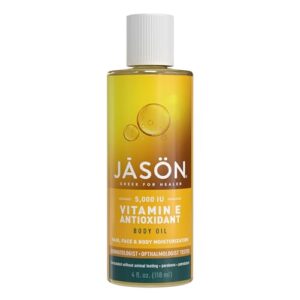
If the ceramide balm was too heavy, Jason’s Vitamin E Moisturizing Body Oil is a lighter call. It mixes sunflower, almond, apricot, avocado, and wheat germ oils into a formula rich in linoleic acid that may coat dry strands without weighing them down.
It’s a body oil, so a little goes far. Warm two or three drops between your palms, then smooth onto mid-lengths and ends after washing. Keep it off the roots; the oil mixture can make fine hair look greasy fast.
The formula skips parabens, sulfates, and petrolatum. It’s also Leaping Bunny certified. Some buyers note leakage in shipping, so inspect the seal on arrival.
| Best For | Anyone with dry skin who wants a lightweight, multi-use oil that works on the face, body, hands, or hair without harsh ingredients. |
|---|---|
| Sunflower Oil | Yes |
| Sulfate-Free | Yes |
| Paraben-Free | Yes |
| Moisturizing | Yes |
| Sensitive-Friendly | Yes |
| Multi-Use | Yes |
| Additional Features |
|
- Blends six nourishing oils — including almond, avocado, and wheat germ — for deep, silky moisture
- Free from parabens, sulfates, and petrolatum, and Leaping Bunny certified cruelty-free
- Versatile enough to use as a body moisturizer, facial oil, or massage oil
- Can leave an oily residue, especially if too much is applied
- Some customers have experienced leakage during shipping
- Requires a small amount and thorough massaging to absorb properly — not a quick-apply option
4. Weleda Skin Food Hydrating Body Butter
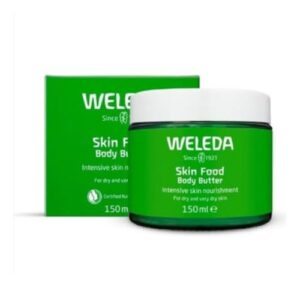
If a light oil won’t cut it for very dry ends, the Weleda Skin Food Hydrating Body Butter may be worth trying. Sunflower seed oil is second on the ingredient list, alongside shea and cocoa seed butters for deep nourishment of brittle strands.
The linoleic acid content may support your hair’s moisture barrier over time. Warm a small amount and apply it as a pre-shampoo treatment or overnight mask, then shampoo out in the morning. It’s NATRUE-certified and free from parabens and synthetic fragrances, and the glass jar is recyclable.
The texture is thick, and the scent can be polarizing. It’s also pricier than most.
| Best For | Anyone with very dry, brittle hair who wants a rich, natural pre-shampoo treatment or overnight mask to deeply nourish and restore moisture. |
|---|---|
| Sunflower Oil | Yes |
| Sulfate-Free | N/A |
| Paraben-Free | Yes |
| Moisturizing | Yes |
| Sensitive-Friendly | N/A |
| Multi-Use | Yes |
| Additional Features |
|
- Packed with shea butter, cocoa seed butter, and sunflower oil to intensely hydrate and nourish dry, brittle strands
- NATRUE-certified natural formula, free from parabens, phthalates, and synthetic fragrances
- Linoleic acid content may help strengthen the hair’s moisture barrier over time
- Very thick, heavy texture that requires shampooing out, making it less convenient for quick use
- Scent is polarizing and may be off-putting for some users
- Higher price point compared to most hair treatment alternatives
5. Medicube Zero Pore Exfoliating Toner Pads
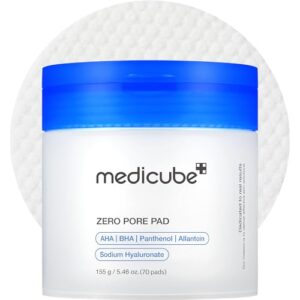
On the opposite end of the texture spectrum, the Medicube Zero Pore Exfoliating Toner Pads include sunflower oil alongside lactic and salicylic acids. That combination targets scalp acne and pore clogging more than moisture, though glycerin and sodium hyaluronate help cushion the barrier impact.
Sunflower oil’s comedogenic rating of 1 makes it unlikely to worsen congestion on its own. The acids handle sebum control, and users report notable oiliness reduction. Still, cosmetic ingredient safety matters here, since fragrance and essential oils in the formula can trigger sensitivity in reactive skin types.
These pads target facial skin only. For scalp hydration and hair care, choose products built for that purpose.
Frequently Asked Questions (FAQs)
Is sunflower oil good for your hair?
Yes, it can be. Sunflower oil coats each hair shaft with fatty acids that may reduce friction, improve shine, and slow moisture loss. It’s a solid pick for natural hair care with low irritation risk.
Which oil grows hair the fastest?
No oil on earth can grow hair faster. Your hair follicles respond to genetics and hormones, not topical products. Sunflower oil for hair may reduce breakage, gradually improving scalp health and your overall length retention.
What are the side effects of sunflower oil on hair loss?
Sunflower oil for hair can trigger allergic contact dermatitis or clog follicles, both of which may worsen existing hair loss or scalp inflammation. Always do a patch test to catch sensitivity before full scalp application.
Can I use sunflower oil on my hair overnight?
Like a long soak in a warm bath, leaving sunflower oil for hair overnight may boost hair moisture but risks scalp buildup. Try it as a brief deep conditioning treatment for better scalp hydration results.
Can sunflower oil lighten or darken hair color?
Think of sunflower oil as a mirror polish, not a dye. It boosts light reflection, making your existing hair color appear richer and more vibrant, without chemically changing the melanin or touching your actual shade.
How long does sunflower oil last once opened?
Once opened, your bottle’s countdown has already begun. Opened sunflower oil usually lasts six to twelve months at room temperature. Refrigeration may push that closer to two years. If it smells rancid, just toss it.
Can you use sunflower oil on your scalp overnight?
Even plants absorb nutrients slowly through the night. You can apply sunflower oil to your scalp overnight as a deep conditioning treatment, but always patch test first and rinse well to support scalp hydration afterward.
Does sunflower oil help with heat styling protection?
Sunflower oil can coat your hair strands, which may reduce friction during heat styling, but it doesn’t provide true thermal protection. High-oleic varieties perform better under heat, but still can’t replace a dedicated heat protectant.
Can sunflower oil be used on color-treated hair?
It’s generally safe to use sunflower oil on color-treated hair. Its natural antioxidants may help with hair protection by forming an oily film that limits moisture loss without affecting dye molecules or causing color fade.
How does sunflower oil compare to argan oil?
Think of them as two different coats: argan oil offers lighter slip and lower oxidation risk, while sunflower oil may leave a slightly heavier, more noticeable film on certain hair types over time.
Conclusion
Think of your hair shaft as a roof after a storm, with shingles lifted and gaps letting in everything you don’t want. Sunflower oil for hair works like a quiet patch job, sealing cuticle edges and slowing moisture loss before it spirals into frizz or snapping strands.
It won’t reverse serious structural damage, but for surface-level issues, it’s a surprisingly capable fix. You probably already have a bottle nearby. That’s a good place to start.