This site is supported by our readers. We may earn a commission, at no cost to you, if you purchase through links. This content is for general informational and educational purposes only and is not a substitute for professional medical, dermatological, or nutritional advice.
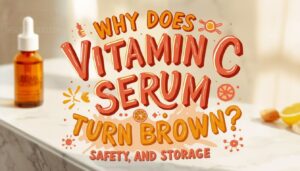
You bought that $45 vitamin C serum three months ago. Now it’s the color of apple juice, and you’re wondering if your skin’s about to pay for it.
Here’s the thing: why does vitamin C serum turn brown comes down to simple chemistry, not bad luck. L-ascorbic acid is unstable by nature. It reacts with oxygen the second you crack that bottle open, and every splash of light or heat speeds things along.
The color isn’t just cosmetic. It’s a map of exactly how much active vitamin C you’ve got left, and whether that serum belongs on your face or in the trash.
Table Of Contents
- Key Takeaways
- Oxidation Makes Vitamin C Serum Turn Brown
- What Each Serum Color Means
- Is Brown Vitamin C Serum Safe?
- Why Vitamin C Oxidizes Quickly
- How to Check Serum Freshness
- How to Store Vitamin C Serum
- Which Vitamin C Formulas Stay Stable?
- When to Replace Your Serum
- Frequently Asked Questions (FAQs)
- How do you know if your vitamin C serum has gone bad?
- Can I still use my oxidized vitamin C serum?
- Can you speed up vitamin C serum oxidation intentionally?
- Is it safe to mix brown serum with other products?
- Can antioxidant boosters reverse an already-browning serum?
- Do all vitamin C brands oxidize at the same rate?
- Conclusion
Key Takeaways
- Your serum turns brown because oxygen, light, and heat break down L-ascorbic acid step by step, eventually turning it into a useless compound called diketogulonic acid.
- Color is your best clue to potency: clear or pale yellow means it’s still working, but once it hits deep orange or brown, the antioxidant power is basically gone.
- Store your serum in a cool, dark drawer, keep the cap on tight, and consider refrigerating it, since these small habits can keep it fresher for months longer.
- Once oxidation is done, there’s no bringing it back, so if your serum smells vinegary or metallic, feels sticky, or has turned brown, it’s time to toss it.
Oxidation Makes Vitamin C Serum Turn Brown
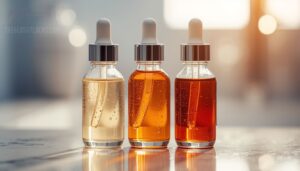
That brown tint doesn’t just show up overnight. It’s chemistry playing out in slow motion, step by step, right inside the bottle. Here’s what’s actually happening at the molecular level.
L-Ascorbic Acid Loses Electrons
Since chemistry rarely stays still, L-ascorbic acid can’t hold onto its electrons forever. It acts as a reducing agent, donating electrons during the oxidation process. This electron transfer:
This same electron-donating action is what makes vitamin C effective in shower filters designed to neutralize chlorine for families, converting it into a harmless compound before it reaches your skin.
- Starts the redox cycling reaction
- Forms an oxidation intermediate
- Triggers antioxidant capacity decline
Researchers can track this degradation using spectrophotometric UV absorption measurements, which detect ascorbic acid’s characteristic absorption peaks as they shift during oxidation.
That’s why airtight opaque tubes and low pH sensitivity matter so much for slowing that brown hue from creeping in early.
Dehydroascorbic Acid Forms
So where do those lost electrons actually go? Straight into forming Dehydroascorbic Acid, or DHA, the first major stop after L-ascorbic acid’s molecular structure gets altered by oxidation. This redox reaction is reversible early on (your body even reduces DHA back via glucose transport and glutathione), but in a bottle at pH 2.5–3.2, that pale yellow tint signals DHA’s chemical speciation shifting toward that eventual brown hue.
| Stage | Compound | Serum Color |
|---|---|---|
| Initial | L-Ascorbic Acid | Clear |
| Mid-oxidation | Dehydroascorbic Acid | Pale yellow |
| Final | Diketogulonic Acid | Brown |
Inactive Compounds Develop
DHA doesn’t stop there. It keeps breaking down into diketogulonic acid, an inactive byproduct with zero antioxidant punch left.
This oxidation non-active compound is what turns your serum brown or rusty orange.
- Degradation product formation accelerates with light exposure damage
- Antioxidant breakdown residues accumulate steadily
- Skin surface compound reactions can cause mild, temporary staining
Antioxidant Potency Declines
So here’s the real cost: every step of that breakdown chips away at what your serum can actually do for your skin.
The antioxidant depletion rate speeds up once oxidation chain reactions take hold, and there’s no bouncing back. Antioxidant regeneration failure means free radical scavenging decline is permanent. Color change tracks potency loss measurement pretty reliably, honestly.
What Each Serum Color Means
Color isn’t random. It’s a timeline of what’s happening inside the bottle. Here’s what each shade is actually telling you.
Clear or Pale Yellow
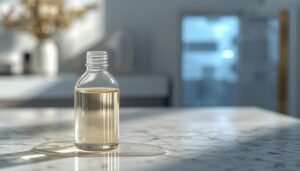
Clear to pale yellow is your green light. It means oxidation is minimal and most L-ascorbic acid is still intact.
- Crystal clear or faint straw color
- Mild, neutral scent
- Smooth, non-gritty texture
- High potency retained
This stage offers real early oxidation detection. Skip jars (oxygen permeability wrecks them), refrigerate, and you’ll extend freshness verification well past week one.
Light Golden Yellow

Sunlight in a bottle, basically. Golden yellow means oxidation’s underway but manageable, more DHAA forming, potency slipping.
Warmth perception spikes here, that soft glow effect flatters skin. Still a caution zone though.
Blame oxygen permeability, heat acceleration, or jar packaging leaving air exposed. Refrigerate now, and you’ll slow the slide toward amber territory.
Deep Orange or Amber
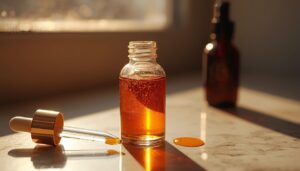
Amber’s the tipping point, not a death sentence, but close. At this stage, oxidation’s chewed through most of your active vitamin C, leaving mostly dehydroascorbic acid behind.
Culprits? Usually:
- Repeated light exposure
- Heat near windows or radiators
- Clear (non-amber) glass packaging
- Weeks of unrefrigerated storage
Skip dark amber glass or airless pumps, and you’re rushing straight toward deep amber degradation.
Dark Brown
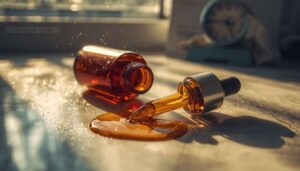
Brown means game over. Ascorbic acid’s fully broken down into diketogulonic acid, useless for your skin.
Slowing that shift comes down to habits like tight lids and cool, dark storage, which you can dial in with these tips for storing vitamin C serum properly.
This end stage usually means months of heat exposure, light exposure, or a cap left loose too long. Efficacy is virtually zero. Some brown serums also carry irritation risk from breakdown byproducts. Skip dark amber glass and refrigeration, and you’ll hit this point fast.
Is Brown Vitamin C Serum Safe?
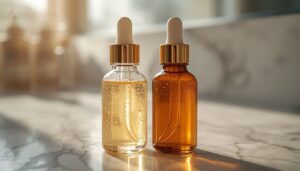
So your serum’s gone brown. Is it dangerous, or just useless? Here’s what that color actually means for your skin.
Light Yellow May Remain Usable
So does a pale yellow tint mean your serum’s toast? Not quite. Light yellow usability can last up to three months post-opening if potency stays above 10%.
Watch for consistent pale-to-golden color, smooth texture, and no sour odor. That’s shelf stability doing its job. Keep the bottle sealed, cool, and dark, and gentle application stays low-risk while oxidation hasn’t fully won yet.
Brown Serum Loses Effectiveness
Once your serum crosses into brown territory, you’re basically applying flat soda to your face. It looks the part, but the fizz is gone.
Brown vitamin C serum is like flat soda: it still looks the part, but the fizz—and the benefit—is gone
That deep color means most of the L-ascorbic acid degraded into inactive compounds with zero antioxidant punch:
- No brightening power left
- Free radicals go unchecked
- Collagen support stalls out
- Wasted money, wasted routine
- Just an amber-tinted moisturizer
Possible Irritation and Stinging
Losing potency isn’t the only risk. Oxidized byproducts can trigger stinging on application, especially past the normal pH tingle you’d feel from fresh L-ascorbic acid at pH 2.5-3.2.
If your barrier’s already compromised from retinol, exfoliation, or harsh cleansers, degraded serum makes it worse. Sensitive or rosacea-prone skin should watch closely, redness lasting past 15 minutes signals real irritation, not typical adjustment.
Temporary Skin Staining
Beyond stinging, oxidized serum can leave color behind. That orange-yellow tint (from erythrulose, same pigment in self-tanners) shows up on skin, nails, even hair.
It’s temporary, fading in hours to two days. Speed it along:
- Gently exfoliate
- Wash thoroughly
- Apply thinner layers next time
No permanent staining occurs, just a annoying reminder your bottle’s gone deep amber.
Contamination Warning Signs
Staining is annoying, but contamination is a different beast entirely. Trust your nose first: a metallic or vinegar-like odor means bacteria have moved in, not just oxidation. Watch for gritty texture, separated layers, or cloudiness too. Any off-smell paired with brown color? Toss it immediately, no matter how far you’re from the period after opening deadline.
Why Vitamin C Oxidizes Quickly
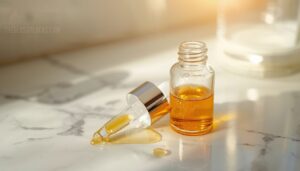
Vitamin C doesn’t just randomly decide to go bad. It’s reacting to specific things happening around it, every single day. Here’s what’s actually speeding up that clock.
Repeated Oxygen Exposure
Every time you pop the cap, you’re feeding the reaction. Oxygen dissolves into the serum within seconds, and cumulative oxygen exposure builds fast. Dropper bottles make it worse, air rushes in with each use.
Close the cap immediately. It’s a small habit, but it limits air exposure. That’s why airless bottles beat opaque jars, no oxygen, no shortcuts.
Sunlight and UV Rays
Light isn’t just visible glow, it’s also UV radiation, and that band drives oxidation hard. UVA and UVB hit your bottle even on cloudy days, since clouds barely block them.
Clear glass? Basically an invitation. That’s why opaque, UV-protective packaging matters so much, it blocks the light before it destabilizes L-ascorbic acid.
Heat and Temperature Changes
Left your serum in a hot car? That’s a problem. Heat speeds up the thermal oxidation rate, pushing electrons away from L-ascorbic acid faster.
Warm storage risks add up too. Temperature fluctuation effects mean repeated warm spells cause more heat-induced degradation than one hot day. Even sealed bottles suffer, since warmth affects dissolved oxygen. Shelf life shrinks fast without opaque packaging and cool storage habits.
Water and High Humidity
Ever wonder why bathroom storage wrecks your serum? Water activity is the culprit. Humidity means water vapor everywhere, and it interacts with your formula, especially water-based vitamin C.
Vapor sneaks past caps, condenses in headspace, and fuels oxidation. So shelf life drops fast in steamy bathrooms. Keep it dry. Your serum will thank you.
Unstable Formula PH
pH is the referee here, and a sloppy one turns your serum brown fast.
Ascorbic acid needs a pH between 2.5 and 3.5 for stability. Push past 3.5, and oxidation speeds up, dehydroascorbic acid forms quicker.
Why does this matter?
- Skin compatibility shifts as pH drifts
- Buffer systems fail under light exposure
- Batch consistency suffers without tight pH control
Moisture during use also nudges pH, weakening potency over time.
How to Check Serum Freshness
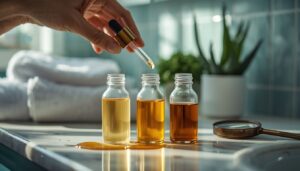
So how do you know if your serum’s still good, or quietly turning on you? You don’t need a lab coat, just your eyes, nose, and a little attention. Here’s what to check before you swipe it on your face.
Compare Its Original Color
Grab your serum and hold it to the light. Was it clear vs pale yellow at first, or did it start with a natural tint from vitamin E or ferulic acid? That’s your baseline.
Oxidation shifts color gradually, so color stability factors like pH and packaging matter. Opaque bottles hide changes longer than clear glass, skewing what "normal" even looks like.
Check for Unusual Odors
Your nose knows things your eyes miss. Sniff at a safe distance, then compare to a fresh bottle. A vinegary or metallic odor signals oxidation from oxygen exposure, way past light golden.
- Sniff test gently, don’t inhale deeply
- Note if smell strengthens near the cap
- Discontinue use if odor lingers after airing out
Any smell paired with dizziness? Stop immediately.
Notice Texture Changes
Smell isn’t the only clue. Rub a little serum between your fingers first.
Fresh L-ascorbic acid feels light. Oxidized serum turns sticky or tacky within minutes, thickening as it degrades. Watch for micro bubbles on the surface, duller edges, or fine lines vanishing entirely.
| Texture Sign | Fresh Serum | Oxidized Serum |
|---|---|---|
| Feel | Light, silky | Sticky, tacky |
| Surface | Smooth | Micro bubbles |
| Spread | Even | Clings, dull edges |
Review The Expiration Date
Texture’s your fingertip test. The bottle’s got a paper trail too.
Flip it over. You’ll find a batch code, manufacture date, and expiration date stamped somewhere on the box or bottle.
- Check expiration date first
- Note unopened shelf life (often 1-2 years)
- Confirm opened shelf life (6-12 months)
- Match color to baseline
- Watch for odor shifts
Past-date serum? Toss it, even if it looks fine.
Track Time Since Opening
Dates on the box only tell half the story. So write your open date on the bottle with a marker, day one.
That’s your open date logging system, dead simple.
| Days Open | Status |
|---|---|
| 0-60 | Peak potency |
| 60-120 | Watch closely |
| 120+ | Potency expiration window |
| 180+ | Replace now |
Set a phone reminder. Usage tracking reminder beats guessing every time.
How to Store Vitamin C Serum
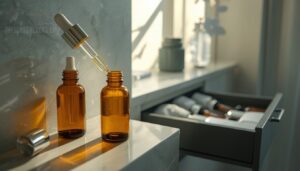
Good news: storage isn’t complicated, just intentional. A few small habits keep oxygen, light, and heat from wrecking your serum before you’ve even finished the bottle. Here’s exactly where and how to keep it.
Choose a Cool Drawer
Where you stash the bottle matters as much as the formula itself. A cool dark drawer beats your bathroom shelf every time, dodging heat and humidity that speed up oxidation.
Good options:
- Bedroom dresser drawer
- Bathroom cabinet (away from shower steam)
- Closet organizer
- Vanity drawer with a lid
- Nightstand drawer
Airtight containers add extra protection, extending shelf life really well.
Keep Away From Sunlight
Sunlight is sneaky. Even a bright windowsill kicks off UV-driven oxidation, degrading L-ascorbic acid faster than you’d think.
Go for opaque packaging or amber glass instead of clear bottles. Dark room storage plus UV protection storage adds real shelf life extension. Combine that with refrigeration away from sunlight, and your serum stays potent way longer than the "clear glass on the counter" crowd’s does.
Close The Cap Immediately
Two seconds. That’s how long it takes to twist that cap back on, and it matters more than people think.
Every second the bottle sits open, oxygen rushes in and speeds up oxidation. Quick recapping also blocks moisture and keeps your formula’s pH stable.
- Cuts oxygen exposure instantly
- Blocks humidity from sneaking in
- Preserves pH balance
- Lowers contamination risk
Avoid Humid Bathrooms
Steamy showers turn your bathroom into a humidity trap, and that’s bad news for vitamin C. Water activity speeds oxidation, so a humid bathroom slowly wrecks your serum’s shelf stability.
Run the fan, crack a window, keep that medicine cabinet somewhere drier. Better yet, store it in your bedroom drawer instead. Your skin barrier isn’t the only thing that hates excess moisture.
Refrigerate Water-Based Formulas
Your fridge is basically a time machine for vitamin C. Cold slows the molecular chaos, keeping L-ascorbic acid stable instead of racing toward degradation.
At 2-8°C, opened serums stay pale for up to 12 weeks. Warm room temps? You’ll lose over 20% potency in less than a month.
Just seal bottles in a bag first. Condensation prevention matters too.
Which Vitamin C Formulas Stay Stable?
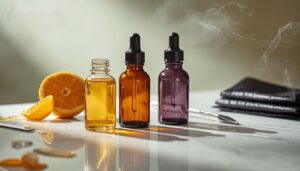
Not all vitamin C serums oxidize at the same speed. Some formulas are built from the ground up to fight it, from the acid itself to the bottle it sits in. Here’s what actually matters.
Pure L-Ascorbic Acid
Pure L-ascorbic acid is the standard, and the most fragile. Its molecular structure gives it real antioxidant power, but that same structure makes it prone to oxidation.
Why it degrades fast:
- Water-soluble, so it reacts easily
- No built-in stabilizers
- Needs pH under 3.5
- Natural occurrence means it’s chemically reactive by design
Chemical stability depends entirely on formulation. Get it wrong, and serum degradation shows up fast, oxidation color change included.
Stable Vitamin C Derivatives
Want vitamin C without the drama? Derivatives are the answer. Magnesium ascorbyl phosphate and sodium ascorbyl phosphate are water-soluble; tetrahexyldecyl ascorbate goes oil-soluble for deeper skin penetration.
| Derivative | Solubility |
|---|---|
| Sodium ascorbyl phosphate | Water |
| Tetrahexyldecyl ascorbate | Oil |
Formulators run pH compatibility testing to match derivative to formula, trading some potency for serious shelf stability.
Vitamin E and Ferulic Acid
Derivatives buy stability. Pairing L-ascorbic acid with vitamin E and ferulic acid buys something better: synergistic stabilization.
Ferulic acid keeps pH low and scavenges free radicals, cutting the oxidation rate by 2-3x. Vitamin E regenerates spent vitamin C, so both antioxidants last longer together.
- Enhanced photoprotection against UV-triggered free radicals
- Slower browning, longer shelf life
- Works best at 15% C, 1% E, 0.5% ferulic acid
Low-pH Formulations
Antioxidants aren’t the whole story. pH stability range matters just as much, and most stable formulas sit between pH 2.5 and 3.2.
Acid buffering agents like lactic acid hold that line. But low pH thins texture, so brands add acid-tolerant polyacrylates for viscosity and silicones for spreadability, keeping oxidation-resistant formulas usable.
Airless and Opaque Packaging
Formula chemistry only gets you so far. The bottle matters too.
Airless pump systems use a piston, not air, to push serum upward, so oxygen never sneaks in. A one-way valve blocks backflow entirely.
Pair that with opaque packaging and you’re blocking UV light too. Dark amber glass or HDPE plastic stops photodegradation cold, extending shelf life a lot.
When to Replace Your Serum
So how do you know when it’s actually time to toss the bottle? Your serum usually tells you, if you know what to look for. Here are the signs that mean it’s done its job and needs to go.
Deep Orange or Brown Color
Color is your clearest gauge here. Once serum shifts from light golden into deep orange or brown, oxidation has run its course, ascorbic acid is basically gone.
That shade means:
- Potency loss is severe
- Irritation risk climbs
- Antioxidant benefits are gone
Toss it. No pH tweak or cold storage brings back degraded actives.
Metallic or Vinegar-Like Odor
Sniffing your serum sounds silly, but your nose catches trouble fast. That sharp, vinegar-like odor signals oxidation byproducts. A metallic smell? That’s skin oils reacting with trace metals, producing volatile compounds like 1-octen-3-one.
| Sign | Cause | Action |
|---|---|---|
| Vinegar smell | Oxidation | Discard |
| Metallic scent | Skin-metal reaction | Discard |
| Sour/off odor | Contamination | Discard |
Trust your nose here.
New Redness or Irritation
If your skin suddenly stings or flushes, that’s not just oxidation talk, that’s your barrier waving a flag. Low pH (2.5-3.5) irritates sensitive skin fast.
- New stinging or burning
- Visible redness or patches
- Increased sensitivity after use
Patch test always. Pair with a fragrance-free moisturizer, cut frequency, and protect your barrier.
Expired Opened Serum
That little jar on your shelf has a clock running, even sealed. Most opened L-ascorbic acid serums stay effective for 3 to 6 months, but potency can drop 40% within just 8 weeks.
Track your open date. If it’s past six months, or the color’s shifted dark, don’t gamble. Chemistry doesn’t negotiate. Toss it and move on.
Buying Fresher Vitamin C
Ready to replace that bottle? Shop smarter this time.
- Check expiration dates before buying, not after
- Verify ingredient list for L-ascorbic acid near the top
- Choose opaque packaging with airless pumps to slow oxidation
- Buy smaller quantities or sample sizes you’ll finish fast
Refrigeration helps too. Fresher vitamin C means better results, period after opening included.
Frequently Asked Questions (FAQs)
How do you know if your vitamin C serum has gone bad?
Think of it like a mood ring for chemistry. Watch for color change, a vinegar-like odor, or gritty texture. Check the expiration date and time since opening, since oxidation from pH shifts or skipped refrigeration speeds decline.
Can I still use my oxidized vitamin C serum?
Mild yellowing? Go ahead. But once oxidation turns your serum deep amber or brown, efficacy drops sharply, oxidized compounds offer no antioxidant benefit, and prooxidants may irritate sensitive skin. When in doubt, toss it and buy fresh.
Can you speed up vitamin C serum oxidation intentionally?
Technically, you could "help it along," but why would you? Skip the cap, leave it near a sunny window, crank the heat, and let humidity in. Oxygen, light, and heat wreck stability fast, especially outside pH 5-
Is it safe to mix brown serum with other products?
Not really. Oxidized serum already carries reduced potency, so stacking it with retinol or exfoliating acids raises skin irritation risk.
Patch test first, avoid acid combinations, and let your skin barrier stay calm instead of layering unstable actives together.
Can antioxidant boosters reverse an already-browning serum?
Nope, boosters can’t undo it. Oxidation is a one-way street once it starts. They’re great for skin protection focus, adding fresh antioxidant support to your routine, but they won’t restore what’s already broken down in the bottle.
Do all vitamin C brands oxidize at the same rate?
Same molecule, wildly different fate? Not quite. Formulation quality, pH, stabilizers, and packaging determine oxidation speed. Pure L-ascorbic acid degrades fastest, while derivatives and well-sealed, low-pH formulas resist browning far longer under identical storage conditions.
Conclusion
Your great-grandmother’s rotary phone lasted decades. Your vitamin C serum won’t survive ninety days once opened, and that’s chemistry doing its job.
Why does vitamin C serum turn brown? Oxygen wins, eventually, in every single bottle. So watch the color, trust your nose, and replace it before it becomes overpriced apple juice.
Fresh serum stays pale for a reason: potency. That’s what you paid for. Protect it like it matters, because honestly, it does.