This site is supported by our readers. We may earn a commission, at no cost to you, if you purchase through links. This content is for general informational and educational purposes only and is not a substitute for professional medical, dermatological, or nutritional advice.
You put on sunscreen at 9 a.m., hit the beach, and figure you’re covered until lunch. By 11, your shoulders are already turning pink, even though the bottle promised SPF 50.
Here’s the problem: sunscreen breaks down fast. Sweat, water, and even a quick towel-dry can strip away a third of your protection in seconds. So how often should you reapply sunscreen lotion? The honest answer surprises most people, and it has nothing to do with how high the SPF number climbs.
Get the timing right, and sunburn stops being a summer guessing game.
Table Of Contents
- Key Takeaways
- Reapply Sunscreen Every Two Hours
- Adjust Timing for Your Activities
- Reapply Sunscreen The Right Way
- SPF Does Not Extend Protection
- Prevent Gaps in Sun Protection
- Frequently Asked Questions (FAQs)
- What is the 3-finger rule for sunscreen?
- How long will SPF 50 last?
- How often do Koreans reapply sunscreen?
- What happens if you don’t reapply sunscreen every 2 hours?
- Does expired sunscreen still provide adequate protection?
- Can you layer sunscreen with moisturizer effectively?
- Is spray sunscreen as effective as lotion?
- Do darker skin tones need less sunscreen?
- How should sunscreen be stored during summer months?
- Conclusion
Key Takeaways
- No matter what SPF number you use, you need to reapply sunscreen every two hours since a higher SPF only blocks slightly more UV rays, not for a longer time.
- Sweat, swimming, and towel-drying can strip away up to 85% of your sunscreen in under 80 minutes, so reapply right away after any of these instead of waiting for your two-hour timer.
- Always check the "water resistant" time on your bottle (usually 40 or 80 minutes), since that’s a lab-tested limit, not a guess, and it means you should reapply the moment you’re done swimming or sweating.
- Use enough sunscreen (about a shot glass full for your whole body) and don’t skip easy-to-miss spots like your ears, neck, lips, and hands, since incomplete coverage undermines even perfect timing.
Reapply Sunscreen Every Two Hours

So what actually counts as two hours? It’s not always a clean, simple clock. A few common situations change the math, and you’ll want to know each one.
After Swimming or Sweating
Jump in the pool and your sunscreen starts breaking down fast. Water resistance only lasts 40 or 80 minutes, so check your label.
Reapplying every couple of hours keeps your SPF working overtime, especially if you’re chasing a base tan poolside—here’s a solid guide to tanning safely with SPF that won’t leave you burnt.
Sweating during a workout works the same way, causing uneven coverage on your forehead and shoulders.
Once you’ve hit that window, reapply sunscreen right away, even if your skin still looks dry.
After Toweling Off
Grabbing a towel does more damage than you’d think. Towel fibers physically lift the sunscreen film off your skin, and even gentle patting strips up to 30% within 30 seconds.
That’s why the two-hour clock resets immediately after drying off, water resistant or not. Pat gently, then reapply sunscreen right away, even over mineral formulas. In fact, dermatologists advise you should reapply immediately after towel drying, regardless of any water resistance claims on the label.
Follow Water-Resistance Timing
So what does "water resistant" actually promise you? Not much time, honestly.
The FDA tests these claims in strict 20-minute swim cycles, so a 40-minute label covers two cycles, and 80 minutes covers four.
Either way, reapply sunscreen the moment you’re out and dry. Sweat or water exposure still means UV radiation degrades active ingredients fast.
Higher SPF, Same Schedule
Think SPF 100 buys you extra time? It doesn’t. SPF measures UVB sunburn protection, not staying power, so SPF 30, SPF 50, and SPF 100 all wear off at the same rate.
That’s why consistent reapplication every two hours still applies, no matter the number on the bottle. Pair any broad spectrum sunscreen with that habit, not a higher SPF alone.
Adjust Timing for Your Activities

That two-hour rule is a solid starting point, but it’s not one-size-fits-all. Your day at the pool calls for different timing than a day stuck behind a windshield or a desk. Here’s how to adjust for whatever you’ve got planned.
Beach and Pool Days
A day at the beach or pool throws extra challenges at your sunscreen. Sand reflection and water exposure speed up breakdown, so reapply sunscreen every two hours minimum.
Water-resistant and sweat-resistant sunscreens only buy you 40 to 80 minutes in water, and chlorine degradation is real. Towel drying removes protection too, so reapply right after.
Exercise and Outdoor Work
Sweat is sneaky. It soaks through sweat or sweat-resistant sunscreens in about an hour, degrading the UV filter layer and creating gaps.
That’s why pairing sunscreen with stylish sun-protective clothing options gives your skin a reliable backup that sweat can’t wash away.
- Apply 15–20 minutes before activity
- Reapply every 60–90 minutes in heat
- Cleanse skin before reapplying
- Use spray or stick for quick touch-ups
- Pair with protective clothing
Schedule sunscreen breaks. Your skin’s SPF effectiveness depends on it.
Driving and Window Exposure
Rolling down the highway with the windows up? You’re still not off the hook. Glass blocks most UVB radiation but lets UVA rays through, so reapply before long drives, keep travel sunscreen in your glove compartment, and grab a hat if the roof’s down.
Frequent drivers who burn easily need broad-spectrum SPF daily, windshield or not.
Indoor Low-Exposure Days
Working far from windows all day? Your skin’s barely seeing indoor UV exposure, so a morning application of SPF 15-30 covers you, with reapplication every 4 to 6 hours instead of two.
Stationary desk jobs qualify as low-risk skin protection days. But if you wander toward a sunny window on lunch break, that clock resets fast.
Cloudy and Winter Weather
Think clouds block UV? Up to 80% still gets through, so skipping SPF on a gray day is a mistake.
- Overcast skies still demand reapplication
- Fresh snow reflects 80% of UV rays
- Altitude adds 4-5% UV per 1,000 feet
- Ski slopes combine both risks
- Windows let UVA rays through indoors
Winter sports demand the same two-hour rule as summer beach days.
Reapply Sunscreen The Right Way
Knowing when to reapply is only half the job. How you do it matters just as much, and small mistakes can quietly cut your protection short. Here’s what to get right every time you put sunscreen back on.
Start With Complete Coverage

Your reapplication only works if the first layer was complete. Cleanse skin first, apply to a dry face, then wait 15 to 30 minutes before heading outside.
Don’t forget the ears, neck, hands, and feet. These spots burn easily but get skipped constantly, leaving real gaps in your skin coverage before reapplication even starts.
Use Enough Sunscreen

Complete coverage means nothing if the layer is too thin. Apply one ounce for full-body coverage, about a shot glass worth, every single time.
Skimping cuts your SPF dramatically. That’s why dermatologists stress:
- Adequate sunscreen use on all exposed skin
- Broad-spectrum, water-resistant formulas for best results
- Reapply the same full amount, not a light touch-up
Cover Commonly Missed Areas

Ounces don’t help if you skip spots. Ears rank third for skin cancer, yet tops and backs get missed constantly. Scalp, lips, and eyelids burn too, especially with thinning hair. Don’t forget hands, neck, and feet. Full body coverage checks matter, since face application often stops at the jawline.
Reapply Over Makeup
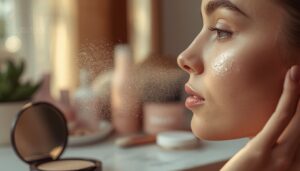
Wearing makeup doesn’t excuse you from reapplying, but it does call for a makeup-friendly application. Try the pressing technique with a nonabsorbing sponge, stippling sunscreen into skin rather than dragging it.
Prefer spray? Hold it 6 to 8 inches away, mist lightly, and let it dry down. A mineral powder can set everything in place, cutting shine without smudging your look.
Set Two-Hour Reminders
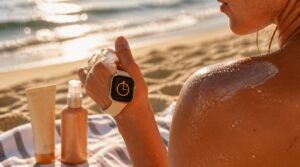
Good makeup routine down? Now protect it. Set a timer alert for two hours, every time you step outside.
- Phone notifications for outdoor plans
- Watch alarms during workouts
- Calendar prompts for beach days
- Reminder apps with recurring alerts
- Backup timers for water-resistant windows
SPF fades fast, and broad-spectrum coverage weakens on schedule, so reapply before your body tells you it’s overdue.
SPF Does Not Extend Protection
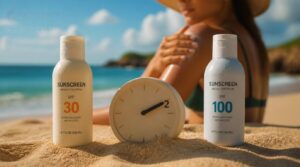
Here’s something that surprises a lot of my patients: a higher SPF number doesn’t buy you more time in the sun. SPF 30 and SPF 100 both need reapplying on the same two-hour clock, no exceptions. Let’s break down what SPF really tells you, and why the number on the bottle matters less than you’d think.
What SPF Actually Measures
What does SPF actually measure? It’s a UVB protection ratio, not a promise of all-day coverage. Labs use minimal erythemal dose, comparing burn onset timing on protected versus bare skin, applying 2 mg per square centimeter as the standard. That’s the SPF calculation method. Real life rarely matches lab conditions, so reapplication frequency still matters no matter the number.
SPF 30 Versus SPF 100
Think SPF 100 doubles your safety over SPF 30? It doesn’t. SPF 30 blocks about 97% of UVB rays, SPF 100 blocks around 99%. That’s a small protection level difference, not double coverage.
- Reapplication frequency matters more than the number
- Real-world SPF effectiveness drops fast with sweat
- Application amount matters, not just the label
- SPF comparison myths mislead buyers
- Neither hits 100% protection
Broad-Spectrum Coverage Matters
Rarely do people check for broad-spectrum labeling, but it’s just as important as your SPF number. Broad-spectrum means a sunscreen blocks both UVA and UVB rays, meeting a critical wavelength of at least 370 nanometers. Without that, you’re only guarding against burning, not the UVA rays tied to aging and skin cancer.
No SPF level replaces that coverage, and it still needs reapplying every two hours.
Mineral Versus Chemical Sunscreens
Zinc oxide and titanium dioxide sit on your skin and reflect UV rays like tiny mirrors, while chemical filters such as avobenzone absorb them instead.
Mineral formulas tend to feel thicker but suit sensitive skin better. Chemical ones go on smoother.
Either way, formulation stability breaks down under sun, so sunscreen reapplication timing stays fixed at two hours no matter which type you choose.
Read Water-Resistance Labels
See "water resistant (40 minutes)" on a bottle? That’s not marketing fluff, it’s a tested duration under lab conditions.
Once you hit that window swimming or sweating, reapply. Toweling off strips coverage too, even early.
Bottom line: water-resistant labels don’t replace your two-hour sunscreen reapplication timing, they just add extra triggers for when water exposure demands it sooner.
Prevent Gaps in Sun Protection

Even with a perfect schedule, sunscreen can fail you in ways you don’t notice right away. Small gaps add up fast, and your skin pays the price before you ever see it. Here’s what actually breaks down your protection, and what you can do about it.
Sweat and Water Remove Coverage
Why does sunscreen vanish fastest at the pool or gym? Sweat removal sunscreen and swimming sunscreen loss both strip your layer within 45-80 minutes, depending on water resistance timing.
- Sweat dilutes and wipes coverage
- Swimming washes product off skin
- Toweling off pulls sunscreen away
Even sweat resistant sunscreens need reapplying once that window closes, so don’t skip it.
Friction Wears Sunscreen Away
Water and sweat aren’t the only culprits. Friction hotspots like your nose bridge, shoulders, and collar line lose coverage from eyeglass pressure, strap rubbing, and clothing abrasion.
Combined, sweat, water, and friction strip up to 85% of your sunscreen film within 80 minutes. SPF 50 can drop to SPF 3 in under two hours, so reapply often.
Sweat, water, and friction can strip 85% of your sunscreen within 80 minutes, dropping SPF 50 to nearly SPF 3
Sunburn is a Late Warning
Redness shows up hours after real damage starts. That’s the trap: your skin looks fine at hour one, so you skip reapplying, but UV exposure already began breaking down cells.
Why waiting for warning signs fails you:
- Skin damage starts before pain does
- Sunburn progression continues for hours post-exposure
- Reapply on schedule, not by symptoms
Add Shade and Clothing
Waiting for symptoms isn’t your only defense, so stack the odds in your favor. Find shade whenever you can, and pair a widebrimmed hat with UPF fabric clothing.
Add neck coverage options and sunglasses with real UV protection. Practice wet clothing care, since damp fabric lets more UV through, and still reapply sunscreen on schedule underneath it all.
Follow Product Directions
Clothing and shade help, but the label on your bottle still matters most. Check the expiration date before you squeeze out a drop, since old formulas lose potency fast.
Apply to dry skin, use the recommended amount, and reapply after towel use. Whether it’s broad-spectrum or water-resistant, follow label instructions and reapply every two hours, no matter the SPF number.
Frequently Asked Questions (FAQs)
What is the 3-finger rule for sunscreen?
Picture a bead of sunscreen tracing a line down your fingers like a tiny ruler. That’s the three-finger rule: squeeze sunscreen along your index, middle, and ring fingers, roughly 1/2 teaspoon, for proper face coverage.
How long will SPF 50 last?
SPF 50 isn’t a countdown timer, that’s a common SPF duration myth. It measures UVB strength, not wear time. Sweat and water resistance still fade, so plan on reapplying every two hours, same as any other SPF.
How often do Koreans reapply sunscreen?
Let’s call it devotion rather than habit. Korean sunscreen culture favors consistent sun protection: generous morning application plus reapplication every two hours in strong UV, keeping daily routines sweat-resistant, water-resistant, and genuinely protective, not just a once-and-done SPF step.
What happens if you don’t reapply sunscreen every 2 hours?
Your sunscreen layer weakens fast. UV exposure buildup accelerates, protection gaps form on your skin, and burn likelihood increases sharply, even with broad-spectrum, sweat-resistant formulas.
Skin damage risk climbs quietly, since you won’t feel it happening until redness shows up later.
Does expired sunscreen still provide adequate protection?
Full bottle, empty promise: expired sunscreen looks the same but isn’t. Lost potency, faded broad-spectrum coverage, and weaker UVA defense mean it can’t deliver its labeled SPF, so toss it and start fresh.
Can you layer sunscreen with moisturizer effectively?
Yes. Let moisturizer absorb first, then apply sunscreen as your final layer. This proper application sequence keeps the SPF film even and undisturbed, so reapplication later actually restores real protection instead of just adding another patchy coat.
Is spray sunscreen as effective as lotion?
Can spray sunscreen outperform an old telegraph line? Both work, but only when used right. Spray needs an even, wet sheen, rubbed in fully. Lotion shows coverage more clearly, making missed spots easier to catch.
Do darker skin tones need less sunscreen?
More melanin does offer some natural UV defense, but not enough on its own. Darker skin tones still burn, still age, and still face skin cancer risk, so daily broad-spectrum SPF 30 and the same two-hour reapplication schedule still apply.
How should sunscreen be stored during summer months?
Think of your sunscreen like butter left on a hot counter, it breaks down fast. Keep it in cool, dry storage, away from heat, out of direct sun, cap tight, and always follow label instructions closely.
Conclusion
Think of sunscreen like a sundial, not a smartphone app. It doesn’t run in the background protecting you all day. It works only while it’s actually on your skin.
So how often should you reapply sunscreen lotion? Every two hours, always, no exceptions for high SPF numbers. Sweat, water, and towels erase coverage fast. Set a timer, carry the bottle, and reapply before your skin gets the chance to burn. That habit is your real protection.