This site is supported by our readers. We may earn a commission, at no cost to you, if you purchase through links. This content is for general informational and educational purposes only and is not a substitute for professional medical, dermatological, or nutritional advice.

Rough, dull skin isn’t always about what you’re missing. Sometimes it’s about what you’re using. Plastic scrub beads and synthetic loofahs can stress skin more than they help. Natural exfoliation tools at home work differently. They lift dead cells using plant fibers, minerals, and kitchen staples instead of chemicals or hard abrasives.
The best options depend on your skin type and which area you’re targeting. Some tools belong on your face. Others work best on calloused heels or your back. Each one below covers what it does, where to use it, and how to keep it clean.
Table Of Contents
- Key Takeaways
- Best Natural Exfoliation Tools at Home
- Household Items for Natural Exfoliation
- Choose Tools by Skin Area
- Use Natural Exfoliation Tools Safely
- Clean and Replace Exfoliation Tools
- Frequently Asked Questions (FAQs)
- What household items can I use to exfoliate my face?
- How can I exfoliate my skin naturally at home?
- What is the best homemade exfoliator?
- What can I use to exfoliate my body naturally?
- Can natural exfoliation tools reduce cellulite appearance?
- Are these tools safe during pregnancy?
- Do natural tools work on tattoos safely?
- Can children use natural exfoliation tools daily?
- Do natural tools help with keratosis pilaris symptoms?
- Conclusion
Key Takeaways
- Match your exfoliation tool to the skin area — konjac sponges and muslin cloths for your face, sisal or bamboo brushes for your body, and pumice stones or coffee scrubs for rough heels.
- Your kitchen already holds some of the best exfoliators around: oatmeal paste, sugar mixed with coconut oil, and spent coffee grounds all work without synthetic additives.
- How often you exfoliate matters as much as what you use — oily skin can handle two to three times a week, but sensitive or dry skin needs just once a week or less.
- Clean and replace your tools on a regular schedule: rinse after every use, air-dry completely, and swap out konjac sponges every four to six weeks to prevent mold and bacteria buildup.
Best Natural Exfoliation Tools at Home

The right tools make all the difference for getting that natural glow at home. Each option below works with your skin rather than against it, using plant-based materials that are gentle, effective, and kind to the planet. Here are the best natural exfoliation tools worth adding to your routine.
From silky sugar scrubs to bristled dry brushes, understanding natural skin care product ingredients helps you choose tools that truly complement your skin type.
Konjac Sponges for Gentle Cleansing
Konjac sponges come in facial and full body options. Both start dry and hard, then soften into a gentle cleansing tool after soaking in warm water for a few minutes.
This natural fiber sponge is made from plant-based fibers and helps your skin renew each day without irritating it. The charcoal-infused version draws out deeper impurities. Air-dry it after each use. It is also ideal for pre-tanning body exfoliation on areas like elbows, knees, and ankles without leaving any oily residue.
Natural Loofahs for Body Exfoliation
Where the konjac sponge cares for your face, natural loofah sponges step in for the body. Soak yours briefly in warm water first. This softens its plant-based fibers so the texture glides rather than scratches.
Add body wash and use gentle circular motions across your skin. Rinse thoroughly when you’re done. Hang it to air dry completely after each use.
Sisal Brushes for Dry Brushing
Unlike a loofah, sisal brushes work best on dry skin only. Always use yours before the shower.
The fibers from the agave plant stay semi-firm to sweep dead skin away without any scratching.
- Use long strokes toward your heart
- Start from feet, move upward
- Keep pressure light and steady
- Rinse and hang to air dry
- Don’t use on broken skin
Bamboo Brushes for Full-Body Reach
If sisal brushes are about firm, focused strokes, bamboo brushes take a wider approach. The long bamboo handle gives you real reach to scrub your back and shoulders without any awkward stretching.
Bristles come in soft, medium, or firm options. Pick what your skin actually needs.
You can use yours dry or in the shower, depending on your routine.
Natural Sea Sponges for Bathing
Your bathing routine can include something truly ancient.
Natural sea sponges have existed for hundreds of millions of years and bring real skin benefits.
- Soft, pliable texture for daily cleansing
- Mineral-rich with calcium, zinc, and magnesium
- Holds water well for rich soap lather
- Biodegradable bath accessory that composts fully
- Sustainably harvested with ocean regrowth in 3-5 years
Household Items for Natural Exfoliation
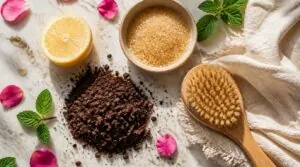
You don’t need a fancy skincare shelf to get glowing skin. Some of the most effective exfoliation tools are already sitting in your home. Here are five simple options worth trying.
Shaving is actually one of them — and when done right, it doubles as effective exfoliation, so brushing up on proper facial shaving techniques can make a real difference.
Soft Cotton Washcloths
A cotton washcloth might be the most underrated tool in your bathroom. Absorbent cotton cloths hold moisture well and deliver gentle facial cleansing without any roughness. The breathable weave helps it dry quickly between uses.
Rinse it after each use and wash regularly to keep it fresh. Simple, effective, and a natural step toward sustainable skincare.
Muslin Cloths for Facial Exfoliation
Muslin cloths sit somewhere between a washcloth and an exfoliating pad. The plain weave delivers gentle mechanical exfoliation without the harshness of scrub beads. Here’s how to use one well:
- Massage your cleanser for 30 seconds
- Rinse the cloth in warm water until damp
- Use circular motions across cheeks, chin, and nose
Rinse it after each use. Air dry completely before reusing.
Oatmeal Paste for Sensitive Skin
Oatmeal is one of the best-kept secrets in DIY beauty. Grind dry oats into a fine powder and stir a spoonful into water. It should turn milky white quickly. If it stays gritty, mix longer.
Mix the powder with a little water to form a paste, apply it with gentle circular motions, and rinse after 10 minutes.
Sugar Scrubs for Body Skin
Sugar is already sitting in your kitchen, and it’s one of the most effective tools for natural exfoliation. A simple DIY sugar scrub mixes 1 cup sugar with 1/2 cup coconut oil. That’s it.
Here’s what makes it work so well:
- Sugar granules physically lift dead skin cells
- Coconut oil moisturizes right after rinsing
- Citrus zest adds a invigorating, brightening boost
- Gentle circular motions keep the process safe
- It leaves skin smoother and more radiant
Coffee Grounds for Rough Feet
Your feet take a beating every day, and coffee grounds can help you fight back.
A DIY Coffee Foot Scrub blends a few tablespoons of spent grounds with sugar and almond oil for Exfoliating Callus Relief on rough heels.
Apply to damp skin using a Gentle Foot Massage in circular motions, then rinse with warm water.
Choose Tools by Skin Area
Not every tool works for every part of your body. Your face needs something gentler than your heels, and your back has different needs than your arms. Here’s how to match the right tool to each skin area.
Face and Sensitive Skin
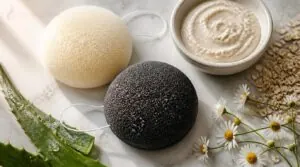
Your face deserves the gentlest touch. Konjac sponges work well here because their natural glucomannan fibers lift dead cells without microtears. Wet one first, then use gentle circular motions across your skin.
A charcoal-infused variant adds detoxifying power for oily or acne-prone skin.
For extra sensitivity, try an oatmeal paste as a mild, inflammation-calming alternative to any tool.
Arms, Legs, and Torso
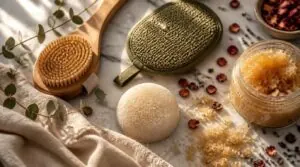
Your arms, legs, and torso handle more pressure than your face. These biodegradable bath accessories work best here:
- Dry body brush on dry skin before showering
- Loofah shower pad for medium-texture scrubbing
- Konjac body sponge for daily gentle exfoliation
- Sugar scrub for a moisture-boosting finish
Use circular motions for 30 seconds, then rinse with lukewarm water and moisturize right after.
Back and Shoulders
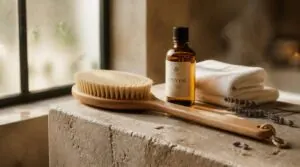
Your back and shoulders are the hardest spots to reach on your own. A long-handled dry body brush solves this. Use controlled strokes from shoulders down toward the waist. One or two passes per section is enough. Limit back exfoliation to once weekly and moisturize right after.
Shaving and Ingrown-Prone Areas
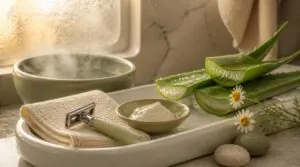
Shaving and ingrown-prone areas need a gentler approach than your back. Prep skin first by washing with warm water and a mild cleanser. Apply shaving cream and let it sit before the razor touches skin. Use a sharp single-blade razor, shave with hair growth, and avoid stretching the skin.
After shaving, gently exfoliate with a soft washcloth using small circular motions to help release trapped hairs.
Heels and Callused Feet
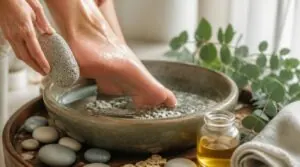
Callused heels need a patient, consistent approach. Soak your feet in warm water for 10 to 15 minutes to soften the skin. Then work a wet pumice stone across the callus slowly in one direction.
Try adding Dead Sea salt or oatmeal to your soak for deeper softening. Finish with coconut oil to seal in moisture and help prevent cracking.
Use Natural Exfoliation Tools Safely

Even the best tools can work against you if you use them the wrong way. A few simple habits make all the difference between glowing skin and unnecessary irritation. Here’s what to keep in mind before, during, and after every exfoliation session.
Prepare Skin and Tools
Prepare skin and tools the right way, and natural exfoliation works better. Follow these three steps before reaching for physical exfoliators:
- Pre-cleanse skin using gentle cleansing and lukewarm water.
- Sanitize tools first, soaking plant-based fibers like konjac for 5 to 10 minutes.
- Patch test sensitivity on your inner forearm and wait 24 hours. If you’re still unsure where to start, this guide to mustache wax for sensitive skin breaks down gentle formulas and which ingredients are worth avoiding.
Soften skin before use. Organize tools nearby.
Apply Gentle Circular Motions
The motion matters as much as the tool. Use gentle circular strokes, letting the texture do the work rather than your hand pressure.
For your face, keep circles about one inch wide for 60 seconds. On your body, work in slow upward circles for two to three minutes. Stop if you feel any stinging.
Set Skin-Specific Exfoliation Frequency
How often you exfoliate matters as much as how you do it. Oily skin tolerates two to three sessions per week. Dry or sensitive skin needs just once a week, sometimes less. If you’re over 50, stretch that to every two weeks. Start slow, watch how your skin responds, and adjust from there.
Before committing to a new exfoliator, do a quick face exfoliation patch test on your inner arm for 48 hours to catch any irritation early.
Avoid Irritated or Broken Skin
Broken skin isn’t ready for exfoliation. Skip any area with open cuts, active breakouts, scabs, or raw patches.
Exfoliating over damaged skin adds friction to tissue that’s already struggling. If you feel stinging or burning mid-session, stop. That’s your skin telling you it’s had enough.
Wait until the area heals fully before using any tool again.
Moisturize and Protect Afterwards
Freshly exfoliated skin drinks up moisture fast. Apply a fragrance-free moisturizer right after patting dry to lock hydration in before water escapes.
- Use gentle circular motions, including your neck
- Choose a hypoallergenic formula for sensitive skin
- Apply sunscreen with zinc oxide every morning
- Smooth moisturizer along hair follicle direction to reduce friction
Clean and Replace Exfoliation Tools
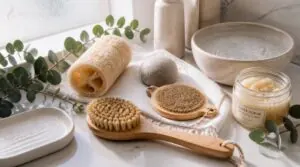
Your tools work hard for your skin, so they need some care in return. Keeping them clean and knowing when to swap them out makes a real difference in how well they perform. Here’s what you need to do to keep every tool fresh and effective.
Rinse Thoroughly After Use
Rinse your tool under warm running water right after every use. Warm water dissolves soap residue and lifts dead skin cells from the fibers more effectively than cold.
Work from top to bottom so dirty water doesn’t run back over clean areas. Squeeze gently to help push residue out. Leftover buildup sitting in the fibers shortens your tool’s life fast.
Air-Dry Between Uses
After rinsing, where you set your tool to dry matters just as much. Damp plant-based fibers lose their structure fast when stored wet in closed spaces.
- Hang konjac sponges near a window or exhaust fan
- Place loofahs on a wall-mounted drying rack
- Keep all tools away from the shower corner
- Dry in rooms between 68-77°F for best results
Prevent Mold and Bacteria
Good air-drying helps, but moisture lingers longer than you think. Ventilate after use by running your exhaust fan for at least 30 minutes after showering. Your biodegradable tools need clean, dry air to stay safe between uses.
| Tool | Mold Risk | Prevention Tip |
|---|---|---|
| Konjac sponge | High | Hang near exhaust fan |
| Loofah | Medium | Wall-mounted rack |
| Sisal brush | Low | Store outside bathroom |
Avoid damp storage in closed shower corners. Control humidity and clean residue off your tools regularly to cut off what bacteria feed on.
Know Replacement Timeframes
Even clean tools wear out. Konjac sponges last 4 to 6 weeks with daily use. Sea sponges need replacing every 3 to 4 weeks.
Sisal brushes hold up for about 3 months before the fibers lose their texture. Bamboo brushes last the longest at 12 to 18 months.
Watch for softness, odor, or color changes. Those tell you it’s time.
Compost Biodegradable Materials Responsibly
When you’re done with a konjac sponge or sisal brush, don’t just bin it. These plant-based fibers break down naturally, so composting them is the smarter exit. Cut pieces smaller than 2 inches, remove any plastic parts, and pre-rinse before adding them to your pile. That’s zero waste beauty working exactly as it should.
Konjac sponges and sisal brushes compost naturally — cut, de-plastic, rinse, and let zero-waste beauty do the rest
Frequently Asked Questions (FAQs)
What household items can I use to exfoliate my face?
The answer’s already sitting in your kitchen. A soft cotton washcloth or finely ground oatmeal paste works well for a gentle DIY face scrub. Skip coffee grounds and sugar. They’re too coarse for your face.
How can I exfoliate my skin naturally at home?
You can exfoliate naturally using tools like konjac sponges, loofahs, sisal brushes, or simple household items like oatmeal paste and sugar scrubs mixed with oil for smooth, healthy skin.
What is the best homemade exfoliator?
Sugar and coffee make one of the best homemade exfoliators around. Mix a tablespoon of each with a little oil for a simple sugar coffee mix that smooths rough patches fast.
What can I use to exfoliate my body naturally?
You don’t need anything synthetic to see real results. Konjac body sponges, loofah shower pads, sisal dry brushes, bamboo body brushes, and natural sea sponges all offer effective gentle skin cleansing using only plant-based fibers.
Can natural exfoliation tools reduce cellulite appearance?
Natural exfoliation temporarily improves skin texture, but it won’t reduce cellulite. Cellulite involves deeper structural changes beneath the skin. Surface tools can smooth the top layer, but the dimpling pattern stays.
Are these tools safe during pregnancy?
Worried about what’s safe for sensitive skin during pregnancy? Konjac sponges are pH-neutral and vegan, making them a solid pick for pregnancy-safe exfoliation. They work only on the surface. Always check with your doctor first.
Do natural tools work on tattoos safely?
Tattoos need time to heal before any exfoliation. New tattoos are especially vulnerable, so skip scrubbing until fully healed. When in doubt, ask a professional about safe cleansing options.
Can children use natural exfoliation tools daily?
Children’s skin is more delicate than adult skin, so daily exfoliation isn’t recommended. A few times per week using a gentle konjac sponge or soft cloth is a safer, skin-friendly option.
Do natural tools help with keratosis pilaris symptoms?
Yes, gentle exfoliation can help soften the rough, bumpy texture caused by keratosis pilaris. A konjac body sponge works well for this. Always moisturize right after.
Conclusion
Think of your skin like a garden. Dead layers are the weeds blocking new growth from showing through. The right natural exfoliation tools at home clear the way without tearing through the soil beneath. Match your tool to your skin area. Use gentle pressure and clean your tools on a regular schedule.
Glowing skin isn’t luck. It’s the result of consistent, careful choices you make every day, starting with what you put in your hands.