This site is supported by our readers. We may earn a commission, at no cost to you, if you purchase through links. This content is for general informational and educational purposes only and is not a substitute for professional medical, dermatological, or nutritional advice.
Most people pack away their sunscreen the moment the temperature drops. Winter feels safe, the sun sits low, and SPF seems like a summer problem. That logic is easy to follow.
UVA rays don’t seasonally adjust. They deliver the same skin-aging dose in January as in July, passing through cloud cover, glass, and the false comfort of a gray sky. Snow amplifies the risk, reflecting up to 90% of UV radiation back onto your skin.
Understanding why sunscreen is important in winter means recognizing that UV damage doesn’t pause for cold weather. Your skin doesn’t get a season off.
Table Of Contents
- Key Takeaways
- Winter UV Rays Still Damage Skin
- Sunscreen Prevents Lasting Winter Skin Damage
- Snow and Altitude Intensify UV Exposure
- Choose The Right Winter Sunscreen
- Apply Sunscreen Every Winter Day
- Frequently Asked Questions (FAQs)
- Do you really need sunscreen in winter?
- Is SPF 50 too much for winter?
- Does wearing sunscreen every day prevent aging?
- Is sunscreen really necessary daily?
- Can winter sunscreen worsen acne or clog pores?
- Is sunscreen safe for children during winter activities?
- How does sunscreen interact with winter makeup routines?
- Does vitamin D production decrease with daily sunscreen use?
- Are indoor workers still at risk of UV exposure?
- Conclusion
Key Takeaways
- UVA rays maintain the same skin-aging intensity year-round, passing through clouds and glass, which means your skin takes a hit even on the grayest January day.
- Snow reflects up to 90% of UV radiation back onto exposed skin, making winter outdoor activities — especially at altitude — significantly more damaging than most people expect.
- Skipping winter sunscreen quietly accelerates collagen loss, hyperpigmentation, and cumulative DNA damage that raises your lifetime melanoma risk, none of which announce themselves until the damage is already done.
- A broad-spectrum SPF 30 or higher, applied every morning and reapplied every one to two hours outdoors, is the single most effective daily habit for preventing premature aging and long-term skin cancer risk.
Winter UV Rays Still Damage Skin

Most people associate sun damage with summer beach days, but your skin doesn’t get a break just because the temperature drops. UV radiation is still very much at work in winter, and several factors make it more of a threat than you might expect.
In fact, winter UV exposure can quietly undermine skin hydration and barrier health, making year-round sun protection a core part of any skincare routine.
Here’s what’s actually happening to your skin when you step outside on a cold winter day.
UVA Remains Strong Year-Round
While summer feels like sun season, UVA intensity stays constant all year, delivering the same skin-aging dose in January as July. It makes up 95% of UV radiation your skin absorbs daily.
Cloud cover only reduces UVA by 10 to 20%, and it passes through glass, so indoor exposure near windows is real even on gray winter days. In fact, UVA and UVB rays both contribute to skin cancer development, including melanoma, making year-round sunscreen protection essential.
UVB Still Causes Sunburn
UVA ages quietly, but UVB rays are what burn. Even in winter, UVB intensity is strong enough to damage the top skin layers and cause real redness.
Sunburn risk factors rise with:
- Clear winter skies
- Reflective UV exposure from snow or ice
- Midday hours, 10 a.m. to 4 p.m.
- Higher elevations
Apply SPF 30 or higher every day.
Clouds Do Not Block UV
Many people step outside on a grey winter day and assume their skin is safe. That assumption is costly. UV penetration through clouds is real. Overcast skies reduce UV but don’t block it. Skin exposure on cloudy days still adds up over time, increasing your skin cancer prevention needs. Broad-spectrum SPF protects you whether or not you see the sun.
| Cloud Type | UV Transmission | Sunscreen Needed |
|---|---|---|
| Clear sky | ~100% | SPF 30+ always |
| Cirrus (thin, high) | 70–90% | SPF 30+ daily |
| Stratus (low, grey) | 20–50% | SPF 30+ still needed |
| Nimbostratus (rain) | 10–30% | SPF 30+ recommended |
| Heavy storm clouds | Under 10% | SPF 30+ still advised |
Cold Temperatures Hide Exposure
Cold air masks UV exposure in ways warm weather never does. Wind and dryness hide UV effects you’d otherwise feel.
These behavioral oversights are common:
- Skipping sunscreen when you don’t feel warm
- Missing ears and lips outdoors
- Forgetting snow reflects UV onto your face
- Assuming grey skies mean no reflective UV exposure
Cumulative silent damage builds across every cold day.
Each exposure adds up, which is why reaching for facial moisturizers designed for cold-weather climates matters more in winter than most people realize.
Sunscreen Prevents Lasting Winter Skin Damage

Skipping sunscreen in winter doesn’t just leave your skin unprotected — it sets the stage for damage that builds quietly over months and years. UV rays don’t take a season off, and your skin keeps score of every unguarded day. Here’s what’s actually at stake when winter sunscreen protection gets overlooked.
UV rays don’t take a season off, and your skin keeps score of every unguarded day
Premature Aging and Wrinkles
Photoaging accelerates wrinkle formation up to 10 times faster than natural aging alone. Your skin loses 1% of its collagen each year after 30, and winter UV radiation drives that collagen breakdown further still. Snow reflects UV rays directly onto your face, compounding the damage. Daily sunscreen in winter protects skin elasticity and helps prevent premature aging and fine lines.
| Aging Factor | Skin Impact | Protection |
|---|---|---|
| Natural collagen loss | 1% per year after age 30 | Consistent SPF use |
| UV/Photoaging | Up to 10x faster wrinkle formation | Broad-spectrum sunscreen |
| Snow-reflected UV | Intensified collagen breakdown | SPF 30+ on all exposed skin |
| Skin elasticity loss | Lines deepen, skin loses bounce | Daily winter sunscreen |
| No sunscreen in winter | Cumulative premature aging | Reapply every 2 hours outdoors |
Dark Spots and Discoloration
Dark spots don’t take the winter off. UV rays trigger melanin overproduction year-round, leaving hyperpigmentation and sunspots concentrated on sun-exposed areas like your face, neck, and hands. Melasma, in particular, deepens with any continued light exposure, even on gray winter days.
Daily broad-spectrum sunscreen interrupts that pigment cycle, helping even your skin tone and stopping new discoloration before it forms.
Cumulative Skin Cancer Risk
Skin cancer doesn’t announce itself in winter. Every UV ray adds to a cumulative DNA damage load, quietly raising your long-term risk. Five or more sunburns over your lifetime doubles your melanoma risk alone.
That’s why daily broad-spectrum SPF 30+ matters even in January. Used consistently, it can reduce your melanoma risk by up to 50% over time.
Weakened Skin Barrier
Winter air is a quiet thief. Low humidity pulls moisture from your outer skin layer, raising transepidermal water loss and leaving your barrier thinner and more permeable.
That increased permeability makes you more vulnerable to irritants, which is why itchy legs while walking in winter can stem from anything between simple dryness and an undiagnosed skin condition.
When that happens, irritants and allergens penetrate more easily. Sunscreen adds a physical buffer, reducing that vulnerability while your moisturizer works to replenish the lipids and ceramides your barrier needs to recover.
Snow and Altitude Intensify UV Exposure
Where you ski or play in the snow matters more than you might think. Certain winter conditions can push your UV exposure well beyond what you’d experience on an ordinary outdoor day. Here’s what makes snow and higher elevations a unique risk for your skin.
Snow and Ice Reflection

Snow doesn’t just look bright; it acts like a mirror. The albedo effect sends up to 90% of UV rays back onto your skin, and reflective winter surfaces nearly double exposure compared to bare ground.
Snow glare hits you from all angles, making winter sports sunscreen essential. Use broad-spectrum SPF 50 or higher and keep reapplying sunscreen.
Stronger Rays at Elevation

The higher you climb, the thinner the atmosphere becomes, and that atmospheric thinning effect lets more UV rays reach your skin.
High altitude sun exposure at ski resort elevations runs 30–40% stronger than at sea level, and the altitude UV increase peaks under clear skies.
You burn faster than expected, making SPF 50 or higher and reapplying sunscreen critical on the mountain.
Skiing and Snowboarding Risks
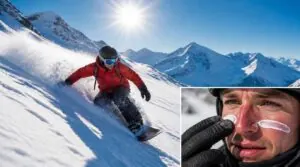
Sun exposure is only one risk on the slopes. Beginners face a higher injury rate, with wrist injuries topping the list for new snowboarders at 30%.
Terrain park features like jumps and rails add fall hazards for all skill levels. A properly fitted helmet protects your head, but nothing protects your skin from UV rays bouncing off snow except sunscreen.
Vulnerable Eyes and Lips

Your helmet guards your head, but snow reflects UV rays right onto your eyes and lips from below.
- Photokeratitis develops after 15 minutes of unprotected snow exposure
- Eye protection goggles block UV rays from all angles
- Lip cancer targets the lower lip most often
- SPF 30+ lip balm cuts your risk greatly
- Cold, dry air accelerates lip moisture loss rapidly
Choose The Right Winter Sunscreen

Not all sunscreens are built the same, and winter conditions call for a formula that does more than just block UV rays. Your skin faces a different set of challenges in the cold — dryness, wind, reflective snow, and shifting altitude — so the right product needs to meet those demands. Here’s what to look for when choosing your winter sunscreen.
Broad-Spectrum SPF 30 Minimum
Think of broad-spectrum SPF 30 as the UV protection standard and Broad-spectrum requirement: it covers UVA and UVB UV rays, supporting anti-aging defense and skin cancer prevention. Make a Daily sunscreen habit in your Winter skincare routine, even when Snow reflects UV rays.
| Label | Meaning | Use |
|---|---|---|
| Broad-spectrum | UVA/UVB | Required |
| SPF 30 | Minimum | Daily |
| Water-resistant | 40/80 minutes | Helpful |
| Face, neck, hands | Cover | Reapply |
SPF 50 for Mountains
At mountain elevations, UV increases 10-12% per 1,000 meters, and fresh snow reflects up to 80% of those rays back onto your skin. That demands SPF 50 as your minimum on the slopes.
A mineral SPF formula with zinc oxide holds firm in wind and cold, and sunscreen reapplication every two hours maintains UVA UVB protection throughout the day.
Moisturizing Formulas for Dryness
Cold air strips moisture fast, making moisturizing sunscreen formulas essential for winter dryness. Look for products combining:
- Humectant water binding ingredients like glycerin and hyaluronic acid
- Occlusive moisture sealing agents such as squalane or mineral oil
- Emollient smoothing lipids including fatty alcohols and plant oils
- Ceramide barrier lipids to strengthen structural skin protection
- Natural moisturizing factor support for deeper hydration
These ingredients work together to keep skin protected and comfortable.
Water-Resistant Winter Protection
Snow melts on your face during outdoor winter activity, washing sunscreen away faster than you’d expect. Water and sweat-resistant formulas help, especially those using hybrid filter systems and polymer film technology that lock broad-spectrum UV filters to skin.
The FDA’s 80-minute water resistance rating is your guide. Reapply every 60 to 90 minutes to keep cumulative skin cancer risk low.
Mineral Options for Sensitivity
If your skin reacts to chemical sunscreen filters, mineral sunscreen is the safer path in winter.
- Zinc oxide gives broad-spectrum UV protection for sensitive areas
- Titanium dioxide adds coverage with a reduced white cast
- Fragrance-free formulas lower irritation and skin cancer risk
- Tinted options neutralize redness for varied skin tones
- Soothing additives like niacinamide and ceramides help restore the barrier
Apply Sunscreen Every Winter Day

Choosing the right sunscreen is only half the battle — applying it consistently is what actually protects your skin. Winter routines need a few practical adjustments to make sure your coverage is complete and effective. Here’s where to focus your attention each day.
Cover Face, Neck, and Hands
Most people remember to apply sunscreen to their face, but your neck and hands take just as much winter UV exposure.
Use a nickel-sized amount for your face, extending it to your neck, ears, and the backs of your hands.
Apply to dry skin using your fingertips, distributing small dots evenly before rubbing in.
Apply Before Going Outdoors
Give yourself at least 15 to 30 minutes before heading out. Sunscreen needs time to absorb and form a protective barrier against UV radiation, and applying it at the door won’t give it that chance.
Make it part of getting dressed. Put on broad-spectrum sunscreen before your coat, gloves, and gear, so nothing interferes with coverage. Add SPF lip balm last.
Reapply During Extended Exposure
If you’re spending a few hours outside, one morning application isn’t enough.
Reapply every 60 to 120 minutes to keep your protection consistent. Sweat, wind, and rubbing all wear sunscreen off faster than you’d expect, leaving patches of skin exposed without you realizing it. A water and sweat-resistant, broad-spectrum formula helps, but it still needs reapplying.
Pair With Winter Skincare
Sunscreen works best as the final step of a complete routine. Start with a gentle, moisturizing cleanser, layer a ceramide-rich moisturizer to support your skin barrier, then apply an antioxidant serum before your broad-spectrum SPF.
Winter is also a good time to ease back on harsh actives that increase dryness or sensitivity.
Protect Lips and Ears
Two areas that often get skipped are your lips and ears. Lips have thinner skin than the rest of your face, making them more vulnerable to UV. Apply a lip balm with SPF each time you head outdoors, and reapply every two hours.
Your ears catch direct sun too, especially along the rim, so extend your broad-spectrum sunscreen there as well.
Frequently Asked Questions (FAQs)
Do you really need sunscreen in winter?
Like sunlight through a window, UV radiation doesn’t stop just because the air feels cold. Winter doesn’t put UV on pause. Your skin needs a daily SPF habit year-round, and cold weather is no exception.
Is SPF 50 too much for winter?
No, SPF 50 isn’t excessive in winter. It blocks about 98% of UVB rays, compared to SPF 30’s 97%. That 1% gap matters most during mountain activities or extended outdoor exposure.
Does wearing sunscreen every day prevent aging?
A daily skincare routine built around broad-spectrum SPF acts like armor against time. It shields collagen and skin elasticity, reduces fine lines and skin texture, prevents dark spots, and slows premature aging from ultraviolet radiation.
Is sunscreen really necessary daily?
Yes. Dermatologists recommend broad-spectrum SPF 30 or higher every single day, year-round. UV radiation reaches your skin regardless of season, and cumulative daily exposure quietly drives both skin cancer risk and premature aging over time.
Can winter sunscreen worsen acne or clog pores?
Some sunscreens can trigger breakouts, but the right formula won’t. Choose a non-comedogenic, lightweight formula to protect your skin without clogging pores, and cleanse thoroughly each night to prevent residue buildup.
Is sunscreen safe for children during winter activities?
A child’s skin is like fresh parchment, thin and quick to mark. Mineral sunscreen with zinc oxide is the top dermatologist recommendation for kids: gentle, broad-spectrum, water and sweat-resistant for active winter play.
How does sunscreen interact with winter makeup routines?
Sunscreen belongs under your makeup, acting as the UV-blocking base layer that most winter foundations simply can’t replace. Applying a broad-spectrum SPF 30+ first ensures your exposed skin gets the consistent daily protection it needs.
Does vitamin D production decrease with daily sunscreen use?
Imagine a daily commuter applying SPF 30 each morning, year-round. Real-world field trials consistently show that daily sunscreen use doesn’t meaningfully lower vitamin D, because some UVB still reaches your skin during normal outdoor time.
Are indoor workers still at risk of UV exposure?
Yes. Indoor workers face real window exposure risk because UVA rays pass through glass, reaching uncovered skin daily. That cumulative exposure raises skin cancer risk over time, making daily sunscreen use a smart workplace habit.
Conclusion
An ounce of prevention is worth a pound of cure. Understanding why sunscreen is important in winter starts with one clear fact: UVA rays don’t take a seasonal break. They age your skin quietly, without a single burn to warn you.
Apply broad-spectrum SPF 30 every morning, clear skies or cloudy, and reapply when you spend extended time outdoors. Your skin accumulates decades of damage silently. Protect it now, before the mirror tells the story.