This site is supported by our readers. We may earn a commission, at no cost to you, if you purchase through links. This content is for general informational and educational purposes only and is not a substitute for professional medical, dermatological, or nutritional advice.
Cold air holds less moisture than warm air, and indoor heating strips away what little humidity remains. That combination pulls water straight out of your skin’s outer layer, faster than most people realize. The result: tight cheeks, flaking around the nose, cracked knuckles that sting when you wash your hands.
Your skin barrier works overtime in winter, and last season’s routine likely can’t keep up. Swapping a few products or steps at the wrong moment often does more harm than good, undoing whatever protection you thought you had.
A proper skin care routine for winter isn’t about piling on more products. It’s about sequencing the right ones, at the right time, so your barrier stays intact through the coldest months.
Table Of Contents
- Key Takeaways
- Winter Skin Care Routine Steps
- Top 7 Winter Skincare Products
- 1. Avène Cicalfate+ Restorative Protective Cream
- 2. La Roche Posay Lipikar Urea 10% Lotion
- 3. CeraVe Healing Ointment Petrolatum Hyaluronic Acid
- 4. Vaseline Petroleum Jelly Original Triple Purified
- 5. Medik8 Press and Glow PHA Toner
- 6. Triple Paste Diaper Rash Cream 2 oz
- 7. Cetaphil Face and Body Moisturizing Cream
- Moisture Barrier Protection Tips
- Cleansing and Exfoliating Adjustments
- Winter Skin Protection Habits
- Frequently Asked Questions (FAQs)
- What is the best skin care routine in winter?
- What is the 4 2 4 rule in skincare?
- What are the 7 steps of skin care?
- Do I need vitamin C serum in winter?
- What is the best skincare routine for winter?
- What are the 7 steps of skincare?
- What are the 5 skin care routines?
- How to layer skincare in winter?
- What should be the winter care for the skin?
- What skin products to use in winter?
- Conclusion
Key Takeaways
- Apply moisturizer to damp skin within minutes of cleansing to trap water in the skin rather than letting it evaporate.
- Layer products in order—humectant serum, then cream, then an occlusive like petrolatum—so each step seals in the last.
- Avoid hot water, over-washing, and mixing strong actives like retinoids with AHAs/BHAs, since these strip your skin’s protective barrier.
- Support your skin from the outside in with daily SPF, a bedroom humidifier, and shorter lukewarm showers to prevent moisture loss.
Winter Skin Care Routine Steps
Winter weather changes how your skin behaves, so your routine needs to change with it. A few targeted adjustments, done in the right order, make the biggest difference in keeping your barrier intact. Here are the five steps I recommend building into your daily routine this season.
Before diving into these winter fixes, it helps to understand how morning and night skincare routines actually differ, since each plays a distinct role in protecting your barrier.
Morning Cleanse and Hydrate

Since your skin loses moisture overnight, start with a gentle cleanser and lukewarm water—never hot. Keep washing brief, then pat dry, leaving skin slightly damp.
That dampness matters: applying moisturizer within a minute or two traps existing water in the epidermis. Look for humectants like glycerin or hyaluronic acid to draw hydration in, supporting skin barrier repair before your day begins. For added hydration, consider starting your day with morning hydration drinks.
Serum Before Moisturizer
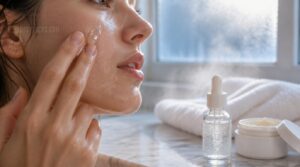
Once your skin is cleansed and slightly damp, reach for serum before cream. Water-based formulas absorb faster, delivering hyaluronic acid or ceramide-support actives directly into skin.
- Apply thin layers
- Let serum set briefly
- Prevents pilling
- Boosts hydration
- Preps skin for sealing
This order maximizes winter comfort, softening flaky texture so moisturizer glides on smoothly afterward.
Thick Cream on Damp Skin
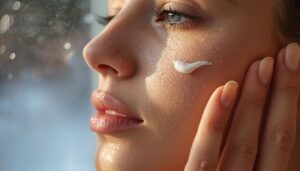
Now for the step that locks everything in: while your skin’s still damp, apply an emollient-rich cream immediately. Water on the surface improves spreadability and softens the outer layer, so cream glides on evenly without tugging.
This timing seals existing moisture rather than letting it evaporate, giving ceramides and hyaluronic acid a real chance to strengthen your barrier through the day.
Nighttime Occlusive Layer
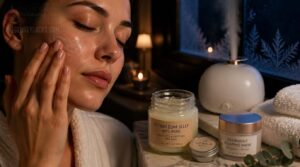
Sealing in overnight matters as much as the cream itself. Slugging—coating your skin with an occlusive like petrolatum—traps moisture underneath while you sleep.
Occlusive layer timing: apply last, after serums and creams have absorbed.
- Petroleum jelly for face
- Dimethicone-based balms for comfort
- Overnight repair masks for barrier support
- Lanolin balm for lips
Use a thin layer; heavy application transfers onto pillows.
Daily Broad-spectrum SPF
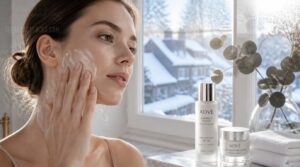
Because snow and ice reflect UV rays, winter SPF isn’t optional. Finish your routine with broad-spectrum SPF 30+, applying two finger-lengths for face and neck, reapplying every two hours outdoors.
Indoor SPF use matters near windows, too.
For sensitive skin, try EltaMD UV Clear SPF 46, AziMD Hydratint BB SPF 44, or Numbuzin No 9 Bio Super Defense Glow Sunscreen.
Top 7 Winter Skincare Products
Knowing the right steps only gets you so far without the right products behind them. Your skin barrier needs specific formulations, ones with proven ingredients like ceramides, urea, and petrolatum, to actually hold up against winter’s demands.
Here are seven products worth keeping in your medicine cabinet this season.
1. Avène Cicalfate+ Restorative Protective Cream
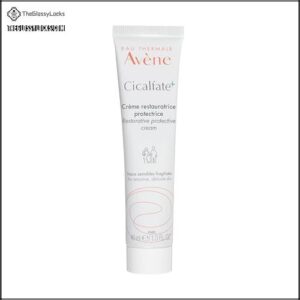
When your barrier feels like it’s cracking under winter’s assault, this occlusive cream steps in like a second skin, sealing in moisture while it quietly repairs the damage underneath. It’s formulated for all types of sensitive skin, gentle enough for infants yet effective for adults dealing with chapped patches.
Apply it twice daily to clean, dry skin on your face or body. Just know it skips SPF entirely, so it’s not your sun defense—only your restorative one.
If irritation lingers, pairing it with a soothing shaving balm for razor burn can ease redness while your skin heals overnight.
| Best For | Anyone with sensitive, chapped, or barrier-compromised skin—including infants, children, and adults—looking for a restorative cream for both face and body. |
|---|---|
| Skin Type | Sensitive skin |
| Fragrance | Not specified |
| Application Area | Face and body |
| Non-Comedogenic | Not specified |
| SPF Included | No |
| Primary Function | Barrier restoration |
| Additional Features |
|
- Helps restore and repair a damaged skin barrier while locking in hydration
- Gentle formula safe for infants, children, and adults alike
- Versatile enough to use on both the face and body
- Contains no SPF, so it can’t double as sun protection
- Not a cleanser or serum, so it won’t replace those steps in a routine
- May feel too heavy or greasy for those with oily skin
2. La Roche Posay Lipikar Urea 10% Lotion
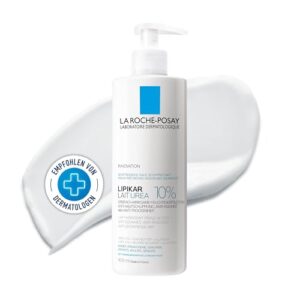
Ten percent urea gives this lotion a genuine keratolytic edge, breaking down the bonds between dead skin cells on elbows, knees, and heels rather than just coating them. Glycerin and shea butter round out the formula, pulling water into the stratum corneum while patching the lipid barrier underneath.
Massage it into damp skin right after bathing to trap that moisture where it belongs. It’s fragrance-free and gentle enough for children, though skip the face unless the label says otherwise.
| Best For | This lotion is best for adults and seniors dealing with rough, bumpy, or flaky skin on areas like elbows, knees, and heels, especially those managing keratosis pilaris or xerosis-related texture concerns. |
|---|---|
| Skin Type | Dry/rough skin |
| Fragrance | Fragrance-free |
| Application Area | Elbows, knees, heels |
| Non-Comedogenic | Non-comedogenic |
| SPF Included | No |
| Primary Function | Exfoliation and hydration |
| Additional Features |
|
- Delivers real keratolytic action thanks to 10% urea, smoothing rough patches with consistent use
- Shea butter and allantoin work together to restore the skin’s moisture barrier and calm irritation
- Fast-absorbing, non-sticky, fragrance-free, and pH-balanced, making it comfortable for daily use on sensitive or dry skin
- Not suitable for broken, irritated, or inflamed skin, and may sting on a compromised barrier
- Requires consistent twice-daily application to see optimal results, which takes commitment
- Contains no SPF, so it can’t double as sun protection on its own
3. CeraVe Healing Ointment Petrolatum Hyaluronic Acid
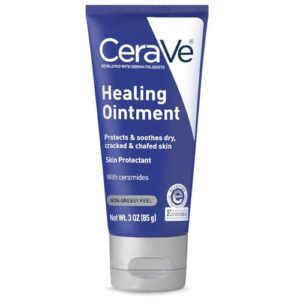
Petrolatum and hyaluronic acid make an unlikely pair, yet together they explain why this ointment sits in so many medicine cabinets. The occlusive petrolatum base blocks water loss on contact, while hyaluronic acid draws moisture into the surface layer beneath it.
Ceramides 1, 3, and 6-II round things out, rebuilding lipid content where the barrier’s compromised. It’s fragrance-free, non-comedogenic, and accepted by the National Eczema Association, making it a solid pick for cracked heels, chafed skin, or eczema-prone patches that need real reinforcement, not just a light coating.
| Best For | People with dry, cracked, or eczema-prone skin who need heavy-duty overnight repair for areas like heels, hands, or chafed patches. |
|---|---|
| Skin Type | Eczema-prone skin |
| Fragrance | Fragrance-free |
| Application Area | Face and body |
| Non-Comedogenic | Non-comedogenic |
| SPF Included | No |
| Primary Function | Barrier repair |
| Additional Features |
|
- Locks in moisture with a petrolatum barrier while hyaluronic acid adds hydration underneath
- Ceramides help rebuild the skin’s natural barrier over time
- Fragrance-free, non-comedogenic, and recognized by the National Eczema Association
- Can feel greasy or heavy on oily or acne-prone skin
- Needs frequent reapplication in wet or high-friction conditions
- Not formulated for deep wounds, infections, or severe burns
4. Vaseline Petroleum Jelly Original Triple Purified
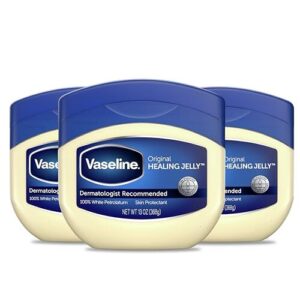
Sometimes the simplest formulation is the one dermatologists reach for most. This triple-purified jelly is 100% pure petrolatum, with no fragrance or additives to irritate compromised skin.
It’s non-comedogenic and hypoallergenic, making it suitable for eczema-prone patches, cracked heels, or minor cuts and burns. Apply a thin layer over damp skin to lock in moisture, though the greasy texture makes it better suited for nighttime use than under makeup.
At roughly 13 ounces per jar, one container lasts most households an entire winter season.
| Best For | People with dry, cracked, or eczema-prone skin who want a fragrance-free, budget-friendly way to protect minor cuts, scrapes, and rough patches. |
|---|---|
| Skin Type | Sensitive skin |
| Fragrance | Fragrance-free |
| Application Area | Body |
| Non-Comedogenic | Non-comedogenic |
| SPF Included | No |
| Primary Function | Moisture lock |
| Additional Features |
|
- Triple-purified 100% petroleum jelly with a clinically proven ability to heal dry, damaged skin
- Fragrance-free, hypoallergenic, and non-comedogenic, with the National Eczema Association Seal for sensitive skin
- Large 13-ounce, 3-count pack offers great value and lasts a long time
- Greasy texture can feel heavy or uncomfortable under makeup or clothing
- Not suitable for deep wounds, infected skin, or severe burns
- Petroleum-based, so it’s not ideal for those seeking plant-based or vegan skincare options
5. Medik8 Press and Glow PHA Toner
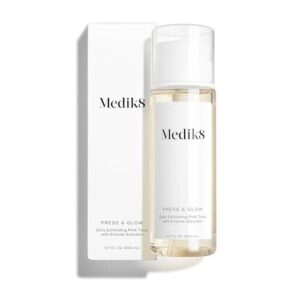
Not all exfoliation needs to sting to work. Press and Glow relies on 5.5% gluconolactone, a polyhydroxy acid with a larger molecular structure than typical AHAs, so it exfoliates the surface without penetrating deep enough to provoke winter irritation.
Prickly pear and aloe vera add humectant support, drawing moisture in as dead cells lift away. The result is smoother texture and better absorption of serums layered afterward.
Use it once or twice daily, and always follow with sunscreen come morning.
| Best For | People with sensitive or easily irritated skin who want gentle, consistent exfoliation without the sting of stronger acids. |
|---|---|
| Skin Type | Sensitive skin |
| Fragrance | Not specified |
| Application Area | Face |
| Non-Comedogenic | Not specified |
| SPF Included | No |
| Primary Function | Exfoliation |
| Additional Features |
|
- Uses a gentle, large-molecule PHA that exfoliates without deep penetration or irritation
- Prickly pear and aloe vera help retain moisture while dead skin cells are lifted away
- Lightweight formula preps skin to better absorb serums and other products used afterward
- Not intense enough for those wanting deeper resurfacing or faster visible results
- Requires consistent daily use over time to see meaningful improvement
- Increases sun sensitivity, so daytime SPF is a must
6. Triple Paste Diaper Rash Cream 2 oz
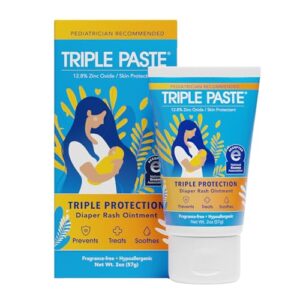
An unexpected pick, maybe, but zinc oxide doesn’t care whose skin it’s protecting. Formulated at 12.8% non-nano zinc oxide, this ointment creates a genuine occlusive barrier against moisture loss, which is exactly what cracked knuckles or windburned cheeks need in January.
Oat extract and beeswax add soothing, fragrance-free comfort, while the fragrance-, dye-, and paraben-free formula suits reactive, sensitized skin. Keep it in your bag for emergency dry patches, not broken or infected skin.
| Best For | Anyone dealing with dry, cracked, or irritated skin who wants a fragrance-free barrier ointment gentle enough for sensitive areas but tough enough for winter weather damage. |
|---|---|
| Skin Type | Sensitive baby skin |
| Fragrance | Fragrance-free |
| Application Area | Diaper area |
| Non-Comedogenic | Not specified |
| SPF Included | No |
| Primary Function | Rash treatment |
| Additional Features |
|
- Contains 12.8% non-nano zinc oxide for effective protection and fast relief
- Free from fragrance, alcohol, talc, dyes, parabens, phthalates, and preservatives
- Soothing oat extract and beeswax formula is gentle enough for daily use, even on newborns
- May leave a white residue on skin or clothing
- Not suitable for broken or infected skin without medical guidance
- Packaging may vary from what’s shown by the manufacturer
7. Cetaphil Face and Body Moisturizing Cream
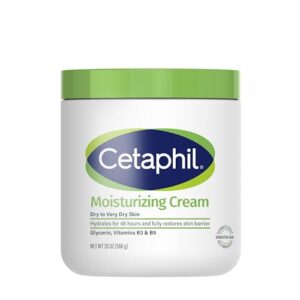
Round out your winter arsenal with something simpler: Cetaphil Face and Body Moisturizing Cream. Petrolatum locks in moisture while glycerin draws water into the outer skin layers, and dimethicone smooths without a greasy feel.
It works equally well on your face and body, easing tightness after cleansing and softening rough patches on elbows and knees. Apply it generously to damp skin post-shower for best absorption. Fragrance-free and gentle, it’s a dependable daily staple when your skin needs consistent, no-fuss barrier support.
| Best For | This moisturizing cream is best for people with dry to very dry skin who want a fragrance-free, gentle option for sensitive areas like the hands, feet, elbows, and knees. |
|---|---|
| Skin Type | Sensitive skin |
| Fragrance | Fragrance-free |
| Application Area | Face and body |
| Non-Comedogenic | Non-comedogenic |
| SPF Included | No |
| Primary Function | Hydration |
| Additional Features |
|
- Delivers 48-hour hydration thanks to sweet almond oil and vitamin E
- Formulated with glycerin, panthenol, and niacinamide to help restore the skin’s moisture barrier
- Fragrance-free, paraben-free, sulfate-free, and non-comedogenic
- Can feel heavy or too rich for oily or acne-prone skin
- Not intended to treat medical skin conditions like eczema or psoriasis without a doctor’s guidance
- Packaging may vary depending on the manufacturer
Moisture Barrier Protection Tips
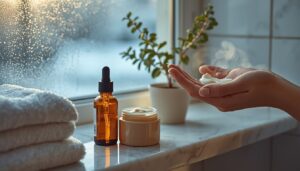
Your skin barrier takes the hardest hit during winter, and protecting it’s what keeps dryness, flaking, and irritation at bay.
Small changes in how you layer and choose products can make a real difference in how your skin holds onto moisture.
Here are five practical tips to strengthen your barrier and keep it resilient all season long.
Choose Ceramides and Lipids
Not all ceramides are created equal, and that’s the detail most winter routines miss. Look for products listing ceramide complexes (NP, AP, EOP) alongside cholesterol and fatty acids—this trio recreates your skin’s natural lipid matrix.
Chain length matters too: long-chain ceramides pack tightly, sealing moisture in. This ceramide-lipid pairing, with cholesterol supporting membrane stability, rebuilds barrier function far better than any single ingredient alone.
Layer Humectants Under Creams
Ceramides rebuild your barrier, but they can’t hydrate on their own—that’s where humectants come in.
Apply hyaluronic acid to slightly damp skin, giving water molecules something to grab before your cream seals them in.
- Dewy, plumped cheeks holding morning moisture
- A serum spreading like silk across damp skin
- Cream gliding smoothly over hydrated texture
- Skin cells swelling with locked-in water
- No tight, papery feeling by midday
This layering technique beats dry indoor heat every time.
Seal Dryness With Petrolatum
Petrolatum earns its reputation as the standard for occlusive moisture sealing, cutting transepidermal water loss by roughly 98%.
| Ingredient | Function | Best Use |
|---|---|---|
| Petrolatum | Occlusive barrier | Hands, lips, cracked skin |
| Jojoba oil | Light occlusive | Face, layering |
| Lanolin | Barrier + emollient | Overnight repair |
Apply it last, over hydrated skin, for true barrier function optimization.
Use Overnight Repair Masks
On nights when your skin feels tight or extra rough, reach for an overnight repair mask instead of your usual cream. Apply it as the final step, after serums, over the entire face or just on dry patches like cheeks.
Look for ceramides, glycerin, and panthenol—they support barrier repair while staying comfortable through hours of wear.
Treat Lips Before Bed
Cracked corners and flaking skin don’t have to greet you every winter morning. Pat lips with a damp cloth first, then seal with Vaseline or a thick balm to lock in moisture overnight.
- Damp base before balm
- Skip menthol, cinnamon, fragrance
- Lip exfoliator once weekly, max
- Reapply consistently, same time nightly
Pair with hand creams for cracked knuckles too.
Cleansing and Exfoliating Adjustments
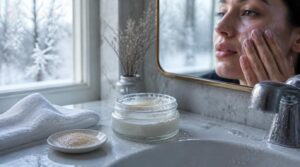
Your cleansing routine matters just as much as what you put on afterward, especially when winter air is already working against your skin barrier. A few small changes to how you wash and exfoliate can make a real difference in keeping irritation at bay. Here’s what I recommend adjusting this season.
Switch to Cream Cleansers
Foaming cleansers can strip your skin’s protective lipids fast in winter. Swap to a cream-based formula instead—these rely on gentle cleansing action rather than heavy lather, preserving barrier function support while lifting away sunscreen and debris.
Look for glycerin or hyaluronic acid in the ingredient list. Cream cleansers suit sensitive skin care needs beautifully, offering moisture retention properties that foaming washes simply can’t match during cold, dry months.
Avoid Hot Water Rinses
That steamy shower feels great, but it’s quietly working against your skin barrier protection. Hot water strips lipids and worsens moisture loss, leaving skin tighter and more irritated.
Switch to a lukewarm water rinse instead:
- Test water on your wrist first
- Keep showers under ten minutes
- Moisturize within three minutes of rinsing
- Pat, don’t rub, skin dry
Skip Squeaky-clean Washing
Ever notice that tight, "just-scrubbed" feeling after washing? That’s not clean skin—that’s a compromised barrier.
That tight, just-scrubbed feeling isn’t clean skin—it’s a compromised barrier
| Sign of Over-Cleansing | Better Approach |
|---|---|
| Squeaky, tight skin | Gentle, fragrance-free cleanser |
| Foaming lather | Cream-based formula |
| Washing 3+ times daily | Limit to twice daily |
| Vigorous scrubbing | Gentle cleansing motions, pat dry |
| Stinging sensation | Protect skin pH balance |
Exfoliate Only Once Weekly
Once your cleanser is gentle, the next question is how often to slough off dead skin. Once weekly is the sweet spot—enough for gentle exfoliation with a mild AHA or BHA, without disrupting your skin barrier.
- Redness that lingers
- Stinging after cleansing
- Flaking that worsens
- Skin feeling raw, not renewed
Follow with ceramides, hyaluronic acid, and squalane to support winter skin recovery.
Reduce Irritating Active Ingredients
Winter isn’t the season for stacking actives. Avoid mixing retinoids with AHAs or BHAs—it strips the barrier fast. Use one exfoliating active per night, at lower strength, and skip benzoyl peroxide combos on sensitive skin.
Buffer with ceramides and niacinamide to calm irritation, and layer humectants underneath for comfort. Fragrance-free formulas matter here—your skin’s already stressed enough by the cold.
Winter Skin Protection Habits

Great skin care goes beyond what you apply to your face. Your daily habits and surroundings play just as big a role in keeping your skin barrier intact through winter. Here are five simple habits worth building into your routine.
Run an Indoor Humidifier
Central heating quietly strips moisture from indoor air, accelerating trans epidermal water loss while you sleep. Running an indoor humidifier restores humidity benefits and helps moisture retention overnight.
Mind humidifier placement tips: keep it a few feet from your bed. Check the water reservoir daily, adjust mist output for comfort, use the humidity sensor for 40-50% readings, and maintain the fan regularly to prevent mold buildup.
Shorten Baths and Showers
Long, hot showers feel wonderful, but they accelerate trans epidermal water loss and leave skin drier than before. Keep showers under ten minutes using lukewarm water, not scalding heat.
Try a timed shower routine: shampoo first, condition second, water off while it sits. Low-flow showerheads and prompt drain plug use round out water-saving habits that protect both your skin barrier and your utility bill.
Wear Scarves and Gloves
Bare skin loses heat fast, which is exactly why wind protection matters as much as any cream. A wool scarf shields your neck, while insulated, grip-friendly gloves prevent chapped, cracked knuckles.
Choose materials wisely: Gore-Tex or leather offer real thermal insulation against wind chill. Wash both regularly, too, since sweat and grime build up fast, undermining hygiene maintenance and your winter routine’s effectiveness.
Hydrate With Water-rich Foods
Roughly a fifth of your daily fluid intake can come straight from food, which makes celery, cucumber, and lettuce genuine allies against winter dryness. Berries and citrus add fluid plus vitamin C, supporting ceramide synthesis alongside your usual hyaluronic acid serum and moisturizers.
Think of produce as edible hydration—no substitute for water, but a smart addition to your winter fruit intake.
Protect Hands After Washing
Give your hands thirty seconds of real attention after every wash. Pat dry gently instead of rubbing, then apply an emollient-rich hand cream with petrolatum while skin’s still damp. This traps moisture before it evaporates.
Keep a barrier cream at your desk or by the sink—consistent reapplication, not one thick coat, is what actually prevents the cracking and redness that plague winter hands.
Frequently Asked Questions (FAQs)
What is the best skin care routine in winter?
Cleanse gently, layer a hydrating serum, then seal with a ceramide-rich moisturizer on damp skin. Add SPF each morning and a petrolatum-based occlusive at night. This sequence helps barrier repair while combating dry, heated indoor air.
What is the 4 2 4 rule in skincare?
It’s a timed cleansing method: four minutes massaging oil cleanser, two minutes water-based cleanse, then a four-minute warm-to-cold rinse.
This structured, K-beauty-inspired ritual thoroughly removes impurities without over-cleansing, prepping skin for serums and moisturizers afterward.
What are the 7 steps of skin care?
The classic seven steps run Cleansing, Toning, Serum Application, eye cream, Moisturizing, occlusive sealing, and Sunscreen.
Dr. Azadeh Shirazi recommends layering humectants like hyaluronic acid before emollients such as ceramides and squalane, locking hydration in against winter’s drying effects.
Do I need vitamin C serum in winter?
Cold winds don’t just chap skin, they accelerate free-radical damage. Yes: vitamin C fights this while brightening dullness, supporting collagen, and pairing well with sunscreen and hyaluronic acid. If sensitive, patch-test first and layer under moisturizer for comfort.
What is the best skincare routine for winter?
Layer smart: gentle cleanse, hydrating serum with hyaluronic acid, ceramide-rich cream on damp skin, and nightly petrolatum sealing. Add daily SPF, weekly gentle exfoliation, a humidifier, and water-rich foods for lasting comfort.
What are the 7 steps of skincare?
Think of it as a seven-layer shield against winter’s assault: cleanser, toner, serum, hydration layer, moisturizer seal, night occlusion, sunscreen. Each step builds on the last, locking moisture in before the next barrier goes on top.
What are the 5 skin care routines?
Five essentials: Morning Cleanse Hydrate, Serum Before Moisturizer on damp skin, Thick Cream Damp Skin application, a Nighttime Occlusive Layer using petrolatum, and Daily Broad-spectrum SPF. Together they support ceramides, hyaluronic acid, and occlusives to keep your barrier intact all winter.
How to layer skincare in winter?
Like building a snow fort, layering needs order: gentle cleanse, humectant serum (hyaluronic acid, niacinamide), moisturizer on damp skin, occlusive seal (petrolatum), then sunscreen last—your barrier’s winter armor against wind, cold, and moisture loss.
What should be the winter care for the skin?
Focus on barrier repair ingredients like ceramides, weekly humectants under cream, nightly hydration masks, and lip protection before bed.
Keep indoor humidity controlled, exfoliate gently once a week, moisturize with occlusives, and wear SPF daily—consistency matters more than any single product.
What skin products to use in winter?
Winter’s not the time to wing it with your skincare drawer. Reach for ceramide-rich creams, hyaluronic acid serums, gentle winter cleansers, and occlusive night balms. Add squalane, niacinamide, and vitamin E to strengthen your barrier against harsh, moisture-stealing air.
Conclusion
The less you do to your skin this winter, the more it thrives: restraint, not overload, protects your barrier better than any extra step ever could.
A consistent skin care routine for winter isn’t about adding products; it’s about honoring sequence, timing, and simplicity.
Ceramides seal moisture in. Humectants draw it there. Petrolatum locks it down for good.
Master that order, and chapped cheeks, cracked knuckles, and flaking skin become winters you simply stop remembering.