This site is supported by our readers. We may earn a commission, at no cost to you, if you purchase through links. This content is for general informational and educational purposes only and is not a substitute for professional medical, dermatological, or nutritional advice.

Every hair on your scalp is operating on its own independent clock right now. Some are growing, some resting, some quietly preparing to shed. That asynchrony is intentional. It’s what keeps you from losing half your hair at once.
Most hair loss isn’t about follicles dying. It’s about the hair growth cycle breaking down. Phases shorten, stall, or shift out of proportion. A hormone, a nutrient gap, a prolonged stretch of stress can tip the balance toward shedding long before you notice anything in the mirror.
Knowing what drives those shifts, and what pulls follicles back into active growth, gives you a framework that changes outcomes.
Table Of Contents
- Key Takeaways
- Hair Growth Cycle Phases and Timing
- How Cycle Changes Cause Hair Loss
- What Pushes Hair Into Telogen
- What Helps Hair Reenter Anagen
- When Hair Loss Needs Evaluation
- Frequently Asked Questions (FAQs)
- What are the big 3 for thinning hair?
- How do I restart my hair growth cycle?
- How to tell if hair is in growth phase?
- How can I stimulate my hair follicles?
- Can hair transplants restore permanently lost follicles?
- Does hair grow faster during pregnancy?
- How does aging affect the hair growth cycle?
- Can certain medications trigger sudden hair loss?
- Does hair texture change after significant shedding episodes?
- Conclusion
Key Takeaways
- Most hair loss isn’t about follicles dying — it’s about the growth cycle breaking down, with phases shortening or stalling due to hormones, stress, or nutrient gaps long before visible thinning appears.
- Your scalp’s natural defense against mass shedding is that each follicle runs on its own independent schedule, with roughly 85–90% actively growing at any moment while only 1–15% rest or transition.
- The biggest cycle disruptors — DHT, thyroid dysfunction, elevated cortisol, and deficiencies in iron, zinc, and vitamins B and D — all share one thing: they cut the growth phase short and trap follicles in rest.
- Recovery starts with fixing the root cause first, since topical treatments and therapies like minoxidil, scalp massage, or low-level light therapy can’t fully work while the underlying trigger is still active.
Hair Growth Cycle Phases and Timing
Your hair doesn’t grow in a straight line — it moves through a precise, repeating cycle that determines how long each strand lives, rests, and eventually sheds. Understanding each phase gives you a clearer picture of why hair loss happens and what your follicles are actually doing at any given moment.
Each phase of this cycle — and how disruption leads to shedding — is explored in depth in this guide to female hair loss causes and triggers.
Here’s a breakdown of the four key phases and how they’re distributed across your scalp.
Anagen Growth and Duration
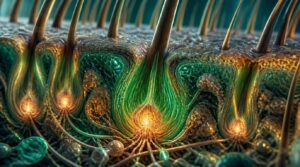
During the anagen phase, your hair follicle operates at peak capacity, driving hair shaft elongation at roughly 1 cm per month. This stage dominates the hair growth cycle, lasting 2 to 8 years. Three defining features:
- Up to 90% of scalp hairs stay in anagen at once
- Genetics sets your personal growth window
- Longer anagen means greater maximum hair length
The dermal papilla signals matrix cells to proliferate, driving the rapid cell division that produces the visible hair shaft.
Catagen Transition and Follicle Shrinkage
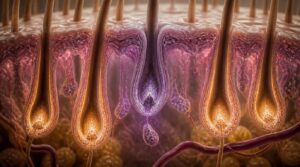
Once that growth window closes, catagen begins, a two-week regression phase where your follicle shrinks to roughly one sixth of its size. The dermal papilla detaches from the regressing bulb, pigment production halts, and cell division stops entirely.
At any moment, only 1% to 3% of your scalp hairs occupy this stage, making catagen the briefest, quietest handoff in the entire cycle.
Telogen Rest and Hair Retention
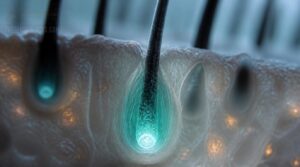
After catagen’s quiet retreat, telogen takes over for roughly four months, accounting for about 15% of your scalp hairs at any given time. The root anchors into a blunt club hair shape while the follicle runs at low energy.
This isn’t true dormancy. Your follicle is still actively preserving the fiber and building molecular readiness for anagen to restart.
Exogen Shedding and New Growth
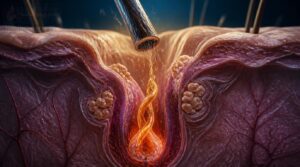
Telogen’s quiet hold eventually releases. Exogen is the phase in which the follicle actively initiates hair shedding through a proteolytic process that severs mooring cells, liberating the shaft. Crucially, anagen can begin before shedding completes.
- Proteolytic enzymes sever mooring cells
- Intercellular bonds break apart
- The club fiber detaches fully
- Hair shedding completes at the surface
- Hair regrowth starts below simultaneously
Normal Hair Cycle Distribution
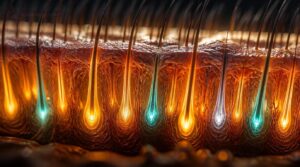
At any given moment, your scalp hosts a distributed population of follicles, each cycling on its own independent schedule. Roughly 85-90% remain in anagen, actively producing the hair shaft, while catagen claims just 1-3% and telogen accounts for the remaining 10-15%. This asynchronous pattern across the hair growth cycle is precisely what prevents synchronized mass shedding and ensures reliable coverage.
Your scalp’s lifelong defense against mass shedding is simply that no two follicles quit at the same time
| Phase | Follicle Distribution |
|---|---|
| Anagen | 85-90% |
| Catagen | 1-3% |
| Telogen | 10-15% |
How Cycle Changes Cause Hair Loss
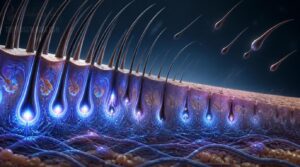
When your hair cycle gets disrupted, the effects don’t show up randomly — they follow distinct, recognizable patterns tied to which phase is thrown off balance. Not all hair loss works the same way, and knowing the difference matters more than most people realize. Here are the main ways cycle changes actually play out.
Tracking these patterns over time is where a personalized hair growth calculator proves genuinely useful, helping you spot cycle disruptions before they become harder to reverse.
Androgenetic Alopecia and Miniaturization
In androgenetic alopecia, dihydrotestosterone binds androgen receptors within the dermal papilla, progressively compressing follicles across successive cycles.
This hair follicle miniaturization steadily tilts your anagen to telogen ratio in the wrong direction, with each cycle producing shorter and finer strands than the last.
When anagen becomes brief enough, hairs won’t breach the skin surface, leaving visible empty follicular pores behind.
Telogen Effluvium and Diffuse Shedding
Unlike gradual follicle miniaturization, telogen effluvium disrupts your anagen to telogen ratio acutely. A physiological shock shifts up to 70% of anagen hairs into premature rest, and diffuse hair shedding surfaces roughly 2 to 3 months after the trigger.
Five recognized triggers that drive the hair cycle into telogen:
- Metabolic stress
- Hormonal shifts
- Drug-induced effects
- Physical trauma
- Emotional stress
Anagen Effluvium and Chemotherapy
Chemotherapy-induced alopecia operates through a completely different mechanism than telogen effluvium. Rather than shifting follicles into rest, cytotoxic agents directly injure anagen-phase hair matrix cells, halting their high mitotic activity mid-cycle and fracturing the hair shaft itself.
Shedding begins within 14 days and becomes most visible 1 to 2 months into treatment. The damage is non-scarring, so regrowth usually resumes once chemotherapy stops.
Inflammation and Prolonged Resting
Scalp inflammation can hold your follicles hostage in telogen far longer than the normal three to six months. Perifollicular inflammation compresses the dermal papilla and disrupts signaling to hair follicle stem cells, delaying anagen re-entry.
Mast cell activation only intensifies this environment, releasing cytokines that sustain the inflammatory cascade. When your scalp can’t resolve that signal, the cycle simply stalls.
Seasonal Changes in Shedding
Your hair follows the calendar more closely than you might expect. Photoperiod-driven shifts in melatonin and prolactin, triggered by shortening daylight hours, push follicles into telogen during late summer.
The delayed result is a concentrated hair shedding peak in early autumn, as those follicles reach exogen before anagen can restart.
This diffuse pattern of seasonal changes in shedding resolves spontaneously within weeks to months.
What Pushes Hair Into Telogen
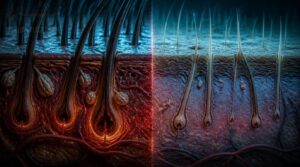
Your hair doesn’t randomly decide to quit growing — something triggers that shift into the resting phase. Several internal and external factors can cut the anagen phase short and push follicles into telogen earlier than they should. Here’s what’s most likely working against you.
DHT and Sex Hormones
When testosterone converts into dihydrotestosterone via 5-alpha reductase inside your follicle, it binds the androgen receptor with far greater potency, pushing genetically susceptible follicles prematurely into telogen.
Your androgen receptor sensitivity determines how aggressively DHT miniaturizes each follicle. Shifts in your estrogen-to-testosterone ratio or declining sex hormone binding globulin increase this effect, increasing free androgen availability at the follicular level.
Thyroid Dysfunction
Sex hormones aren’t the only hormonal force that can push follicles toward premature exit. Thyroid hormone regulates the metabolic activity of your follicular keratinocytes, and when levels fall below range, follicles exit anagen early and stall in prolonged telogen, producing the diffuse hair loss pattern characteristic of hypothyroidism.
Even subclinical hypothyroidism can disrupt your hair cycle before other symptoms surface.
Stress, Cortisol, and Poor Sleep
When your body encounters chronic stress, it activates the HPA axis, driving cortisol elevations that push follicles into premature telogen effluvium. Poor sleep quality amplifies this, since sleep loss shifts cortisol timing and raises levels the following evening.
- Elevated cortisol accelerates telogen entry
- Poor sleep quality alters diurnal cortisol patterns
- Sleep loss elevates next-evening cortisol
- Stress-insomnia cycles prolong hair shedding
Protein, Iron, and Zinc Deficiency
Nutritional gaps hit follicles where your protein intake matters most. Deficiency reduces amino acid availability for keratin synthesis during anagen, slowing new shaft formation.
Low ferritin signals iron deficiency before clinical anemia sets in, cutting oxygen delivery to dividing follicle cells. Phytate-rich diets impair zinc absorption efficiency, and research found inadequate intake raised biochemical zinc deficiency odds by over fivefold.
Vitamin D and B Vitamins
A vitamin D deficiency quietly stalls follicle cycling, pushing hairs prematurely into telogen. Your B complex vitamins fuel the metabolic demands of rapidly dividing keratinocytes, and deficiencies in both accelerate hair loss. Watch for these nutritional gaps:
- Serum 25-OH-D below 50 nmol/L
- B12 or B6 shortfall triggering anemia
- Inadequate intake reducing keratin synthesis
- Impaired energy metabolism in follicle cells
What Helps Hair Reenter Anagen
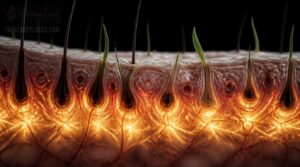
Getting hair back into the growth phase isn’t just about waiting it out — there are real, evidence-backed ways to encourage that shift. The right approach depends on what’s keeping your follicles stuck in telogen in the first place. Here’s what actually helps move the needle.
Treating Underlying Hair Loss Triggers
When the trigger is still active, no topical treatment will fully compensate. Correcting thyroid dysfunction, resolving iron or ferritin deficiency, and addressing vitamin D insufficiency each represent evidence-based first steps that shift follicles back toward anagen.
If a medication is driving your shedding, stopping it removes the physiological insult. Your scalp simply can’t recover until the root cause is gone.
Minoxidil and Follicle Blood Flow
Minoxidil targets follicle blood flow by opening ATP-sensitive potassium channels in vascular smooth muscle. Your scalp converts it to minoxidil sulfate via sulfotransferase enzymes, the active form that elevates vascular endothelial growth factor and drives vascularization around follicles, countering hair loss at its vascular root.
Early telogen shedding in the first month is expected, reflecting the hair growth cycle beginning to reset.
Scalp Massage and Circulation
Mechanical pressure from scalp massage translates into real cellular signaling. Studies show it increases hair thickness by inducing stretching forces on dermal papilla cells, upregulating vascular endothelial growth factor and platelet derived growth factor, both critical to follicle cycling.
Four to five minutes daily, your fingertip pads moving in slow circles, can meaningfully improve circulation without irritating sensitive scalp tissue.
Low-Level Light Therapy
Red and near-infrared light drives photobiomodulation in follicular tissue, upregulating cellular metabolism to counter hair loss and push the hair growth cycle toward active hair regrowth.
Low-level light therapy protocol:
- Wavelengths: 632 to 904 nm
- Power density: 5 to 21 mW/cm²
- Dose: 0.1 to 3 J/cm²
- Frequency: 3 to 5 sessions weekly
- Devices: LED caps, panels, or combs
PRP and Growth Factors
Platelet rich plasma concentrates your blood’s own signaling molecules and delivers them directly to the scalp. Pairing PRP sessions with a dermaroller for scalp microneedling can help those concentrated growth factors penetrate deeper into follicle-rich tissue.
Released growth factors such as PDGF, VEGF, and TGF-beta target dormant hair follicles, supporting re-entry into anagen.
Think of it as using your body’s own biochemical vocabulary to push the hair growth cycle toward active hair regrowth.
When Hair Loss Needs Evaluation

Knowing when to act is just as important as knowing what’s happening. Hair loss that goes unaddressed too long can make recovery harder, so there are some clear signals worth paying attention to. Here’s what to watch for and when it’s time to get answers from a professional.
Signs of Excessive Shedding
Most days, losing 50 to 100 hairs is simply the exogen phase doing its job.
When that number climbs and your brush, drain, and ponytail all tell the same story, hair shedding has crossed into clinical territory. A widening part or diffuse thinning without discrete patches often signals telogen effluvium, where a disrupted anagen to telogen ratio accelerates hair loss.
Recognizing Active Hair Growth
After excessive shedding slows, new fine hairs emerging along the hairline and crown signal that hair follicles are cycling back into anagen. These shorter, lighter strands reflect the hair growth cycle restarting from the follicle base.
Tracking hair density across the same scalp zones over 8 to 12 weeks gives you a practical, measurable window into active hair regrowth.
Ferritin, Vitamin D, and Zinc
Three lab values shape your hair growth cycle more than most people realize: ferritin, vitamin D, and zinc.
- Ferritin below 10 ng/mL links to diffuse hair loss
- Patients with hair loss average 14.72 ng/mL vs. 25.30 ng/mL
- 25(OH)D levels are much lower in hair-loss patients
- Zinc and iron deficiency commonly co-occur
- Ferritin may reflect active inflammation, not just iron stores
When to See a Dermatologist
When those lab values stall your hair growth cycle in telogen phase, pushing the anagen phase further out of reach, you don’t want to wait.
Rapid shedding, scalp changes, or thinning that persists beyond a few months are clear signals when to see a dermatologist.
Hair loss paired with skin, nail, or mole changes rarely resolves without professional evaluation.
Frequently Asked Questions (FAQs)
What are the big 3 for thinning hair?
Like the combination regimens that transformed HIV management, the big three for hair loss are minoxidil, finasteride, and ketoconazole shampoo, each targeting a distinct androgenetic alopecia pathway disrupting your hair cycle’s anagen and accelerating telogen.
How do I restart my hair growth cycle?
Restarting your hair cycle starts with understanding what disrupted it in the first place. Correcting the triggers pushing follicles prematurely into telogen creates favorable conditions for anagen re-entry, slowing hair shedding and restoring hair regrowth.
How to tell if hair is in growth phase?
Your anagen phase hairs carry a pigmented, sheathed root bulb when pulled; telogen phase hairs usually don’t. When the anagen to telogen ratio shifts, catagen phase activity rises and hair shedding becomes more pronounced.
How can I stimulate my hair follicles?
Think of the dermal papilla as an ancient telegraph station. To stimulate your follicles, minoxidil, low-level light therapy, regular scalp massage, and platelet-rich plasma each activate the WNT signaling pathway and drive hair follicle cycling.
Can hair transplants restore permanently lost follicles?
No, hair transplants don’t restore lost follicles, they relocate donor follicles from the occipital scalp into thinning zones. Hair density can still decline as surrounding native hair loss progresses.
Does hair grow faster during pregnancy?
Pregnancy shifts the estrogen to testosterone ratio favorably, holding more follicles in anagen while keeping them out of telogen. That’s why your hair growth feels accelerated and hair regrowth appears noticeably denser during this period.
How does aging affect the hair growth cycle?
Like a clock running slower with each decade, aging shortens anagen and extends telogen rest, pulling your hair cycle away from active growth. Hair loss builds steadily as follicle stem cells lose regenerative capacity.
Can certain medications trigger sudden hair loss?
Medication-induced hair loss is well-documented across multiple drug classes. Drug-induced telogen effluvium usually begins 6 to 12 weeks after exposure, while anagen effluvium from chemotherapy-induced alopecia disrupts actively growing follicles far more abruptly and rapidly.
Does hair texture change after significant shedding episodes?
Yes, texture can shift after significant shedding. Regrown strands haven’t accumulated oils, styling wear, or sun exposure yet, so they feel softer or behave differently than the mature hair they replace.
Conclusion
Think of your follicles as a relay team, where each runner must hand off cleanly for the race to keep going. When the hair growth cycle breaks down, that handoff fails and progress stalls entirely. Hormones, nutrient deficits, and chronic stress are the most common sources of interference.
But stalled cycles can restart with the right intervention. Addressing the root cause, not the shedding itself, is where lasting recovery begins. That distinction changes everything.