This site is supported by our readers. We may earn a commission, at no cost to you, if you purchase through links. This content is for general informational and educational purposes only and is not a substitute for professional medical, dermatological, or nutritional advice.

Skin that looks glossy after a scrub can feel like a win, until water stings and your moisturizer suddenly burns. That slick, tight finish often isn’t a glow. It can be your protective barrier asking for a break.
Your skin already sheds its outermost cells on a steady schedule. Frequent acid toners, gritty scrubs, retinoids, or a crowded routine can push that process too far, leaving redness, flakes, rough bumps, and breakouts in its wake.
Knowing the signs you are over exfoliating your face helps you stop the cycle early. Gentle care can restore comfortable, resilient skin again over time.
Table Of Contents
- Key Takeaways
- Why Over-Exfoliation Damages Your Skin
- Common Signs You’re Over-Exfoliating Your Face
- Subtle Signs Mistaken for Healthy Glow
- How to Treat Over-Exfoliated Skin
- Top 3 Products for Gentle Recovery
- How Long Over-Exfoliated Skin Takes Healing
- Resume Exfoliation Without Repeating Damage
- Frequently Asked Questions (FAQs)
- How do I know if I’m over exfoliating my face?
- What happens if I exfoliate my face too much?
- How long does it take to recover from over exfoliating?
- How do you tell if your exfoliator is working?
- Can over-exfoliation cause dark spots or hyperpigmentation?
- Which skin types are most prone to over-exfoliation?
- Can over-exfoliation trigger eczema or rosacea flare-ups?
- Is hydrocortisone safe for over-exfoliated facial skin?
- Should I wear makeup while my skin heals?
- Conclusion
Key Takeaways
- Tight, shiny, red, stinging, flaky, rough, or suddenly breakout-prone skin can signal over-exfoliation and a weakened moisture barrier.
- Stop acids, scrubs, retinoids, and other irritating actives as soon as symptoms appear, since adding more treatment usually prolongs irritation.
- Reset with lukewarm water, a gentle fragrance-free cleanser, a bland ceramide-rich moisturizer, and daily broad-spectrum SPF 30 or higher.
- Resume exfoliation only after your skin has been fully comfortable for weeks, starting with one gentle product no more than once every 7 to 10 days.
Why Over-Exfoliation Damages Your Skin
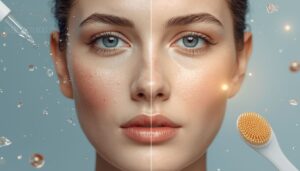
Exfoliation can brighten dull skin, but more isn’t always better. When you remove too much too quickly, your protective skin barrier can’t keep up. Here are the main reasons over-exfoliation causes damage.
Choosing a gentle men’s face scrub for sensitive skin can help remove buildup without overwhelming your barrier.
Natural Skin Desquamation Cycle
Your face already has a built-in renewal system. Through desquamation, mature corneocytes loosen and shed one at a time as newer cells rise beneath them.
- Maintains even outer-layer thickness
- Helps a resilient skin barrier
- Usually happens invisibly
- Varies by body area
This natural desquamation process keeps skin cell turnover orderly. Dead skin cells shed continuously to help maintain the skin barrier. Exfoliation should respect that rhythm, preserving healthy renewal every day.
Chemical Exfoliants and Overuse
Your natural shedding rhythm can falter when chemical exfoliants become an everyday habit. Glycolic, lactic, and salicylic acids can help, but high strength, long leave-on contact, or excessive exfoliation frequency may cause overexfoliation, weakening the skin barrier and causing skin irritation. Recovery needs time now.
| Signal | Meaning | Response |
|---|---|---|
| Burning | Alarm | Pause |
| Redness | Stress | Comfort |
| Shine | Dehydration | Rest |
| Breakouts | Inflammation | Simplify |
Physical Scrubs and Friction
Acids can overwork skin quietly, but scrubs add a more direct problem: mechanical friction. Grainy scrubs and other physical exfoliants press and slide across the surface, creating shear forces that can trigger skin irritation.
Overexfoliating often happens when you scrub harder, longer, or on damp, sensitive skin. Rough particles can cause barrier function disruption, especially with vigorous circular rubbing. Think polish, not sanding: use minimal pressure, and stop if your skin stings.
Product Layering Mistakes
After a scrub has stressed your skin, careless product layering can keep the damage going. Pairing retinol with AHAs or BHAs, or stacking acids, benzoyl peroxide, and strong vitamin C, can overwhelm your skin barrier.
Use one targeted active per routine. Apply products from thinnest to thickest, and keep a gentle skincare routine when stinging or peeling appears. That pause prevents further barrier function disruption and overexfoliating.
Environmental Stress and Sensitivity
When exfoliation has thinned your defenses, environmental stress hits harder. UV, pollution, cold wind, and dry indoor air can trigger burning, redness, and lingering skin sensitivity because your skin barrier can’t hold moisture or block irritants well.
Picture exposed skin meeting:
- hot sunlight
- gritty city air
- sharp winter wind
Keep healing ingredients simple, wear broad-spectrum sunscreen, and avoid prolonged heat or cold until your barrier settles.
Common Signs You’re Over-Exfoliating Your Face
Over-exfoliation doesn’t always announce itself right away. Your skin may first seem unusually reactive, uncomfortable, or simply unlike its usual self. Watch for these common signs that your barrier needs a break.
Redness, Burning, and Inflammation

Redness with burning is a common warning that your skin barrier has been pushed too far. Over-exfoliation triggers inflammation, increasing blood flow and making skin feel hot, stingy, or tender, even when you apply plain water.
Stop exfoliating products, retinoids, and fragranced formulas. For skin irritation treatment, use a bland moisturizer with ceramides, glycerin, or petrolatum to support barrier repair.
Dryness, Flaking, and Peeling
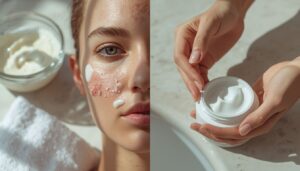
When your face feels tight and looks dusty after cleansing, you may have removed more than dead cells. Barrier disruption lets water escape, causing dryness, flaking, and peeling alongside irritation and redness.
Switching to a hydrating cleanser for mature skin can help protect moisture while supporting a smoother, calmer complexion.
Skip hot water and rubbing. Cleanse gently, pat dry, then apply a fragrance-free moisturizer while skin is damp. Think of it as resealing a leaky roof after storms.
Small Rough Bumps
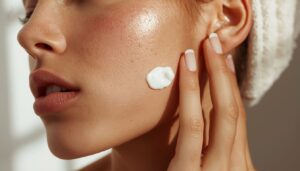
Small rough bumps can feel like sandpaper, often in clusters across irritated areas. They may look oily but feel tight underneath, a common sign of barrier disruption rather than acne.
Pause exfoliants and avoid picking. A gentle cleanser and bland moisturizer support skin barrier repair. As hydration and normal cell shedding return, skin texture normalization usually follows.
Patchy, Rashlike Skin Texture

Patchy, rashlike texture is a classic warning sign that your routine has pushed past “glow” into irritation. You may see rough, red, uneven areas that sting or scale, often around the cheeks, nose, or mouth.
Stop active products and focus on skin barrier repair. With gentle cleansing and moisturized skin appearance restored, skin texture normalization can follow.
Subtle Signs Mistaken for Healthy Glow
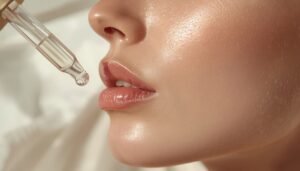
Over-exfoliated skin doesn’t always look dry or obviously irritated. In fact, early barrier damage can mimic the smooth, bright look many people associate with healthy skin. Watch for these quieter changes before they become harder to ignore.
Tight, Waxlike, Shiny Skin
A waxy sheen is not always a healthy glow. When over-exfoliation disrupts surface, oil reflects light while irritation creates a tight texture. This can coexist with skin dehydration. You may notice:
- Skin looks polished, not supple.
- Surface feels stretched after cleansing.
- Red and shiny skin appears together.
- Shine gathers unevenly around follicles.
- Comfort returns with barrier function restoration.
Dehydration Despite Excess Shine
That polished, waxy texture can hide dehydration. Over-exfoliation raises transepidermal water loss: water escapes while skin produces oil, so shine is not moisture retention. Oil is a raincoat, not a drink for thirsty skin cells.
Over-exfoliation can leave skin shiny yet dehydrated, because oil is a raincoat, not a drink
| What you notice | What it can mean |
|---|---|
| Greasy surface | Compensatory sebum |
| Tightness | Impaired barrier function |
| Makeup clings | Low water content |
| Cleansing stings | Barrier stress |
More Prominent Fine Lines
When water escapes through a weakened barrier, dry, fine lines can suddenly look deeper, especially around the eyes and mouth. This isn’t necessarily new aging. Dehydrated skin loses its cushion, much like a grape becoming a raisin.
Over-exfoliation also disrupts skin cell turnover and barrier function. Pause exfoliants, then use a bland moisturizer with ceramides to help restore a smoother, better-hydrated surface.
Increased Sensitivity to Touch
As dehydration makes fine lines stand out, a weakened barrier can also make ordinary contact feel intense. Sensitive skin may sting when you wash, towel-dry, or apply moisturizer.
Watch for:
- Stinging from a gentle cleanser
- Redness after light rubbing
- Irritation from pillowcases
- Discomfort with lukewarm water
These are signals to stop exfoliating and minimize friction until touch feels normal again.
Unexpected Worsening Breakouts
When touch starts to sting, new breakouts can follow. Barrier damage from overexfoliation raises inflammation and disrupts skin pH balance, allowing pores to clog more easily.
Your skin may feel dry yet suddenly oily, as oil glands try to compensate. Don’t chase these pimples with stronger acne treatments. Pause exfoliants, use a bland moisturizer, and let your barrier settle.
How to Treat Over-Exfoliated Skin

The first step is to stop adding stress to already irritated skin. Focus on calming inflammation and giving your moisture barrier time to recover. These practical steps can help you reset your routine safely.
Pause Acids, Scrubs, and Retinoids
Stop all active products when burning, redness, flaking, or tight, shiny skin appears. Your barrier needs fewer inputs, not a stronger routine.
- Pause acid exfoliation, including glycolic, lactic, salicylic, and peel pads.
- Stop physical scrubs, cleansing brushes, and exfoliating massage.
- Hold retinol products until symptoms settle.
Use a gentle cleanser and plain moisturizer only. This reset shortens the skin recovery timeline and prevents irritation from compounding.
Use Cool Soothing Compresses
A cool compress can calm skin redness and inflammation while your barrier resets. Soak a clean washcloth in cold water, wring it out, and lay it gently on the area.
| Do | Timing |
|---|---|
| Apply cloth | 10–15 minutes |
| Re-soak | Every few minutes |
| Remove | By 20 minutes |
| Repeat | After 1–2 hours |
Pat dry. This offers soothing relief without prolonging skin recovery time.
Simplify Your Skincare Routine
Strip your routine back to basics while your skin is irritated. Use a gentle cleanser with lukewarm water, then apply one plain moisturizer. In the morning, finish with sunscreen.
Put exfoliation, masks, toners, serums, and spot treatments aside for now. Fewer layers mean fewer chances to trigger burning or confusion about what your skin can tolerate. Let it settle.
Rebuild With Barrier-supporting Ingredients
Think of your barrier as mortar between bricks: it needs replenishing, not more polishing. Choose a gentle cleanser, then apply a moisturizer with ceramides, glycerin, and fatty acids to replace skin lipids.
Hyaluronic acid can draw water into dehydrated skin, while niacinamide may support recovery. Keep formulas plain, fragrance-free, and use these barrier-supporting ingredients consistently until stinging and roughness resolve.
Apply Broad-spectrum Sunscreen Daily
Daily broad-spectrum sunscreen protects fragile, recovering skin from UVA aging and UVB burning. Choose a mineral sunscreen, ideally fragrance-free, with at least 30 SPF. Apply generously 15 to 20 minutes before daylight exposure.
- Reapply every two hours outdoors
- Reapply after sweating or swimming
- Pair with hats and shade
This skincare routine adjustment prevents overexfoliation symptoms from lingering or worsening.
Top 3 Products for Gentle Recovery
When your skin feels raw or reactive, a short, gentle routine is usually best. Look for formulas that cleanse without stripping and moisturize without adding extra irritation. These three options are reliable places to start.
1. Cetaphil Gentle Cleanser Face Wash
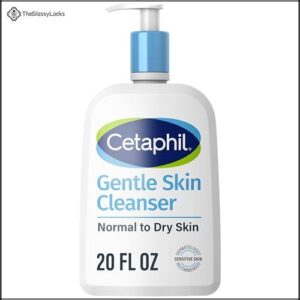
Cetaphil Gentle Cleanser Face Wash is a smart reset when over-exfoliated skin stings at the sink. This non-foaming, fragrance-free cleanser lifts dirt, makeup, and daily oil without the squeaky-clean feeling that often signals unnecessary stripping.
Glycerin, panthenol (vitamin B5), and niacinamide support hydration and the moisture barrier while you cleanse. Use a small amount with lukewarm water, massage lightly, then rinse. If your skin is very reactive, wipe it away gently instead. It is hypoallergenic, non-comedogenic, sulfate-free, and suitable for dry-to-normal sensitive skin.
| Best For | Dry-to-normal, sensitive skin that needs a gentle, non-foaming cleanser to remove everyday dirt and makeup without disrupting the moisture barrier. |
|---|---|
| Sensitive Skin | Suitable |
| Fragrance | Fragrance-free |
| Parabens | Paraben-free |
| Face Use | Suitable |
| Daily Use | Regular use |
| Moisture Support | Hydrating cleanse |
| Additional Features |
|
- Provides hydrating glycerin, panthenol, and niacinamide in a fragrance-free formula.
- Gentle enough for reactive skin, post-procedure use, and skin affected by acne medications.
- Clinically proven to deliver up to 48 hours of hydration when wiped off rather than rinsed.
- May require a second cleanse or makeup remover for waterproof makeup and heavy zinc-based sunscreen.
- Can leave a slight greasy residue for some users.
- Its non-foaming texture may not appeal to people who prefer a lathering cleanser.
2. Avène Gentle Cleanser Lotion Sensitive Skin
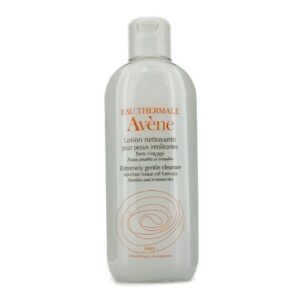
For skin that feels raw or reactive, Avène Gentle Cleanser Lotion offers a softer approach. This non-foaming cleanser uses Avène Thermal Spring Water and a creamy lotion base to lift oil, makeup, and debris without the tight, stripped feeling.
Apply it with fingertips or a cotton pad, then tissue it off or rinse with lukewarm water. Its fragrance-free, soap-free formula suits sensitive skin, including redness-prone complexions. Heavy or waterproof makeup may need a second pass, but during barrier recovery, gentle cleansing beats a squeaky-clean finish every time.
| Best For | Sensitive, reactive, or redness-prone skin needing a gentle daily cleanser that won’t leave it feeling dry or tight. |
|---|---|
| Sensitive Skin | Suitable |
| Fragrance | Fragrance-free |
| Parabens | Paraben-free |
| Face Use | Suitable |
| Daily Use | AM/PM use |
| Moisture Support | Hydrating cleanse |
| Additional Features |
|
- Fragrance-free, soap-free, non-foaming formula helps cleanse without stripping moisture
- Can be tissued off or rinsed, making it flexible for gentle AM/PM cleansing
- Helps remove light makeup and impurities while leaving skin soft and comfortable
- Heavy or waterproof makeup may require a second application
- Some users notice a medicinal or chemical-like scent despite the fragrance-free formula
- The lotion texture and lack of lather may not appeal to users who prefer foaming cleansers
3. Vanicream Moisturizing Cream 16 Oz Pump
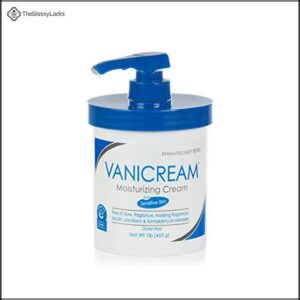
Once cleansing feels comfortable, seal in that moisture with Vanicream Moisturizing Cream. Its fragrance-free, non-comedogenic formula skips dyes, lanolin, parabens, botanical extracts, and essential oils, all sensible omissions when your barrier is irritated.
The thick white cream uses an occlusive base to limit water loss, so a small amount goes far on the face. Apply it after cleansing while skin is slightly damp. The 16-ounce pump keeps dosing clean and controlled, though oily skin may prefer a lighter daytime layer instead.
| Best For | Sensitive, dry, eczema-prone skin needing a simple, fragrance-free daily moisturizer for the face and body. |
|---|---|
| Sensitive Skin | Suitable |
| Fragrance | Fragrance-free |
| Parabens | Paraben-free |
| Face Use | Suitable |
| Daily Use | Daily use |
| Moisture Support | Barrier moisturizing |
| Additional Features |
|
- Free of fragrance, dyes, lanolin, parabens, botanical extracts, and essential oils.
- Non-comedogenic, dermatologist-tested, and accepted by the National Eczema Association.
- Generous 16-ounce pump bottle provides hygienic, controlled dispensing for daily use.
- Thick texture can take extra time to fully absorb.
- May feel too rich for oily skin or hot, humid weather.
- Pump can clog if cream dries inside the nozzle.
How Long Over-Exfoliated Skin Takes Healing

Healing time depends on how irritated your skin is and how consistently you protect its barrier. A mild flare may settle fairly quickly, while more significant damage needs a slower, gentler approach. Here’s what to expect as your skin returns to normal, and when it’s worth getting medical advice.
Mild Versus Severe Damage
When damage is mild, you may notice dryness, slight flaking, stinging, or temporary redness, but basic moisturizer usually remains comfortable. These overexfoliation symptoms often settle within days once irritants stop.
Severe barrier damage feels different: persistent burning, peeling, rashlike patches, and skin that reacts even to gentle products. It may look shiny or waxy, feel fragile, and remain irritated despite moisturizing.
Returning to Baseline Texture
As irritation settles, your goal is a return to baseline texture, not a glossy, perfectly smooth finish. Healthy skin feels soft, flexible, and comfortable, with normal pores and mild natural variation.
During skin healing, use a moisturizer consistently and wash with a gentle pHbalancing cleanser. Overexfoliation symptoms are resolving when makeup sits evenly, products no longer sting, and your face stays comfortable between applications.
Choose a pH-balancing gentle facial cleanser that rinses clean without leaving skin tight or stripped.
Typical Skin Recovery Timeline
A mild setback often improves within 3 to 7 days once you stop acids, scrubs, and retinoids, and use a bland moisturizer consistently. Stinging usually eases first, often within 48 to 72 hours.
Moderate recovery from overexfoliation may take 2 to 4 weeks. More severe, long-standing barrier repair can require 4 to 8 weeks. Exfoliation moderation matters, because healing follows biology, not a deadline.
Signs Your Barrier Has Healed
One reliable sign of barrier repair is that washing and applying moisturizer no longer sting. Your skin stays comfortable for hours each day.
Redness, heat, flaking, and tenderness fade, while wind or towel contact feels ordinary again. A ceramide-rich routine holds hydration better, with less transepidermal water loss and less hydration loss. That calm baseline means your skin is ready.
When to See a Dermatologist
If redness, irritation, peeling, or stinging lasts beyond two weeks despite a gentle routine, schedule a dermatologist visit. Your barrier may need more than a reset.
Get checked sooner for a spreading rashlike texture, painful cracks, swelling, crusting, or a new spot that changes. Dermatologist recommendations are especially important when acne flares, hair loss, or nail changes appear alongside facial symptoms.
Resume Exfoliation Without Repeating Damage

Once your skin feels calm and back to its usual texture, you can consider exfoliating again. The key is to treat it as a gradual return, not a race to make up for lost time. Use these steps to restart without putting your barrier under strain.
Wait Until Symptoms Disappear
Wait for complete comfort, not just clearer-looking skin. After exfoliant cessation, over exfoliated skin needs time to recover from overexfoliation. Don’t restart while you have stinging, flaking, flushing, or dry sensitive and tight skin.
Count from the last symptomatic day. Mild cases need 2 to 4 symptom-free weeks; more significant irritation may need 4 to 6 weeks or longer.
Restart Slowly With One Exfoliant
Restart slowly with one exfoliant, not a full lineup of acids, scrubs, and treatment pads. After exfoliant cessation, your overexfoliated skin needs a controlled test, not another experiment.
Choose either a gentle AHA, BHA, or enzyme product. Apply it once weekly at night to clean, dry skin, then use moisturizer. Keep cleanser, moisturizer, and sunscreen unchanged so you can clearly judge your skin’s response.
Alternate AHAs and BHAs
Think of acids as tools, not a team sport. To alternate AHAs and BHAs, use alpha hydroxy acids for surface texture and beta hydroxy acids for congested pores, never on same night initially.
- Use AHA once weekly.
- Use BHA on a separate weeknight.
- Stop if inflamed skin stings.
- Check labels: glycolic, lactic, or salicylic acid.
This exfoliation protects your barrier.
Schedule Regular Recovery Days
Build in recovery days between exfoliation sessions. Your skin needs quiet time for skin cell regeneration, ceramide synthesis, and repair after acids or scrubs.
If you have over exfoliated skin, protect these days like an appointment. Use gentle cleanser, moisturizer, sunscreen, and no actives. This limits the inflammatory response and helps with topical inflammation relief, rather than repeatedly testing your barrier.
Adjust Exfoliation Frequency Carefully
After recovery days, let your skin set the pace. Start with one exfoliation every 7 to 10 days, then increase only if there is no stinging, redness, or flaking.
Dry or sensitive skin may stay weekly; oily skin may tolerate two sessions. This skincare routine adjustment protects over exfoliated skin, helps skin cell regeneration, and prevents an unnecessary inflammatory response.
Frequently Asked Questions (FAQs)
How do I know if I’m over exfoliating my face?
If your routine needs a chemistry degree, it’s too much. Over exfoliated skin often feels tight, with redness, irritation, peeling, or stinging during cleansing. Stop acids and scrubs, then moisturize until your skin feels calm again.
What happens if I exfoliate my face too much?
Too much exfoliation strips protective surface cells and disrupts your moisture barrier. Over exfoliated skin may develop redness, irritation, peeling, and stinging, while normally gentle products, weather, and sunlight feel harsher until your barrier recovers.
How long does it take to recover from over exfoliating?
Over exfoliated skin may calm within days, but barrier repair often takes one to four weeks. As the stratum corneum restores, tranepidermal water loss decreases and skin renewal cycle normalizes. Severe irritation can require months.
How do you tell if your exfoliator is working?
Skin cell turnover takes roughly 28 days on average. Your exfoliator is working when skin feels noticeably smoother, looks brighter and less dull, and makeup sits more evenly, all without burning, tightness, or new breakouts.
Can over-exfoliation cause dark spots or hyperpigmentation?
Yes, over-exfoliation can cause dark spots. Damaging the stratum corneum disrupts epidermal surface health, triggering inflammation. That response can activate melanin overproduction, leading to postinflammatory hyperpigmentation on over exfoliated skin, especially with aggressive chemical acids.
Which skin types are most prone to over-exfoliation?
Oily skin seems toughest to damage, but sensitive skin and dry skin are actually most at risk. Both types struggle to hold onto their barrier, leaving over exfoliated skin far more prone to breakouts and postinflammatory hyperpigmentation.
Can over-exfoliation trigger eczema or rosacea flare-ups?
Over exfoliated skin can trigger an inflammatory skin response, worsening eczema or rosacea. Scrubs and acids weaken the barrier, raising skin sensitivity. Stop exfoliating if burning, flushing, peeling, or soreness develops, then focus on gentle barrier repair.
Is hydrocortisone safe for over-exfoliated facial skin?
Hydrocortisone cream may briefly calm an inflammatory skin response in over exfoliated skin, but use facial steroids only with clinician guidance. Apply sparingly, then focus on ceramide-rich, fragrancefree products to restore your barrier.
Should I wear makeup while my skin heals?
Treat makeup like sandpaper on a fresh scrape: avoid it until over-exfoliated skin no longer stings or peels. Physical vs chemical exfoliation, product sensitivity, and skincare product layering raise irritation risks; restart with fragrance-free products.
Conclusion
Your skin can turn one extra swipe into a five-alarm protest, so listen before irritation becomes your new normal. The signs you’re over exfoliating your face aren’t failures, they’re useful feedback.
Pause active products, keep cleansing and moisturizing gentle, and protect healing skin from sun exposure. Once comfort, texture, and tolerance return, reintroduce one exfoliant slowly.
Healthy skin isn’t polished thin, it’s calm, flexible, and strong. that’s the goal, always.