This site is supported by our readers. We may earn a commission, at no cost to you, if you purchase through links.
You’ve probably stood in a store holding a body scrub, heard someone swear by their dry brush, and wondered which one your skin needs. The answer depends less on preference and more on what your skin is doing right now.
Both methods exfoliate the stratum corneum, the outermost layer of dead skin cells, but they work differently and suit different skin conditions. The dry brushing versus body scrub debate isn’t about one method being better; it’s about timing, skin type, and realistic results.
This breakdown covers what each method delivers, where it falls short, and how to use either one without overdoing it.
Table Of Contents
- Key Takeaways
- Dry Brushing Vs Body Scrub: Key Differences
- Dry Brushing Benefits and Drawbacks
- Body Scrub Benefits and Drawbacks
- Which Exfoliation Method Suits Your Skin?
- How to Use Each Method Safely
- Can You Use Both Methods?
- Frequently Asked Questions (FAQs)
- What are the cons of dry brushing?
- Do dermatologists recommend dry brushing?
- What parts of my body should I dry brush?
- Do I have to shower immediately after dry brushing?
- Are these methods safe during pregnancy?
- Can dry brushing or scrubbing reduce ingrown hairs?
- Which exfoliation method is more cost-effective?
- Can either technique be used on the face?
- How long do the skin results typically last?
- Conclusion
Key Takeaways
- Both dry brushing and body scrubs only reach the surface layer of dead skin, so your technique and pressure matter more than which method you pick.
- Body scrubs outperform dry brushing on rough, textured areas like knees and elbows because particle abrasion plus rinsing lifts dead cells more efficiently, especially when the formula includes AHAs or BHAs.
- Dry brushing suits dry or sensitive skin better since it skips added particles and offers gentler contact, but it carries a higher irritation risk than scrubs because there’s no water or lather to buffer the friction.
- You can use both methods safely by alternating them week to week—never stacking them in the same session—and always moisturizing immediately after to protect your skin barrier.
Dry Brushing Vs Body Scrub: Key Differences
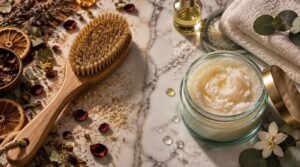
Both methods exfoliate, but they work differently and deliver different results. How each one functions shapes which fits your skin, schedule, and goals. Here’s a look at the key differences.
Understanding which approach suits your skin comes down to how each method works — a deeper look at exfoliating techniques for preventing ingrown hairs can help clarify which one your skin actually needs.
Exfoliation Depth and Results
Between these two methods, exfoliation depth is more similar than different. Both remove dead skin cells from the stratum corneum.
| Factor | Dry Brushing | Body Scrub |
|---|---|---|
| Exfoliation depth | Surface only | Surface only |
| Skin texture improvement | Moderate | High |
| Skin barrier repair | No | Possible |
Pressure and technique drive your results more than the method itself. Scrubs commonly include emollients that support skin barrier repair post-rinse, adding a moisturizing layer. Dry brushing creates brief circulation stimulation through friction, but that warming effect doesn’t last.
Dry Brushing Benefits and Drawbacks

Dry brushing has real benefits, but it also comes with a few limitations worth knowing. Understanding both sides helps you decide if it fits your routine and how to use it effectively. Here’s what you need to know about what dry brushing can and can’t do for your skin.
Gentle Surface Exfoliation
Bristles work across your skin in short, controlled strokes, and that’s exactly how dry brushing delivers gentle exfoliation at the surface. It targets only the outermost dead cells, so it stays far gentler than a body scrub.
Here’s what you’ll notice right after:
- Skin feels smoother to the touch
- Gradual skin texture improvement over time
- Less flakiness on dry patches
Temporary Circulation Boost
That smoothing sensation hints at something else going on beneath the surface. Mechanical exfoliation from brushing briefly activates sensory nerves and triggers a circulation boost in the skin’s microvessels, and some credit the lymphatic system too. You’ll notice a warm flush, but it fades within minutes once you stop.
Pushing past your skin sensitivity threshold turns that flush into inflammation.
Repeated exposure to harsh ingredients can tip your scalp from reactive to chronically inflamed — exploring natural scalp relief remedies for sensitive skin may help you break that cycle before it takes hold.
Invigorating Self-Care Ritual
That sensory flush is what makes dry brushing feel like a ritual worth repeating. It’s an exfoliation practice that doubles as a selfcare routine you can actually own.
- Brush before showering, never after.
- Start at your feet and stroke toward the heart.
- Limit each session to two minutes.
- Three sessions weekly deliver that invigorating feeling consistently.
Skin Irritation Risk
Because dry brushing applies friction to bare skin without any water or lather to buffer contact, it carries a higher irritation risk than most scrubs.
If you have sensitive skin, eczema, or psoriasis, you should skip the brush completely.
Overexfoliating with either method weakens your skin barrier over time, leading to redness and stinging. Don’t use either on broken skin.
Limited Cellulite Effects
Both dry brushing and body scrub treatments get promoted as cellulite fixes, but the real results are surface-level at best.
Cellulite stems from fibrous structures deep beneath the skin that exfoliation can’t reach.
Dry brushing may boost lymphatic drainage temporarily, creating a brief visual improvement. That short-lived effect isn’t structural change, so don’t mistake a circulation flush for lasting reduction.
Body Scrub Benefits and Drawbacks

Body scrubs bring a different set of advantages to the table, but they’re not without trade-offs. What you gain in skin smoothing and nourishment, you also need to balance against the risk of irritation and improper storage. Here’s what to know before adding a scrub to your routine.
Immediate Skin Smoothing
A body scrub delivers immediate softness you can feel the moment you rinse off.
Unlike dry brushing, the gritty particles create more physical friction across your skin, speeding up keratin removal and flattening micro-roughness more effectively. That exfoliation reduces the visible contrast from your dry, flaky buildup.
The smoother skin you get right after a scrub is real, just surface-level.
Moisturizing Ingredient Benefits
One study found exfoliation temporarily increases transepidermal water loss, making your next step critical.
The best scrubs pack in moisturizing ingredients that work immediately after your exfoliation:
- Glycerin draws water into skin cells
- Hyaluronic acid boosts surface skin hydration
- Ceramide replenishment rebuilds your barrier function support
- Shea butter locks in moisture and slows evaporation
- Vitamin E counters post-exfoliation oxidative stress
Rough Area Exfoliation
Elbows, knees, and shins accumulate thickened surface keratin faster than softer areas, which is why standard exfoliation rarely cuts it there.
A body scrub outperforms dry brushing on these spots because particle abrasion combined with rinsing lifts loosened dead skin cells more efficiently. For genuinely rough patches, you’ll need consistent, repeated use over time, since neither method restructures skin permanently.
Irritation and Over-Exfoliation
Scrubs can turn on you fast. Scrub too often or too hard, and you strip away more than dead skin cells.
Signs you’ve gone too far:
- Persistent redness or stinging
- Tight, flaky patches on sensitive skin
- Burning when moisturizing
- Raw skin between sessions
Limit exfoliation to one or two times per week, using gentle circular motions to protect your barrier.
For a gentler approach, an exfoliating bath mitt glove gives you more control than a harsh scrub, making it easier to stay within that safe weekly routine.
Contamination and Storage Risks
Irritation isn’t the only risk with body scrubs. Dipping wet fingers or a sponge back into the tub introduces bacteria each use, and microbial contamination builds fast, especially on sensitive skin.
Unlike dry brushing tools you can hang to dry, open tubs trap moisture, creating a storage problem. Keep yours in a dry, ventilated spot well away from shower spray.
Transferring your scrub into an airtight body scrub jar gives you a tighter seal and makes it far easier to store away from steam.
Which Exfoliation Method Suits Your Skin?

Your skin type is the clearest guide to which method actually works for you. The right exfoliation match depends on whether your skin runs dry and reactive or rough and textured. Here’s how each type breaks down.
Dry and Sensitive Skin
Two things tend to push exfoliation too far for dry and sensitive skin: too much pressure and too much frequency. Dry brushing is usually the better starting point, since it relies on gentle surface contact without any added particles.
Keep these limits in mind:
- Use light strokes with a soft-bristle brush
- Exfoliate no more than once per week
- Apply products with moisturizing ingredients right after rinsing
This helps protect your skin barrier and reduces post-session tightness.
Rough and Textured Skin
needs more than the light surface contact that works for sensitive types.
Body scrubs with fine sugar or salt granules work harder on areas like elbows and knees where dead cells accumulate.
If texture is your main concern, look for a scrub with an AHA or BHA. Those go deeper than granules alone and break down keratin buildup that dry brushing won’t reach.
You can dry brush mid-week to keep exfoliation balanced. For a deeper approach, body planing on oiled skin after showering can remove dead cells more effectively than dry brushing alone.
How to Use Each Method Safely
Getting the technique right makes all the difference between results and irritation. Whether you’re picking up a brush or reaching for a scrub, how you apply each method matters as much as which one you choose. Here’s what you need to know to use both safely.
How to Dry Brush

Think of dry brushing as the morning ritual you’re actually in control of. You grab a firm bristled brush, start at your feet, and sweep upward with firm yet gentle strokes as part of your pre-shower routine.
- Keep your skin completely dry before you start
- Brush from your feet upward, always toward the heart
- Use circular motions on elbows and knees
- Apply firm but not painful pressure throughout
- Shower immediately after to remove dead skin cells
How to Apply Body Scrub

Apply your body scrub to damp skin immediately after stepping out of the shower stream. Use light, steady pressure and work in small sections, moving in circular motions to aid dead skin removal. Don’t press hard; that only raises irritation without improving exfoliation.
Focus rougher areas like knees and elbows briefly rather than scrubbing everywhere at the same intensity. Rinse thoroughly to clear all residue, then follow with moisturizer application while your skin’s still slightly damp.
Can You Use Both Methods?

Yes, you can use both—and doing so strategically gives you the best of each method. The key is spacing them correctly throughout the week so your skin has time to recover between sessions. Here’s how to build that into your routine.
Weekly Exfoliation Schedule
Using both methods doesn’t mean you need both every week. Alternating week by week is smarter: dry brushing one week, body scrub the next. This keeps your weekly body care routine consistent, one or two times per week, without overlapping mechanical stress before your barrier recovers.
The key to safe exfoliation isn’t how many products you use. It’s keeping your total weekly load, meaning pressure, duration, and tool roughness, within what your skin can actually handle.
Safe exfoliation depends not on how many products you use, but on how much your skin can handle weekly
Aftercare and Tool Hygiene
Good habits don’t end when the exfoliation does. Postexfoliation hydration is what preserves skin comfort; without it, skin turns tight and irritated. After your dry brushing or body scrub session, moisturize with a fragrance-free product while skin is damp. Tool hygiene is essential. A fragrance-free body moisturizer applied to damp skin seals in hydration right when freshly exfoliated skin needs it most.
- Keep dry brush bristles fully air-dried after each use
- Store scrub tools out of standing water
- Launder all cloth tools regularly
- Replace brushes when bristles loosen or shed
- Ventilate storage areas between uses
Frequently Asked Questions (FAQs)
What are the cons of dry brushing?
Dermatologists consistently flag over-exfoliation as dry brushing’s top risk. A firm-bristled brush strips your skin’s outer lipid barrier faster than epidermal turnover can rebuild it, causing micro-tears, skin irritation, and cumulative dryness in sensitive areas.
Do dermatologists recommend dry brushing?
Walk into any dermatology office and you’ll hear a conditional yes on dry brushing. It clears dead surface skin well, but too much pressure or frequency can disrupt your skin barrier and trigger real irritation.
What parts of my body should I dry brush?
Stick to your arms, legs, and torso for skin exfoliation. Elbows, knees, and heels respond especially well to dry brushing since the skin texture is rougher and uneven. Skip your face and any broken skin.
Do I have to shower immediately after dry brushing?
No, you don’t have to shower immediately after dry brushing. Timing mainly affects comfort, not exfoliation results. If you notice visible residue or tackiness on your skin, rinse soon, but a brief wait is fine.
Are these methods safe during pregnancy?
Pregnancy makes your skin a more sensitive landscape, so dry brushing and a body scrub are both fine if you’re using gentle natural ingredients and keeping pressure light. Stop if any burning or redness appears.
Can dry brushing or scrubbing reduce ingrown hairs?
Like a door propped open, gentle exfoliation gives trapped hairs a clear exit. Dry brushing helps at the surface, but scrubbing too hard inflames follicles, and that can make your ingrown hairs worse, not better.
Which exfoliation method is more cost-effective?
One dry brush can last several months, but a good sugar scrub jar runs out fast and keeps pulling you back to the store. The product-free approach wins on long-term cost-effectiveness when you stay consistent.
Can either technique be used on the face?
Neither technique is designed for your face. Facial skin is thinner and more sensitive than body skin, so both dry brushing and body scrubs carry a real irritation risk there. Always use facial-specific exfoliation instead.
How long do the skin results typically last?
The results are temporary, but that’s completely normal given how exfoliation works. You’ll usually notice smoother texture for 1–3 days. Keep skin hydrated and skip irritation, and skin renewal can extend that toward a week.
Conclusion
Think of your skin like a mood board: some days it calls for a gentle sweep, and other days it clearly needs a deeper reset. The dry brushing versus body scrub debate was never really a competition.
Both methods work well, but only when you match them to what your skin is actually doing right now. Read those signals, choose accordingly, and you’ll spend far less time guessing and more time seeing results that last.