This site is supported by our readers. We may earn a commission, at no cost to you, if you purchase through links. This content is for general informational and educational purposes only and is not a substitute for professional medical, dermatological, or nutritional advice.

Most people scrub too hard, thinking the rougher the treatment, the better the results. That instinct works against you: aggressive scrubbing damages your skin barrier, triggers inflammation, and leaves your skin more vulnerable than before you started.
Knowing how to exfoliate your body properly means choosing the right method for your skin type, applying the right pressure, and spacing sessions far enough apart that your barrier can recover. A glycolic acid formula that works well for oily skin can cause real irritation on dry or sensitive skin.
This guide gives you a clear, dermatologist-approved plan so you get smoother skin without the setbacks.
Table Of Contents
- Key Takeaways
- How to Exfoliate Your Body Properly
- Choose Physical or Chemical Exfoliation
- Match Exfoliants to Your Skin Type
- Set a Safe Exfoliation Schedule
- Prevent Irritation and Protect Your Skin
- Top 5 Exfoliating Products to Consider
- Frequently Asked Questions (FAQs)
- What is the proper way to exfoliate your skin?
- Do I exfoliate before body wash or after?
- Do you exfoliate dry or wet?
- How can I remove dead skin from my body?
- Can I exfoliate before or after shaving?
- Is it safe to exfoliate tattoos?
- Can children or teenagers exfoliate their body?
- Should I exfoliate my feet and heels differently?
- Can I use body exfoliants on my face?
- Conclusion
Key Takeaways
- Match your exfoliant to your skin type: glycolic acid suits oily skin, while dry or sensitive skin does better with gentler, larger-molecule options like mandelic or lactic acid.
- Use light, even pressure on damp skin (or clean, dry skin for chemical exfoliants), apply in the direction of hair growth, and never combine physical and chemical methods in the same session.
- Start exfoliating just once per week and increase frequency only after 3–4 weeks with no reaction, since up to 90% of people over-exfoliate and damage their skin barrier.
- Always moisturize right after exfoliating and apply broad-spectrum SPF 30+ the next morning, because freshly exfoliated skin absorbs UV damage far more easily.
How to Exfoliate Your Body Properly

Get the technique right before worrying about which product to choose. When you exfoliate, light, even pressure delivers better results than scrubbing hard. Excess force causes micro-irritation, even with a gentle body scrub.
This gentle-pressure principle applies beyond exfoliation — it’s the same mindset behind shaving techniques that reduce hair regrowth over time, where working with your skin rather than against it makes all the difference.
Apply your exfoliant in the direction of hair growth to cut down on friction and redness. For rinse-off formulas, aim for about 60 seconds of contact, then rinse thoroughly. Prolonged exposure, even with a mild wash, raises your chance of stinging.
Your skin type shapes everything here, from how often you exfoliate to which form you use. Before going full-body with any new product, physical exfoliation or chemical exfoliation alike, patch-test a small area first. It only takes a day or two to know if your skin will tolerate it.
Choose Physical or Chemical Exfoliation
Once you’ve got your technique down, the next step is picking the right method for your skin type.
Physical exfoliation suits superficial buildup but demands careful pressure control. Scrub too hard and you’ll irritate faster than you exfoliate.
Chemical exfoliation covers larger areas like your back or legs more evenly since it doesn’t rely on manual skill to work. A chemical exfoliant body lotion with AHA or BHA lets you treat hard-to-reach areas like your back without any scrubbing at all.
Here are 5 cues to guide your choice:
- Oily or congested skin, use a BHA like salicylic acid.
- Large surface areas, choose a leave-on chemical formula.
- Sensitive skin, start with a low-concentration AHA.
- You tend to over-scrub, skip physical exfoliation.
- Tempted to mix both methods, don’t. It compounds irritation risk.
Keep exfoliation frequency low until your skin adjusts.
Match Exfoliants to Your Skin Type

Once you know whether a physical exfoliant or chemical exfoliant suits your method, matching the right acid to your skin type is what separates results from irritation.
Oily or acne-prone skin tolerates glycolic acid well. It’s a small-molecule AHA that penetrates deeper, and sebum keeps the surface from drying out. If you have dry or sensitive skin, start with mandelic acid instead. Its larger molecule penetrates more slowly, making it far less likely to cause stinging.
Lactic acid sits between the two. It’s gentler than glycolic but still effective, especially if you exfoliate regularly but find your skin reactive.
Finish every session with a moisturizer to help your barrier recover. A barrier-repair body moisturizer with ceramides or hyaluronic acid is especially effective at locking in hydration after exfoliation.
For gentle options that won’t undo your exfoliation work, these alcohol-free calming after-shave products pair beautifully with glycolic acid routines.
Set a Safe Exfoliation Schedule

Once you’ve matched your exfoliant to your skin type, frequency is the final variable to set. Start with once per week, no matter which acid you chose. That spacing lets your barrier recover before the next session.
- Oily skin can try twice weekly after 3 to 4 weeks with zero reaction.
- Sensitive or dry skin should stay at once weekly, or stretch sessions to every 10 days.
- Leave-on acids need more recovery time than rinse-off formulas, so space those further apart.
If you’re using a body wash and a leave-on acid together, treat that as combined exfoliation exposure and lower your frequency. Tightness or stinging is your skin sensitivity test signaling overexfoliation risks. Pull back and restart with gentle exfoliation from scratch.
Prevent Irritation and Protect Your Skin

After exfoliating, your skin barrier is temporarily weakened, so everything you apply right afterward counts. For sensitive skin, skip any fragranced products immediately post-session and reach for a ceramide or glycerin moisturizer instead. Always apply broad-spectrum SPF 30+ the next morning, since sun protection after exfoliation is non-negotiable: freshly exfoliated skin absorbs UV damage far more readily.
Freshly exfoliated skin is vulnerable — protect it with SPF 30+ every morning, no exceptions
A quick skin type assessment helps you catch irritation before it snowballs:
- Redness that lingers past 30 minutes means you’re overdoing frequency or strength
- Dry or compromised skin needs at least 48 hours between sessions
- Tingling that turns to burning is a signal to rinse immediately
Good postexfoliation care is simple: moisturize right after, protect with SPF, and let your skin recover fully.
For days when exfoliation extends beyond your face, reach for a SPF body sunscreen lotion to give freshly treated skin the same sun protection your face gets.
Top 5 Exfoliating Products to Consider
Finding the right exfoliant can feel overwhelming, but a few well-formulated options make the decision easier.
The five products below cover a range of skin types and needs, from gentle daily moisturizers to targeted AHA treatments.
Whether your skin is sensitive, oily, or somewhere in between, there’s something on this list worth trying.
1. INKEY List 10% Glycolic Acid Toner
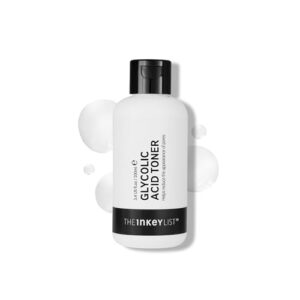
The INKEY List 10% Glycolic Acid Toner delivers real acid exfoliation in a simple toner format. Its 10% glycolic acid from sugar cane breaks down the bonds holding dead skin cells together, so brighter skin surfaces faster. The added 5% witch hazel helps control excess oil without stripping.
Apply it to dry skin after cleansing, then wait 1-2 minutes before moisturizing. Start with twice a week, and skip retinoid nights to avoid irritation. Always follow with SPF in the morning.
| Best For | People with normal to oily skin who want an affordable, no-fuss toner to tackle blackheads, uneven texture, and dullness. |
|---|---|
| Exfoliating Acids | 10% Glycolic Acid |
| Skin Types | Normal and oily |
| Cruelty-Free | Yes |
| Fragrance-Free | Yes |
| Skin Smoothing | Improves texture and brightness |
| Daily Use | Yes |
| Additional Features |
|
- 10% glycolic acid delivers genuine exfoliation, helping reveal brighter, smoother skin over time
- Fragrance-free and cruelty-free formula makes it a safe pick for those avoiding harsh additives
- Witch hazel helps manage excess oil without leaving skin feeling stripped or dry
- Can cause stinging, burning, or irritation — especially for sensitive skin or new acid users
- Some users report the bottle leaks, which is frustrating for a product this size
- At 3.4 oz, many feel the value doesn’t quite match the price compared to similar options
2. Naturium Glycolic Acid Body Wash 16.9 oz

Skin renews itself every 28 to 40 days, but dead cells don’t always shed evenly on their own. This body wash experiences that with a multi-acid mix of glycolic, lactic, pyruvic, and tartaric acids, calibrated to a pH of 4.25 to 4.75 for consistent, gentle exfoliation.
Massage it onto wet skin for 60 to 90 seconds, rinse thoroughly, then follow with moisturizer. Patch test first if you’re prone to sensitivity, since some users do report mild irritation.
If you’re unsure whether your hair can handle regular exfoliation, understanding which hair types are most prone to fragility and sensitivity can help you adjust how often you use it.
| Best For | Anyone looking to smooth uneven skin texture with daily, gentle chemical exfoliation — especially those who prefer clean, vegan formulas. |
|---|---|
| Exfoliating Acids | AHA acid blend |
| Skin Types | All skin types |
| Cruelty-Free | Yes |
| Fragrance-Free | No |
| Skin Smoothing | Improves skin texture |
| Daily Use | Yes |
| Additional Features |
|
- Multi-acid blend (glycolic, lactic, pyruvic, and tartaric) works across several layers of exfoliation for noticeably smoother skin
- PH-balanced between 4.25 and 4.75, making it effective yet gentle enough for daily use on all skin types
- Vegan, cruelty-free, paraben-free, and gluten-free — a solid pick for those mindful of ingredients and ethics
- Some users experience mild irritation, rashes, or hives, so a patch test is strongly recommended before regular use
- The fragrance gets mixed reviews — a notable drawback if you’re sensitive to scent
- At 16.9 oz, the bottle is on the larger side, which may be inconvenient for travel or smaller bathrooms
3. Sunday Riley Good Genes Lactic Acid Serum
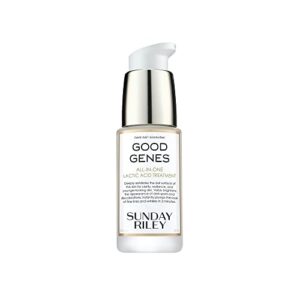
Good things come in small packages, and this 1-ounce serum proves it. Sunday Riley Good Genes delivers purified lactic acid that exfoliates dead skin while licorice targets dark spots from sun exposure. It’s clinically tested to visibly improve fine lines in as little as 3 minutes.
Apply 2-3 drops to clean, dry skin two to three nights per week. Skip retinoids the same night, and wear sunscreen the next morning. Some users notice mild stinging, so patch test beforehand.
| Best For | Anyone looking to fade dark spots and smooth fine lines with a gentle but effective exfoliating serum. |
|---|---|
| Exfoliating Acids | Lactic acid |
| Skin Types | Most skin types |
| Cruelty-Free | Yes |
| Fragrance-Free | Not specified |
| Skin Smoothing | Reveals smoother skin |
| Daily Use | Yes |
| Additional Features |
|
- Purified lactic acid exfoliates dead skin to reveal a smoother, more even complexion
- Licorice extract targets dark spots and sun discoloration
- Clinically tested to visibly improve fine lines in as little as 3 minutes
- Can cause mild stinging or irritation, especially for sensitive skin
- At 1 ounce, the bottle may run out in as little as two weeks with regular use
- Some users find the price hard to justify given the small quantity
4. Amlactin Daily Nourish Body Lotion 7.9 oz

This lotion does double duty. Its 12% lactic acid gently exfoliates while simultaneously drawing moisture into the skin, so you’re smoothing and hydrating in one step.
Apply it to damp skin within 3 minutes after your shower to lock in hydration while your barrier is most receptive.
It’s fragrance-free, dye-free, and paraben-free, making it a solid daily option for sensitive or dry-prone skin.
If you feel mild stinging at first, that’s normal; it usually fades within a few days of consistent use.
| Best For | People with dry, rough, or flaky skin who want a simple daily lotion that exfoliates and hydrates at the same time. |
|---|---|
| Exfoliating Acids | 12% Lactic Acid |
| Skin Types | Normal to dry |
| Cruelty-Free | Yes |
| Fragrance-Free | Yes |
| Skin Smoothing | Relieves rough skin |
| Daily Use | Yes |
| Additional Features |
|
- The 12% lactic acid works double duty — smoothing rough skin while pulling moisture in, so you’re not layering multiple products
- Free from fragrance, dyes, parabens, and phthalates, making it a low-irritant option for sensitive skin
- The pump bottle makes daily application quick and mess-free
- Some users experience stinging or burning, especially when starting out
- Despite being marketed as fragrance-free, the scent has drawn complaints from customers
- At 7.9 oz, some find the price high relative to the amount of product you get
5. NeoStrata Mandelic Clarifying Cleanser Gel

Triple-acid formulas sound intense, but this cleanser is built for daily use. Its 4% AHA/BHA/PHA combination combines mandelic acid, salicylic acid, and gluconolactone to exfoliate gently without stripping your barrier. Mandelic acid’s larger molecular size means slower, more tolerable penetration than glycolic, so it works well even on reactive, oily skin.
Tea Tree Oil, glycerin, and castor oil round out the formula. Lather on wet skin morning and night, and don’t skip SPF after your morning cleanse.
| Best For | Those with oily, acne-prone, or reactive skin who want an effective daily exfoliating cleanser without the harshness of stronger acids. |
|---|---|
| Exfoliating Acids | PHA/AHA blend |
| Skin Types | Oily, acne-prone |
| Cruelty-Free | Yes |
| Fragrance-Free | Yes |
| Skin Smoothing | Smooths skin texture |
| Daily Use | Yes |
| Additional Features |
|
- Combines three exfoliating acids (mandelic, salicylic, and gluconolactone) in a gentle 4% blend that works without stripping or damaging your skin barrier
- Soap-free and fragrance-free formula makes it suitable for daily morning and night use
- Tea tree oil, glycerin, and castor oil support both thorough cleansing and hydration at the same time
- Sits at a higher price point compared to many other facial cleansing gels on the market
- Contains tea tree oil and active acids, so those with sensitivity to either may want to patch test or avoid entirely
- The value proposition may feel harder to justify for shoppers on a tighter budget
Frequently Asked Questions (FAQs)
What is the proper way to exfoliate your skin?
Exfoliate on damp skin with gentle circular motions, then rinse and moisturize. Choose a chemical exfoliant or manual exfoliator based on your skin type assessment, limit sessions to two or three weekly, and stop if you notice burning.
Do I exfoliate before body wash or after?
Think of it like sweeping before mopping: you wash first, then exfoliate. Apply leave-on acids after your body wash on clean, dry skin; rinse-off scrubs and exfoliating cleansers work during the wash, followed by postexfoliation care.
Do you exfoliate dry or wet?
Do you exfoliate dry or wet? For physical scrubs, exfoliate wet skin in the shower using lukewarm water and gentle circular motions. For chemical exfoliants like glycolic acid, apply to clean, dry skin.
How can I remove dead skin from my body?
You have two options: use a manual exfoliator like a washcloth or scrub, or apply a chemical exfoliant, such as glycolic or lactic acid, to boost skin cell turnover. Start once weekly.
Can I exfoliate before or after shaving?
Can you exfoliate before or after shaving? Yes, but timing matters. Shaving removes barrier cells, so wait 24 to 48 hours after shaving before using any exfoliator, especially with sensitive skin.
Is it safe to exfoliate tattoos?
Can you exfoliate tattoos? Yes, once they’re fully healed, usually after 2 to 4 weeks. Use gentle chemical exfoliants like lactic acid, moisturize afterward, and skip fresh tattoos entirely to avoid irritation.
Some experts caution that full healing can take up to three months, so it’s wise to understand the tattoo healing timeline before exfoliating.
Can children or teenagers exfoliate their body?
Can children or teenagers exfoliate their body? Yes, but gently. Children’s skin stays sensitive, so skip routine exfoliation. Teenagers can use a mild wash-off exfoliant once weekly, patch-test first, and stop if stinging or redness appears.
Should I exfoliate my feet and heels differently?
Yes, your feet need their own plan. Heels build up thick, callused dead skin cells, so use a stronger chemical exfoliator or foot file there, while gentler passes suit the rest of your body.
Can I use body exfoliants on my face?
Can I use body exfoliants on my face? Don’t. A body scrub’s rough particles cause microtears, and higher acid concentrations disrupt your skin barrier. For irritation prevention, choose facial-specific exfoliants, especially with sensitive skin.
Conclusion
Dermatologists estimate that up to 90% of people exfoliate too often, and that overdoing it’s the top cause of the irritation they treat.
That’s why learning how to exfoliate body properly matters more than scrubbing harder. Pick the method that fits your skin type, space sessions two to three days apart, and moisturize right after. Your skin barrier does the real work between treatments, so give it time.
Consistency beats intensity, every time.