This site is supported by our readers. We may earn a commission, at no cost to you, if you purchase through links. This content is for general informational and educational purposes only and is not a substitute for professional medical, dermatological, or nutritional advice.
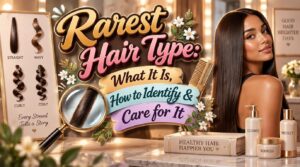
Most people assume the rarest hair type is 4C, because its tight coils and dramatic shrinkage make it look uniquely complex. But type 1A is the true outlier, occurring in only a small fraction of the global population. It’s pin-straight, fine, and produces no wave or curl, even under humidity.
That distinction matters beyond curiosity. Sebum distribution, moisture retention, and product tolerance all shift depending on where your hair falls on the typing scale. What works for a 3C ringlet actively weighs down a 1A strand.
Knowing your type gives you a clinical starting point for building a regimen that actually performs.
Table Of Contents
- Key Takeaways
- What is The Rarest Hair Type—and is It Really 1A?
- How Do Hair Types 1A, 3C, and 4C Compare?
- How Can You Identify Your Hair Type?
- How Should You Care for 1A, 3C, and 4C Hair?
- Top 8 Products to Consider for 1A, 3C, and 4C Hair
- 1. Gentle Hair Detangling Brush Tool
- 2. Luxurious Hair Shine Brush Tool
- 3. Olaplex Volumizing Hair Mist Spray
- 4. Fine Hair Volumizing Shampoo Solution
- 5. Seaweed Volumizing Shampoo For Hair
- 6. Drunk Elephant Scalp Exfoliating Scrub
- 7. Dove Hydrating Shampoo For Dry Hair
- 8. Dove Hydrating Scalp Therapy Conditioner
- Frequently Asked Questions (FAQs)
- What is the rarest type of hair?
- Who has type 1A hair?
- Which hair type is most fragile?
- Why is 1A hair rare?
- Can rare hair types change over time?
- Are there medical conditions linked to rare hair?
- How do hormones impact rare hair texture?
- Can diet or supplements alter rare hair types?
- Can rare hair types change with age?
- Is hair type entirely determined by genetics?
- Conclusion
Key Takeaways
- Type 1A — pin-straight, fine, and completely curl-free — is most commonly cited as the rarest hair type, though no controlled global data officially confirms this ranking.
- Your hair type determines how sebum travels down your strands, how well your hair retains moisture, and which products will help versus hurt your routine.
- Porosity and elasticity are independent of curl pattern and matter more than your hair type alone when predicting breakage risk and how your hair responds to products.
- Your hair type isn’t fixed: hormones, aging, and chemical processing can all shift your curl pattern, strand diameter, and texture over time.
What is The Rarest Hair Type—and is It Really 1A?
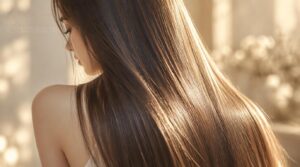
Why does the label rarest hair type consistently get attached to Type 1a? The short answer is that it probably shouldn’t, at least not without some qualification.
The Andre Walker Curl Typing System offers useful context here, since calling Type 1a "rare" makes more sense within that specific four-category framework than as a universal claim.
Type 1a describes fine, straight hair with virtually no curl or wave formation. In the Andre Walker typing system, it sits at one end of the hair texture spectrum, set apart from other hair subtypes by strand diameter and overall silkiness rather than curl pattern alone.
The rarity claim isn’t well-supported by controlled data. Hair rarity depends heavily on the population surveyed and whether classification is self-reported or clinically assessed. Your hair subtype can shift over a lifetime due to hormonal changes or chemical processing, making any definitive prevalence claim difficult to verify.
Hair type rarity claims are difficult to verify—your subtype can shift across a lifetime, and data depends entirely on who gets counted
How Do Hair Types 1A, 3C, and 4C Compare?
Understanding where 1A sits becomes clearer when you compare it against hair type 3C and hair type 4C directly. These three types represent meaningfully different structural realities, each with its own behavior.
- Hair type 1A lies flat with no curl scaffolding, so sebum distributes visibly along the shaft, often appearing greasy at the roots.
- Hair type 3C forms tight ringlets where uneven moisture causes frizz rather than definition.
- Hair type 4C produces tight coils or Z-shaped kinks that shrink a lot when dry, making oil distribution from scalp to ends difficult.
Hair porosity and hair elasticity vary independently of curl pattern, so you’re dealing with variables that cut across all three types. Two people sharing a type can still respond differently.
A home hair porosity test kit can help you pin down exactly how your strands absorb moisture, which matters far more than your curl type alone.
How Can You Identify Your Hair Type?
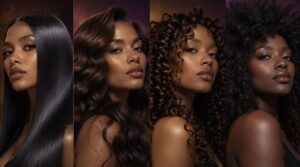
Knowing how 1A, 3C, and 4C differ structurally gives you a foundation for accurate curl pattern assessment. The most reliable approach combines wet-to-dry observation with hands-on hair strand analysis.
Start on a clean wash day, free of product buildup. Then check these five markers:
- Does your hair lie flat when wet and stay flat as it dries?
- Do ringlets or coils form without styling products?
- How much length does your hair lose from wet to dry?
- Does a single strand curl back on itself after gentle stretching?
- Is your curl pattern consistent across your crown, nape, and temples?
Hair porosity and hair elasticity operate independently of curl type, so test both before you draw any conclusions about your hair type.
How Should You Care for 1A, 3C, and 4C Hair?
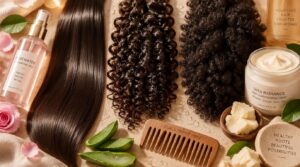
Once you’ve confirmed your hair type, your care approach should match how your strands actually behave.
1A hair tends toward oil buildup and flatness. Keep your hair care regimen lightweight and skip heavy conditioners. A volumizing shampoo for fine hair can lift roots without weighing strands down or triggering faster oil buildup.
3C and 4C curl patterns work differently. Tighter coils slow oil travel from scalp to tip, which makes moisture retention harder. Section your hair before detangling to reduce mechanical stress and limit breakage.
Picture what a practical wash week looks like:
On wash days, you’ll likely condition every time — and if you want to fine-tune your routine around hair type or damage level, this guide to how often you should condition your hair breaks it down clearly.
- Rinsing 1A with cooler water to slow scalp oil production
- Applying a leave-in conditioner to wet 4C hair before combing
- Wearing protective hairstyles between wash days to limit friction
- Deep conditioning 3C coils after every cleanse
- Adjusting your hair care regimen as humidity shifts seasonally
Top 8 Products to Consider for 1A, 3C, and 4C Hair
Finding the right products for 1A, 3C, or 4C hair can make a real difference in how your strands look and feel day to day. Starting with a curl type hair care set tailored to your specific pattern takes the guesswork out of building a routine that actually works.
Each of these hair types has distinct structural needs, from weightless volume support for fine straight hair to intense moisture retention for tightly coiled textures.
The eight options below are worth considering based on those specific requirements.
1. Gentle Hair Detangling Brush Tool
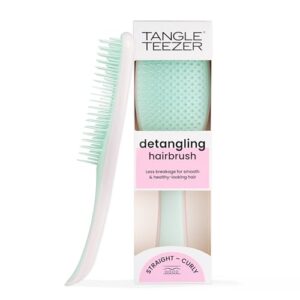
Fragile strands break when the wrong tool drags through a knot. This brush takes a different approach. Its 325 flexible teeth operate in two tiers, spreading tension across multiple contact points rather than pulling from one, so you’re easing knots out instead of snapping them.
You can use it on wet or dry hair, which makes it practical in the shower during conditioning and equally useful for post-styling detangling. The ergonomic handle keeps your grip steady through longer styling sessions, and at 3.53 ounces it’s light enough to prevent hand fatigue. Pairing it with a light detangling spray can improve glide noticeably on 1A, 3C, and 4C textures. Very thick or coily hair may require more pressure to reach the scalp fully.
| Best For | Anyone with wet, dry, straight, wavy, or lightly curly hair who wants a gentle, everyday detangling tool that minimizes breakage and scalp irritation. |
|---|---|
| Hair Type | All hair types |
| Key Ingredients | N/A |
| Application | Wet or dry |
| Primary Benefit | Gentle detangling |
| Clinical Data | N/A |
| Scalp Impact | Reduces irritation |
| Additional Features |
|
- 325 flexible, two-tiered teeth spread tension across multiple points, easing out knots instead of snapping them
- Works on both wet and dry hair, making it useful in the shower during conditioning and for post-styling touch-ups
- Lightweight at 3.53 ounces with an ergonomic handle, so longer styling sessions don’t wear out your hand
- Less effective on very thick or coily hair, where extra pressure may be needed to reach the scalp
- A few bristles may arrive slightly bent out of the box
- Customers with tight curl patterns report it performs better on straight to wavy hair types
2. Luxurious Hair Shine Brush Tool
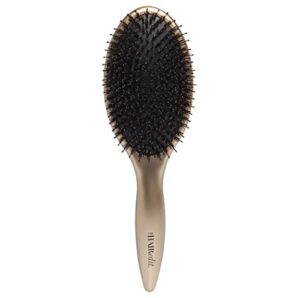
For fine hair that already reflects light naturally, the right brush amplifies that without adding product weight.
The boar-and-nylon hybrid construction does two things at once: boar bristles carry scalp sebum down the shaft, and ball-tipped nylon pins detangle while stimulating circulation. Regular use can produce a measurable shine boost, with studies suggesting up to an 18% increase in light reflectance after three weeks.
Use it on dry hair only. Wet strands are more vulnerable to breakage, and this brush isn’t designed for that. At 4.66 ounces with a non-slip ergonomic handle, it’s easy to control. Clean it every two to three days to prevent oil buildup from dulling your results.
| Best For | Anyone with fine or naturally shiny hair who wants to enhance gloss and smooth flyaways without adding product weight. |
|---|---|
| Hair Type | Fine, shiny hair |
| Key Ingredients | Boar & nylon bristles |
| Application | Dry hair only |
| Primary Benefit | Shine enhancement |
| Clinical Data | 18% shine increase (3 weeks) |
| Scalp Impact | Stimulates circulation |
| Additional Features |
|
- Boar bristles distribute natural scalp oils down the hair shaft, building shine with every stroke
- Ball-tipped nylon pins detangle gently while stimulating the scalp, reducing tension and pulling
- Lightweight at 4.66 ounces with a non-slip ergonomic handle that’s easy to maneuver
- Bristles may bend or break with regular use, shortening the brush’s lifespan
- Some users notice an unpleasant chemical smell, particularly when new
- Not suitable for wet hair, which limits its versatility as an all-purpose styling tool
3. Olaplex Volumizing Hair Mist Spray
Think of 1A hair as a freshly ironed sheet: clean, but prone to collapsing the moment anything lands on it. This mist acts like scaffolding rather than added weight, using Jackfruit Polysaccharides and Expert Polymers to fight frizz while preserving natural sleekness.
You’ll apply it 6 to 8 inches from damp roots, then blow-dry upside down to activate its lift. With heat protection up to 450°F, it shields fragile shafts during thermal styling without compromising keratin bonds.
Clinically, 94% of users reported buildable volume and 96% saw lightweight style retention. That said, results tend to soften within a few hours on ultra-fine strands, and over-application can leave hair feeling sticky.
| Best For | Anyone with straight, fine hair (Type 1A) who wants weightless volume and frizz control during heat styling without sacrificing softness or natural sleekness. |
|---|---|
| Hair Type | Fine, straight (1A) |
| Key Ingredients | Jackfruit Polysaccharides, Polymers |
| Application | Damp hair |
| Primary Benefit | Volume & frizz control |
| Clinical Data | 94% volume, 96% retention |
| Scalp Impact | N/A |
| Additional Features |
|
- Heat protection up to 450°F shields fine, fragile hair during blow-drying without weakening keratin bonds
- Jackfruit Polysaccharides and Advanced Polymers fight frizz while keeping hair light and residue-free
- Clinically backed results: 94% of users saw buildable volume and 96% experienced lightweight style retention
- Volume can deflate within a few hours on ultra-fine strands, meaning it may not hold up all day
- Over-application risks leaving hair feeling sticky or weighed down — the opposite of the intended effect
- Limited static control in dry climates, which can be a drawback for fine hair prone to flyaways
4. Fine Hair Volumizing Shampoo Solution
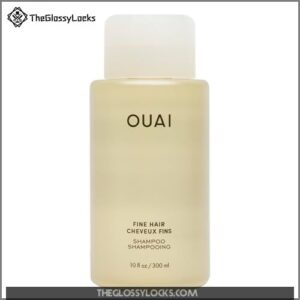
The shampoo that promises to add hair volume can be the exact thing flattening your strands. OUAI Fine Hair Shampoo sidesteps that contradiction: biotin and keratin fortify each shaft without the sulfate stripping that triggers excess sebum production, a common issue in ultra-straight textures where oil travels root to tip within hours.
Its lightweight formula lifts at the follicle level while chia seed oil guards against brittleness, which matters because fine hair’s low hair thickness makes it prone to mechanical breakage.
Fine hair also tends toward low hair porosity, so a formula that rinses completely clean is non-negotiable in your hair care regimen.
You’ll notice cleaner roots and sustained hair volume across 24 to 36 hours.
| Hair Type | N/A |
|---|---|
| Key Ingredients | N/A |
| Application | N/A |
| Primary Benefit | N/A |
| Clinical Data | N/A |
| Scalp Impact | N/A |
| Additional Features |
|
5. Seaweed Volumizing Shampoo For Hair
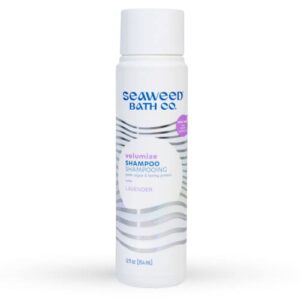
When volume shampoos keep letting you down, the ingredient list is usually the problem. This formula uses Atlantic seaweed and barley protein to coat each strand with algae-derived polysaccharides, temporarily increasing surface thickness and creating visible lift. Argan oil and aloe round out the mix.
Seaweed extract can also support scalp microcirculation, which often benefit your follicular environment with consistent use. The sulfate-free, vegan formula is color-safe, so you’re not trading volume for color integrity.
Some users report dryness over time, so pairing this with a lightweight conditioner helps maintain moisture balance. Most 1A hair types see noticeable fullness within one to two washes.
| Best For | Anyone with fine, limp, or low-volume hair — including color-treated hair — who wants a clean, vegan formula that adds fullness without harsh chemicals. |
|---|---|
| Hair Type | Fine, limp, low-volume |
| Key Ingredients | Atlantic seaweed, barley protein |
| Application | Wet hair |
| Primary Benefit | Volumizing & thickening |
| Clinical Data | N/A |
| Scalp Impact | Supports microcirculation |
| Additional Features |
|
- Atlantic seaweed and barley protein work together to visibly thicken and lift fine strands
- Sulfate-free and color-safe, so it won’t strip dye or irritate a sensitive scalp
- Leaping Bunny certified and fully vegan, with a soothing lavender scent
- Some users experience dryness with prolonged use, making a conditioner almost necessary
- Lather can be minimal, which may feel unsatisfying for those used to foamy shampoos
- The bottle cap requires significant pressure to open, which can be frustrating in the shower
6. Drunk Elephant Scalp Exfoliating Scrub
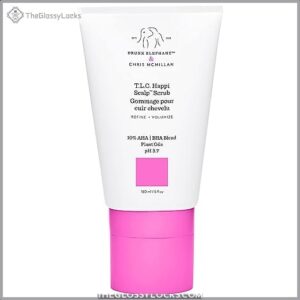
A clean scalp is the foundation for healthy hair growth, especially when you’re managing delicate 1A or 3C strands prone to buildup and flakiness.
The Drunk Elephant T.L.C. Happi Scalp Scrub pairs a 10% AHA/BHA mix with biodegradable cellulose acetate beads to dissolve dead skin cells and styling-product residue at the follicle level. Sweet almond oil offsets post-exfoliation dryness, keeping the scalp barrier intact while the actives work.
Apply it to a damp scalp, massage gently, and leave it for 10 minutes before rinsing. That wait gives the acids time to break down buildup effectively. Note that skipping the brand’s shampoo or using too little can leave a greasy residue.
Used once or twice weekly, it usually reduces flakiness and leave your scalp feeling noticeably balanced.
| Best For | Anyone dealing with scalp buildup, dandruff, or flakiness — particularly those with delicate hair types like fine 1A or curly 3C strands that need a gentle but effective cleanse. |
|---|---|
| Hair Type | Fine 1A or curly 3C |
| Key Ingredients | 10% AHA/BHA, cellulose beads |
| Application | Damp scalp |
| Primary Benefit | Scalp exfoliation |
| Clinical Data | N/A |
| Scalp Impact | Dissolves follicle buildup |
| Additional Features |
|
- The 10% AHA/BHA blend dissolves dead skin cells and product residue at the follicle level, offering real chemical exfoliation rather than surface-level scrubbing
- Biodegradable cellulose acetate beads add gentle physical exfoliation without harsh microplastics
- Sweet almond oil keeps the scalp moisturized post-exfoliation, so you’re not left with a tight, stripped feeling
- The 10-minute wait time required before rinsing can feel like an inconvenient addition to a shower routine
- Works best when paired with Drunk Elephant’s own shampoo — using too little product or skipping that step can leave a greasy residue
- The higher price point has divided users on whether the results justify the cost
7. Dove Hydrating Shampoo For Dry Hair
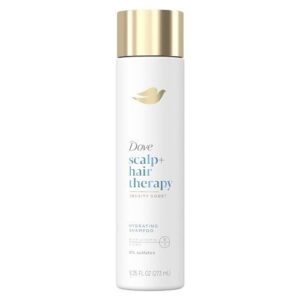
After exfoliating the scalp, the next step is a cleanser that won’t undo that work. Dove’s sulfate-free hydrating shampoo helps dry hair without stripping 1A’s fine strands or 4C’s fragile coils.
The Vitamin B3 and zinc complex helps scalp health while glycerin draws moisture into the hair shaft. It cleanses impurities and seals in hydration simultaneously, a balance that’s hard to find in most daily-use formulas.
Dermatologist involvement in the formulation shows. In a 2023 study, 92% of users agreed it moisturized their scalp, and 82% noticed lift at the root. A few users do report itchiness, so monitor your scalp in the first few washes.
| Best For | Anyone with dry hair across all hair types — from fine 1A strands to fragile 4C coils — who wants a gentle, hydrating daily cleanser that supports scalp health. |
|---|---|
| Hair Type | All types, dry hair |
| Key Ingredients | Vitamin B3, zinc, glycerin |
| Application | Wet hair |
| Primary Benefit | Hydration & scalp health |
| Clinical Data | 92% moisturized, 82% root lift |
| Scalp Impact | Moisturizes & supports health |
| Additional Features |
|
- Sulfate-free formula cleanses without stripping moisture, making it safe for delicate and textured hair
- Vitamin B3 and zinc complex actively supports scalp health while glycerin seals in hydration
- Dermatologist-formulated with strong user backing — 92% reported scalp moisturization and 82% noticed root lift
- Some users experience itchiness or dandruff, especially in the first few washes
- Results vary for dry hair, with not all users finding it effective enough
- Can feel pricey compared to similar options, particularly when purchased through Amazon
8. Dove Hydrating Scalp Therapy Conditioner
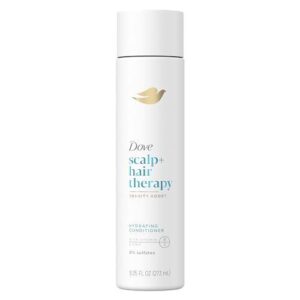
The conditioner pairs naturally with that shampoo, continuing the hydration cycle where the cleanser leaves off. Formulated with Vitamin B3 and zinc, it targets scalp health while locking moisture into dry, brittle strands, making it a logical follow-up for any wash day.
For 1A hair, apply from mid-lengths downward to avoid weighing fine roots down. For 4C coils, you can work it through from scalp to ends more freely. The glycerin and scalp-targeted conditioning agents help reduce itchiness and restore softness without sulfates or unnecessary stripping. Dermatologists contributed to the formula, which shows in its balanced pH and measured, soothing approach to scalp care.
If you’re sensitive to preservatives or fragrances, patch test first, since some users report mild reactions with frequent use.
| Best For | Anyone with a dry, itchy scalp — especially those with fine 1A hair looking for lightweight moisture or 4C coils needing deeper scalp-to-end hydration. |
|---|
- Sulfate-free formula with Vitamin B3 and zinc targets scalp health while restoring softness to dry, brittle hair
- Dermatologist-developed with a balanced, soothing approach that helps reduce scalp itchiness
- Versatile enough for a range of hair types, from fine to coily
- May cause dryness or peeling on sensitive skin with frequent use
- Not suitable for those with sensitivities to certain preservatives or fragrances
- Some users find the moisture and shine payoff only moderate
Frequently Asked Questions (FAQs)
What is the rarest type of hair?
Think of a client whose hair falls completely straight, with zero wave or curl pattern. That’s Type 1A, most often cited as the rarest, but no hair typing system officially ranks types by global frequency.
Who has type 1A hair?
Picture strands that fall like still water, utterly weightless. Type 1A hair belongs to people whose hair follicle shape is nearly circular and whose genetic makeup produces naturally fine, straight hair with no visible wave.
Which hair type is most fragile?
No single hair type wins the fragility crown outright. Type 4C experiences the most mechanical stress during detangling, but hair porosity and hair elasticity ultimately determine your breakage risk more than any curl pattern alone.
Why is 1A hair rare?
A trichologist examining 200 scalp samples might find only eight that qualify as true Type 1a. Hair follicle biology demands uniform strand diameter and consistent global straightness, a threshold that mixed ancestry admixture rarely meets.
Can rare hair types change over time?
Each hair follicle cycles through growth phases every two to seven years, giving your hair type multiple opportunities to shift. Hormones, aging, and processing can alter strand diameter and hair growth cycle length over time.
Are there medical conditions linked to rare hair?
Like a flawed blueprint, certain genetic mutations can alter your hair’s shaft structure at a cellular level. Conditions like trichothiodystrophy compromise elasticity and porosity, producing atypical hair type patterns that don’t fit standard clinical classification.
How do hormones impact rare hair texture?
Ironically, you’re often told your curl pattern is genetic and entirely fixed.
Estrogen, cortisol, and thyroid hormones actively disagree, reshaping follicle geometry, texture, porosity, and elasticity across every single phase of your hair growth cycle.
In fact, hormones regulating hair growth cycles span distinct phases—anagen, catagen, and telogen—each influenced by shifting hormone levels that can permanently alter your curl pattern over time.
Can diet or supplements alter rare hair types?
Your diet affects hair quality, not curl genetics. Deficiencies can increase breakage or shedding, which cosmetically mimics a texture shift. Once nutritional gaps are corrected, it’s your regrowth that improves, not your natural hair type.
Can rare hair types change with age?
Your hair type isn’t permanently fixed. Hormonal transitions alter keratin production, which shifts curl pattern and hair elasticity over time. Your porosity, shrinkage, and response to environmental conditions can all shift noticeably as you age.
Is hair type entirely determined by genetics?
Genetics gets far too much credit here. Your hair type, hair texture, and hair porosity can all respond to hormones, humidity, and nutrition, which means genetics isn’t the only factor shaping what your hair becomes.
Conclusion
What separates a functional hair regimen from a frustrating one isn’t price or product variety. It’s knowing your strand structure and biology. Whether you have the rarest hair type on the full spectrum or a curl-dense 4C pattern, your sebum output, moisture retention, and product tolerance all operate according to exactly the same fundamental structural logic.
Identify your actual hair type correctly, and the rest of your routine finally has a real foundation worth trusting.