This site is supported by our readers. We may earn a commission, at no cost to you, if you purchase through links. This content is for general informational and educational purposes only and is not a substitute for professional medical, dermatological, or nutritional advice.

That dull, rough patchiness you keep blaming on "bad skin days"? It’s usually dead skin cells overstaying their welcome. Exfoliation clears them out, but here’s the catch: most beginners grab the strongest acid on the shelf and end up with redness, flaking, or a damaged barrier.
The right facial exfoliators for beginners work with your skin type, not against it. Oily skin loves salicylic acid. Sensitive skin does better with gentle mandelic acid. And frequency matters as much as formula.
I’ve tested the options and narrowed them to nine safe, effective picks, plus a simple routine to use them without irritation.
Table Of Contents
- Key Takeaways
- What Facial Exfoliation Does for Your Skin
- Physical Vs. Chemical: Know Your Exfoliant Type
- Matching Exfoliators to Your Skin Type
- Top 9 Facial Exfoliators for Beginners
- 1. Paula’s Choice 2% BHA Liquid Exfoliant
- 2. Dermalogica Daily Microfoliant Exfoliating Powder
- 3. Naturium Mandelic Acid 12% Serum
- 4. The Ordinary Glycolic Acid 7% Toner
- 5. BYOMO Moisturizing Gel Cream
- 6. Curel Intensive Face Moisturizer Cream
- 7. COSRX Niacinamide BHA Blackhead Exfoliant Toner
- 8. Minimalist Salicylic Acid 2% Serum
- 9. Pixi Glow Tonic Exfoliating Face Toner
- How Often Should Beginners Exfoliate?
- Build a Safe Beginner Exfoliation Routine
- Frequently Asked Questions (FAQs)
- What is the best exfoliant I can buy at the drugstore?
- Should a 60 year old woman exfoliate her face?
- What exfoliate do dermatologists recommend for the face?
- What is the best exfoliator for older skin?
- Can I exfoliate if I have active breakouts?
- Should I exfoliate in the morning or at night?
- Can I use exfoliants with retinol or vitamin C?
- How long until I see results from exfoliating?
- Can I exfoliate after getting a facial treatment?
- Conclusion
Key Takeaways
- Beginners should start with just one gentle exfoliant once a week, increasing to twice weekly only after two to three weeks without irritation—daily exfoliation is the fastest route to barrier damage.
- Match the acid to your skin type: salicylic acid (BHA) suits oily, clog-prone skin, while mandelic acid is the gentlest choice for sensitive skin and darker skin tones.
- Chemical exfoliants (AHAs, BHAs, PHAs) dissolve the bonds holding dead cells rather than scrubbing them off, making them safer than physical scrubs, which can cause microtears.
- Every exfoliation routine should follow the same four steps: patch test first, cleanse, exfoliate at night, moisturize immediately with a ceramide-based cream, and wear sunscreen daily since freshly exfoliated skin burns faster.
What Facial Exfoliation Does for Your Skin

On any given day, your skin sheds dead cells on its own, but the process isn’t always fast enough to keep pace. That buildup dulls your complexion and contributes to clogged pores over time. Dead skin cell removal through exfoliation speeds that cycle along, revealing fresher, brighter skin underneath.
If you’re unsure where to start, this guide to effective skin renewal breaks down the best exfoliation methods for your skin type.
The payoff shows up fast. You’ll notice skin texture improvement you can actually feel, smoother and more even across your whole face. Pore unclogging becomes easier because there’s less surface debris mixing with sebum below. And complexion brightening happens gradually as newer, less-pigmented cells replace the old ones.
The catch? More isn’t always better. Overdoing exfoliation strips your skin barrier, raising dryness and inflammation that slows the results you came for.
Physical Vs. Chemical: Know Your Exfoliant Type
Once you understand why exfoliation matters, the next step is picking the right approach. There are two main categories, and they work in completely different ways.
Physical exfoliation relies on friction: scrubs, brushes, and textured cloths that manually buff dead cells away. It’s satisfying and immediate, but too much pressure or a rough particle size causes microtears.
Chemical exfoliation uses acids or enzymes to dissolve the bonds holding dead cells on the surface, no rubbing required. AHAs like glycolic acid improve texture at the surface level, BHAs like salicylic acid penetrate pores, and PHAs are the gentlest starting point.
| Type | How It Works |
|---|---|
| Physical | Friction removes surface cells |
| AHAs/BHAs | Acids break intercellular bonds |
| PHAs | Mild loosening, lowest irritation risk |
Matching Exfoliators to Your Skin Type
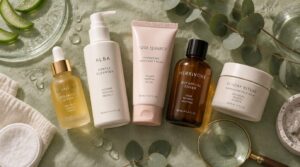
Now that you know how each exfoliant works, matching one to your skin type makes chemical exfoliation actually feel manageable.
Here’s what your skin is telling you:
- Oily skin management works best with a BHA like salicylic acid, which gets into pores instead of just sitting on the surface
- For dry skin hydration, reach for an AHA at 5-10% and always follow with a ceramide moisturizer
- Sensitive skin care means starting at 5% or lower, patch testing first, and skipping retinoids on exfoliant nights
- Combination skin responds well to mandelic acid, a gentler AHA with larger molecules
- The best exfoliator for beginners on darker skin tones is often mandelic acid, which carries a lower irritation risk
Top 9 Facial Exfoliators for Beginners
These nine picks were chosen with beginners in mind, so you won’t find anything harsh or overwhelming here. Each one balances efficacy with skin safety, making it easier to start strong without guessing. Whether your concern is acne, dullness, or texture, there’s something on this list for you.
1. Paula’s Choice 2% BHA Liquid Exfoliant
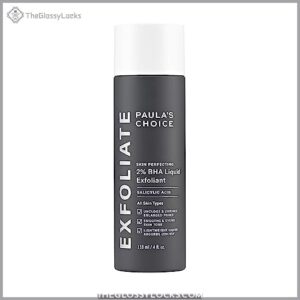
Say you’ve been struggling with clogged pores and uneven skin texture for months, and nothing you’ve tried has made a real dent.
Paula’s Choice 2% BHA Liquid might just be your answer. Its 2% salicylic acid penetrates deep into pores to dissolve built-up sebum and debris, smoothing texture and reducing the look of enlarged pores over time. The fragrance-free, non-abrasive formula leaves a lightweight, non-greasy finish.
Start 2-3 times weekly after cleansing, apply before your moisturizer, and never skip sunscreen.
| Best For | Anyone dealing with clogged pores, enlarged pores, or uneven skin texture who wants a gentle, fragrance-free daily exfoliant. |
|---|---|
| Exfoliating Acids | 2% salicylic acid |
| Fragrance-Free | Yes |
| Sun Sensitivity | Increased; sunscreen needed |
| Skin Type Fit | Oily, combination, acne-prone |
| Paraben-Free | Yes |
| Usage Frequency | Daily |
| Additional Features |
|
- 2% salicylic acid penetrates deep into pores to dissolve buildup and visibly reduce their appearance over time
- Leave-on formula is fragrance-free, paraben-free, and non-abrasive — gentle enough for daily use on face and neck
- Regular use helps smooth skin texture, improve tone, and reduce the look of fine lines and wrinkles
- Increases sun sensitivity, so daily sunscreen is non-negotiable
- Can cause irritation, dryness, or peeling during the initial adjustment period
- Moisturizing performance varies — some users find it too oily or not hydrating enough for their skin type
2. Dermalogica Daily Microfoliant Exfoliating Powder
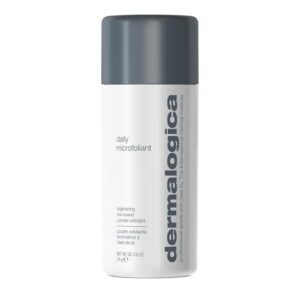
Powder exfoliators don’t get much gentler than this one. Dermalogica’s Daily Microfoliant mixes with water into a creamy paste, so you control the intensity with every swipe.
Since gentle exfoliation pairs well with a gradual routine, it’s worth knowing what happens when you stop using hydroquinone cream before layering on brightening actives.
Rice-based polishers smooth texture while salicylic acid unclogs pores and papaya enzyme brightens dull skin. Colloidal oatmeal and allantoin cushion sensitive complexions.
Start with 2-3 times per week, massage in circles, then rinse well. It works on your face, chest, or legs. One heads-up: the pourer can leak powder in transit.
| Best For | People with sensitive or dull skin who want a gentle, daily-use exfoliant that brightens and smooths without harsh scrubbing. |
|---|---|
| Exfoliating Acids | Papaya enzyme + salicylic acid |
| Fragrance-Free | Yes |
| Sun Sensitivity | Possible; sunscreen advised |
| Skin Type Fit | Sensitive, all skin types |
| Paraben-Free | Yes |
| Usage Frequency | Daily (start 2-3x weekly) |
| Additional Features |
|
- Mixes with water into a creamy paste, letting you control exfoliation intensity
- Salicylic acid unclogs pores while papaya enzyme brightens skin
- Colloidal oatmeal and allantoin make it gentle enough for sensitive skin
- Can irritate very reactive skin, so it’s best to start 2–3 times per week
- The pourer design may leak powder during shipping
- The fragrance-free formula gets mixed reactions from users
3. Naturium Mandelic Acid 12% Serum
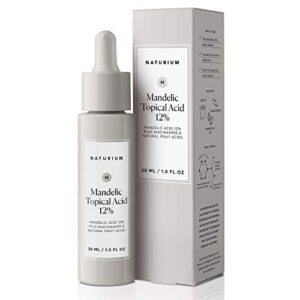
You’ll love how gentle this one feels. Naturium’s serum uses 12% mandelic acid, an AHA with a larger molecule than glycolic, so it penetrates slowly and rarely stings. Niacinamide and fruit acids round out the formula, which is vegan, cruelty-free, and dermatologist tested.
At night, smooth on one to two pea-sized drops after cleansing, starting twice weekly. Expect smoother texture and faded dark spots over several weeks. Just note the cinnamon-like scent and always wear sunscreen.
| Best For | People with sensitive, dry, acne-prone, aging, combination, or oily skin who want gentle exfoliation to smooth texture and fade dark spots. |
|---|---|
| Exfoliating Acids | 12% mandelic acid |
| Fragrance-Free | Yes |
| Sun Sensitivity | Increased; sunscreen needed |
| Skin Type Fit | Sensitive, dry, acne-prone, aging |
| Paraben-Free | Yes |
| Usage Frequency | Nightly, 1-2 drops |
| Additional Features |
|
- 12% mandelic acid penetrates slowly, so it rarely stings
- Improves skin texture and reduces hyperpigmentation over time
- Vegan, cruelty-free, paraben-free, and dermatologist tested
- May cause mild burning or sensitivity if overused
- Requires daily sunscreen due to increased photosensitivity
- Some users dislike the cinnamon-like odor
4. The Ordinary Glycolic Acid 7% Toner

Here’s a number worth pausing on: studies suggest glycolic acid works best at a pH of 3 to 4, yet many toners sit well above that.
The Ordinary Glycolic Acid 7% Toner gets the chemistry right. Its 7% glycolic acid dissolves dead surface cells, while Tasmanian Pepperberry and aloe calm the tingle.
Start once or twice weekly at night, never layer it with retinoids, and wear SPF 30+ daily.
Bonus: it doubles for scalp, elbows, and underarms.
| Best For | Anyone looking to smooth uneven skin texture and tone with a gentle, fragrance-free exfoliating toner that also works on scalp and body areas. |
|---|---|
| Exfoliating Acids | 7% glycolic acid |
| Fragrance-Free | Yes |
| Sun Sensitivity | Increased; sunscreen needed |
| Skin Type Fit | Normal, oily, combination |
| Paraben-Free | Yes |
| Usage Frequency | Daily or as tolerated |
| Additional Features |
|
- Contains 7% glycolic acid to effectively dissolve dead surface cells and smooth skin
- Includes soothing ingredients like Tasmanian Pepperberry, aloe, and ginseng to calm irritation
- Versatile enough for scalp, elbows, knees, and underarms, not just the face
- May cause tingling or burning, especially during the first few uses
- Increases sun sensitivity, so daily sunscreen is a must
- Requires careful application to avoid the eyes and sensitive areas
5. BYOMO Moisturizing Gel Cream
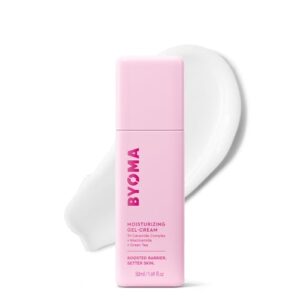
Here’s a stat worth remembering: studies show your skin barrier can lose up to 25% more water after aggressive exfoliation. That’s why pairing acids with a barrier moisturizer matters.
BYOMO Moisturizing Gel Cream does exactly this. Its Tri-Ceramide Complex combines ceramides, cholesterol, and fatty acids to rebuild what exfoliating strips away. Niacinamide calms redness, and green tea adds antioxidant protection.
It’s fragrance-free, alcohol-free, and non-comedogenic. The gel-cream texture absorbs instantly, sits sheerly under sunscreen, and won’t clog pores. Just know it’s lightweight, so very dry skin may need layering.
| Best For | Anyone using exfoliating acids who needs a lightweight, barrier-supporting moisturizer that layers well under sunscreen and makeup. |
|---|---|
| Exfoliating Acids | None (barrier support) |
| Fragrance-Free | Yes |
| Sun Sensitivity | Not applicable |
| Skin Type Fit | Sensitive, dry, redness-prone |
| Paraben-Free | Yes |
| Usage Frequency | Daily |
| Additional Features |
|
- Tri-Ceramide Complex with ceramides, cholesterol, and fatty acids supports skin barrier repair
- Contains niacinamide and green tea antioxidants to calm redness and protect skin
- Fragrance-free, alcohol-free, non-comedogenic, and vegan with a fast-absorbing gel-cream texture
- May not provide enough hydration for very dry skin on its own
- Lightweight texture may require layering in colder weather
- Some customers report issues with the pump mechanism
6. Curel Intensive Face Moisturizer Cream
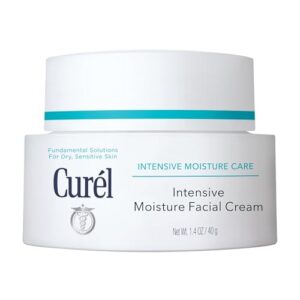
Exfoliating without replenishing moisture? That’s a recipe for irritation. Curel Intensive Face Moisturizer Cream steps in as your recovery partner.
Its ceramide-rich formula helps your skin barrier, and it’s fragrance-free, pH balanced, and colorant free, so freshly exfoliated skin stays calm. At 1.4 ounces, the jar is compact, but a little goes far.
It layers beautifully over chemical exfoliants and even pairs with retinoids to soften their bite. One caveat: some users find it doesn’t last all day, so reapply if tightness creeps back.
| Best For | People with dry to very dry, sensitive skin who need a gentle, fragrance-free moisturizer to calm and hydrate freshly exfoliated skin or buffer retinoid irritation. |
|---|---|
| Exfoliating Acids | None (moisturizer) |
| Fragrance-Free | Yes |
| Sun Sensitivity | Not applicable |
| Skin Type Fit | Dry to very dry sensitive |
| Paraben-Free | Yes |
| Usage Frequency | Daily |
| Additional Features |
|
- Contains ceramides that support and strengthen the skin barrier
- Fragrance-free, pH balanced, and colorant free, making it ideal for sensitive skin
- Layers well over chemical exfoliants and helps reduce retinoid irritation
- Some users report hydration doesn’t last all day, requiring reapplication
- The small 1.4-ounce jar may feel expensive for the volume
- Some users note there’s no protective seal between the lid and jar
7. COSRX Niacinamide BHA Blackhead Exfoliant Toner
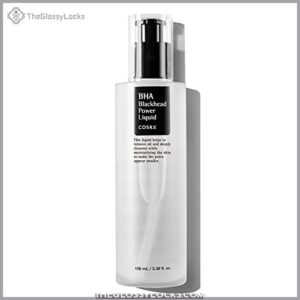
Blackheads love a stubborn pore, and this toner goes straight after them. You get 4% betaine salicylate, a gentle BHA, plus willow bark water to loosen dead skin without scrubbing. It’s hypoallergenic and free of parabens, sulfates, and phthalates, so sensitive beginners can breathe easy.
Use it at night after cleansing, before moisturizer. Expect a brief tingle; that’s normal. Just wear broad spectrum SPF the next morning. Stubborn hormonal breakouts? Pair it with stronger treatments later.
| Best For | Beginners and those with sensitive skin who want a gentle daily BHA toner to clear clogged pores and blackheads as part of a nighttime routine. |
|---|---|
| Exfoliating Acids | 4% betaine salicylate |
| Fragrance-Free | Yes |
| Sun Sensitivity | Increased; SPF needed |
| Skin Type Fit | Sensitive, oily, acne-prone |
| Paraben-Free | Yes |
| Usage Frequency | Daily, nighttime |
| Additional Features |
|
- Gentle 4% betaine salicylate with willow bark water exfoliates without harsh scrubbing
- Hypoallergenic, dermatologist tested, and free of parabens, sulfates, and phthalates
- Helps diminish enlarged pores and prevent blackheads with daily use
- May cause brief tingling or discomfort upon application
- Requires broad spectrum SPF the following morning
- May not be strong enough alone for hormonally driven breakouts or stubborn concerns
8. Minimalist Salicylic Acid 2% Serum
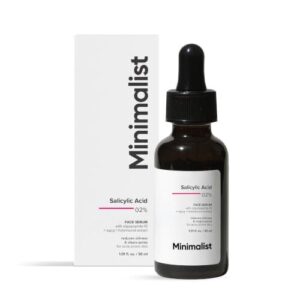
The COSRX toner is gentle, but if oily skin and clogged pores are your main battle, this serum hits harder. You get 2% salicylic acid in a lightweight, fragrance-free base that’s also silicone-free and non-comedogenic. It’s budget-friendly and comes in a 30ml dropper bottle, so layering is easy.
Start two to three nights a week after cleansing. The pH sits around 3.5 to 4.0, so penetration is strong; skip other exfoliants that night. Dryness? Buffer with moisturizer.
| Best For | People with oily, acne-prone skin who want an affordable, fragrance-free salicylic acid serum to unclog pores and control shine. |
|---|---|
| Exfoliating Acids | 2% salicylic acid |
| Fragrance-Free | Yes |
| Sun Sensitivity | Increased; sunscreen advised |
| Skin Type Fit | Oily, acne-prone |
| Paraben-Free | Yes |
| Usage Frequency | Daily |
| Additional Features |
|
- Contains 2% salicylic acid that penetrates pores to reduce oil, shine, and breakouts
- Fragrance-free, silicone-free, and non-comedogenic, making it easy to layer with other products
- Clinically shown to reduce active acne in 93% of users within 4 weeks
- May cause irritation or redness, especially in the first few weeks of use
- Not suitable for dry or sensitive skin types
- Some users report their skin condition worsened with use
9. Pixi Glow Tonic Exfoliating Face Toner
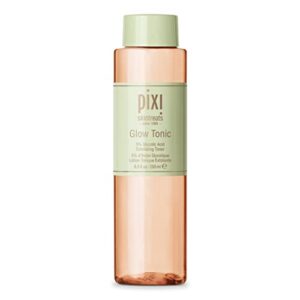
If serums feel like too much, try a toner instead. Pixi Glow Tonic uses 5% glycolic acid to sweep away dulling buildup and tighten pores, with ginseng and aloe vera to keep things calm. The alcohol-free, vegan formula suits normal, oily, and combination skin, and the 250ml bottle covers face, neck, and décolletage. Start every other night, avoid your eye area, and wear sunscreen daily. Some users note added dye, so patch test first.
| Best For | Anyone with normal, oily, or combination skin who wants gentle daily exfoliation and a brighter complexion without harsh alcohol-based toners. |
|---|---|
| Exfoliating Acids | 5% glycolic acid |
| Fragrance-Free | No |
| Sun Sensitivity | Sunscreen advised |
| Skin Type Fit | Normal, oily, combination, sensitive |
| Paraben-Free | Yes |
| Usage Frequency | Morning and evening |
| Additional Features |
|
- Contains 5% glycolic acid that gently exfoliates, refines pores, and evens skin tone
- Alcohol-free formula with ginseng and aloe vera soothes and hydrates while it works
- Vegan, cruelty-free, and paraben-free, making it suitable even for sensitive skin
- Contains added dye and coloring that some users find undesirable
- Mixed feedback on value for money, as the 250ml bottle runs out quickly relative to the price
- Some users report diminished effectiveness after prolonged use, requiring reduced frequency
How Often Should Beginners Exfoliate?
Here’s the honest answer: once a week. That’s your starting point, and it’s enough. Your skin needs time to recover between sessions, and rushing the process backfires fast. If you’re unsure where to start with acids or which type suits your skin, this guide to chemical exfoliation breaks down the basics.
Think of it as Start Slow, Glow Steady. After two to three weeks without irritation, you can move to twice weekly. That’s it. Exfoliating daily is where beginners get into trouble, because barrier damage takes days to settle and stacking sessions on top of it leads to stinging, flaking, and redness.
Watch for these signals to adjust your schedule:
- Tightness after cleansing
- Stinging when you apply products
- Visible flaking or rough patches
- Increased redness that lingers
- Rebound oiliness or breakouts
Skin tolerance building is the real goal here. Controlled exfoliation means your skin stays comfortable between uses. Oily skin may eventually tolerate more frequent BHA use, but dry or sensitive types should stay at the low end. If irritation shows up, don’t increase frequency. Pull back instead.
Build a Safe Beginner Exfoliation Routine

Now let’s put it all together. A safe routine is simple: cleanse, exfoliate, Moisturize Immediately, and Use Sunscreen Daily. That last one matters most, because freshly exfoliated skin burns faster.
Before anything touches your face, do a Patch Test. Apply the product behind your ear or on your inner arm for two days. No reaction? You’re clear to start.
Remember Start Slow Glow Steady: one product, one night a week, rest days in between. Never try Layering Multiple Exfoliants at once. If you can’t tell which product caused the sting, you’ve learned nothing.
Pick one exfoliator from the list, pair it with a barrier-friendly moisturizer, and track how your skin responds. Consistency beats intensity every time. Your glow is built on patience, not aggression.
Your glow is built on patience, not aggression—choose one gentle exfoliator and stay consistent
Frequently Asked Questions (FAQs)
What is the best exfoliant I can buy at the drugstore?
Paula’s Choice 2% BHA Liquid wins. Its Salicylic Acid clears pores gently, suits oily and combination skin, and requires no rubbing. Start twice weekly, moisturize after, and always wear sunscreen.
Should a 60 year old woman exfoliate her face?
Should a 60 year old woman exfoliate her face? Yes, gently. Aging skin renews slowly, so gentle exfoliation brightens texture. Choose a mild chemical exfoliant, prioritize skin barrier repair, moisturize well, and wear sunscreen daily.
What exfoliate do dermatologists recommend for the face?
Dermatologists often recommend salicylic acid 2% for clogged pores, like Paula’s Choice Skin Perfecting 2 BHA Liquid Exfoliant, or gentler mandelic acid for sensitive skin. Start once weekly and adjust based on tolerance.
What is the best exfoliator for older skin?
What’s the best exfoliator for older skin? Think of your skin as a favorite silk blouse: it needs gentle exfoliation, not scrubbing.
I recommend mandelic acid for sensitive skin care. Start weekly at 2–3%, then layer a ceramide moisturizer for skin barrier support. Pair with a hydrating moisturizer nightly.
Can I exfoliate if I have active breakouts?
Yes, but carefully. Skip physical scrubs on inflamed skin. Choose gentle exfoliation with salicylic acid, low strength, once or twice weekly. Pause if lesions feel tender, very red, or open.
Should I exfoliate in the morning or at night?
Night wins for most beginners. Take Maya, who exfoliated mornings, skipped sunscreen, and stung by noon. Evening exfoliation helps skin cell turnover overnight, avoids UV, and pairs with moisturizer. Morning works only with strict sunscreen.
Can I use exfoliants with retinol or vitamin C?
Short answer: not on the same night. Alternate retinol and chemical exfoliation, and keep vitamin C for mornings with sunscreen. This spacing prevents irritation while still delivering that product absorption boost.
How long until I see results from exfoliating?
How long until you see results? Expect subtle texture changes After First Use, smoother skin After 2 Weeks, and visibly clearer pores After 4–6 Weeks of consistent Cell Turnover.
Can I exfoliate after getting a facial treatment?
Can you exfoliate after a facial? Wait at least 48-72 hours. Your skin needs skin barrier repair first. Skip acids if you’re still red, especially post-extractions. Prioritize gentle post-facial care.
Conclusion
Think of exfoliation as turning a page: you can’t read fresh text until you let the old one go. That’s exactly what the right facial exfoliators for beginners do for your skin.
Start slow, match the formula to your skin type, and moisturize after every session. Your barrier will thank you with smooth, calm skin that glows on its own.
Pick one product from this list, commit to consistency, and let patience do the rest.
- https://nonieofbeverlyhills.com/blogs/blog-posts/chemical-vs-physical-exfoliants-what-they-are-and-how-they-can-elevate-your-skincare-regimen
- https://www.cerave.com/skin-smarts/skincare-tips-advice/understanding-the-differences-between-ahas-and-bhas
- https://www.facetory.com/blogs/curations/beginners-guide-to-exfoliants