This site is supported by our readers. We may earn a commission, at no cost to you, if you purchase through links. This content is for general informational and educational purposes only and is not a substitute for professional medical, dermatological, or nutritional advice.
Your face stings when you splash it with plain water. That’s not a sign your skin is sensitive. It’s a sign your barrier is failing.
Between your skin cells sits a mortar of ceramides, cholesterol, and fatty acids. When that layer cracks, water escapes faster and irritants get in, so your skin feels tight, dry, and reactive. Many people respond by adding more actives, which usually makes it worse.
The best ingredients for skin barrier repair work differently. They refill the mortar, hold in water, and calm irritation. Here’s what each one does and how to use it.
Table Of Contents
- Key Takeaways
- What a Damaged Skin Barrier Needs
- 12 Best Ingredients for Skin Barrier Repair
- Choose Barrier-Repair Ingredients for Your Skin Type
- Build a Simple Skin Barrier Repair Routine
- Ingredients to Avoid During Skin Barrier Repair
- Barrier Recovery Timelines and When to Seek Help
- Frequently Asked Questions (FAQs)
- What is the most effective ingredient for repairing the skin barrier?
- What are the best products for repairing the skin barrier?
- How to heal a damaged skin barrier fast?
- Which oils can help repair the skin barrier?
- Can you over-moisturize and weaken your skin barrier?
- How do you know if your skin barrier is damaged?
- Can you use retinol while repairing your barrier?
- Does sun exposure slow down skin barrier recovery?
- Are physical exfoliants safe for a compromised skin barrier?
- Conclusion
Key Takeaways
- Your barrier needs water, lipids, and time to heal, so ceramides, cholesterol, and fatty acids work best together, with a humectant like glycerin to draw in water and an occlusive like petrolatum to seal it.
- Stinging, tightness, and reactivity usually signal a leaky barrier rather than "sensitive" skin, and piling on more actives often makes it worse.
- Keep your routine simple (gentle cleanser, humectant, ceramide moisturizer, SPF 30+) and pause fragrance, alcohol toners, harsh exfoliants, and retinoids until your skin stops stinging.
- Mild damage often settles in 7 to 10 days, but a full rebuild can take 6 to 12 weeks, so stay consistent and see a dermatologist if nothing improves after 3 to 4 weeks or if you notice signs of infection.
What a Damaged Skin Barrier Needs
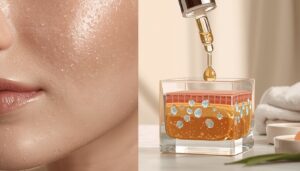
A damaged skin barrier needs three things: water, lipids, and time. Miss one, and recovery usually stalls.
After shaving, a lotion with glycerin and soothing botanicals helps seal in moisture, and this guide to the best aftershave for men shows what to look for.
Damaged skin heals only when water, lipids, and time all come together; without any one, recovery stalls
Start with the lipid matrix. The outer layer holds together because ceramides, cholesterol, and fatty acids sit between skin cells in organized layers. When that seal breaks, transepidermal water loss rises, and skin feels tight, dry, and reactive.
Water matters too, but hydration alone won’t fix a leaky barrier. You also need to stop the damage. Harsh cleansers, alkaline soaps, and low humidity all keep the surface stressed. Skin also prefers a mildly acidic pH, which helps the enzymes that build lipids and shed old cells in an orderly way.
Your skin can rebuild itself. It just needs support and fewer disruptions.
12 Best Ingredients for Skin Barrier Repair
Not every barrier-repair ingredient does the same job. Some rebuild the lipid matrix, some hold water in, and others seal it all under a protective layer. Here are the 12 you’ll most often see on labels, and what each one is good for.
Ceramides
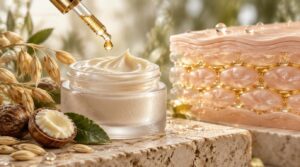
Ceramides make up about half of the lipid matrix between your skin cells, so they’re the first ingredient to look for in a skin barrier repair routine. When levels drop, water escapes faster and irritants get in.
Topical skin barrier ceramides help refill those gaps. They work best with cholesterol and fatty acids, and they usually need several weeks of steady use. Combining them with retinoids can also help, since ceramide and cholesterol mixtures replenish depleted lipids and reduce retinol-induced irritation.
Cholesterol
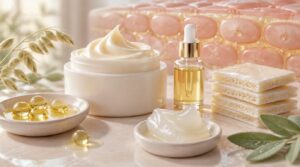
makes up about a quarter of the lipid matrix between your skin cells, and it works as a partner to ceramides. Aggressive exfoliation and peels often deplete it, which leaves skin red and reactive.
Look for a cholesterol product in your skin barrier repair routine that also contains:
- Ceramides for structure
- Fatty acids for flexibility
- An occlusive like petrolatum
Together, they support barrier lipid replenishment far better than cholesterol alone.
Free Fatty Acids
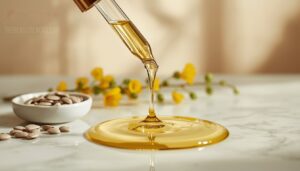
Fatty acids give the lipid matrix its flexibility. With ceramides and cholesterol, they help lipid replenishment and often help skin hold water.
For a closer look at how these barrier-supporting ingredients fit into a routine, see skincare products dermatologists recommend for formulas built around ceramides, cholesterol, and fatty acids.
| Fatty acid | Role | Note |
|---|---|---|
| Linoleic | Helps barrier lipid synthesis | Often well tolerated |
| Palmitic | Adds structure | Common in creams |
| Oleic | Can disrupt packing | Use cautiously |
Choose products listing linoleic acid, and don’t assume every fatty acid behaves the same.
Glycerin
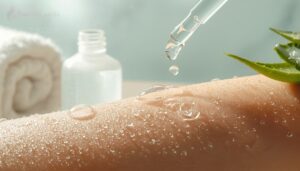
Water loss is often the first problem in a weakened barrier, and glycerin combats it directly. This humectant pulls water into the outer skin, improving skin hydration and moisture retention.
Here’s what to know:
- Aim for 10 to 20 percent for skin barrier repair.
- Expect better hydration within three days.
- Add an occlusive on top to seal in the water.
Hyaluronic Acid
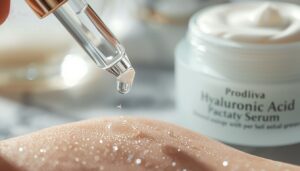
is a humectant that pulls water into the outer layer of your skin, giving you quick skin hydration. It doesn’t replace ceramides or fatty acids, so it won’t rebuild a damaged barrier by itself.
For skin barrier repair, pair it with a moisturizer containing occlusive ingredients. That combination improves moisture retention and limits evaporation, especially in dry air.
Panthenol
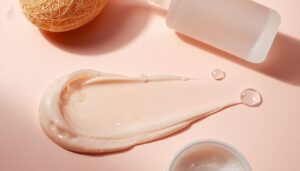
Think of panthenol as a sponge sewn into your moisturizer. It pulls water into the outer skin layer and holds it there.
Hydration helps skin barrier repair, and panthenol often reduces water loss after irritation, helping skin barrier function. It doesn’t replace ceramides and isn’t occlusive. Look for it in barrier repair products you leave on, and patch test first.
Petrolatum
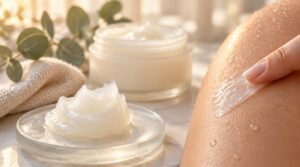
Yes, petrolatum feels greasy, but that’s no reason to skip it. It’s an effective occlusive, and it helps skin barrier repair by forming a thin film that slows transepidermal water loss. Prevention is the point here.
Apply a small amount over damp skin or a water-based moisturizer. Thick layers aren’t needed. Reactive skin usually tolerates plain white petrolatum well.
Dimethicone

works like a sheer, breathable glove for your skin.
It’s an occlusive silicone that slows water loss, but it doesn’t replace lipids. For skin barrier repair, pair it with ceramides in a moisturizer. Here’s what you’ll notice:
- A silky, smooth glide
- Less tackiness
- A thin, flexible shield
- Reduced friction on irritated skin
Reapply often, since barrier function needs support.
Squalane
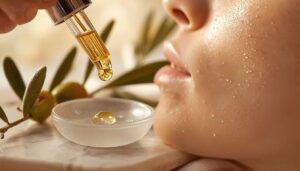
Your skin already makes something very close to squalane.
Squalane is a stable, lightweight emollient that mimics sebum, so it fits into your lipid barrier instead of sitting on top of it. For skin barrier repair, it softens rough patches and helps limit water loss. It’s noncomedogenic and usually well tolerated, even if you’re acne-prone or sensitive. Use it daily.
Niacinamide
Squalane helps your barrier from the surface. Niacinamide works from within.
It can increase ceramide production, along with free fatty acids and cholesterol, which are your skin barrier lipids. That often means less water escaping. Look for 2–5% in your barrier repair products. Higher isn’t proven better. If you feel stinging, check the full formula, not just niacinamide.
Colloidal Oatmeal
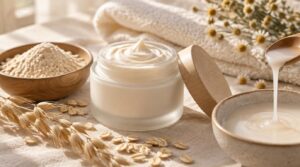
Niacinamide helps your lipids. Colloidal oatmeal calms the irritation around them.
Its avenanthramides have antiinflammatory activity that often eases itch, while beta-glucan helps support your moisture barrier. It’s one of the soothing ingredients worth adding to skin barrier repair, but it doesn’t replace ceramides. Choose a product made for skin, not kitchen oats. Stop if you have an oat allergy.
Centella Asiatica
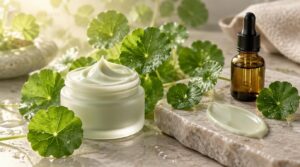
Colloidal oatmeal isn’t the only soothing ingredient worth knowing. Centella Asiatica is another, and you’ll often see it in calming creams.
Its triterpenes, such as madecassoside, may reduce inflammation in the lab. That doesn’t prove it repairs your barrier function. Evidence in humans is limited, so pair it with ceramides and petrolatum. Patch test first, since reactions are possible.
Choose Barrier-Repair Ingredients for Your Skin Type
Your skin type can narrow the list, but it doesn’t predict barrier function. Oily skin can be dehydrated, and dry skin isn’t always damaged. For skin barrier health, start with what you tolerate, then match the texture.
- Dry: Look for ceramides, cholesterol, and petrolatum in a cream or ointment for lipid matrix restoration.
- Oily or acne-prone: Choose glycerin, niacinamide, or squalane in a gel or light lotion.
- Combination: Use a lightweight lotion overall and add richer cream only on dry areas.
- Sensitive: Pick fragrance-free formulas with few ingredients, such as colloidal oatmeal or panthenol.
Even mild products can sting during skin barrier repair, so patch test first. With eczema or rosacea, ask your dermatologist, since sensitive skin often reacts unpredictably.
Build a Simple Skin Barrier Repair Routine
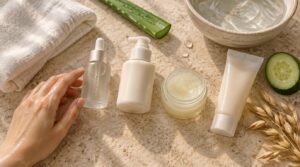
Follow four steps twice daily: cleanse, hydrate, moisturize, and protect. Apply products from thinnest to thickest, and put your humectant serum on slightly damp skin.
| Step | Morning | Evening |
|---|---|---|
| Cleanse | Water rinse | Gentle cleanser, lukewarm water |
| Hydrate and moisturize | Humectant serum, emollient ceramide moisturizer | Same, then occlusive |
| Protect | SPF 30+ | None |
Evening care matters most, since your skin repairs itself overnight. If it feels tight in the morning, skip the cleanser and rinse with water. In dry indoor air, layer an occlusive like petrolatum over your moisturizer to slow water loss.
Stay consistent for at least two weeks before judging results. Frequent product changes usually prolong recovery. If anything stings or burns, stop it and return to cleansing and moisturizing only.
Ingredients to Avoid During Skin Barrier Repair

Many products that feel harmless can slow barrier repair. Until your skin stops stinging and flaking, pause anything that irritates or strips it.
Skip these:
- Fragranced products, including "unscented" ones with masking scents, which often cause low-grade irritation.
- Alcohol based toners that dissolve the lipids holding your barrier together.
- Harsh exfoliants, such as scrubs, glycolic acid, and salicylic acid, that tear or inflame fragile skin.
- Retinoids, which speed turnover faster than damaged skin can make lipids.
Choose fragrance free formulas instead, and always read labels closely. Retinoids and acids are often fine long term. They just don’t belong in the repair phase.
Barrier Recovery Timelines and When to Seek Help
Mild damage often clears in 7 to 10 days, but a full lipid rebuild can take 6 to 12 weeks. That gap explains why skin may feel fine long before it’s truly strong.
Moderate damage usually needs 2 to 4 weeks of consistent skin barrier recovery. Severe damage can take 4 to 8 weeks or longer. Age over 50, cold dry air, and stress often slow things down.
Your barrier is truly restored when water or moisturizer doesn’t sting and products absorb within 60 seconds. A ceramide-containing product, steady transepidermal water loss prevention, and gentle skin barrier strengthening build lasting skin barrier strength.
See a dermatologist if nothing improves after 3 to 4 weeks, or if signs of infection appear.
Frequently Asked Questions (FAQs)
What is the most effective ingredient for repairing the skin barrier?
No single ingredient wins. Your skin barrier repairs best with ceramides, cholesterol, and fatty acids together, since they rebuild its natural lipid structure. Add a humectant and occlusive agents, and you’ll usually see better results.
What are the best products for repairing the skin barrier?
Look for a fragrance-free ceramide moisturizer that also lists cholesterol and fatty acids. Pair it with a gentle cleanser and a petrolatum-based ointment for dry patches. Simple formulas usually work best for skin barrier repair.
How to heal a damaged skin barrier fast?
Want faster results? Stop irritating your skin first. Skin barrier repair works best with a gentle cleanser and a moisturizer containing ceramides, cholesterol, and fatty acids.
Use hyaluronic acid on damp skin. Pause retinoids today.
Which oils can help repair the skin barrier?
Say your cheeks feel tight after winter wind. Sunflower seed oil, rich in linoleic acid, often helps most.
Squalane, jojoba oil, and marula oil soften skin. Rosehip oil may suit some. None fully replaces ceramides.
Can you over-moisturize and weaken your skin barrier?
Probably not. A moisturizer doesn’t weaken intact skin, and no amount or frequency is known to harm it. If your skin burns, itches, or turns red, suspect skin irritation from fragrance or preservatives instead.
How do you know if your skin barrier is damaged?
Picture a brick wall losing its mortar. Skin barrier damage often feels tight, flaky, and stinging, especially when familiar products burn. Rising trans epidermal water loss leaves skin dry despite moisturizer.
Persistent symptoms need assessment.
Can you use retinol while repairing your barrier?
Usually not. During skin barrier repair, pause retinol until burning, redness, and peeling settle. Retinol usage can worsen irritation. Rely on moisturizing ingredients for skin sensitivity relief, then restart slowly, once plain moisturizer stops stinging.
Does sun exposure slow down skin barrier recovery?
Yes, it does. Sun exposure raises water loss and delays recovery, often even without visible burning. Skin barrier repair works better with daily broadspectrum SPF 30, which helps skin barrier integrity while ceramides and moisturizers rebuild.
Are physical exfoliants safe for a compromised skin barrier?
The belief that scrubbing helps damaged skin renew faster is a myth. Physical exfoliants add friction, and they don’t support skin barrier repair.
Skip them until your sensitive skin feels fully comfortable and intact again.
Conclusion
Your skin barrier is a brick wall, and damage is just missing mortar. Patch it, and the wall holds again.
The best ingredients for skin barrier repair are usually the simplest: ceramides, cholesterol, fatty acids, and a good humectant, sealed in with an occlusive. Skip the harsh actives while you heal, and keep your routine short and steady.
If stinging, redness, or flaking lingers, see a dermatologist. Healthy skin rarely needs more. It needs consistency.