This site is supported by our readers. We may earn a commission, at no cost to you, if you purchase through links. This content is for general informational and educational purposes only and is not a substitute for professional medical, dermatological, or nutritional advice.

That angry red bump showed up the night before a big event, so you did what most of us do: dabbed on spot treatment, then dabbed again an hour later. By morning, the pimple was still there, and now it had a flaky, stinging halo.
More product rarely means faster results. Over-applying dries out the surrounding skin, damages your barrier, and often makes the blemish look worse.
Knowing how often you should apply spot treatment puts you back in control. The right schedule depends on your ingredient, your skin type, and how your skin responds, so here’s how to dial it in.
Table Of Contents
- Key Takeaways
- How Often Should You Apply Spot Treatment?
- How Do Ingredients Affect Spot Treatment Frequency?
- How Should Skin Type Guide Treatment Frequency?
- How Do You Apply Spot Treatment Correctly?
- When Should You Reduce Spot Treatment Frequency?
- When Should You Stop or Seek Help?
- Frequently Asked Questions (FAQs)
- Can I use spot treatment everyday?
- What is the 4 2 4 rule in skincare?
- What kills acne quickly?
- Do I put on spot treatment before or after moisturizer?
- Can you use spot treatment on healed skin?
- Is it safe to apply spot treatment before makeup?
- Does spot treatment work on cystic acne?
- Can you leave spot treatment on overnight?
- Why does spot treatment leave a dry patch?
- Conclusion
Key Takeaways
- Start with once-daily use at night on clean, dry skin, only on the blemish, and move to twice daily only if your skin handles it well.
- Match your schedule to the ingredient and its strength, from every-other-day use for 5–10% benzoyl peroxide to once or twice daily for 0.5% salicylic acid, and alternate nights instead of stacking actives.
- Your skin type sets the pace, so oily skin tolerates more while sensitive or dry skin needs a gentler schedule, and stinging, redness, or flaking means you should scale back.
- See a dermatologist if a spot gets worse despite consistent care, if you notice signs of infection or an allergic reaction, or if nothing improves after four to six weeks.
How Often Should You Apply Spot Treatment?

Usually, once or twice a day is the sweet spot for spot treatment, and you get to decide where in that range you land. Start with once daily at night. That gives you a clear read on how your skin responds before you add anything more.
If your skin leans dry, this roundup of the best face oils for dry skin can help you pick a formula that hydrates without clogging pores.
Before you commit, patch test the product on a small area along your jaw for a day or two. Then apply a thin layer to clean dry skin, only on the blemish itself. More product doesn’t mean faster results.
If your skin copes well with it, you can move to twice daily while a pimple is active. Keep going until it’s completely flat, which usually takes three to five days per spot. Redness, dryness, flaking, or burning are signs of overuse, and they mean you should cut back on how often you apply it.
Still seeing no change after four to six weeks? Time to call in a professional.
How Do Ingredients Affect Spot Treatment Frequency?
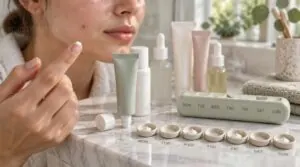
Your frequency depends heavily on which active ingredients are in the tube. Strength matters as much as the ingredient itself, so check the label before you set your schedule.
Here’s how to match them:
- Benzoyl peroxide at 2.5%: once daily, then build up as tolerated.
- Benzoyl peroxide at 5-10%: every other day at first.
- Salicylic acid at 2%: two to three times weekly.
- Salicylic acid at 0.5%: once or twice daily works for most people.
- Tretinoin: every third night, then every other night, then nightly.
Pairing ingredients raises irritation risk, so alternate nights instead of stacking them. If you’re especially prone to skin sensitivity, always patch test every new product first. Still unsure? A dermatologist consultation takes the guesswork out.
If your skin flares up easily, a gentle moisturizer for reactive skin can calm redness and keep your barrier strong between active ingredients.
How Should Skin Type Guide Treatment Frequency?

Ingredients set the starting point, but your skin type decides how fast you can move. Two people can use the same tube and get opposite results.
The same product can work wonders for one person and backfire for another, because your skin type sets the pace
Oily skin usually tolerates once or twice daily, so start with once and watch how you respond. Sensitive skin needs a gentler pace: once daily or every other day, increasing only if nothing stings. With dry skin, treat only the blemish itself and keep active ingredients off the surrounding patches.
Once your skin settles into a routine, pairing it with one of these homemade skin toners for glowing skin can help soothe and balance it between treatments.
Picture what’s at stake:
- Waking up to a calm, clear face you actually control
- Skipping the angry, flaky patches from overdoing it
- Knowing exactly why your skin responds the way it does
Your skin type is your rulebook. Follow it and stay in charge.
How Do You Apply Spot Treatment Correctly?
Knowing how often is half the job; technique is the other half. Precision keeps you in control, and targeted application is the whole game.
Here’s the routine:
- Cleanse and tone, then pat your skin completely dry.
- Dab a pea-sized amount onto each blemish only, using a thin layer.
- Wait one to two minutes before adding anything else.
- Follow with non-comedogenic moisturizer, plus sunscreen in the morning.
Remember, less is more. Piling on product won’t clear a spot faster, it just invites flaking. Rinse it off by morning. For skin irritation prevention, buffer strong treatments like benzoyl peroxide with a little moisturizer first, and skip chemical exfoliants around the same time. If a breakout keeps returning or worsens, consult a dermatologist.
If you’re unsure which spot treatment suits your skin, these best acne treatment product reviews can help you compare gentler options.
When Should You Reduce Spot Treatment Frequency?

If your skin starts stinging, turning red, or flaking after a spot treatment, it’s time to scale back. Skin irritation that builds with each application means your schedule is outpacing what your skin can handle. Less is more.
| What you notice | What to do |
|---|---|
| Tightness or dryness | Add moisturizer, apply less often |
| Stinging, redness, or peeling | Switch to every other day |
Adapalene labeling allows every-other-day use when irritation shows up. Retinoid irritation often peaks early, but worsening symptoms aren’t something to push through. Skin barrier damage from harsh cleansers, scrubs, or alcohol-based products compounds the problem, so simplify your routine.
Using several acne products? Pause extras, reintroduce one at a time. Follow your products instructions, and trust consistency and patience.
When Should You Stop or Seek Help?

You stay in control of your routine, and that includes knowing when to pull the plug. Mild stinging is common, but certain signs mean you should discontinue use right away.
- Hives, facial swelling, or throat tightness: seek emergency care.
- Persistent skin irritation that spreads beyond the treated spot.
- Pus, warmth, or red streaks, which suggest infection.
- Fresh rebound breakouts around treated areas.
- Deep, painful cysts that ignore over-the-counter products.
Severity of the blemish matters too. If a spot gets angrier despite consistent care, don’t keep stacking product. Consult a dermatologist, who can match treatment to your skin.
On isotretinoin, mood changes, vision problems, or dark urine need a doctor’s call the same day. Pregnant? Stop retinoids and phone your provider promptly.
Frequently Asked Questions (FAQs)
Can I use spot treatment everyday?
Using spot treatment every day for a century would torch your skin barrier.
Try once daily at night, scaled to the severity of the blemish, and consult a dermatologist if dryness lingers. Dermatologist-recommended skincare agrees.
What is the 4 2 4 rule in skincare?
Picture a slow dance. The 4 2 4 rule is just cleansing and toning: four minutes massaging, two with oil, four rinsing. It guides neither spot treatment, moisturizer before spot treatment, nor acne breakout treatment.
What kills acne quickly?
Nothing truly erases a pimple overnight, but benzoyl peroxide kills acne bacteria fastest, while salicylic acid clears pores. Both active ingredients help, so expect overnight acne reduction, not magic. Stick with your dermatologist-recommended skincare basics.
Do I put on spot treatment before or after moisturizer?
Worried moisturizer first sounds gentler? It can buffer irritation, but may dilute your topical acne medication.
Apply spot treatment first, as a targeted application on clean, dry skin. Then add moisturizer for skin barrier repair.
Can you use spot treatment on healed skin?
Yes, but go gentle. Healed skin only needs spot treatment once or twice daily for prevention, and a topical acne medication can drop to weekly. Pair it with skin barrier repair, and watch for postacne marks.
Is it safe to apply spot treatment before makeup?
Think of spot treatment as a thin primer coat, and let it dry first.
Then moisturize with a noncomedogenic moisturizer before makeup application, skip comedogenic ingredients, and support skin barrier repair so irritation stays low.
Does spot treatment work on cystic acne?
Picture a painful bump that’s been camping on your chin for three weeks. Spot treatment barely dents that kind of cystic acne, since active ingredients can’t reach deep inflammation.
Consult a dermatologist about topical medication.
Can you leave spot treatment on overnight?
Your pimple won’t vanish in a million years if you never try, so go ahead: overnight application of spot treatment works well. Dab benzoyl peroxide on dry skin, protect your skin barrier, and consult a dermatologist if irritation appears.
Why does spot treatment leave a dry patch?
Your spot treatment acts like a tiny sandblaster on your moisture barrier. It strips oil and lipids, leaving redness, peeling, dryness on dry skin.
Switch to a nondrying formula and add daily ceramide moisturization afterward.
Conclusion
Worried that less product means slower healing? It’s the opposite. Patience protects the skin that does the repairing.
So, how often should you apply spot treatment? Once or twice daily, depending on your ingredient and skin type, and only on the blemish itself. Watch how your skin responds, scale back at the first hint of dryness, and call a dermatologist if breakouts linger.
You’re not fighting your skin. Consistent, restrained application is what clears it.