This site is supported by our readers. We may earn a commission, at no cost to you, if you purchase through links. This content is for general informational and educational purposes only and is not a substitute for professional medical, dermatological, or nutritional advice.
That sleek ponytail looks great at 8 a.m. By 3 p.m., your temples ache, and by evening you’re wincing as you pull the elastic free. I see this often in my clinic.
Tight hairstyles causing hair breakage rarely announce themselves loudly. Hair strands stretch past their limit, scalp vessels squeeze, and follicles grow inflamed. Then short, uneven hairs appear at your temples and nape, right where the pull is strongest.
The good news is that you can reverse much of this. Once you know why tension harms your hair, you can spot the early signs, protect your strands, and style with confidence.
Table Of Contents
- Key Takeaways
- What Happens When a Hairdo is Too Tight?
- The Most Damaging Hairstyles to Avoid
- Why Do Tight Braids and Ponytails Cause Breakage?
- How to Prep and Protect Hair Before Tight Styling
- Gentle Styling Habits That Reduce Tension
- Can You Reverse Breakage and Repair Tension Damage?
- Frequently Asked Questions (FAQs)
- Can you reverse breakage in hair?
- What is the most damaging hair style?
- What hairstyles don’t cause hair breakage?
- Why is my hair suddenly breakage so much?
- How long should braids stay in?
- Does sleeping with a ponytail damage hair?
- Are loose hairstyles always safer for hair?
- Can silk pillowcases reduce overnight hair breakage?
- When should someone see a dermatologist about hair loss?
- Conclusion
Key Takeaways
- Tight styles keep your strands stretched and squeeze the blood vessels around your follicles, so breakage shows up first at your temples and nape, where the pull is strongest.
- Soreness, redness, small bumps, and short uneven hairs along your hairline are early warning signs, so loosen the style as soon as you notice them.
- You can protect your hair by using soft scrunchies or fabric-covered elastics, adding a leave-in conditioner and light oil beforehand, rotating your styles and parting lines, and keeping braids in for no more than six to eight weeks.
- Early tension damage is usually reversible once the pulling stops, but smooth, shiny patches with no visible follicle openings mean permanent damage, so see a dermatologist if your hairline stays thin.
What Happens When a Hairdo is Too Tight?
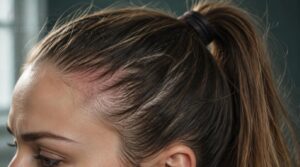
A hairdo that’s too tight does more than feel uncomfortable. It quietly strains both the hair shaft and the root, and your scalp tells you about it long before the hair does. Here are four things worth understanding, so you can spot trouble early and keep your hair strong.
If you color your hair too, it’s worth reading about whether bubble hair dye is damaging, since dyed strands are already more fragile when pulled tight.
Why Sustained Tension Weakens The Hair Shaft and Root
When you wear tight hairstyles daily, scalp tension never really switches off. Your strands stay stretched, and your roots stay loaded.
Picture how it builds:
- Strands stretch past their limit.
- Hair shaft weakness sets in.
- Follicles stay inflamed.
- Follicle damage builds quietly.
- Hair breakage follows.
Pulling gently always protects what you’ve already grown. Ease the load before it becomes permanent.
How Continuous Pulling Disrupts Scalp Circulation and Nutrient Flow
That constant pull doesn’t stop at the strands. It squeezes the tiny vessels beneath your skin, so scalp circulation slows. Less blood reaches each follicle, which means less oxygen and fewer proteins, vitamins, and minerals for growth.
You won’t feel it happening. Nutrient delivery drops quietly, and hair root stress builds. Reduced blood flow can leave follicles deprived of essential nutrients, leading to fragile hair, slowed growth, or even a complete halt in growth. Ease the pull, and your follicles can breathe again.
Early Warning Signs: Soreness, Redness, and Bumps Along The Hairline
Your scalp talks before your hair does. Increased scalp sensitivity is your cue to recognize early signs of tension damage:
- Soreness or a burning, pulling feeling after styling.
- Redness along the hairline.
- Small bumps around braid roots.
Loosen the style now, avoid excessive tension at roots, and protect hairline and edges. Ignored, this can lead to hairline thinning. Act early.
Short Broken Hairs at Temples and Nape as Damage Signals
Soreness and redness are one signal. Short hairs are another.
Look at your temples and nape. Tight hairstyles pull hardest there, and hair breakage shows up as short, uneven strands that don’t match the rest. Baby hairs are naturally short.
Check weekly to recognize early signs of tension damage. Then limit duration of tight styles and protect hairline and edges.
The Most Damaging Hairstyles to Avoid

Some styles ask far more of your hair than others. Three of them show up again and again when I see tension-related breakage. Here’s what to watch for, so you can spot the risk before your scalp does.
If you’d rather keep your edges safe while still protecting your ends, these protective hairstyles that support natural hair growth put far less strain on your hairline.
Tight High Ponytails
A tight high ponytail looks neat, but your hairline pays for it. Pulling everything toward the crown puts steady strain on the front and temples. That’s where hair breakage shows up first.
Skip the slicked-back pull and use gentle hair accessories. Rotate hairstyles frequently and limit duration of tight styles. Your follicles will thank you.
Ballerina Buns
Think twice before pulling your hair into a tight ballerina bun every day. It’s one of the most tension-heavy tight hairstyles, because it drags every strand upward and holds it there for hours.
That constant pull strains the roots and hairline. Over time, you’ll see hair breakage, hair elasticity loss, and a weakened protein-moisture balance. Loosen it before damage begins.
Overly Tight Box Braids
Picture a tent rope pulled taut against its stake. That’s your hairline under tight box braids.
Tight box braids pull your hairline like a taut tent rope against its stake, straining every follicle
Bumps, tenderness, or tiny bulbs on the braid ends mean hair breakage is already underway, and your hair follicle health is at risk.
Loosen them early. Ask your stylist for softer parts and lighter extensions. Protective styling should never hurt. Choose tensionfree styling instead.
Why Do Tight Braids and Ponytails Cause Breakage?
Tight styles don’t break your hair for just one reason. Four separate causes are at work, and each one chips away at your strands in its own way. Once you understand them, you can spot the warning signs early and style with more control.
Friction and Snagging From Rough Elastics During Styling and Removal

Your hair tie might be the quiet culprit.
Rough elastics lift your cuticle scales every time you style or remove them, and that friction adds up. Metal clasps snag strands too. For better hair accessory safety, choose soft scrunchies or fabric-covered elastics.
Avoid styling on wet hair, since it snaps easily. Practice gentle unwinding of hair ties, and never yank.
Pulling Strands Against Their Natural Growth Direction

Your hair has a built-in direction, and your styling should respect it. Scalp hairs usually leave the skin at a slight angle, and each follicle works to hold that line.
Pulling against it adds shear force at the follicle and breaks strands 2-3mm from the scalp. Tight hairstyles do this often at your temples and nape. Choose gentle hair handling.
When Tension Turns Into Traction Alopecia Along The Hairline
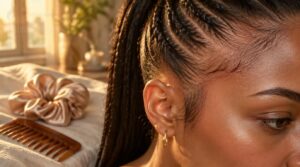
Your hairline is the first place tension shows up. Traction alopecia starts there when tight hairstyles pull on the same follicles day after day.
At first, the damage is quiet. Strands thin and break. Catch it early, and your follicles can recover. Keep pulling, and the loss can become permanent.
Hairline protection is balanced styling philosophy in practice. Ease the pull before your body decides for you.
Styling Wet or Fragile Hair Increases Snapping Risk

Wet strands are weaker than they look. Water swells the fiber, so wet hair fragility rises and your hair elasticity turns stretchy instead of springy. A ponytail pulled tight on damp hair can snap it.
Let hair dry first. Fine or processed strands need extra care, because protein-moisture balance keeps the hair shaft strength steady. Protect it, and breakage prevention gets easier.
How to Prep and Protect Hair Before Tight Styling

Tight styles don’t have to cost you your hair. A few simple steps before you style can protect your strands from stress. Here are four prep habits I recommend, starting with what goes on your hair and ending with what holds it.
Apply Lightweight Leave-in Conditioner to Boost Elasticity
Apply a lightweight leave-in conditioner to damp, sectioned hair before you tie anything back. Focus on the mid-shaft to the ends, where tension does the most harm.
The humectants and emollients help your hair stretch instead of snap. That boosts hair elasticity and helps your hair retain moisture. Add a little protein-moisture balance, and your strands hold up under pull.
Use it daily. Consistency protects you.
Seal in Moisture With a Light Oil Before Styling
Once your leave-in is on, lock it down. Oil seals in moisture by coating the cuticle, which slows evaporation and keeps your strands pliable under tension.
Pick a light oil like argan, jojoba, or grapeseed. Warm a few drops between your palms, then smooth them over damp hair:
- Focus on mid-lengths and ends.
- Keep it away from your scalp.
- Use less than you think.
Balance protects you.
Protect Delicate Edges and Hairline With Nourishing Oils
Your edges need their own care. They’re the thinnest, most fragile strands you have, and tight styles hit them first.
Smooth a drop of nourishing oil on edges, such as Jamaican black castor, sweet almond, or rosehip. Then shape them with a softbristle brush for edges. This coats them, cuts friction, and aids moisture retention.
Strong edges bend before they break.
Choose Soft Scrunchies, Spiral Ties, and Fabric-covered Elastics
Because your hair ties touch your strands all day, they matter more than most people think. Soft scrunchies spread pressure across a wider area. Fabric-covered elastics shield hair from the narrow center. Spiral ties leave gentler creases.
Pick gentle hair ties that hold without squeezing. This helps hair breakage prevention and low-manipulation styling. Replace stretched bands before they snag strands.
Gentle Styling Habits That Reduce Tension

Your hair can handle a lot, but it needs you to stay in control of the tension. These four habits give you simple ways to protect your scalp and strands every time you style. Let’s look at each one so you can build a routine that keeps your hair strong.
Secure Hair Firmly Without Stretching The Scalp
Firm doesn’t mean tight. Your hold should feel secure, never strained.
Choose soft scrunchies or fabric-covered elastics. Loosen styles before bed, giving your hair resting overnight. Favor low-manipulation styling too. Picture the payoff:
- A calm, comfortable scalp by evening
- Fuller hairlines season after season
- Fewer broken strands in your brush
- Pride in your reflection
Gentle holds keep strong hair growing.
Gently Unwind Hair Ties Instead of Pulling Them Out
Think of a tangled necklace: you tease the knot loose, you don’t yank the chain.
Unwind each wrap slowly, especially when hair’s wet. Soft scrunchies and fabric-covered elastics glide free.
| Method | Result |
|---|---|
| Unwinding | Less breakage |
| Pulling | Snapped strands |
| Wet pulling | Snapping |
Loosen styles before bed, so hair resting overnight stays free of tension. Gentle habits support hair recovery. Patience matters.
Rotate Hairstyles and Part Lines to Distribute Stress
Your scalp works like a footpath. Walk the same line daily and the grass wears away.
Try alternating part lines each week. Pair that with hairstyle rotation, moving between a ponytail, a loose braid, and a low bun. Choose lowtension styling most days, and keep protective hairstyles from pulling on one spot. Small shifts protect follicles. Add hair styling breaks.
Limit Wear Time and Schedule Scalp Rest Periods
Your follicles need downtime, just like you do. Cutting wear time is the simplest fix.
- Keep braids under 6-8 weeks, and cornrows under 2-3 weeks.
- Leave tight hairstyles loose for 48-72 hours afterward.
- Take 1-2 weeks between protective installs.
Build rest periods for scalp recovery into your hairstyle rotation. It lowers your traction alopecia risk. Balance protects your hairline long-term.
Can You Reverse Breakage and Repair Tension Damage?

Yes, you can often repair tension damage, and you have more control over it than you might think. The answer depends on how long the strain lasted and how your scalp and strands respond. Here are the four steps I’d start with.
Scalp Massage to Restore Circulation and Relieve Tension
Your scalp has been under pressure, so give it some relief. A daily scalp massage is the simplest place to start.
Use your fingertips and make slow, small circles over each area. Spend five to ten minutes on it. This eases tension from tight hairstyles and brings fresh blood to your hair follicles. Gentle habits protect what you’ve got.
Protein and Moisture Treatments to Rebuild Strength
Massage helps the scalp, but the strands need repair too. Use protein-based treatments to rebuild strength, then follow with hydrating treatments to restore stretch.
Aim for protein-moisture balance. Alternate the two weekly, applying protein to damp hair under a cap for better penetration. Too much protein stiffens hair, so don’t skip moisture.
Balance keeps hair strong and supple.
When Traction Alopecia is Reversible—and When It Isn’t
Strong strands help, but what you can regrow depends on the follicle. Early traction alopecia is usually reversible hair loss. Stop the pulling, and hair often returns within months.
Smooth, shiny patches with no visible openings point to permanent follicle damage. Hair won’t regrow there. See a dermatologist if your hairline stays thin or looks scarred.
Building a Low-tension Styling Routine That Prevents Relapse
Whether your hairline recovers or not, the goal now is keeping it safe. Build a routine around low-manipulation styling:
- Use soft scrunchies, never tight elastics.
- Rotate your styles and part lines weekly.
- Keep up hair hydration and a protein-moisture balance.
- Schedule balanced strengthening treatments.
Gentle habits last longer than quick fixes. If a style hurts, loosen it. Balance protects regrowth.
Frequently Asked Questions (FAQs)
Can you reverse breakage in hair?
Yes, often you can. Ease the tension first, then strengthen hair with treatments and keep a proteinmoisture balance.
Watch your hair shedding patterns for hair root weakening. Scarred areas may eventually need surgical hairline restoration.
What is the most damaging hair style?
Think of your hairline as a rope under strain.
No single style is worst, but tight hairstyles worn repeatedly cause mechanical hair damage, hair root weakening, and traction alopecia. Ease off, and follicle stimulation returns.
What hairstyles don’t cause hair breakage?
Gentle doesn’t mean boring. Loose low ponytails with fabric-covered elastics, knotless braids, and wash-and-gos all work.
Choose low-manipulation styling, add moisture before styling with a lightweight leave-in conditioner, and keep a steady hair styling rotation.
Why is my hair suddenly breakage so much?
Most people shed 50 to 100 hairs a day, so check what’s falling. Short pieces mean hair breakage, often from tight hairstyles, heat, or bleach.
Pulling stresses hair follicles, risking traction alopecia and hair thinning.
How long should braids stay in?
Keep your braids in for six to eight weeks at most. That’s a ceiling, not a target. If your tight braids feel sore, pull at your hairline, or cause hair breakage, take them out sooner.
Does sleeping with a ponytail damage hair?
Your hair isn’t a rope, so don’t tie it down like one.
A tight ponytail overnight strains hair follicles, raises hair shaft fragility, and fuels hair breakage. Sleep hair damage is real, so loosen up.
Are loose hairstyles always safer for hair?
A loose rope can fray. Loose hairstyles aren’t always safe, because rubbing, snug pins, and heavy extensions add hair breakage, hair shaft fragility, and scalp inflammation. Adjust your hair care routine, and watch for soreness.
Can silk pillowcases reduce overnight hair breakage?
Yes, they can. Silk pillowcases cut friction, so your strands glide instead of snag. They also don’t soak up your hair’s moisture like cotton does. That’s real hair breakage prevention, though it’s preventive, not a cure.
When should someone see a dermatologist about hair loss?
You might think hair loss is normal and will pass. Sometimes it does. But see a dermatologist if it’s sudden, patchy, or spreading, or if thinning along your hairline continues after you’ve stopped wearing tight styles.
Conclusion
Picture a rubber band stretched for hours, thinning with every tug until it finally snaps. Your hair behaves the same way.
When tight hairstyles causing hair breakage start to show up at your temples, listen early. Loosen the style, cushion your strands, and give your scalp rest. Most damage fades once the pull stops, and you can rebuild strength with patient, gentle care.
Style your hair the way you’d treat a friend: firmly, never ruthlessly.