This site is supported by our readers. We may earn a commission, at no cost to you, if you purchase through links. This content is for general informational and educational purposes only and is not a substitute for professional medical, dermatological, or nutritional advice.
That foam looks gentle. It smells like a fruity shampoo and spreads like a salon treatment, so it’s easy to forget you’re applying real hair color. Your hair doesn’t care about the texture, though. Permanent bubble formulas lift the cuticle and change the structure inside each strand, just like a classic cream dye.
So is bubble hair dye damaging? Yes, and how much depends on your formula, how often you color, and how long it sits on your head. Ingredients like ammonia, peroxide, and PPD can dry your hair or trigger sudden allergic reactions. Here’s how to spot the risks, protect your hair, and choose smarter options.
Table Of Contents
- Key Takeaways
- Is Bubble Hair Dye Damaging to Your Hair?
- Which Bubble Hair Dye Ingredients Can Damage Hair or Irritate Your Scalp?
- Is Permanent Bubble Hair Dye More Damaging Than Semi-Permanent Dye?
- How Can You Reduce Damage When Using Bubble Hair Dye?
- What Are Gentler Alternatives to Bubble Hair Dye?
- Frequently Asked Questions (FAQs)
- Is bubble hair dye healthier?
- What is the healthiest hair dye to use?
- Which hair dye is the most damaging?
- Which hair dye is least damaging to hair?
- Can bubble hair dye cause hair loss?
- Is bubble hair dye safe for sensitive scalps?
- Can you use bubble dye on bleached hair?
- How often can you safely recolor with bubble dye?
- Does bubble hair dye work on dark hair?
- Conclusion
Key Takeaways
- Bubble dye is just as damaging as regular cream dye, because the fluffy foam changes how it spreads but not how it lifts your cuticle and alters your strands, so how much harm you get depends on the formula, how often you color, and how long you leave it on.
- You’ll want to read the label for ammonia or ethanolamine, PPD, resorcinol, and peroxide, since these can dry your hair or trigger allergic reactions, and "ammonia-free" or "hypoallergenic" claims don’t guarantee your scalp will stay safe.
- Permanent bubble dye does more harm than semi-permanent, which mostly coats the surface and fades in 6 to 12 washes, so choose permanent only if you need full gray coverage.
- You can cut the risk by patch-testing 48 hours ahead, deep conditioning beforehand, processing for 20 to 30 minutes, rinsing until the water runs clear, waiting 48 hours to shampoo, and spacing touch-ups 4 to 8 weeks apart.
Is Bubble Hair Dye Damaging to Your Hair?

Why does a foam feel so gentle when the chemistry underneath isn’t? Bubble hair dye can cause hair damage, and the fluffy texture doesn’t change that! The foam just helps you spread color evenly. Permanent versions still lift your cuticle and alter the strand’s inner structure, much like a traditional box dye.
Foam can soften coarse hair and ease irritation, and a gentle grooming routine, including electric shavers for office professionals, helps keep skin calm too.
Bubble hair dye feels gentle because of its fluffy foam, but the chemistry underneath still lifts your cuticle and damages your hair
Here’s the good news: you’re in control of how much risk you take. Damage depends on the formula, how often you color, and how long you leave it on. Choosing an ammoniafree option or one with natural ingredients may soften the impact, though it won’t erase it. Some "zero ammonia" formulas simply swap in monoethanolamine as a substitute, which lacks the odor but can stay on hair after rinsing.
Treat hair dye safety as a habit, and your strands will thank you! Start by knowing exactly what’s in the bottle.
Which Bubble Hair Dye Ingredients Can Damage Hair or Irritate Your Scalp?
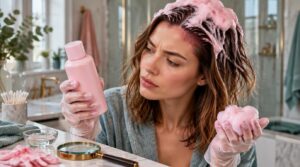
So what’s actually in that bottle? Flip it over and read the label, because the foam won’t tell you anything. Formulas vary by brand and shade, but these are the ingredients worth spotting:
- Ammonia or ethanolamine: swell your cuticle so color can enter, but repeated use dries hair and can irritate eyes, airways, or skin.
- PPD and similar dye precursors: can trigger allergic reactions, even if past uses went fine.
- Resorcinol and peroxide developer: resorcinol is a common coupler that may irritate, while peroxide lightens melanin and weakens the cuticle.
- Fragrance, preservatives, and harsh surfactants: these can sting your scalp or strip its oils.
Labels like "hypoallergenic" don’t guarantee safety. Check the list every time, and you’ll stay in charge!
If your scalp is easily irritated, browsing organic hair care products for sensitive scalps can help you spot gentle formulas with short, honest ingredient lists.
Is Permanent Bubble Hair Dye More Damaging Than Semi-Permanent Dye?
Yes, it is, and the gap is bigger than most people expect. Permanent bubble hair dye relies on ammonia and PPD to open your cuticle and build color inside the cortex, so the change stays until new hair grows in.
Semipermanent formulas mostly coat the surface and fade within 6 to 12 washes. Less chemistry means less stress on your strands.
Here’s the side-by-side comparison.
| Factor | Permanent | Semipermanent |
|---|---|---|
| Ammonia and peroxide | Usually yes | Usually no |
| Lasts | Until regrowth | 6 to 12 washes |
Gray coverage is the deciding factor, since semipermanent barely touches it. If you need full coverage, permanent bubble hair dye is your option, so make hair damage prevention your priority. Want to experiment? Go semipermanent and keep control.
Since permanent dye alters your hair’s structure, it helps to read this permanent vs semi-permanent hair dye comparison before deciding what your hair can handle.
How Can You Reduce Damage When Using Bubble Hair Dye?

You can’t make bubble dye gentle, but you can take real control of how much it costs your hair! Three steps make the biggest difference, and they cover prep, application, and aftercare. Work through them in order, and you’ll color with confidence instead of crossing your fingers.
Allergy Testing and Hair Preparation
Think you can skip the test because you’ve dyed before? Don’t. A hair dye allergy can appear after years of trouble-free use.
Do a skin allergy test 48 hours before using bubble hair dye, even if it’s an ammoniafree dye. Rinse, then watch the spot. Redness, itching or swelling means stop.
Skip a scratched scalp, and protect your hair cuticle.
Safe Application and Processing
You hold the power when you apply bubble hair dye, so work methodically. Do your skin allergy test first:
- Comb out tangles.
- Wear gloves and add barrier cream.
- Invert the bottle five times.
- Massage foam from roots to ends.
- Time it for 20 to 30 minutes.
High porosity grabs color fast, so choose ammoniafree dye and schedule deep conditioning beforehand.
Proper Rinsing and Aftercare
Rinse your hair with lukewarm water until it runs completely clear, and check your hairline, ears, and neck for leftover bubble hair dye. Residue can keep irritating your scalp, so scalp health starts here.
Follow with a color-safe conditioner, then wait 48 hours before shampooing. For hair dye aftercare, choose moisturizing ingredients, and skip hot water, which dries strands.
What Are Gentler Alternatives to Bubble Hair Dye?

Bubble’s bold color promises a lot, but your hair pays the price. Gentler options exist, and they put you in charge of the result!
Start with natural ingredients and pick what fits your goal:
- Henna coats the shaft without ammonia or peroxide, so you skip the damage.
- Coffee or black tea rinses darken hair and mix grays gradually.
- Semi-permanent dyes like Arctic Fox fade evenly, with no developer needed.
- Hairprint restores your natural shade using food-grade ingredients, not dye.
Want a true organic hair dye feel? Try ammonia-free options, which open the cuticle gently and cut scalp irritation. Check labels for PPD too, since it’s a common allergen.
Look for plant keratin and hydrolyzed silk in aftercare. They add strength.
Frequently Asked Questions (FAQs)
Is bubble hair dye healthier?
One client swore bubble hair dye was gentler, then her scalp stung. It isn’t healthier by default. Ammonia-free formulas still use harsh agents. Check labels for natural ingredients and hydrolyzed silk, not chemicalfree dye claims.
What is the healthiest hair dye to use?
You want control, so read your hair dye ingredients! Pure henna and indigo make a true chemicalfree dye. Prefer permanent? Try gentle ammoniafree options with hydrolyzed silk and royal jelly extract, and always patch-test first.
Which hair dye is the most damaging?
Bleach does the most damage, so skip it if you can! Permanent bubble dye comes next, since ammonia and higher alkaline levels swell your hair cuticle. Bubble hair dye in semi-permanent form is much gentler.
Which hair dye is least damaging to hair?
Say you’re reviving faded copper. Bubble hair dye in a semipermanent bubble dye formula wins! Skip permanent. Ammoniafree options with plant keratin cut damage, and weekly deep conditioning keeps you in control of your color!
Can bubble hair dye cause hair loss?
Your hair is a garden, and chemicals are the weather! Bubble hair dye can cause breakage that looks like loss, but rarely harms roots.
Ammonia and hair shaft penetration are damaging. Guard your hair health.
Is bubble hair dye safe for sensitive scalps?
Think of your scalp as a quiet lake: one harsh splash and it ripples. Bubble hair dye with ammonia can irritate it, so run a skin allergy test first. Wait 48 hours, then decide.
Can you use bubble dye on bleached hair?
Think of bleached hair as a dry sponge: it drinks up color fast. Bubble hair dye works on it, but you’ll want to go semi-permanent, skip ammonia where you can, and strand test first for control.
How often can you safely recolor with bubble dye?
Think of your hair as a canvas that needs drying time between coats. For bubble hair dye, wait 4 to 8 weeks between full applications. Dry or damaged hair needs the longer gap to avoid damaging it.
Does bubble hair dye work on dark hair?
Worried dark hair blocks color? It doesn’t! Bubble hair dye adds depth, but it won’t lighten, so use a lightening primer first.
The foamy texture spreads evenly. Permanent bubble hair dye boosts hair dye durability.
Conclusion
The foam feels soft, but the chemistry underneath isn’t. Is bubble hair dye damaging? It can be, yet you hold more control than the box suggests.
Patch test first, watch your timer, rinse thoroughly, and condition like you mean it. If your strands feel fragile, semi-permanent color or a gloss gives you the shade without the stress. Choose the method that fits your hair, not the one with the prettiest lather. Color on your terms.