This site is supported by our readers. We may earn a commission, at no cost to you, if you purchase through links. This content is for general informational and educational purposes only and is not a substitute for professional medical, dermatological, or nutritional advice.
Skipping a strand test and applying dye straight to your full head is one of the most common, and most expensive, mistakes in at-home hair coloring. A single session can leave you with brassy orange roots, unexpected green tones, or hair that stretches like gum and snaps under tension.
Learning how to do a hair dye strand test at home takes under 30 minutes and gives you a preview of exactly what your hair will do, before you commit to the whole head. This guide walks you through each step so you color with confidence, not guesswork.
Table Of Contents
- Key Takeaways
- What is a Hair Dye Strand Test, and When Should You Do One?
- How Should You Prepare for a Hair Dye Strand Test?
- How Do You Perform a Hair Dye Strand Test at Home?
- How Should You Assess Your Strand Test Results?
- When Can You Dye Your Hair, and What if The Test Result is Wrong?
- Frequently Asked Questions (FAQs)
- How to do a test strand when dyeing hair?
- How to do a hair dye patch test at home?
- How to do the hair strand test?
- How much bleach to mix for a test strand?
- What safety precautions should I take when doing a strand test?
- How often should I do a strand test?
- Are there any special techniques to apply the dye?
- Is strand testing suitable for all hair types?
- How do I adjust the hair colour if I’m not satisfied with the results?
- Can you strand test on color-treated hair?
- Conclusion
Key Takeaways
- A strand test takes under 30 minutes and uses your exact dye, developer, and timing on a hidden one-inch section, giving you an accurate preview of how color will behave across your full head.
- Always judge the test result only after the strand is completely dry in natural daylight, since wet hair reads darker and distorts undertones, leading to costly misjudgments.
- The strand reveals four critical signals: color accuracy, fiber integrity (snapping or gumminess means the formula is too strong), unexpected undertone shifts, and how well the color holds after a wash.
- If the result lands wrong, adjust processing time or shade on a new strand before committing to a full application — and consult a specialist if the test exposes serious damage.
What is a Hair Dye Strand Test, and When Should You Do One?
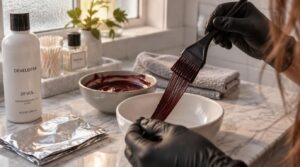
Why risk your whole head on a guess? A hair dye strand test lets you apply your chosen color to one small, hidden section of hair before committing to a full application. You use the same dye, developer, and timing you’d use on the rest of your hair, so the result predicts your final shade accurately. Most at home hair color kits include enough product to set aside a small amount for a strand test before diving into the full application.
If the shade comes out darker than expected, knowing how to lighten beard dye that’s too dark can save you from a frustrating full-application mistake.
It’s worth doing when you’re trying a new brand or formula, shifting to a much darker, lighter, or more saturated tone, or coloring hair that’s changed through fading, treatments, or prior corrections.
A strand test shows how your hair absorbs pigment, whether color develops evenly or patchily, and if your undertone pulls the result warmer or cooler than expected. Remember, it’s not an allergy test; skin safety requires separate patch testing.
How Should You Prepare for a Hair Dye Strand Test?
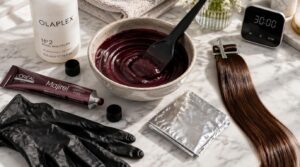
You’ve decided a strand test is worth your time, so let’s set it up for results you can trust. Preparation is where most at-home precolor testing goes wrong, and it’s easy to fix.
First, check your hair condition. Don’t test on freshly dyed, bleached, or chemically straightened hair, because leftover chemistry shifts how dye takes. Wash out oils and styling product buildup with a clarifying shampoo, then skip conditioner on the test zone.
Gather your supplies:
- Your exact dye, developer level, and brand for the full application
- Gloves and a foil or towel barrier
- A small clip to isolate your strand
- A timer and your usual rinse setup
Mix the dye only when you’re ready to apply it, since premature oxidation skews color. Plan the test at least 24 hours ahead so you can redo it if the shade lands wrong.
If the color still looks off after settling, fading hair dye that turned out too dark is easier than most people expect with a few gentle techniques.
How Do You Perform a Hair Dye Strand Test at Home?
Once you’ve prepped your space and supplies, you’re ready to run the actual test. The process breaks down into five clear steps, from isolating your strand to rinsing and drying it for evaluation. Follow each one in order so your results accurately predict how the dye will behave on your full head.
Prepare Your Hair and Supplies
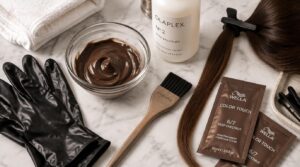
One bad reaction to dye can happen in minutes, which is why colorists never skip prep. Before you test at home, start with clean, dry hair at the test site, and skip any relaxers, perms, or bleach beforehand so your hair condition reflects baseline.
Lay out your hair dye kit, gloves, a non-reactive bowl, towels, and confirm you’ve got enough developer for full saturation.
Choose and Isolate The Strand
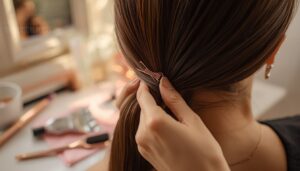
With your supplies laid out, pick your strand from a hidden spot behind your ear that matches the shade area you’re targeting. Follow these rules:
For more guidance on decoding your base tone and undertones before you snip that test strand, check out this complete hair color selection guide.
- Take a one-inch section with thickness matching the rest of your hair.
- Clip surrounding hair away so the strand test stays isolated.
- Use clean tools from your hair dye kit to prevent cross-contamination.
Keep the strand dry, separated, and ready for completely saturated coverage at home.
Mix and Apply The Dye
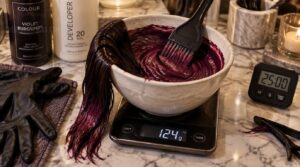
Mix your dye and developer in a non-metallic bowl using a digital scale, following your brand’s exact ratio. Stir only about 5 grams for your one-inch section, since mixed color can’t be saved. Use accurate gram-based measurements to keep the formula precise.
Apply immediately with a brush or gloved fingertips, working root to tip until the strand is completely saturated. Let it process for 10–20 minutes, then assess the result.
Cover and Time The Strand
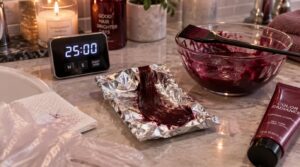
After applying the dye evenly, cover the strand with foil or plastic wrap so it can’t touch neighboring hair or skin. Set a dedicated timer for the label’s full development time, starting the moment application is complete. Keep the strand at room temperature, away from direct sun. Pre-cut highlighting foil sheets for hair coloring make this step easier, since they lay flat and seal snugly without slipping.
If you feel strong irritation, stop early. Process for 10–20 minutes as directed, then assess the result.
Rinse and Fully Dry
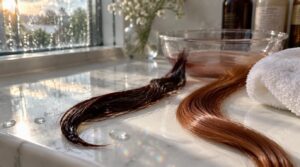
Picture a wet windowpane: colors look deeper and darker until it dries. Your strand is no different.
- Rinse with lukewarm water until the water runs nearly clear.
- Pat gently, then let the strand air dry completely, isolated from nearby hair.
- Judge the shade only when fully dry.
Wet hair distorts tone, so wait past your development time before comparing.
How Should You Assess Your Strand Test Results?
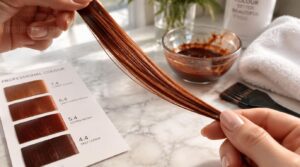
Many colorists have ruined a full head application by misreading a wet strand. Don’t make that mistake. Once your color development time ends, rinse the strand and dry it completely.
Never judge a strand test wet; rinse, dry completely, then read the true result
Assess four key areas:
- Color accuracy: Compare the dry strand in natural daylight against a swatch to confirm the final color result matches your target.
- Fiber integrity: Gently stretch the hair; if it snaps or feels gummy, the formula is too strong.
- Undertone shifts: Orange signals warm undertones that weren’t neutralized; green suggests metallic salt interference.
- Fading potential: Wash the strand once to test long-term vibrancy.
Your color prediction is only accurate when the hair dye strand test result is fully oxidized, completely dry, and checked in proper natural lighting.
When Can You Dye Your Hair, and What if The Test Result is Wrong?
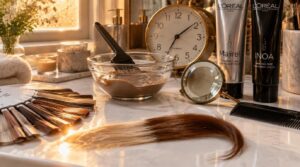
Once your strand test is complete, wait 24 hours before applying color to your full head. This lets you catch a delayed allergic reaction, similar to what a patch test reveals for skin, and assess the final color result across different lighting once your hair has fully dried.
If you’re not allergic to the dye’s ingredients, you can proceed immediately.
If the color came out too dark, shorten your processing time for the full application. Too light? Leave it on longer. For an unexpected tone, isolate a new strand and test a different shade or mixture before committing to the full head.
If the strand test reveals serious damage, consult a color correction specialist rather than attempting another at-home fix.
Frequently Asked Questions (FAQs)
How to do a test strand when dyeing hair?
Mix your dye and developer, isolate a small section in a hidden area, apply evenly, and time it per the instructions. Rinse, dry it fully, then check the result before committing to your whole head.
How to do a hair dye patch test at home?
For a skin patch test, apply a small amount of your mixed dye to clean skin behind your ear or inner elbow. Leave it uncovered for 48 hours, then check for redness, swelling, or itching.
How to do the hair strand test?
Think of a hair dye strand test as a trial run, so you’ll know what’s coming. Clip a one-inch section from your hidden spot, apply the right shade, follow development time, then wash and dry.
How much bleach to mix for a test strand?
A teaspoon is your precision instrument here. For a strand test, use 1 teaspoon of bleach powder with 5 to 2 teaspoons of developer. That small batch fully saturates your one-inch section without any waste.
What safety precautions should I take when doing a strand test?
Your basic safety precautions for a strand test are simple: patch test an inconspicuous area at least 24 hours before to screen for potential allergies, wear gloves throughout, and always work in a well-ventilated room.
How often should I do a strand test?
Picture a ruined color spreading before you catch it. Do a strand test before each hair dyeing session, and repeat when you switch color shade, change developer strength, or notice damage on previously dyed hair.
Are there any special techniques to apply the dye?
Want an even result? Saturate from root to tip in one careful, controlled pass with a wide-tooth comb, so your one-inch section gets fully consistent dye penetration and no missed, thin, or dry spots remain.
Is strand testing suitable for all hair types?
Yes, strand testing is suitable for all hair types, but your results can vary. Hair porosity, texture, and chemical history all influence dye uptake, so pick a strand that closely matches the area you’re coloring.
How do I adjust the hair colour if I’m not satisfied with the results?
If the color outcome is too dark, switch to a lighter shade for your next attempt. Too light or flat? Extend your timing in small increments first before reaching for a darker hair dye formula.
Can you strand test on color-treated hair?
Strand testing absolutely works on color-treated hair, but your prior hair dye history and a hair damage assessment matter. Altered porosity means your strands absorb dye faster, so a hair porosity test helps prevent over-deposit.
Conclusion
Most color disasters happen in the 30 minutes before the dye ever touches a full head. That’s the same window it takes to run a proper test.
Knowing how to do a hair dye strand test at home turns that window into your advantage. You’ll catch problems before they become permanent, confirm your processing time, and walk into every color session with real evidence behind your choices, not just hope.