This site is supported by our readers. We may earn a commission, at no cost to you, if you purchase through links. This content is for general informational and educational purposes only and is not a substitute for professional medical, dermatological, or nutritional advice.
Your badger brush may be the last holdout in a drawer full of modern gear. A $30 synthetic can now whip up lather that most people can’t tell from a $150 knot in a blind test.
That shift changes the buying decision. Badger still wins on plush tips and water retention. Synthetics dry in hours instead of days, resist mildew, and skip the ethical questions around where the hair comes from.
This badger vs synthetic shaving brush comparison weighs lather, feel, upkeep, sourcing, and lifespan with real numbers, so you can match a brush to your face, your bathroom, and your budget.
Table Of Contents
- Key Takeaways
- Badger Vs Synthetic Lather Performance
- Softness, Backbone, and Knot Design Compared
- Drying, Maintenance, and Travel Practicality
- Badger Hair Sourcing and Synthetic Alternatives
- Brush Longevity and Long-Term Value
- Which Shaving Brush Should You Buy?
- Frequently Asked Questions (FAQs)
- Do synthetic brushes work well for sensitive skin?
- Can synthetic brushes be used with all shaving soaps?
- How should a new shaving brush be cleaned first?
- What is the difference between Best badger and Pure badger shaving brushes?
- Should shavers hold the brush differently depending on material?
- Can a shaving brush be used with alum?
- Conclusion
Key Takeaways
- A $30 synthetic brush builds lather that most people can’t tell from a $150 badger knot in a blind test, so your soap and technique matter more than the brush.
- Badger wins on plush tips and water retention, while synthetics feel uniformly smooth, need no break-in, and suit sensitive skin.
- Synthetics dry in hours and resist mildew, but a badger brush needs 24 to 48 hours to dry, which makes synthetics the easier pick for daily use and travel.
- Both types can last 10 to 15 years or longer with good care, and badger sourcing raises ethical concerns that synthetics skip entirely.
Badger Vs Synthetic Lather Performance
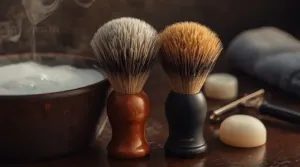
How much does your brush really matter once the lather hits your face? Less than the forums suggest. Modern synthetics build rich, dense lather that rivals good badger, and most shavers can’t tell the difference blind.
If you’d rather spend where it counts, a well-made soap does more for your lather than any brush, so start with these best shaving soaps.
Once soap meets skin, a good synthetic brush lathers so richly that most shavers couldn’t pick it out from badger blindfolded
The gap is smaller than the debate implies. Badger hair absorbs water into the fiber, which gives a warm, organic feel and slightly better water retention while you load and swirl. That extra heat is marginal, and it mostly vanishes once lather is on your skin.
Synthetics are non-absorbent, so they’re thrifty with soap. You’ll often need less product for a fine, creamy result. Load properly and hydrate the knot, and lather density lands in the same range.
Badger also asks for a break-in period and more upkeep. Synthetics skip both. Synthetics also dry within hours and offer mildew and odor resistance, while a badger brush left damp can develop mildew.
Softness, Backbone, and Knot Design Compared
Once the lather is on your face, feel is what’s left to separate these brushes. Here the gap is real, though it’s about design as much as material.
- Silvertip gives the plushest tips and a cushioned, luxurious face feel.
- Synthetic fibers feel uniformly smooth from day one, just less plush.
- Super badger sits in the middle, softer than pure but less cushiony.
- A 70/30 mix, like Nexus, softens the synthetic feel with badger character.
Backbone is where people get misled. Badger isn’t automatically floppy. Knot design and hair grade decide stiffness more than species. A bulb-shaped knot limits splay and adds spring, while a fan shape spreads out and feels softer. Bore fit matters too: a tighter bore feels firmer.
If you’re comparing options, this guide to choosing a shaving brush shows how knot shape, bristle grade, and bore fit translate into real-world feel.
Drying, Maintenance, and Travel Practicality
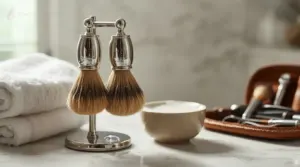
Feel is one thing. Living with the brush every morning is another, and here the gap is wide.
A synthetic brush is nearly dry within a few hours. Rinse it, shake it hard, pat it with a towel, and you’re done. A badger brush holds moisture deep inside the knot and needs 24 to 48 hours to dry fully in a normal bathroom. Hang it knot-down with decent airflow, or you risk mildew, odor, and brittle hair.
Travel makes the difference sharper. You can toss a damp synthetic into a dopp kit and forget it. Badger needs to be bone dry before it goes in a sealed bag.
Badger also asks for the occasional wash with mild soap to stop buildup from souring. Synthetics shrug that off.
Badger Hair Sourcing and Synthetic Alternatives
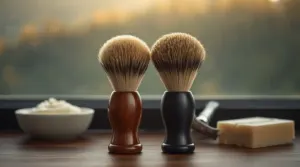
Then there’s the question of where the hair comes from, which matters more to some shavers than drying time.
Nearly all badger hair sourcing leads back to China, where badgers are culled as crop pests under license. The hair is often a byproduct of animals raised for fat or meat. Animal welfare groups have documented ugly conditions on some farms, and several large retailers have dropped badger brushes since.
If ethics bother you, here’s how to weigh it:
- Ask the maker where the knot’s hair originates.
- Check whether the brush is labeled cruelty-free or vegan.
- Try a modern synthetic first.
Today’s synthetic alternatives use tapered nylon filaments that come surprisingly close to badger. They cost less than animal hair, too.
Brush Longevity and Long-Term Value
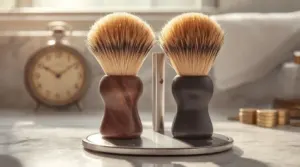
Most quality brushes outlast the razors you’ll pair them with. A well-kept badger brush runs 10 to 15 years, and high-end knots can stretch to decades. Synthetics match that span or beat it, since the fibers shrug off water and won’t swell the handle.
Your habits matter more than the material. Hang or stand the brush bristles-down in open air, and rotate between two brushes if you shave daily. Store one wet in a closed case and you might get six months. The usual failure point is the epoxy holding the knot, not the hair itself.
On price and value, badger costs more upfront but spreads out thinly over 10 years. Badger also needs a break-in period, while synthetics don’t.
Which Shaving Brush Should You Buy?
You’ve seen how badger and synthetic brushes differ, so now it’s time to pick one. Below are two solid options, one from each camp, so you can match the trade-offs to your own routine. Your lathering style and budget will point you to the right one.
Goodfellas Smile Deep Synthetic Brush
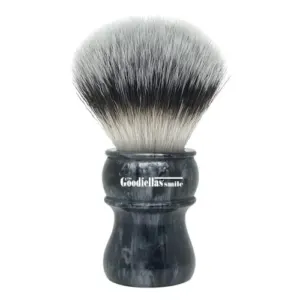
Want a brush that works the day it arrives? This one does.
The 24mm knot packs roughly 30,000 fibers of BASF PBT technopolymer, standing about 50mm tall. That’s enough structured backbone to build rich lather in a bowl or on your face. It weighs 88 grams.
Low water absorption means less upkeep, and the fibers shrug off heat up to 230°C. Rinse away the processing dust, dry it thoroughly, and keep it out of direct sunlight, since UV ages synthetics.
- Packs about 30,000 BASF PBT fibers into a 24mm knot, producing rich lather
- Low moisture absorption means less upkeep
- Fibers resist heat up to 230°C, and the structured design gives the knot firm rigidity
- Synthetic fibers are sensitive to UV exposure, so it must be kept out of direct sunlight
- Needs thorough drying after every use
- Processing dust must be rinsed out before first use
MÜHLE Classic Badger Hair Brush
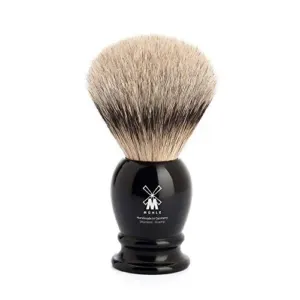
Synthetics dry fast and ask little of you. The MÜHLE Classic asks more and pays you back in lather.
Its handmade silvertip badger hair soaks up water and builds dense, creamy lather, whether you work it in a bowl or directly on your face. Size is chosen at purchase: 6.3", Small, Medium, or Large.
Grips come in black resin, faux ivory resin, or olive wood, sold separately. Rinse it after every shave and hang it bristle-side down so it dries.
- Handmade silvertip badger hair soaks up water to build dense, creamy lather.
- Works in a shaving bowl or directly on the face with soap or cream.
- Comes in four sizes (6.3", Small, Medium, Large) with black resin, faux ivory resin, or olive wood handle finishes.
- Handle finishes are sold separately, which adds to the total cost.
- Size must be chosen at purchase, so you need to decide before you buy.
- Needs rinsing and hanging bristle-side down after every shave, which takes more care than a synthetic brush.
Frequently Asked Questions (FAQs)
Do synthetic brushes work well for sensitive skin?
Think of a synthetic brush as a blank slate for your face: no animal proteins, no itch. For sensitive skin, yes, they work well. They’re hypoallergenic, need no break-in, and build dense lather fast.
Can synthetic brushes be used with all shaving soaps?
Hard soaps are tougher on soft fibers, but that doesn’t rule them out. Synthetic brushes handle nearly every soap type, since low water retention keeps lather quality strong.
Hard pucks need a longer, firmer load.
How should a new shaving brush be cleaned first?
Rinse your new brush under warm running water, no hotter than 45°C, to clear dust and manufacturing residue. Add a few drops of mild dish soap or baby shampoo, work it through gently, then rinse thoroughly.
What is the difference between Best badger and Pure badger shaving brushes?
Best badger comes from finer, more pliable belly and body hair, so it feels softer and holds more water. Pure badger is coarser, firmer, and cheaper, with blunt tips that feel scratchier but lift stubble well.
Should shavers hold the brush differently depending on material?
A brush is a tool, and grip follows fiber. With badger, hold it like a pencil and let the backbone work. With synthetic, firm up slightly and use more pressure, because the soft tips won’t punish you.
Can a shaving brush be used with alum?
Think of alum as a finishing touch, not a lathering partner. You can use a brush with diluted alum solution, and brief contact won’t hurt badger or synthetic fibers. Rinse the bristles afterward, though.
Conclusion
Badger brushes feel like luxury, but synthetics behave like common sense. That’s the takeaway from any badger vs synthetic shaving brush comparison.
Choose badger if you want a plush tip, generous water retention, and don’t mind slow drying. Choose synthetic if you want fast drying, easy care, and no sourcing questions. Both build lather once you’ve learned your water ratio.
Pick the brush that fits your bathroom, then master your technique. Either way, you win.