This site is supported by our readers. We may earn a commission, at no cost to you, if you purchase through links. This content is for general informational and educational purposes only and is not a substitute for professional medical, dermatological, or nutritional advice.
You spent three months rubbing oil into your beard, and the patchy spots on your cheeks look exactly the same. So, does beard growth oil work? Here’s the uncomfortable truth: no clinical trial has ever shown that topical oils create new facial hair follicles.
What they can do is soften coarse hairs, calm the itch, and fix the dry, flaky skin underneath. Those benefits matter, but they’re not the same as filling in gaps.
I’ll break down what’s actually in the bottle, what your genes and hormones control, and which options, like minoxidil, have real evidence behind them.
Table Of Contents
- Key Takeaways
- Does Beard Growth Oil Actually Work?
- What Determines Beard Growth and Patchiness?
- What Ingredients Are in Beard Growth Oil?
- What Are The Benefits and Side Effects of Beard Growth Oil?
- What Alternatives Can Support Beard Growth?
- Frequently Asked Questions (FAQs)
- Does beard growth oil really work?
- What is the 3 month beard rule?
- What stimulates beard growth?
- How do I fix my patchy beard?
- How long until I see beard growth results?
- Should I use beard growth oil daily or weekly?
- Does beard growth oil work on all skin types?
- Can beard oil reverse a receding beard line?
- Is beard growth oil safe for sensitive skin?
- How long before beard oil shows visible results?
- Conclusion
Key Takeaways
- No clinical trial has ever shown that beard growth oil creates new hair follicles—its real, proven benefits are softening coarse hairs, reducing itch and flaking, and improving shine, not filling in patchy gaps.
- Beard growth is controlled by genetics, age, and hormones (testosterone converted to DHT), so patchiness in your twenties is normal and often fills in over time regardless of what products you use.
- "Growth oil" is essentially regular beard oil with essential oils and a higher price tag, and it carries real risks like allergic dermatitis, clogged pores, and sun-triggered reactions—so patch test for 48 hours before daily use.
- For actual growth, minoxidil is the only option with solid evidence, supported by good sleep, adequate protein, and fixing deficiencies in iron, zinc, and vitamin D, with a dermatologist visit warranted for bald patches, infection, or scarring.
Does Beard Growth Oil Actually Work?

So, does beard growth oil actually work? Here’s the honest answer: the short version is "it conditions, it doesn’t create hair." Let’s separate the marketing claims from what users actually report, so you know exactly what you’re buying before you spend another dollar.
If you’re ready to focus on what beard oil actually does well, our guide to the best smelling beard oils covers scents worth trying.
Beard growth oil conditions the hair you have—it doesn’t create new hair, no matter what marketing claims promise
Scientific Evidence Vs Marketing Claims
How strong is the science here? Honestly, it’s thin. Scientific evidence for beard growth oil is scarce, and most studies test skin hydration, not new hair. Growth claims rely on vague words like "boost" without measuring follicles or density. Marketing claims often confuse shine and less breakage with real growth. Want proof? Demand controlled before-and-after photos, not testimonials.
User Reviews and Realistic Results
Since science is thin, I lean on user reviews. Most report softer hair and less itch, not new growth. Realistic results look like this:
- Reduced flaking and irritation
- Existing hair looks shinier, fuller
- No new follicles, no patch filling
Growth claims rarely match "beard growth oil before results" photos. Human research stays absent. Set expectations at conditioning, nothing more.
What Determines Beard Growth and Patchiness?

So why do some guys grow a full beard while you’re stuck with gaps? It comes down to a few things.
Genetic factors set the blueprint. Your follicle distribution and density are largely inherited, so patchiness often just reflects where follicles are and how many you’ve got.
If you’re wondering how much of that unevenness is fixable, this guide on shaping your beard during growth breaks down what to work with and what to wait out. Simple tools help too—using the right beard comb for beginners keeps patchy areas neat and makes uneven growth look intentional while it fills in.
Hormonal factors matter too. Beard growth depends on testosterone converted to DHT, and some follicles respond better than others. That’s why one cheek fills in while another stays thin.
Then there’s timing. Follicles mature with age, and they cycle through growth and dormant phases. Patchy beards are common in your twenties for exactly this reason.
Add in follicle health: irritation, clogged pores, poor sleep, or nutrition gaps can all slow things down. The fix? Patience and good care.
What Ingredients Are in Beard Growth Oil?
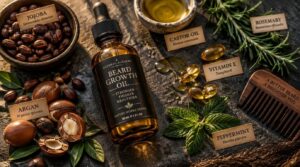
So what’s actually inside that little bottle you’re paying $30 for? I’ll break down the two ingredient types you need to know. Then I’ll show you how growth oil differs from the regular stuff.
Carrier Oils and Essential Oils
Think of carrier oils as the taxi and essential oils as the passengers. The taxi does the heavy lifting, carrying everything across your skin.
Carrier oils like jojoba or argan are mild fats that soften skin and support hair follicle health. Essential oils, like peppermint or tea tree, are concentrated plant extracts. They smell great but can irritate, especially undiluted. That’s why patch testing matters before facial oil application. Check the ingredient list, because concentration varies wildly between brands.
Growth Oil Vs Regular Oil
Marketing is the real difference. Beard growth oil is usually regular beard oil plus essential oils and a bigger price tag. Both are carrier-oil blends that moisturize and seal your skin. Neither has human research proving new follicles. So compare labels, not growth claims. If a topical oil softens your beard, great. Just don’t pay extra for hype.
What Are The Benefits and Side Effects of Beard Growth Oil?
So what can beard growth oil actually do for you, and what should you watch out for? Here’s the honest breakdown, from real skin and hair benefits to the side effects nobody puts on the label. I’ll also cover safe application and when it’s time to see a dermatologist.
Skin And Hair Benefits
Here’s what beard oil genuinely does well: it keeps your skin hydrated. The right carrier oils, like jojoba and argan, absorb quickly and strengthen your skin barrier function, cutting down on that maddening itch and flaking underneath your beard. Your hair gets a protective film around each strand too, which reduces breakage. Softer skin, noticeably less brittleness. That part’s real. In fact, consistent use has been shown to restore stratum corneum lipid levels by up to 35% over just six weeks.
Growth Claims And Limits
Snake oil salesmen would have recognized modern beard growth oil ads instantly. No clinical trial has proven facial hair growth stimulation from these products. The scientific evidence just isn’t there.
What oils genuinely do is reduce dryness and improve sheen, and that subtle change gets misread as beard growth. Without ingredients that actually affect your follicles, it’s conditioning, not growing.
Potential Side Effects
Here’s the irony: a product meant to improve your beard can wreck the skin underneath it. Allergic contact dermatitis from lavender, tea tree, or peppermint oil often shows up days later, so you might mistake early irritation for progress.
Citrus oils can trigger phototoxic reactions after sun exposure. Heavy carrier oils cause clogged pores and acne, especially on sweaty skin. Undiluted clove oil can even damage mucous membranes.
As a dermatologist, I’d say patch test first, store bottles properly, and stop using anything that stings.
Safe Application Tips
Here’s my dermatologist rule: patch test first. Dab a few drops behind your ear or on your inner arm, wait 48 hours, and watch for redness.
No reaction? Start with 3 to 4 drops daily, worked into the skin, not just the hair.
Keep topical oil away from eyes and lips, skip broken skin, and toss bottles that smell rancid.
When To Seek Help
Oil won’t fix everything. See a doctor if you ever notice:
- Round bald patches with brittle edge hairs, a sign of alopecia areata
- Pus-filled sores or persistent redness pointing to infection
- Scarring with visible hair loss, where hair follicle regression becomes permanent
Androgenetic alopecia needs real dermatological treatment. Oils support healthy skin; they can’t restart follicle maturation once it’s gone.
What Alternatives Can Support Beard Growth?
If beard oil alone isn’t cutting it, a few alternatives are worth knowing about. Some have actual evidence behind them, others are more about optimizing what you already have. Here’s what’s realistically on the table.
Minoxidil and Medical Options
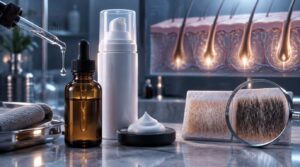
Truth is, minoxidil beats any oil. This dermatological treatment drives hair follicle activation, and topical application efficacy shows in weeks to months, not days. Expect possible irritation.
| Option | Reality Check |
|---|---|
| Minoxidil foam | Gentler, less sting |
| Minoxidil solution | Stronger, more irritation |
| Topical hair growth creams | Mixed evidence |
| Prescription options | Need a dermatologist |
Patchy from alopecia? See a doctor first.
Nutrition and Lifestyle Factors

Minoxidil works better when your body has raw materials to build hair. Hair is keratin, so eat enough protein. Deficiencies in vitamins and minerals, especially iron, zinc, and vitamin D, can slow growth.
- Sleep 7 to 9 hours; poor sleep worsens follicle cycling.
- Exercise regularly for a healthy lifestyle and better hormone balance.
- Skip crash diets; severe calorie restriction triggers shedding.
Smoking? Quit. It impairs blood flow to follicles.
Derma Rollers and Grooming
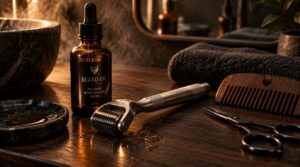
You’ve got the lifestyle side down, so let’s talk tools. A derma roller creates tiny channels that may boost absorption, but evidence for beard regrowth is thin.
| Needle length | Frequency | Risk |
|---|---|---|
| 0.2–0.25 mm | 2–3x weekly | Low |
| 0.5 mm | Weekly | Moderate |
| 0.75+ mm | Avoid at home | Infection |
Clean your micro derma roller with alcohol, don’t share it, and stop if skin reddens. Pair microneedling therapy with your beard grooming routine, keep expectations realistic, and see a dermatologist if irritation persists.
Frequently Asked Questions (FAQs)
Does beard growth oil really work?
Here’s the irony: a bottle promising a fuller beard mostly just softens the one you’ve got. Beard growth oil conditions hair and skin, but it can’t reprogram your hair follicles. Genetics and hormones control facial hair growth, not marketing.
What is the 3 month beard rule?
Ever wondered why your beard looks patchy at week six? The 3 month beard rule says wait 90 days before judging. Your hair growth timeline varies, so resist trimming and let slower follicles catch up.
What stimulates beard growth?
A patient once asked me why his beard filled in at Simple answer: dihydrotestosterone (DHT), genetics, and age. These drive follicle stimulation, while minoxidil, good nutrition, and blood circulation help marginally.
How do I fix my patchy beard?
Fix a patchy beard by letting time work, since hair follicles fill in over years. Use beard oil for conditioning, try minoxidil for facial hair growth, and see a dermatologist if patchiness persists.
How long until I see beard growth results?
Worried you’re wasting money? Fair. Here’s the honest timeline: beard growth oil softens skin and stubble in two to four weeks. Real facial hair growth from follicle activation takes three to six months, if it happens.
Should I use beard growth oil daily or weekly?
Think daily oil is overkill? It’s not, if your skin tolerates it. Apply once daily after showering when pores are open. Adjust for dryness, climate, or irritation. Weekly use simply won’t maintain moisture.
Does beard growth oil work on all skin types?
Beard growth oil doesn’t suit every skin type equally. Jojoba and hemp seed oils work fairly broadly, but heavier blends can clog pores on oily skin, while lighter carriers often leave dry complexions wanting more.
Can beard oil reverse a receding beard line?
Say your hairline has shifted back an inch over two years. No beard growth oil reverses that. It can’t create new follicles, and your genetics already set that boundary long before you opened the bottle.
Is beard growth oil safe for sensitive skin?
Fire tests metal. Essential oils in growth formulas stress your sensitive skin far more than carrier oils alone ever would.
Always patch-test first. If your facial skin’s already irritated, avoid it until things fully settle.
How long before beard oil shows visible results?
Like watering a rock, beard oil can’t sprout new hair follicles. Expect softer, shinier hair within days to two weeks. Real beard growth? That takes months, if it happens at all.
Conclusion
Picture your beard as a garden. Oils water the soil, but they can’t plant seeds where none exist. That’s the honest answer to does beard growth oil work: it conditions, softens, and soothes, yet it won’t fill patchy gaps your genetics control.
If you want real growth, talk to a dermatologist about minoxidil, fix your sleep and diet, and stay patient. Care for what you have. Grow what you can.