This site is supported by our readers. We may earn a commission, at no cost to you, if you purchase through links. This content is for general informational and educational purposes only and is not a substitute for professional medical, dermatological, or nutritional advice.
Your scalp takes a direct hit from the sun all day, with no natural tilt away from UV rays the way your face and arms have. Hair gaps, part lines, and thinning areas leave patches of skin fully exposed, and most people never think to protect them.
A scalp sunburn can be as painful as any other, and repeated burns on the scalp carry the same skin cancer risk. Reflective surfaces like sand and water push UV upward, meaning even shade offers less protection than you’d expect.
Knowing how to prevent sunburn on the scalp takes the right combination of hats, sunscreen, and timing.
Table Of Contents
- Key Takeaways
- Why Does Your Scalp Sunburn So Easily?
- Which Hats Best Prevent Scalp Sunburn?
- How Should You Apply Sunscreen to Your Scalp?
- What Else Helps Prevent Scalp Sunburn?
- What Should You Do After Scalp Sunburn?
- Frequently Asked Questions (FAQs)
- Why do I get sunburn on my scalp?
- How long does a sunburned scalp last?
- How to get rid of a scalp sunburn fast?
- Should I wash my hair if my scalp is sunburned?
- What type of sunscreen is best for scalp sunburn?
- How often should sunscreen be applied to the scalp?
- What is the best way to soothe a sunburned scalp?
- Are there any home remedies for sunburn on the scalp?
- Are there any special precautions for balding or thinning scalp areas?
- Can children use adult scalp sunscreen safely?
- Conclusion
Key Takeaways
- Your scalp receives near-direct UV radiation with little natural protection, making part lines, thinning areas, and bald spots as vulnerable to skin cancer as any exposed skin.
- A wide-brim hat with a UPF 50+ rating and at least a three-inch brim is your most effective single tool, but it must be paired with broad-spectrum SPF 30+ spray or gel along exposed hairline edges.
- Reapply sunscreen every two hours outdoors, and immediately after swimming or heavy sweating — sweat dilutes protection faster than most people expect.
- If a burn does occur, cool the scalp promptly with a damp cloth and fragrance-free aloe vera, and seek medical care if you develop fever, blisters, dizziness, or nausea.
Why Does Your Scalp Sunburn So Easily?
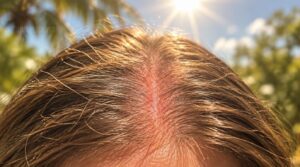
Because your scalp sits at the top of your body, it catches UV radiation almost directly overhead, especially around solar noon. Hair provides some shade, but gaps between strands let UV through, and hair part exposure leaves skin fully unprotected. If your hair is light-colored or thinning, that natural protection drops further.
Even brief midday exposure can trigger inflammation and long-term damage, as common causes of poor scalp health show UV stress is one of the most overlooked factors affecting the skin beneath your hair.
The scalp is ordinary skin, and it burns when UV dose exceeds what it can handle. People with lighter skin phototypes reach that threshold much faster.
Short outdoor bursts during peak UV hours can still deliver enough radiation to cause a burn. Many people underestimate this because heat and UV don’t always feel the same way. Using SPF 30 or higher alongside protective headwear helps close that gap.
Which Hats Best Prevent Scalp Sunburn?
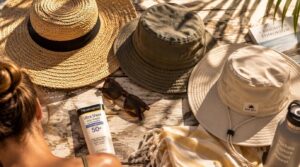
Hat choice matters more than most people realize. A wide brim of at least three inches blocks both overhead and angled UV rays, covering the temples and upper ears, where burns are common.
Look for these features when choosing protective headwear:
- A UPF rating of 50+, confirming the fabric blocks at least 98% of UV transmission
- A brim that wraps to the sides, not just the front
- A snug, stable fit so it doesn’t ride up during movement
Low-profile caps don’t provide reliable scalp protection in strong sun. They leave the top and front of your head exposed.
Pair a wide-brim hat with broad-spectrum sunscreen applied along any exposed hairline edges to close the remaining coverage gaps.
How Should You Apply Sunscreen to Your Scalp?
Applying sunscreen to your scalp takes more thought than just squeezing from a tube. The right format, targeted coverage, and consistent reapplication all make a difference. Here’s what you need to know to protect your scalp correctly.
For a deeper look at how sun exposure affects your strands and scalp together, this guide on protecting hair and scalp from sun damage covers everything from product choices to daily habits.
Choosing Scalp-Friendly Sunscreen Formats
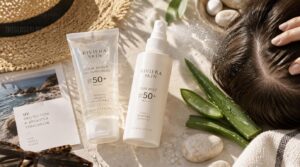
Most people reach for lotion, but it clumps hair and misses skin.
For scalp protection, gel or spray formats spread thinly and reach between strands without leaving residue. Look for broad-spectrum SPF 30 or higher and a non-greasy, fragrance-free label.
Sprays cover larger areas quickly. Gels give you more precise control over the sunscreen when you’re not wearing a hat.
Covering Parts and Thinning Areas
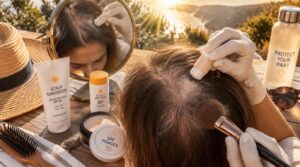
Once you’ve chosen your format, target the most exposed zones first:
- Run sunscreen along your part line using a stick or brush
- Cover thinning hair areas with a powder SPF after application
- Apply to bald spots just as you would facial skin
- Wear a widebrimmed hat or UPF clothing for added coverage
- Use a mirror to check for missed patches
Keep in mind that scalp UV radiation exposure can damage skin cells and DNA for decades, greatly raising your long-term risk of skin cancer.
Reapplying After Water and Sweat
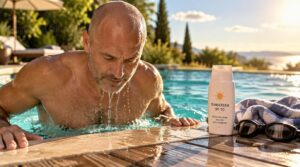
When you swim or sweat heavily, reapply sunscreen immediately after toweling off or leaving the water.
| Exposure Type | When to Reapply |
|---|---|
| Swimming | Immediately after exiting |
| Sweating | Every 40 to 80 minutes |
Choose a water-resistant, broad-spectrum formula with SPF 30 or higher. Sweat dilutes and displaces your sunscreen faster than you’d expect, so stick to consistent reapplication throughout any outdoor activity.
What Else Helps Prevent Scalp Sunburn?

Although wearing a hat is essential, your timing and surroundings also shape how much UV your scalp absorbs. Peak sun hours, roughly 10 a.m. to 4 p.m., deliver the highest UV intensity. If you can avoid the sun during that window, you’ll cut your cumulative exposure a lot.
Reflective surfaces like sand, water, and light pavement bounce UV upward, raising your total dose even under partial shade. Position yourself under overhead cover rather than relying on side shade, and plan sunscreen reapplication every two hours when you’re outside.
Loose hairstyles offer more natural scalp coverage than tightly pulled styles, which lift hair and expose more skin. A broadspectrum sunscreen also shifts with sweat, so stay consistent with reapplication throughout the day.
What Should You Do After Scalp Sunburn?
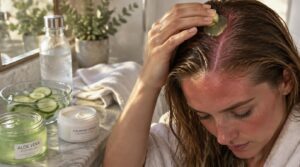
If you’ve already got a scalp sunburn, how you treat it in the next few hours matters. The right steps can ease discomfort, protect the damaged skin, and help it heal faster. Here’s what to do.
Cooling and Soothing Your Scalp
Burns often peak hours after sun exposure, so don’t wait to cool your scalp. Apply a cool compress or shower in cool water to lower skin temperature.
Steer clear of:
- Thick creams that trap scalp heat
- Fragrant sprays that sting inflamed skin
- Hot air from your dryer
Aloe vera gel cools and helps hydration for skin recovery without trapping heat.
Washing Hair Without Irritation
Think of your scalp as a scraped knee. Scrubbing it now only makes the damage worse.
A sunburned scalp, like a scraped knee, only worsens when scrubbed
Use a cool water rinse and sulfate-free shampoos for gentle washing. Avoid sulfates completely; they’ll strip the already-damaged skin barrier.
Apply shampoo with light fingertip pressure, then rinse fully. Pat-dry instead of rubbing. Scalp moisturization after each wash helps restore comfort and barrier function.
Recognizing Serious Warning Signs
Some scalp burns are more than a minor irritation. Watch for these warning signs:
- Fever or nausea after heavy sun exposure
- A worsening headache that rest doesn’t relieve
- Small fluid-filled blisters across your scalp
- Unusual fatigue or dizziness
- Swelling around your eyes or ears
Don’t ignore these. They can signal heat illness or a serious burn. Get medical help quickly.
Frequently Asked Questions (FAQs)
Why do I get sunburn on my scalp?
Many people step inside after a sunny afternoon and later notice scalp sunburn along their part. UV radiation penetrates directly to living skin cells, and hair doesn’t provide the physical barriers most people naturally assume.
How long does a sunburned scalp last?
Like a clock set at the moment of sun exposure, your healing time starts ticking right away. Mild scalp sunburn clears in 3–7 days.
Blistering burns need 1–2 weeks and can linger longer with friction.
How to get rid of a scalp sunburn fast?
Fast relief doesn’t exist, but you can ease the discomfort. Apply cold compresses, then aloe vera gel to calm the scalp sunburn. Take ibuprofen (Advil, Motrin) for pain. Wear a hat outdoors until it heals.
Should I wash my hair if my scalp is sunburned?
Yes, but do it gently. Use a sulfate-free shampoo with cool water and very light pressure. Hot water and friction will both increase pain and irritation. If your scalp is blistering, skip washing for now.
What type of sunscreen is best for scalp sunburn?
Not every sunscreen suits the scalp well. Choose a mineral scalp sunscreen with zinc oxide or titanium dioxide. A broad-spectrum formula rated SPF 15 or higher gives reliable UV defense against both UVA and UVB.
How often should sunscreen be applied to the scalp?
Sunscreen doesn’t last all day, no matter the SPF. Reapply to your scalp every two hours during continuous outdoor sun exposure. After swimming or heavy sweating, immediate reapplication is necessary, even with water-resistant sunscreen formulas.
What is the best way to soothe a sunburned scalp?
Most scalp burns get worse without any early care. Cool your scalp first with a damp cloth, apply fragrance-free aloe vera, and take an anti-inflammatory. Once it heals, use sunscreen to prevent the next burn.
Are there any home remedies for sunburn on the scalp?
Home remedies can’t reverse UV damage, but cooling therapy does help with comfort. Apply plain aloe vera gel to calm heat and dryness. Avoid coconut oil; it traps heat and may worsen an inflamed burn.
Are there any special precautions for balding or thinning scalp areas?
Hair has a natural SPF of roughly 2 to Thinning hair reduces this sharply. Apply mineral sunscreen to bare skin, focusing on crown exposure and bald spot coverage, then add a UPF 50 hat.
Can children use adult scalp sunscreen safely?
About 80% of lifetime UV damage occurs before age Children’s skin is more sensitive, so always check the label first.
If a scalp sunscreen isn’t approved for pediatric use, choose one that clearly is.
Conclusion
Scalp melanoma has one of the highest mortality rates among skin cancers because it hides under hair and often gets diagnosed too late to treat easily. That’s exactly why knowing how to prevent sunburn on the scalp matters as much as protecting your face.
A wide-brim hat does most of the work. SPF spray covers what fabric misses. Reapply after swimming or sweating. Your scalp is just skin, and it deserves the same daily attention.