This site is supported by our readers. We may earn a commission, at no cost to you, if you purchase through links. This content is for general informational and educational purposes only and is not a substitute for professional medical, dermatological, or nutritional advice.
Bleach doesn’t just strip color. It fractures the keratin chains that give your hair its tensile strength, which is why chemically treated hair snaps when you brush it wet. The damage is structural, not cosmetic, and no amount of conditioner can rebuild what’s broken at the molecular level.
A well-formulated hair mask for chemically damaged hair can, though. The right one reconnects broken bonds, restores elasticity, and cuts breakage by measurable percentages, not vague promises. I’ve evaluated dozens of formulas on ingredient science and clinical data, and five earned their place here. Your hair’s recovery starts with knowing which ones actually work.
Table Of Contents
- Key Takeaways
- 8 Best Hair Masks for Chemically Damaged Hair
- How to Choose a Repairing Hair Mask
- Best Ingredients for Chemical Damage
- Hair Mask Benefits for Chemical Damage
- How to Use Repairing Hair Masks
- Frequently Asked Questions (FAQs)
- What is the best hair mask for chemical damage?
- How do you fix chemically damaged hair?
- Which hair mask is best for chemically treated hair?
- What is the best hair mask for severely damaged hair?
- Can hair masks reverse permanent chemical damage?
- How long should I wait after treatments?
- Are DIY hair masks effective for damage?
- Can over-masking cause additional hair problems?
- Whats the difference between masks and conditioners?
- Can I use a hair mask right after bleaching my hair?
- Conclusion
Key Takeaways
- Chemical processing fractures keratin chains and disulfide bonds inside the hair shaft, so effective repair requires bond-building technology (like K18’s peptide, which restores up to 91% of original strength) rather than surface conditioning alone.
- No single mask does everything—match your formula to your damage type: bond rebuilders for bleached hair, lipid replenishers (hyaluronic acid, squalane, shea butter) for stripped moisture, and lightweight protein blends for fine or thinning hair.
- Application discipline drives results: wait 48–72 hours after chemical treatments before masking, apply from mid-lengths to ends, follow rinse-out timing exactly, and adjust frequency to damage severity while reassessing every four weeks.
- Balance protein and moisture carefully—over-masking or layering protein treatments causes stiffness, brittleness, and increased breakage, so alternate protein and moisture masks weekly and watch for chalky residue or reduced curl as overload signals.
8 Best Hair Masks for Chemically Damaged Hair
Not all hair masks are built for the level of repair chemically damaged hair actually needs. The eight options below have been selected for their clinically backed formulas, standout ingredients, and real results across different hair types and damage levels. Here’s what made the cut.
If you’d rather skip store-bought formulas altogether, this DIY hair mask for damaged hair uses simple pantry staples and works scalp to ends in just 30 minutes.
1. Oribe Gold Lust Hair Masque
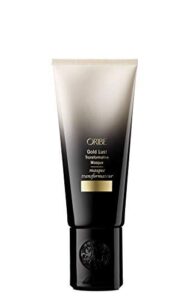
The Oribe Gold Lust Hair Masque earned its reputation through results, not branding. In a 106-person consumer panel, 94% reported softer hair within seven days, and 86% saw measurable damage reversal. Those aren’t marketing numbers; they reflect what happens when formulation chemistry is genuinely done right.
At the heart is the Bio-Restorative Complex: plant collagen, caffeine, biotin, and niacinamide working together to rebuild weakened fibers and restore elasticity. Bleaching and perming don’t just strip color; they fracture the polypeptide chains holding your hair together. This masque targets exactly that structural deficit, going beyond surface conditioning.
It’s vegan, silicone-free, and works for all hair types, including color-treated.
For a scalp-friendly routine, the benefits of a hair growth stimulating serum are worth a look, especially if you’re patch testing and easing in gradually.
Even with a gentle formula like this, it helps to compare hair moisturizing treatment masks by porosity and texture, and to clarify regularly so buildup never blocks moisture.
| Best For | Anyone with dry, damaged, or chemically treated hair who wants deep conditioning and visible repair across all hair types. |
|---|---|
| Repair Type | Deep conditioning masque |
| Color-Treated Safe | Yes |
| Breakage Reduction | 86% damage reversal reported |
| Vegan Formula | Yes |
| Works All Hair Types | Yes, all types |
| Frizz Reduction | Yes |
| Additional Features |
|
- Packed with a science-backed blend of plant collagen, caffeine, biotin, and niacinamide that actually works to rebuild hair structure from within
- Consumer panel results are impressive — 94% of users reported softer hair and 86% saw damage reversal in just seven days
- Clean formula (vegan, silicone-free, phthalate-free) that’s safe for all hair types, including color-treated
- The price point is a sticking point for many buyers, with some feeling it doesn’t justify the cost
- Results aren’t consistent across the board — some users notice little to no difference after use
- There have been reports of products arriving with damaged or compromised packaging, which raises quality control concerns
2. amika Hydro Rush Moisture Mask
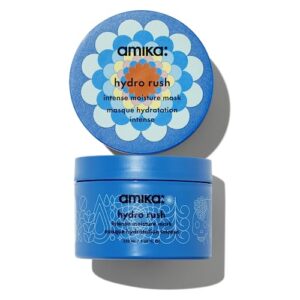
Where the Oribe masque targets fiber structure, the amika Hydro Rush Moisture Mask combats a different problem: your hair’s depleted lipid barrier. Chemical processing strips that barrier fast, and once it’s gone, moisture can’t stay put.
Hyaluronic acid and squalane do the heavy lifting here. Hyaluronic acid attracts moisture, holding up to 1,000 times its weight in water, while squalane locks it in at the cuticle level. The clinical numbers back that up: 76% breakage reduction, hair that’s 5x more hydrated, 4x stronger, and five times easier to detangle after one use. Those results hold across color-treated, bleached, and textured hair types from 2A to 4C.
At $44, it’s a real investment. For compromised strands, the math works in your favor.
| Best For | Anyone with dry, color-treated, bleached, or textured hair (2A wavy to 4C coily) who needs serious moisture and wants to cut down on breakage and detangling time. |
|---|---|
| Repair Type | Hydrating moisture mask |
| Color-Treated Safe | Yes |
| Breakage Reduction | 76% breakage reduction |
| Vegan Formula | Yes |
| Works All Hair Types | Yes, 2A to 4C |
| Frizz Reduction | Yes |
| Additional Features |
|
- Delivers fast, measurable results — hair is 5x more hydrated, 4x stronger, and 76% less prone to breakage after just one use
- Works across a wide range of hair types and textures, including chemically processed and damaged strands
- Hyaluronic acid and squalane work together to pull in moisture and actually keep it there
- At $44, it’s on the pricier end and may not suit every budget
- Some users find they still need a leave-in conditioner for easier detangling, depending on their hair type
- Results aren’t universal — a small number of users report little to no noticeable improvement
3. K18 Leave In Hair Mask
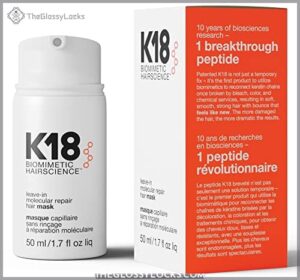
Hydration solves one problem. Structural damage from chemical processing is a different one entirely, and that’s what K18 goes after. Its patented K18Peptide reconnects broken keratin chains from inside the cortex, restoring up to 91% of original strength and 94% elasticity after bleach or chemical treatments. It doesn’t coat the shaft to simulate repair. It rebuilds the actual bonds.
The application protocol is deliberate: work 1-3 pumps into towel-dried hair from mid-lengths to ends, wait four minutes, then style. Skip the conditioner beforehand. No rinsing is required.
Results hold through consecutive washes, and that distinction matters. 78% of users report measurably reduced breakage within 2-3 uses. At $75, it asks more than most masks, but the clinical repair mechanism earns it.
| Best For | Anyone dealing with chemically damaged hair from bleaching, coloring, or heat styling who wants actual structural repair rather than surface-level conditioning. |
|---|---|
| Repair Type | Molecular bond repair |
| Color-Treated Safe | Yes |
| Breakage Reduction | 78% users report less breakage |
| Vegan Formula | Yes |
| Works All Hair Types | Yes, all types |
| Frizz Reduction | Yes |
| Additional Features |
|
- Rebuilds hair at the molecular level using patented K18Peptide, restoring strength and elasticity rather than just masking damage
- Works in just 4 minutes as a leave-in, no rinsing needed — fits easily into any styling routine
- Results carry over through consecutive washes, meaning you need to use it less frequently over time
- At $75, it’s a significant investment compared to standard hair masks
- May not deliver enough moisture for very dry or coarse hair types, since its focus is structural repair rather than hydration
- Requires 4-6 consecutive uses before you hit peak results, so patience is part of the deal
4. Virtue Flourish Thinning Hair Mask
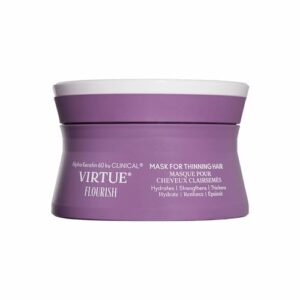
K18 targets structural rebuilding. Virtue Flourish solves a different overlap: hair that’s both chemically processed and actively thinning.
The Alpha Keratin 60ku CLINICAL in this mask mimics your hair’s own protein architecture, strengthening the scalp’s moisture barrier without adding weight. A Biomimetic Tetrapeptide combined with Red Clover extract targets follicles directly to support healthier regrowth over time. Beet root and fructooligosaccharides keep the formula lightweight, which matters on fine strands that collapse under heavy conditioning.
In a 58-subject trial, 94% reported instant hydration and 91% noticed healthier-feeling hair after a single use. Apply on damp hair for 2-3 minutes, 1-2 times per week. At $49, it covers both repair and growth support in one step.
| Best For | People with chemically treated or color-processed hair that’s also thinning and needs both structural repair and growth support in one step. |
|---|---|
| Repair Type | Keratin strengthening mask |
| Color-Treated Safe | Yes |
| Breakage Reduction | Strengthens against breakage |
| Vegan Formula | No |
| Works All Hair Types | Yes, fine hair focus |
| Frizz Reduction | Yes |
| Additional Features |
|
- Strengthens and hydrates without weighing fine hair down, thanks to a lightweight, whipped formula
- Clinically backed ingredients like Alpha Keratin 60ku and Red Clover actively support follicle health and regrowth over time
- Safe for color-treated and chemically processed hair, and free of silicones, sulfates, parabens, and synthetic dyes
- Results vary — some users notice no meaningful difference compared to their regular conditioner
- Application takes noticeable time and effort, which may feel like too much for a quick routine
- Can make brushing harder for color-treated hair in some cases
5. OUAI Fine to Medium Hair Mask
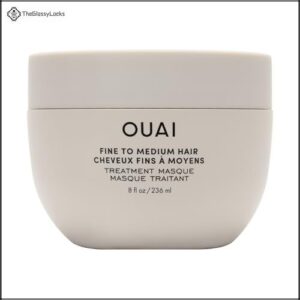
Fine to medium strands need repair without the weight penalty, and that’s exactly what the OUAI Fine to Medium Hair Mask is designed to deliver. Hydrolyzed keratin rebuilds structural bonds fractured by chemical processing, while shea butter and panthenol lock moisture into the cortex and smooth the cuticle layer without leaving residue.
For anyone pairing this mask with beard care, natural oils like jojoba and argan can round out your routine — see these thickening beard remedies with natural oils for lightweight conditioning tips that work the same way.
Five minutes is all it takes. Apply from mid-lengths to ends on damp hair, rinse with cool water, and your hair comes out noticeably softer and much less frizz-prone. The clean formula is sulfate-, paraben-, and SLS-free, making it a dependable weekly option for color-treated or heat-styled hair.
At $38 for 8 ounces, the price is accessible for a weekly repair treatment. The signature scent runs especially strong, which can be a real drawback for fragrance-sensitive users.
| Best For | Fine to medium hair types looking for a lightweight weekly repair treatment that adds moisture and reduces frizz without weighing strands down. |
|---|---|
| Repair Type | Keratin repair mask |
| Color-Treated Safe | Yes |
| Breakage Reduction | Reduces breakage and frizz |
| Vegan Formula | No |
| Works All Hair Types | Fine to medium focus |
| Frizz Reduction | Yes |
| Additional Features |
|
- Hydrolyzed keratin, shea butter, and panthenol work together to rebuild and moisturize without leaving a greasy residue
- Clean, thoughtful formula — free from sulfates, parabens, SLS, and SLES, making it safe for color-treated or heat-styled hair
- Quick and effective: just five minutes from application to rinse for noticeably softer, smoother hair
- At $38 for 8 ounces, it’s on the pricier end for a weekly treatment
- The signature fragrance is quite strong, which may be off-putting for anyone sensitive to scent
- Results are less impressive on very thick or coarse hair textures — it’s really optimized for finer strands
6. Amika Soulfood Hair Mask Nourishing
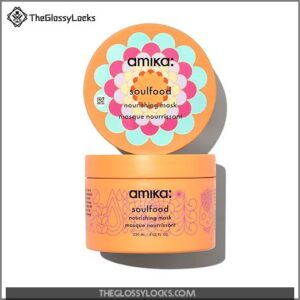
If your strands feel brittle and parched after chemical processing, the Amika Soulfood Nourishing Mask targets exactly that kind of structural depletion. Jojoba seed oil mimics your scalp’s natural sebum, while sea buckthorn oil delivers fatty acids and vitamins A, D, and E to rebuild the lipid barrier that bleach and color treatments strip away.
Five to seven minutes is the processing window. Apply from roots to ends on wet hair, rinse clean, and you’ll notice reduced frizz and noticeably easier detangling even after the first use.
The vegan, cruelty-free formula works across all hair types without product buildup, making it a practical weekly treatment for chemically compromised strands.
| Best For | Anyone with chemically processed, color-treated, or bleach-damaged hair that needs serious deep hydration and frizz control. |
|---|---|
| Repair Type | Nourishing hydration mask |
| Color-Treated Safe | Yes |
| Breakage Reduction | Easier detangling |
| Vegan Formula | Yes |
| Works All Hair Types | Yes, all types |
| Frizz Reduction | Yes |
| Additional Features |
|
- Leaves hair noticeably softer, silkier, and easier to detangle — even after the first use
- Lightweight formula hydrates without weighing hair down or causing buildup
- Vegan and cruelty-free, suitable for all hair types
- Some users experience hair fall or scalp irritation after use
- May not deliver enough moisture for those with very high hydration needs
- Price-to-value ratio is a sticking point for some buyers
7. Briogeo Don’t Despair Repair Mask
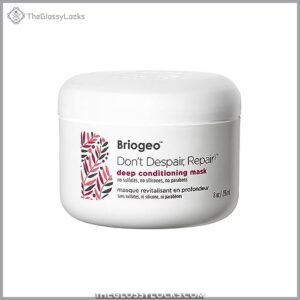
Protein and moisture have to stay in balance, and when one outpaces the other, your hair pays for it. The Briogeo Don’t Despair Repair Mask gets that balance right through a 97% naturally derived formula, clinically proven to double hair strength after just three uses.
Rosehip oil, algae extract, and biotin drive the reconstruction, rebuilding disrupted keratin chains while argan oil seals moisture back into the cortex. Ten minutes of processing time is all it takes, and strength gains hold across multiple washes.
Apply it weekly as a conditioner replacement. It’s vegan, free of sulfates, parabens, and silicones, and it performs cleanly across color-treated and chemically processed textures without weighing your hair down.
Before you apply color, check this guide on whether to wash your hair before dyeing it, since timing depends on your dye type.
| Best For | Anyone with damaged, brittle, or chemically processed hair who wants a clean, protein-rich treatment to restore strength and reduce breakage without harsh ingredients. |
|---|---|
| Repair Type | Protein-rich repair mask |
| Color-Treated Safe | Yes |
| Breakage Reduction | 2x stronger after three uses |
| Vegan Formula | Yes |
| Works All Hair Types | Yes, all textures |
| Frizz Reduction | Yes |
| Additional Features |
|
- Clinically proven to deliver up to 2x stronger hair after just three uses, with results that hold across multiple washes
- 97% naturally derived formula — vegan, silicone-free, sulfate-free, and paraben-free — making it safe for color-treated and chemically processed hair
- Fast and effective: just 10 minutes of processing time works as a full conditioner replacement, with enhanced results when used with a heat cap
- Mixed reviews on moisturizing effectiveness — some users find it more protein-heavy than hydrating, which can leave hair feeling dry
- Considered pricey for the amount of product you get, especially given weekly use is recommended
- The fragrance divides opinions, described by some as pleasantly botanical and by others as unexpectedly sweet
8. K18 Mini Leave In Mask
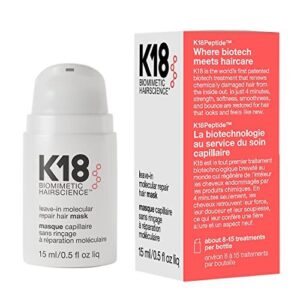
Molecular repair starts where surface conditioning can’t reach. The K18 Mini Leave-In Mask delivers the same patented K18PEPTIDE technology as the full size, packed into a compact 15 ml bottle built for travel and trial.
After washing, apply 1 to 3 pumps to towel-dried hair from mid-lengths to ends. No rinsing. Four minutes of absorption time, then style as usual. That’s it. The peptide reconnects broken polypeptide chains at the molecular level, restoring elasticity lost to bleach and heat.
If you spot frayed ends or fine fibers snapping along the strand, you’ll want to understand what causes hair breakage and split ends so you can keep the damage from coming back.
For hair that’s already past the point of no return, our guide on how to fix dead hair covers the deeper repair steps that pair well with this routine.
Consumer data backs this up: 78% of users reported reduced breakage after just 2 to 3 uses. Results hold through multiple washes. For a sampling option before committing to the full size, the mini is the smart starting point.
| Best For | Anyone looking to restore chemically treated or heat-damaged hair who wants to try the K18 formula before investing in the full-size product. |
|---|---|
| Repair Type | Molecular peptide repair |
| Color-Treated Safe | Yes |
| Breakage Reduction | Reduces breakage in 2-3 uses |
| Vegan Formula | Yes |
| Works All Hair Types | Yes, including coily |
| Frizz Reduction | Yes |
| Additional Features |
|
- Repairs hair at the molecular level using patented K18PEPTIDE technology, restoring elasticity lost to bleach and heat
- Quick and easy to use — just 4 minutes as a leave-in treatment, no rinsing required
- Works on all hair types, including coily, curly, and color-treated hair, without weighing it down
- Some users experience dryness or brittleness after use, with inconsistent results across customers
- The small bottle size means frequent repurchases, especially for those with longer or thicker hair
- Mixed reviews on value for money given the price-to-quantity ratio
How to Choose a Repairing Hair Mask
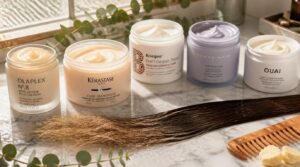
Not every repairing mask will work the same way for your hair — the right pick depends on a few factors worth knowing before you buy.
From your damage type and hair texture to how much protein your strands actually need, these details will help you narrow the field fast.
Here’s what to look at when choosing a mask that’ll actually do its job.
Damage Type and Repair Goals
Not all chemically damaged hair needs the same fix. Your repair goal drives everything. Research shows that structured, data-centered reading approaches can really improve how students interpret complex information, as demonstrated by data interpretation skills improvement in undergraduate science courses.
Match your mask to your specific damage type:
- Color-treated strands: prioritize disulfide bond rebuilding
- Relaxed or permed: target molecular repair using K18 peptide
- Bleached hair: focus on full hair structure restoration
- Heat-stressed strands: replenish lost surface lipids
- Multiple chemical processes: combine bond care with moisture support
Hair Texture, Density, and Porosity
Your strand thickness, hair count per square inch, and porosity determine which mask actually penetrates.
Fine texture with low density needs lightweight formulas, while coarse, high-density hair absorbs richer concentrates.
Porosity governs moisture retention: high porosity loses hydration fast, demanding heavier sealants, whereas low porosity resists absorption entirely.
Test yours in water, then match mask weight accordingly for real repair.
Protein-Moisture Formula Balance
Beyond porosity, your formula’s internal ratio decides whether repair holds or backfires. A mask needs protein-moisture balance: hydrolyzed proteins rebuild weakened keratin, while humectants like glycerin and hyaluronic acid hold water in the cortex.
Read labels for three things:
- Protein type listed first — keratin, wheat, or silk proteins signal real repair
- Paired humectants — glycerin or panthenol prevent stiffness
- Usage guidance — frequency hints show intended balance
Chemically treated hair craves both. Protein alone leaves strands stiff; moisture alone leaves them limp. Alternate a protein treatment with a purely moisturizing mask weekly, and watch for chalky residue or reduced curl, the classic overload signals.
Chemically treated hair needs both protein and moisture—alternate treatments weekly and watch for chalky residue or reduced curl as overload signals
Rinse-Out Versus Leave-in Format
Format matters as much as formula. A rinseout hair mask delivers concentrated repair in 10–20 minutes, while a leavein hair treatment offers continuous protection.
| Rinse-Out | Leave-In |
|---|---|
| Surface repair, bond-building technology | Daylong moisture barrier |
| No buildup on oily scalps | Frizz and heat defense |
| Fine hair stays light | Thick hair stays soft |
| Shower application | Damp or dry hair use |
Match format to your hair mask frequency and damage level.
Price, Size, and Treatment Value
Cost should reflect repair, not packaging. A $68 Oribe jar lasts 6–12 weeks; a $28 amika mask stretches 2–3 months. Bond-building technology justifies higher prices for chemically damaged hair.
- $0.68 oz K18 minis for testing
- Larger jars cut unit cost
- Leave-ins span multiple washes
- Trial sizes lower entry risk
- Rich formulas protect color too
Calculate treatment value per use, not per jar.
Best Ingredients for Chemical Damage
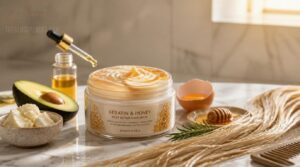
Chemical processing breaks hair down at the molecular level—disulfide bonds snap, keratin chains fracture, and the cuticle’s lipid barrier gets stripped away. Not every mask ingredient can fix that, so knowing what actually works saves you money and prevents further damage.
Here are the five ingredient categories I recommend looking for when your hair has been through bleach, color, or relaxers.
Peptides and Bond-Building Complexes
Peptides are the most effective repair signal in modern hair care. These short amino acid chains, under 50 units long, drive peptide-driven repair by mimicking natural keratin interactions and binding to damaged sites along the cuticle.
Combined with bond-building technology, they support disulfide bond reformation and keratin chain reconnection at the molecular level. Think of them as instructions your hair can actually read.
Hydrolyzed Keratin and Proteins
Hydrolyzed keratin is the workhorse of any protein treatment for hair. Cut into fragments small enough to penetrate the cuticle, it fills gaps where chemical processing stripped your natural keratin away. It also forms a lightweight film that helps moisture retention in hair and shields strands from heat. That dual action drives measurable hair strength recovery.
Why it earns its place:
- Rebuilds broken keratin chains
- Seals rough, lifted cuticles
- Boosts elasticity against breakage
- Pairs well with bondbuilding technology
You’ll find it listed as hydrolyzed keratin, wheat, or silk protein on labels.
Hyaluronic Acid and Humectants
The ability to bind up to 1,000 times its weight in water makes hyaluronic acid the backbone of moisture retention in any hair mask application for chemical damage.
| Humectant | Role |
|---|---|
| HA | Binds water, forms film |
| Glycerin | Pulls air moisture |
| Urea | Penetrates, repairs |
Pairing hyaluronic acid with other humectants drives deep hydration into the shaft, locking in hydration retention after rinsing.
Shea Butter, Squalane, Plant Oils
Chemically processed hair loses lipids fast. Shea butter replenishes those lost lipids, sealing the cuticle with oleic and stearic acids that restore elasticity after bleaching or color.
Squalane works lighter, filling cuticle gaps without residue.
Plant oils like argan and marula round out the mix, delivering vitamin E and fatty acids that soften coarse strands and reduce breakage over time.
Citric Acid and Antioxidants
Citric acid does two jobs at once in a damaged strand. It lowers your hair’s pH, tightening the cuticle and locking in moisture, while its tricarboxylic structure chelates metal ions that drive oxidative damage post-bleach.
Antioxidant protection matters because chemical treatments leave strands vulnerable to free radical stress. Citric acid neutralizes that threat while supporting cuticle sealing for stronger, smoother results.
Hair Mask Benefits for Chemical Damage
Chemical processing doesn’t just strip moisture—it fractures the bonds that give your hair structure, elasticity, and strength. The right mask works at multiple levels simultaneously, addressing everything from surface smoothness to deep cortex repair. Here’s what consistent masking actually does for chemically damaged hair.
Restore Strength and Elasticity
Chemical processing severs disulfide bonds deep inside the cortex, leaving strands prone to snapping.
Peptide hair therapy and molecular repair technology work at the fiber level, reinforcing broken links so your hair controls daily tension again.
Cortex repair treatment rebuilds weakened keratin structures, while bond reinforcement with citric acid seals the cuticle and stabilizes pH to restore strength and elasticity.
Replenish Moisture and Lipids
Bleach and color strip away your hair’s natural lipid barrier, leaving the cuticle porous and unable to hold water. Repairing masks restore hair lipid replenishment through ceramides, squalane, and plant oils, rebuilding what processing removed.
The result is improved hair hydration levels, smoother cuticle sealing, and genuine moisture and sheen from mid-lengths to ends.
Reduce Breakage and Split Ends
Breakage is where chemically damaged hair shows its true cost. When bleach dissolves disulfide bonds, your strands lose tensile strength and snap under ordinary combing.
Repairing masks target this directly. Bond-building peptides reconnect broken internal links, while a targeted protein layer reinforces the cortex. That’s real hair elasticity improvement: strands bend, then recover, instead of fracturing at the mid-shaft.
Split end sealing matters too. Emollients smooth lifted cuticles, stopping cracks from traveling up the strand.
Smooth Cuticles and Protect Color
A sealed cuticle does double duty: it stops breakage and it holds your color. When chemical processing lifts those scales, pigment leaks out with every wash. A good hair mask flattens the cuticle back down, locking dye molecules inside where they belong. The payoff is longer-lasting vibrancy, often several extra weeks between salon visits.
UV filters and film-forming silicones add another layer of defense, shielding chemically damaged hair from sun and heat fading.
Improve Softness, Shine, and Manageability
Color retention matters, but touch matters more. A mask that smooths the cuticle also delivers softness, shine, and manageability, and those benefits compound. Consider what one weekly treatment provides:
- Hair shine restoration through light reflection
- Hair elasticity improvement, so strands flex
- Hair breakage prevention during detangling
- Frizz reduction in humidity
Your hair stops fighting back. That’s the goal.
How to Use Repairing Hair Masks
Even the best formula underperforms when it’s applied wrong—timing, placement, and frequency all change what a mask can actually do for chemically processed hair. Your cuticle is vulnerable after bleaching or relaxing, and small missteps can undo the repair you’re paying for. Here’s exactly how to use these treatments to get real results.
Wait 48–72 Hours After Treatments
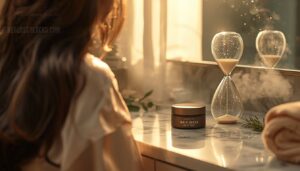
Timing matters more than most people realize for post-treatment masking. After a chemical service, your cuticle needs 48–72 hours to settle, so resist the urge to mask immediately.
During that window, hair is still stabilizing, and aggressive conditioning can interfere with bond restoration. Wait it out, then let the molecular repair technology do its work properly.
Apply From Mid-Lengths to Ends

Zone your product where the damage actually lives. Chemically damaged hair shows the most structural compromise from midshaft to ends, where bleaching and heat exposure concentrate. Apply there, not at the scalp, to support molecular repair and elasticity improvement without limp, weighted roots.
Work in small sections, pressing product in with palm warmth. Slide downward, coating ends first, then move up. Even distribution drives breakage reduction.
Follow Rinse-Out or Leave-in Directions
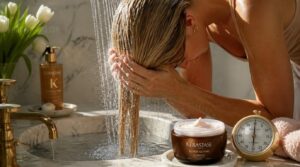
Respect the format, because chemistry follows the label, not your schedule. A rinse-out mask needs its full 5 to 15 minutes for penetration, then a thorough rinse until water runs clear. Leave-in formulas skip that step entirely, working for up to 72 hours.
- Rinse until clear, or residue dulls your hair.
- Never leave rinse-outs sitting overnight.
- Cool water seals the cuticle after rinsing.
Your results depend on this discipline.
Adjust Frequency by Damage Level
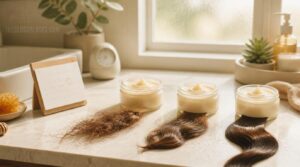
Match your schedule to the severity of the chemical damage. Severe damage calls for masking every two to three days initially, moderate every three to seven, light every four to five.
Once elasticity improves, drop to weekly. Reassess every four weeks, and let strand bounce guide you.
Avoid Protein Overload and Stiffness
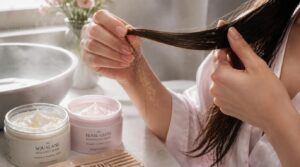
Protein overload is the most common masking mistake on chemically damaged hair. Layer a protein mask with a protein leave-in and stiffness follows, especially on high-porosity strands.
Watch for hair that feels brittle, not strong, or snaps instead of stretching.
Because those proteins only coat the surface, it helps to understand whether hair oils actually contain protein before expecting them to repair brittle strands.
Rotate in a moisture mask with squalane or humectants, rinse thoroughly in warm water, and skip detangling until flexibility returns.
Frequently Asked Questions (FAQs)
What is the best hair mask for chemical damage?
For chemically damaged hair, the K18 Leave In Mask leads. Its bond building technology performs molecular repair at the peptide level, restoring hair elasticity improvement, while its protein and vitamin mix rebuilds strength.
How do you fix chemically damaged hair?
Fixing chemically damaged hair means stopping damage first. You can’t repair what you keep breaking. Rebuild disulfide bonds through molecular repair, restore protein and moisture carefully, and avoid protein overload by balancing treatments.
Which hair mask is best for chemically treated hair?
For chemically treated hair, the K18 Leave In Mask stands out. Its bond building technology reconnects keratin chains, delivering deep conditioning treatment and breakage prevention in just four minutes.
What is the best hair mask for severely damaged hair?
Think of severely damaged hair as a fractured wall. K18 Leave-In Mask rebuilds it from within, reconnecting broken disulfide bonds at the molecular level, restoring strength and breakage resistance within 4–6 hours.
Can hair masks reverse permanent chemical damage?
No. Permanently altered bonds can’t be fully restored, like unscrambling an egg. Masks excel at surface repair and preventing further breakage, improving elasticity and appearance while new growth replaces damaged strands.
How long should I wait after treatments?
Wait 48–72 hours after coloring or relaxing. This lets your cuticle seal fully, preventing product interactions that could compromise color vibrancy and skew your damage assessment. Patience here protects both results and scalp health.
Are DIY hair masks effective for damage?
DIY hair masks improve softness and moisture, but they can’t rebuild broken bonds. For chemically treated hair needing true hair damage repair, lab-formulated treatments outperform kitchen ingredients. Use DIY options for conditioning, not structural repair.
Can over-masking cause additional hair problems?
Yes. Over-masking causes protein overload, scalp buildup, and product saturation. Your strands turn stiff, brittle, and moisture-resistant, so breakage increases and hair health worsens instead of recovering.
Whats the difference between masks and conditioners?
Conditioners coat the cuticle in minutes, adding slip and shine. Masks penetrate deeper with concentrated actives, using bond building technology to rebuild structure. For chemically treated hair, masks deliver lasting repair; conditioners maintain daily softness.
Can I use a hair mask right after bleaching my hair?
A client once bleached and masked within the hour, turning straw to gum. Don’t. Wait 48–72 hours, rinse bleach fully, then apply a bond builder before your mask for bleached hair.
Conclusion
Yes, your hair mask will absolutely reverse years of bleach damage overnight, right after it fixes your split ends and repaints your ceiling. Chemistry doesn’t work that way.
A quality hair mask for chemically damaged hair rebuilds bonds gradually, with consistent use and realistic expectations. Pick a formula matched to your damage type, apply it correctly, and give it weeks, not days.
Your hair’s structure reacts to science, and science rewards patience.