This site is supported by our readers. We may earn a commission, at no cost to you, if you purchase through links. This content is for general informational and educational purposes only and is not a substitute for professional medical, dermatological, or nutritional advice.
You mixed up a fresh batch of guar gum gel, applied it to your hair, and watched tiny white specks appear on your strands. Not the result you were after.
Guar gum white flakes in hair are one of the most common frustrations in DIY hair care, and they almost always trace back to something fixable: concentration, hydration time, or how you applied the product. The flakes aren’t a sign that guar gum is wrong for your hair. They’re a sign that the formula or method needs a small tweak.
Knowing which variable to change makes all the difference.
Table Of Contents
- Key Takeaways
- Why Does Guar Gum Cause White Flakes in Hair?
- How to Remove Guar Gum Flakes From Hair
- How to Prevent Guar Gum White Flakes
- Flake-Free Guar Gum Hair Recipes
- Guar Gum Flakes or a Scalp Condition?
- Frequently Asked Questions (FAQs)
- What does guar gum do to hair?
- What is the white stuff in my hair?
- How to get rid of white flakes in hair after washing?
- Why do products flake in my hair?
- How can I tell if I am allergic to Guar Gum?
- What is the best way to apply Guar Gum to my hair?
- Can I make a Guar Gum conditioner at home?
- How do I remove Guar Gum build-up from my hair?
- Do all hair types experience white flakes?
- How to remove existing guar gum buildup?
- Conclusion
Key Takeaways
- White flakes from guar gum almost always come down to one of three fixable issues: too high a concentration (stay between 0.2–2%), not enough hydration time, or applying the gel to dry hair instead of damp.
- Pre-mixing the powder with glycerin before adding water helps every particle hydrate evenly, which is the single most effective way to prevent undissolved clumps from ending up on your strands.
- If flakes do appear, rewet your hair with warm water, wait a few minutes, then work through with a clarifying shampoo using circular motions for about a minute—one wash usually clears it completely.
- Not every flake is a product problem: guar residue shows up on the mid-shaft and feels waxy, while dandruff and scalp conditions like seborrheic dermatitis originate at the scalp and keep coming back after washing.
Why Does Guar Gum Cause White Flakes in Hair?
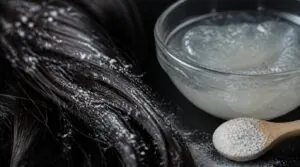
Guar gum is great for hair, but it doesn’t always behave perfectly straight out of the jar. A few common mistakes in how it’s mixed or applied are usually the culprit behind those annoying white flakes. Here’s what’s actually going wrong.
Pairing proper gum dispersion with the right rinse routine — especially if you’re also dealing with shea butter buildup — makes a noticeable difference, and removing shea butter from hair often requires the same careful approach to avoid trading one residue problem for another.
Undissolved Guar Gum Particles
Most white flakes from guar gum have one root cause: undissolved particles left behind on your hair strands.
- Dry guar gum powder starts as a pale, chalky solid
- It needs full water contact to transform into a smooth gel
- Particles that skip hydration stay rigid and visible
- They deposit onto hair as dry, flaky residue
- Hydration time and water ratio decide whether guar gum coats or clumps
Guar gum’s galactomannan polysaccharide molecular structure explains why incomplete hydration leaves rigid, water-resistant particles that cling to hair strands as visible white flakes.
Using Too Much Guar Gum
Even with perfect mixing, using too much guar gum is a fast track to flaking. The sweet spot is 0.2% to 2% of your total formula weight.
Go above that, and the excess polymer can’t bind properly to hair strands. Instead, it sits on top and dries into sticky white residue that clings like plaster.
Applying Product to Dry Hair
Applying product to dry hair gives guar gum too little water to spread and hydrate evenly. Instead of coating hair strands smoothly, it can collect in small patches and dry into white flakes.
Start on damp hair, especially through the mid-lengths and ends. Water helps the formula distribute, smooth the cuticle, and reduce surface residue buildup. On dry hair, the product works less effectively and flakes become more visible.
Poor Rinsing and Product Buildup
Poor rinsing is another common trigger. When water doesn’t fully reach your hair strands, guar gum residue stays behind and dries into white flakes that are hard to miss.
Watch for these rinsing mistakes:
- Low water pressure that misses inner layers of hair
- Short shampoo contact time leaving product buildup behind
- Cool water temperature that slows residue removal
- Rushing past the scalp area during rinsing
Product Layering, PH, and Water
Sometimes the problem isn’t guar gum itself. Layering it over oils or heavy conditioners blocks water from reaching the powder, leaving undissolved gel clumps beneath other products.
pH matters too. Formulas outside the 4.5 to 6.5 range can disrupt film formation on strands.
Damp hair improves water activity around each particle, helping guar gum hydrate evenly and skip the flakes.
How to Remove Guar Gum Flakes From Hair
Guar gum flakes aren’t stubborn once you know how to approach them. The process comes down to a few simple steps that work with your hair’s natural texture instead of against it. Here’s exactly what to do.
Pairing this technique with a solid hair care routine for long hair keeps your strands healthy enough to handle styling products without buildup becoming a recurring problem.
Rewet and Loosen The Residue
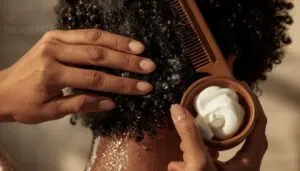
Lukewarm water is the first tool you need. Cold water won’t penetrate the flakes, and hot water can set guar gum deeper into the hair strand coating.
- Dampen the area and wait 2-3 minutes before combing
- Work your fingertips from ends upward to avoid breakage
- Add coconut oil to stubborn white flakes
- Use a conditioner to soften hair product buildup
Rinse Thoroughly With Warm Water

Once residue is loose, warm water does the heavy lifting. Keep the temperature tepid, not hot. Hot water irritates your scalp and can cause dermatitis with repeated exposure.
Start at your scalp and work downward. Let water flow through each section for 30 seconds. When it runs clear, the guar gum white flakes are fully gone.
Use a Gentle Clarifying Shampoo

A clarifying shampoo cuts through guar gum product residue that warm water alone can’t lift.
- Lather a small amount into your palms before applying
- Massage your scalp with circular motions for one full minute
- Let it sit for two minutes before rinsing
Rinse fully after. This single step resets your hair care routine and clears those stubborn white flakes fast.
Detangle Without Scraping The Scalp
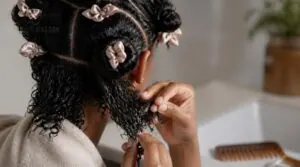
Don’t scrape at the scalp. Rewet hair and apply a detangler or other hair slip agent first. Divide it into four to six sections, then use your fingers to loosen guar gum and white flakes in hair.
Work from the ends upward with gentle tension. Follow with a wide-tooth comb only after knots release. This protects scalp hydration and helps prevent breakage.
Repeat Washing Only if Needed

Repeat washing only if needed. If warm rinsing and one gentle shampoo remove the guar gum and white flakes in hair, stop there. A second wash can strip protective oils, upset scalp pH balance, and leave hair dry or frizzy.
Double-shampoo only for heavy hair product residue. Massage shampoo into your scalp with fingertips, then condition mid-lengths and ends. Most hair washing routines need cleansing only two to three times weekly.
If your hair feels dry between washes, a cold-pressed avocado oil treatment for hair can add moisture, just patch test first.
How to Prevent Guar Gum White Flakes
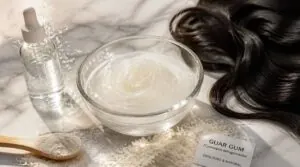
Most guar gum flakes are preventable with a few careful changes to how you make and use the product. The goal is a fully hydrated formula that leaves a flexible film on damp hair, not a dry residue. Use the steps below to keep your routine smooth and flake-free.
Measure Guar Gum Concentration Carefully
Start low: the Ideal Guar Gum Ratio is 0.2% to 0.5% for a leave-on hair viscosity enhancer. Measuring Guar Gum Powder with a 0.01 g scale prevents buildup and White Stuff in Hair.
- Weigh 0.2 g per 100 g batch.
- Check spread.
- Increase by 0.1%.
- Stop before drag develops.
Always use Concentration Testing Methods for Ensuring Proper Dilution, Avoiding Over-Concentration.
Pre-Mix Powder With Glycerin
After measuring, make a glycerin slurry: mix guar gum powder with three parts glycerin until coated. These glycerin slurry benefits include a hydration efficiency boost and reduced flaking risk. Your hair detangler gains hair hydration, hair frizz reduction, enhanced detangling performance, and improved product stability.
| Action | Guide | Result |
|---|---|---|
| Mix | 1:3 | coated |
| Stir | 30s | smooth |
| Mix | low | even |
| Add | slowly | stable |
Hydrate Until Completely Smooth
Let the glycerin slurry hydrate in warm, not hot, filtered water. Whisk while adding it slowly, then rest it for 30 minutes to 2 hours. Stir once or twice during that time.
A smooth guar gum gel should look slightly translucent and flow in one ribbon. If you feel grit or see specks, wait longer. Complete dissolution helps hair hydration, frizz control, slip, and shine without flakes.
Apply Only to Damp Hair
Apply guar gum gel, conditioner, or detangler to damp hair, not dry strands. Towel-dry after washing until hair feels moist but does not drip.
That thin water layer helps guar gum finish hydrating and spread evenly. You’ll get easier comb-through and better hair moisture retention from mid-lengths to ends.
On dry hair, thick product can grab, clump, and set too fast. Damp application lowers the flaking risk by preventing grainy white patches.
Limit Product Layering and Frequency
Usually, one full routine on wash day is enough. Layering guar gum with creams, oils, or hold products creates residue, not hair care.
- Use less: pea-sized amounts.
- Refresh with water first.
- Limit full routines to 2–3 weekly.
- Fine hair needs fewer layers.
- Clarify monthly, then deep-condition.
For hair breakage prevention, avoid product overuse. With low hair washing frequency, use lighter refreshes.
Flake-Free Guar Gum Hair Recipes
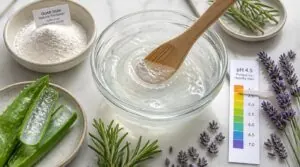
A flake-free recipe starts with the right guar type, a modest amount, and careful mixing. You’ll also need to watch pH, preservation, and how your scalp responds. Use the following formulas and checks to make your next batch smoother and more reliable.
Low-Flake Guar Gum Hair Gel
A smooth gel starts with full hydration. Weigh 0.3 to 0.5% guar gum powder on a 0.01 g scale. Pre-mix it with glycerin, then slowly whisk into warm distilled water. Rest 20 minutes until clear and lump-free.
Use this low-viscosity hair gel alternative on damp hair. Smooth on one thin layer only. Heavy layering causes White Stuff in Hair and flaking.
Conditioner With Cationic Guar
Cationic guar, listed as guar hydroxypropyltrimonium chloride, carries a positive charge that bonds to negatively charged hair fibers. That attraction leaves a thin conditioning film even after rinsing, boosting hair slip and detangling while cutting static.
Disperse the powder into a water vortex and mix for 15 minutes before adding fatty alcohols or oils. Apply to wet hair and rinse well for smooth, residue-free results.
Safe Guar Gum Concentrations
Getting the concentration right changes everything. Keep guar gum between 0.2% and 2% of your total formula. Below that, you won’t get enough gel formation to condition or detangle. Go above 2%, and the mixture turns too viscous to rinse cleanly, leaving residue that dries into white flakes.
Keep guar gum between 0.2% and 2%—too little won’t hold, too much won’t rinse
Use a kitchen scale. Even small overages shift how the gel behaves.
PH Adjustment Without Clumping
pH affects how well guar gum hydrates. A target pH of 4.5 to 5.5 keeps your formula stable and scalp-friendly. Use diluted citric acid to adjust it. Mix the acid into warm water first, then add it drop by drop while stirring your detangler. This gradual mixing method prevents clumping. Avoid layering acidic products on top, or your pH shifts unevenly.
Preservation and Patch Testing
Your guar gum recipe needs a natural preservative to stay safe. Bacteria grow in water-based formulas fast. Phenoxyethanol at 1% is a reliable choice.
Before your first use, do patch testing on your inner arm. Leave it on for 48 hours, then check for redness. This screens for contact dermatitis and confirms your formula won’t cause white flakes or irritation.
Guar Gum Flakes or a Scalp Condition?
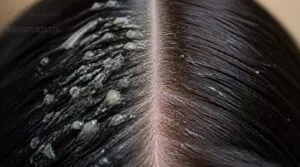
Not every flake you see in your hair means guar gum is the problem. Sometimes what looks like product residue is actually a scalp condition that needs a different fix entirely. Knowing the difference starts with looking at a few key signs.
Where Flakes Appear on Hair
Flake location is a big clue. Guar gum residue rarely shows up at your scalp roots. Instead, flakes appear along the mid-shaft and ends.
Look for these patterns:
- White specks cling to the cuticle of individual strands
- Curly hair collects buildup in bends and coils
- Darker hair shows flakes more clearly against the strand
- Porous, damaged ends hold flakes stubbornly
Guar Residue Versus Dry Scalp
Knowing where white flakes in hair appear helps, but texture and feel close the case.
| Feature | Guar Residue | Dry Scalp |
|---|---|---|
| Texture | Waxy or gritty | Dry, flaky skin cells |
| Location | Hair shaft and ends | Scalp surface |
| Removal | Clarifying shampoo | Moisturizing treatment |
| Feel when touched | Coated or sticky | Tight and sensitive |
| Distribution | Patchy, uneven | Spread across scalp |
Guar residue feels waxy or gritty on your strands. Dry scalp shows up as tight, itchy skin that sheds small flakes uniformly. It also disrupts moisture retention, leaving hair brittle. Guar gum buildup is just product accumulation on the shaft. One fix is thorough cleansing; the other is hydration for scalp health.
Guar Residue Versus Dandruff
Dry scalp and dandruff look alike, but dandruff has a biological cause.
- Fungal scalp activity drives the flaking cycle
- Recurrent itching is the clearest dandruff sign
- Warm water removes guar residue, not dandruff flakes
- Oily, clumped flakes on the scalp point to fungus
- Guar residue fades after one good wash
Dandruff returns without antifungal shampoo. Residue always clears up faster.
Signs of Dermatitis or Psoriasis
Some scalp issues go beyond dandruff or product buildup. Seborrheic dermatitis causes oily, inflamed scalp redness patches with persistent itching and soreness.
Scalp psoriasis looks different: you’ll notice raised thick plaques covered in silvery-white scaling, with stubborn flaking that won’t clear after washing.
Since that inflammation can also weaken follicles and trigger shedding, it helps to understand how scalp inflammation leads to hair shedding and what you can do about it.
Both conditions tend to follow cyclic flare patterns, returning even when your hair is completely product-free.
When to See a Dermatologist
If home care isn’t clearing things up, it may be time to call a dermatologist. See one when you notice:
- Persistent scalp itching that won’t stop after two weeks of home care
- Worsening inflammation or spreading redness across new areas
- Unusual lesions appearing on your scalp or hairline
- Rapid spread that doesn’t respond to washing
- Ongoing care needed for seborrheic dermatitis or scalp psoriasis
Frequently Asked Questions (FAQs)
What does guar gum do to hair?
When added to your routine, guar gum coats each strand with a thin film that locks in moisture, smooths the cuticle, and gives your hair noticeable slip and shine with easier detangling.
What is the white stuff in my hair?
White stuff in hair can be dandruff, dry skin flakes, product buildup, or hair casts. Each looks slightly different and has a different cause, so texture and location matter most when identifying it.
How to get rid of white flakes in hair after washing?
Rewet your hair first to loosen the residue, then rinse thoroughly with warm water. Apply a clarifying shampoo, detangle gently post-wash, and repeat wash if necessary until the white flakes in hair are gone.
Why do products flake in my hair?
Products pile up, layer by layer, even when you can’t see them. Poor rinsing, dry hair, and incompatible ingredients all cause white flakes. Most of the time, the fix is easier than you think.
How can I tell if I am allergic to Guar Gum?
True guar gum allergic reactions are rare, but they do happen. Watch for itching, redness, or hives on your scalp or skin after use. A simple patch test beforehand helps you catch any sensitivity early.
What is the best way to apply Guar Gum to my hair?
Start on damp hair right after washing. Mix your guar gum powder slowly into water with a little glycerin, let it hydrate fully until smooth, then distribute evenly from roots to ends.
Can I make a Guar Gum conditioner at home?
Yes, you can easily make a DIY guar gum conditioner at home. Slowly mix the powder into warm water at 5% concentration, add glycerin for slip and shine, apply to damp hair, and rinse thoroughly.
How do I remove Guar Gum build-up from my hair?
Time to wash the slate clean. Wet your hair with warm water and let it soak for 2-3 minutes. Massage in a sulfate-free clarifying shampoo, then rinse from roots to ends until water runs clear.
Do all hair types experience white flakes?
White flakes can show up on any hair type, but fine or low-porosity hair often collects more visible buildup. Product deposits stay on the surface rather than absorbing in, so flakes show up more easily.
How to remove existing guar gum buildup?
Moisture is your first move. Rewet guar gum residue with warm water, then massage a clarifying shampoo through your hair for 60 seconds. Use gentle detangling after rinsing, and repeat washing only if it still feels sticky.
Conclusion
Think of your formula like a recipe that just needs a little fine-tuning. Guar gum white flakes in hair don’t mean the ingredient has failed you. They mean one variable slipped: too much powder, not enough hydration, or hair that wasn’t quite damp enough. Fix that one thing.
Most people get it right on the second batch. Start low, mix until smooth, apply to wet hair, and you’ll wonder why the flakes ever showed up.