This site is supported by our readers. We may earn a commission, at no cost to you, if you purchase through links.
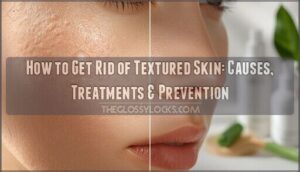
Your skin won’t lie to you. When you run your fingers across your cheek and feel bumps instead of smoothness, or when foundation settles into valleys you didn’t know existed, textured skin is making itself known.
This roughness stems from causes ranging from stubborn dead cells and dehydration to collagen loss and genetic factors. The frustration compounds when concealer cakes, highlighter emphasizes imperfections, and your reflection shows dullness instead of radiance.
Understanding what creates uneven texture—and which treatments actually work—gives you control over your skin’s appearance. Medical-grade solutions, targeted ingredients, and evidence-based home care can restore smoothness when applied correctly.
Table Of Contents
- Key Takeaways
- What is Textured Skin?
- What Causes Textured Skin?
- How Does Skin Type Affect Texture?
- How Can I Smooth Textured Skin at Home?
- Does Exfoliation Improve Skin Texture?
- What Ingredients Help Smooth Skin?
- How Important is Hydration for Texture?
- Can Professional Treatments Fix Textured Skin?
- How Does Sun Protection Affect Texture?
- What Makeup Techniques Blur Textured Skin?
- Frequently Asked Questions (FAQs)
- What are the best products for textured skin?
- Can textured skin be reversed?
- How long does it take to see results from treatments?
- What are the side effects of RF microneedling?
- How often should I exfoliate my textured skin?
- Can diet or supplements improve skin texture?
- How long until textured skin visibly improves?
- Does stress or sleep affect skin texture?
- Can textured skin be completely reversed permanently?
- Is textured skin different from aging skin?
- Conclusion
Key Takeaways
- Textured skin stems from dead cell buildup, clogged pores, dehydration, collagen loss, and sun damage—treating it requires consistent exfoliation, barrier repair, and broad-spectrum SPF 30+ daily.
- Chemical exfoliants like AHAs (5-10%) and BHAs (0.5-2%) dissolve surface roughness and penetrate pores, while retinol and niacinamide boost collagen production and strengthen your skin barrier over 4-12 weeks.
- Professional treatments including chemical peels, microneedling, and laser resurfacing deliver faster texture improvement than at-home care, especially for stubborn acne scars or deep wrinkles.
- Hydration from hyaluronic acid moisturizers applied twice daily, combined with adequate water intake and a blurring primer before makeup, smooths texture both structurally and cosmetically.
What is Textured Skin?
Textured skin isn’t one single thing—it’s a catch-all term for skin that feels rough, bumpy, or uneven when you touch it. It can show up as visible bumps, dull patches, or areas that just won’t lie flat no matter what you do.
Sometimes textured skin comes with dry, flaky patches that make the surface feel even rougher and look dull.
Understanding what textured skin actually looks and feels like helps you figure out what’s happening with your skin and where it’s happening most.
Knowing whether your texture is from dryness, oil buildup, or product residue can guide you toward hydrating formulas that actually smooth things out instead of making it worse.
Signs and Symptoms
Rough skin, bumpy texture, and dry patches signal textured skin—and you’ll notice them the moment your fingertips brush your face. These skin irregularities often feel coarse or raised, disrupting the smooth surface you’re used to.
If you’re just starting out, a simple skin care routine for beginners can help restore moisture and smooth out rough, uneven areas.
Uneven tone, enlarged pores, and dull appearance accompany the texture, while acne scars or flaky dry skin can make makeup cling to rough areas instead of gliding on evenly.
Treating underlying breakouts with targeted acne treatment for teenage girls helps prevent future texture issues and allows makeup to sit more smoothly on clearer skin.
Understanding skin texture issues is essential to addressing these problems effectively.
How Textured Skin Looks and Feels
Textured skin disrupts the smooth canvas you expect when you look in the mirror, showing up as raised bumps, uneven patches, or a surface that catches light in all the wrong ways. Your fingertips detect the roughness before you see it—bumpy skin causes include clogged pores, acne scars, and dead cell buildup.
The dull skin appearance stems from uneven skin texture blocking light reflection, leaving your complexion flat instead of radiant.
Areas Commonly Affected
Your face shows the most obvious signs—forehead, nose, and cheeks develop bumpy complexion issues because oil glands cluster densely there. Beyond facial texture problems, body acne creates rough patches on your chest, back, and shoulders where hormones trigger breakouts. The upper arms, thighs, and buttocks trap dead cells around follicles, producing sandpaper-like skin irritation you can’t ignore.
- Central face zones with concentrated pore activity
- Upper trunk areas prone to acne scarring
- Limb surfaces showing keratosis pilaris bumps.
Understanding acne scar types is essential for effective treatment.
What Causes Textured Skin?
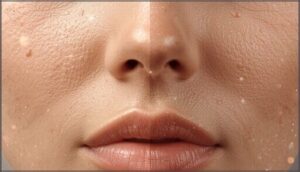
Your skin’s texture doesn’t just change on its own. Several factors—some within your control, others not—can disrupt the smooth surface you’re aiming for. Understanding what’s behind the bumpiness or roughness gives you a clearer path to treating it effectively.
Acne and Breakouts
Acne doesn’t just leave marks behind—it creates ongoing inflammation and oil buildup that keeps your skin feeling rough and uneven long after breakouts fade. When bacteria and dead cells inflame your pores, they damage surrounding tissue.
Conditions like rosacea worsen this cycle with persistent redness and bumps.
A dermatologist can recommend targeted acne treatment and blemish control strategies to calm inflammation and restore smoother skin texture.
Clogged Pores and Dead Skin Buildup
Dead skin cells pile up on your skin’s surface like layers of dust, trapping oil and debris inside your pores until they stretch and create that unmistakable bumpy feel. Blackheads and whiteheads form when these clogged pores oxidize or close over.
If you’re dealing with clogged pores and prefer gentler products, fragrance-free shaving cream alternatives can help minimize irritation while keeping your skin clear.
Regular exfoliation methods provide dead skin removal and skin purification. Without consistent pore minimization strategies, this buildup worsens textured skin and enlarges your pores permanently.
Dryness and Dehydration
When your barrier fails, transepidermal water escapes faster than you can replace it, leaving your skin rough and tight. Dehydration causes flaking that disrupts your complexion, while dry skin compounds the problem by lacking natural oils.
Moisturize with hyaluronic acid and ceramides for barrier repair—skin hydration tips start here. Without proper hydration, even gentle exfoliation won’t smooth your texture.
Aging and Sun Damage
Time breaks down your skin’s framework from within and without. Aging reduces collagen loss and skin elasticity, while chronic sun damage triggers photoaging effects through oxidative stress and the glycation process. These forces combine to roughen your complexion:
- UV rays activate enzymes that degrade collagen
- Reactive oxygen damages structural proteins
- Sugar molecules stiffen elastic fibers
- Slower cell turnover leaves dead skin lingering
- Matrix breakdown creates uneven surface texture
Sunscreen remains your strongest antiaging defense against textured skin.
Genetics and Skin Conditions
Your DNA writes part of your skin’s story, determining whether you’ll battle chronic texture issues or sail through life with a naturally smooth complexion. Genetic predisposition influences your skin inheritance—from pore size to oil production patterns.
Inherited traits can trigger skin conditions like rosacea, eczema, or hormonal imbalance that worsen textured skin. A dermatologist can identify these condition triggers and create treatment plans that work with your unique skin health blueprint.
How Does Skin Type Affect Texture?
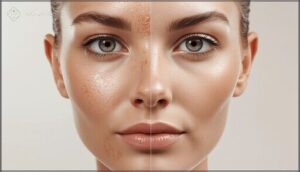
Your skin type plays a major role in how texture shows up on your face. Oily skin often struggles with clogged pores and breakouts, while dry skin often looks rough or flaky.
Understanding your specific skin type helps you choose the right treatments that’ll actually work for your texture concerns.
Oily Vs. Dry Skin
Skin type differences play a major role in how texture shows up. Oily skin produces extra sebum, which clogs pores and creates visible bumps—especially in the T-zone. You’ll notice enlarged pores and a shiny surface.
Dry skin, on the other hand, develops flakiness and fine lines from lack of moisture.
To balance texture, oily types need oil control and gentle exfoliation, while dry skin requires deep moisturization.
Sensitive and Combination Skin
If you have sensitive skin or combination skin, you need to approach texture carefully. Dryness and oiliness can exist on your face at once, which means one-size-fits-all products won’t cut it.
Here’s how to manage both:
- Use fragrance free products to avoid irritating sensitive areas
- Introduce gentle exfoliants one at a time with patch testing first
- Apply lightweight, non-comedogenic moisturizers that won’t clog pores
Target each zone with products matched to its needs for smoother skin texture.
Impact of Skin Type on Treatments
Treating textured skin isn’t universal—your skin type directly shapes how you’ll respond. Oily skin often clears faster with acne-targeted treatments, while dry skin needs gentler formulas to avoid irritation. Sensitive skin care demands patch tests and lower concentrations of actives like retinoids.
| Skin Type | Treatment Adjustment |
|---|---|
| Oily | Stronger actives, faster results |
| Dry/Dehydrated | Lower concentrations, slower buildup |
| Sensitive/Reactive | Patch test first, conservative regimens |
Tailored regimens prevent setbacks and improve treatment efficacy over time.
How Can I Smooth Textured Skin at Home?
You don’t need a dermatologist’s office to start improving your skin’s texture. A consistent at-home routine with the right products can make a real difference in how your skin looks and feels.
Let’s break down the essentials that will help you build smoother, healthier skin from your own bathroom.
Daily Skincare Routine Essentials
Consistency transforms textured skin over time. A simple skincare routine for texture starts with cleansing twice daily using a gentle, nonfoaming formula that won’t strip your skin barrier. Then apply a lightweight, noncomedogenic moisturizer to lock in daily hydration. Every morning, finish with broad-spectrum sunscreen to prevent UV damage.
- Morning cleansing removes overnight oil buildup without overdrying
- Night moisturizing repairs and strengthens your skin barrier while you sleep
- Gentle exfoliation 1-2 times weekly clears dead cells that dull skin texture
Gentle Cleansing Techniques
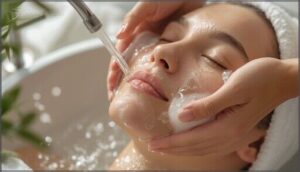
How you wash your face matters just as much as what you wash it with. Use lukewarm water and gentle circular motions to protect your skin health. Hot water strips protective oils and disrupts skin pH balance. Pat dry instead of rubbing to avoid irritation.
Fragrance-free products support sensitive skin care. This cleansing method sets the foundation for your entire skin care routine when improving skin texture.
Non-Comedogenic Product Choices
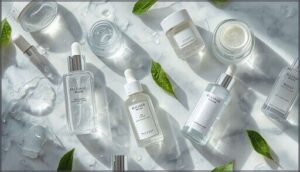
After cleansing, your product labels become your roadmap. Look for noncomedogenic on cosmetic claims to prevent pore-friendly choices from backfiring. Oil-free formulas with lightweight textures absorb quickly without residue.
Check ingredient lists for water-based hydrating options that won’t clog pores while you exfoliate and improve skin texture. These skin care selections protect your progress toward smoother results.
Does Exfoliation Improve Skin Texture?

Yes, exfoliation directly improves skin texture by removing the buildup of dead cells that make your skin feel rough and look dull. The key is choosing the right method and frequency for your skin type.
Let’s break down the two main approaches, how often you should exfoliate, and the safety rules that protect your skin while you smooth it out.
Chemical Vs. Physical Exfoliation
You have two main exfoliation methods to smooth skin texture: chemical and physical. Chemical peels and acids dissolve dead cells at the surface, while microdermabrasion and scrubs physically buff them away. Each exfoliant type offers distinct benefits for texture improvement, but protecting your skin barrier remains essential with both approaches.
- Chemical exfoliants (AHAs, BHAs) penetrate pores to dissolve buildup without scrubbing
- Physical exfoliation provides immediate smoothing through gentle mechanical action
- BHAs work best for oily skin and clogged pores
- Overuse of either method can compromise your skin barrier and cause irritation
How Often to Exfoliate
Your skin type analysis determines your ideal exfoliation frequency. Normal and combination skin tolerate exfoliation 1 to 3 times weekly, while oily skin can handle 2 to 4 sessions. Dry or sensitive skin should start once weekly.
Product rotation between chemical and physical exfoliants prevents over-processing. Monitor how your skin responds—redness or flaking signals you’re overdoing it. Exfoliant strength matters as much as frequency for skin texture improvement.
Exfoliation Safety Tips
Start slow with any new exfoliant—patch test on your inner forearm for 24 to 48 hours before full-face application. This simple step prevents irritation and protects your skin barrier.
- Limit exfoliation frequency to 1–3 times weekly to avoid damaging uneven skin texture
- Use lukewarm water and gentle techniques when applying exfoliant types
- Skip exfoliation on broken or sunburned skin to prevent worsening textured skin
- Stop immediately if redness or burning persists beyond 48 hours
What Ingredients Help Smooth Skin?

Certain active ingredients work directly on the skin’s surface to address texture issues. They dissolve dead cells, boost collagen production, and repair the skin’s protective barrier.
Here’s what actually has an impact when you’re choosing products to smooth out bumpy or uneven skin.
AHAs and BHAs
Think of alpha and beta hydroxy acids as your skin’s power duo for texture refinement. AHAs like glycolic acid dissolve surface bonds between dead cells, while BHAs such as salicylic acid dive into pores to clear debris from within. Both exfoliate effectively, promoting skin renewal and improving texture with consistent use at proper concentrations.
| Acid Type | Best For | Key Action |
|---|---|---|
| AHAs (glycolic, lactic) | Rough texture, dullness, fine lines | Surface exfoliation and cell turnover |
| BHAs (salicylic) | Clogged pores, blackheads, oily skin | Penetrates follicles, reduces sebum |
| Combined Use | Multiple texture concerns | Targets both surface and pore-level issues |
| Safety Note | All skin types | Start low concentration; always use SPF 30+ |
Start with lower concentrations—5-10% for AHAs, 0.5-2% for BHAs—and apply 2-3 times weekly after cleansing. Always pair these exfoliants with broad-spectrum sunscreen, as they increase sun sensitivity. If you experience persistent irritation, scale back frequency or consult your dermatologist for guidance customized to your skin’s tolerance.
Retinol and Vitamin C
Retinol speeds cell renewal while boosting collagen production deep in your skin—both essential for smoothing rough patches. Vitamin C serum complements this by brightening tone and defending against oxidative damage that worsens texture.
Apply Vitamin C each morning and retinol at night, starting 2-3 times weekly. Pair with SPF 30+ daily, since both increase sun sensitivity and gradual introduction minimizes irritation.
Niacinamide and Hyaluronic Acid
Niacinamide strengthens your skin barrier by boosting ceramide production, which helps regulate oil and reduce the appearance of fine lines. Hyaluronic acid delivers lightweight hydration—holding up to 1000 times its weight in water—plumping your skin’s surface without clogging pores.
Together, these active ingredients tackle uneven texture, improving skin health when used consistently at 2–5% concentrations in serums or moisturizers.
Ceramides and Barrier Repair
Ceramides are lipid molecules that restore barrier function and lock in moisture—forming about 40–50% of healthy skin’s lipids. When your barrier weakens, texture worsens.
Ceramide-rich moisturizers rebuild that protective layer:
- Reduce transepidermal water loss within weeks
- Support ceramide NP, AP, and EOP restoration
- Pair with cholesterol and fatty acids for best results
- Complement hyaluronic acid for deeper hydration
- Improve resilience in dry or reactive skin
Consistent use smooths texture and strengthens skin health.
How Important is Hydration for Texture?

Hydration isn’t just a buzzword—it’s the foundation of smooth, healthy skin texture. When your skin lacks moisture, dead cells pile up and create that rough, uneven surface you’re trying to fix.
Let’s break down how to hydrate properly based on your skin’s unique needs and lifestyle factors.
Moisturizing for Different Skin Types
Your skin type dictates which moisturizer will actually sink in and do its job rather than sit on the surface or clog your pores. Dry skin needs rich formulas with hyaluronic acid and ceramides applied twice daily.
Oily skin responds better to lightweight, oil-free gels that won’t trigger breakouts.
Sensitive skin requires fragrance-free options that protect without irritation.
Hydration From Diet and Lifestyle
Drinking enough water and eating hydrating foods like cucumbers and soup work from the inside out to keep your skin soft and smooth. Aim for eight glasses daily to support skin hydration and skin regeneration.
These lifestyle changes directly impact skin texture and overall skin health. Your dermatologist will tell you that daily moisturizing combined with adequate water intake creates the foundation for lasting improvement.
Preventing Dryness and Flakiness
Daily hydration goes beyond drinking water—you need to lock it in. Apply a moisturizer with hyaluronic acid immediately after gentle cleansing while your skin barrier is still damp. Choose fragrance-free formulas for dry skin and moisturize twice daily.
Control indoor humidity during winter when heating strips moisture. Limit hot showers and exfoliate only once or twice weekly to prevent flakiness and maintain smooth skin texture.
Can Professional Treatments Fix Textured Skin?

At-home care can only go so far when you’re dealing with stubborn texture. Professional treatments deliver stronger ingredients and deeper action than anything you’ll find in a bottle at the drugstore.
Here’s what actually works when your skin needs more than a daily routine can offer.
Chemical Peels and Microdermabrasion
Chemical peels use formulations with exfoliants like glycolic or salicylic acid to resurface your skin and improve texture. Studies show that a series of 20 to 30 percent salicylic peels can improve post-acne roughness in about 66 percent of patients.
Consider these dermabrasion techniques:
- Superficial peels target fine texture and dullness
- Medium peels reach deeper for wrinkles
- Microdermabrasion gently buffs away dead cells
- Multiple sessions deliver better, lasting results
Microneedling and Laser Resurfacing
Sophisticated skin rejuvenation techniques offer powerful texture improvement. Microneedling benefits your skin by puncturing it with tiny needles to trigger collagen stimulation—trials show significant progress after three to six sessions. Laser resurfacing removes damaged cells while boosting collagen production. Fractional lasers offer shorter recovery times, while ablative options deliver faster results for deep scars.
Your dermatologist can customize needle depth or laser intensity based on your specific concerns.
| Treatment | How It Works | Best For |
|---|---|---|
| Microneedling | Needles create controlled injury (0.5–2.0 mm depth) to remodel collagen | Atrophic acne scars, rough texture |
| Fractional Non-Ablative Laser | Heats tissue without removing surface (e.g., 1540 nm wavelength) | Fine lines, mild texture, minimal downtime |
| Fractional Ablative Laser | Vaporizes skin columns (CO2 or Er:YAG) for deep resurfacing | Deep wrinkles, severe scars, significant texture |
| Microneedling + PRP | Combines needling with platelet-rich plasma for enhanced healing | Stubborn scars, anti-aging, textured skin |
| Professional Dermabrasion | Mechanically removes outer layers under controlled settings | Uneven texture, pigmentation, skin rejuvenation |
When to See a Dermatologist
When should you escalate to a dermatologist referral? If textured skin persists beyond four to eight weeks of consistent home care, professional dermatology evaluation is warranted. Sudden worsening, pain, or spreading redness requires emergency derm care to rule out infection.
A dermatologist can tailor acne treatment options, rosacea management, or skin cancer screening while recommending sophisticated skin regeneration techniques for your specific skin health and wellness needs.
How Does Sun Protection Affect Texture?
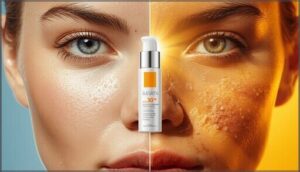
Sun damage doesn’t just cause dark spots—it breaks down collagen and creates uneven texture over time. Protecting your skin from UV rays is one of the most effective ways to prevent roughness and maintain smoothness.
Here’s what you need to know about using sunscreen and antioxidants to protect your skin’s texture.
UV Damage and Skin Texture
Sun damage breaks down collagen and elastin, leaving your skin rough and uneven. Photoaging effects from UV exposure accelerate texture problems faster than natural aging alone. Here’s what UV damage does to your skin:
Sun damage accelerates textured skin by breaking down collagen and elastin faster than natural aging ever could
- Triggers enzymes that degrade collagen fibers
- Creates reactive oxygen species that damage cells
- Causes solar elastosis, a thick leathery texture
- Disrupts your skin’s barrier, leading to dryness
Consistent UV protection slows these changes and aids collagen repair over time.
Choosing and Applying Sunscreen
Your dermatologist will tell you: protecting against sun damage and skin cancer starts with choosing a broad-spectrum SPF 30 or higher sunscreen. Mineral formulas with zinc oxide work well for sensitive or acne-prone skin.
Apply a nickel-sized amount to your face and neck 15 minutes before UV protection matters most. Reapply every two hours during daily application, especially after sweating.
Antioxidants for Additional Protection
Free Radical Damage from pollution and UV rays creates Oxidative Stress that breaks down your skin’s smoothness. Antioxidants deliver Cellular Protection your sunscreen can’t provide alone.
Layer these for maximum Antioxidant Benefits:
- Vitamin C serums boost collagen and tackle uneven Skin Texture
- Niacinamide calms inflammation while supporting Skin Barrier Repair
- Green Tea extracts soothe irritated, rough patches
- Retinol at night provides AntiAging texture refinement
What Makeup Techniques Blur Textured Skin?
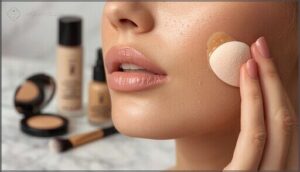
You don’t have to skip makeup just because your skin feels uneven. The right products and techniques can soften the appearance of texture and give you a smoother finish.
Here’s how to prep, apply, and set your makeup for the best results.
Primers and Blurring Products
A blurring primer creates a smooth canvas by filling micro-relief with silicone-based formulas that flatten uneven areas temporarily. Light-diffusing pigments scatter reflection, making pores less visible for six to eight hours.
Choose oil-control versions for oily skin or hydrating formulas for dry patches.
Apply a pea-sized amount to central zones, let it set for 30 seconds, then match your foundation type to the primer base for ideal makeup compatibility and skin texture improvement.
Foundation Application Tips
After your blurring primer sets, foundation techniques matter just as much as product choice. A hydrating foundation works best on textured skin—apply it in thin layers with a damp sponge, pressing gently instead of dragging. These makeup tricks prevent settling into pores:
- Choose lightweight, breathable formulas
- Build coverage gradually from the center outward
- Use a stippling brush for airbrushed results
- Avoid over-blending textured zones
- Set lightly with translucent powder
Setting Sprays and Finishing Techniques
Once your foundation looks smooth, a setting spray locks everything in place. Alcohol-free formulas won’t dry out your skin—mist evenly from 8–10 inches away and let it air-dry.
For extra insurance, dust a light finishing powder over high-shine zones before spraying. This combo can keep your makeup looking fresh for 8–12 hours while softening visible texture.
Frequently Asked Questions (FAQs)
What are the best products for textured skin?
Look for glycolic acid treatments, niacinamide serums, retinol creams, and salicylic exfoliants to smooth rough patches.
Hydrating moisturizers with hyaluronic acid lock in moisture, while barrier-repair formulas keep skin smooth and resilient.
Can textured skin be reversed?
You can improve textured skin markedly with collagen stimulation treatments like retinol, chemical exfoliation, and professional procedures.
Complete reversal depends on the cause—dehydration reverses easily, while deep scarring requires dermis restoration for partial texture correction.
How long does it take to see results from treatments?
Most treatments targeting textured skin show initial texture improvement within four to twelve weeks. Retinol and chemical exfoliation usually deliver visible skin rejuvenation after six weeks, while microneedling stimulates collagen production with result variations appearing around four weeks.
What are the side effects of RF microneedling?
RF microneedling risks include temporary redness lasting 24 to 72 hours, swelling for up to three days, and mild discomfort during skin rejuvenation.
Rare complications involve infection or pigment changes, making post-procedure care essential for safe microneedling recovery.
How often should I exfoliate my textured skin?
Regarding exfoliation, less is often more. Exfoliate your textured skin one to three times weekly, depending on your skin tolerance and the exfoliant type you’re using—AHAs work gently for most textures.
Can diet or supplements improve skin texture?
Yes, diet affects skin texture. Antioxidants from fruits, omega-3 fatty acids, and adequate protein support collagen production and skin health.
Vitamin C supplements and hydration help smooth rough texture when dietary habits alone fall short.
How long until textured skin visibly improves?
Most people notice smoother, more even skin texture within four to twelve weeks of consistent treatment.
Prescription retinoids and professional procedures like microneedling may require three to six months for visible results.
Does stress or sleep affect skin texture?
Chronic stress elevates cortisol levels, worsening acne and increasing sebaceous activity that roughens skin texture.
Poor sleep impairs your skin’s barrier function and slows skin recovery, while adequate rest promotes skin rejuvenation and helps you maintain smoother skin health naturally.
Can textured skin be completely reversed permanently?
Some patients achieve near-complete texture reversal with diligent exfoliation routines and collagen production treatments, but permanent fixes aren’t guaranteed.
Skin rejuvenation depends on longevity factors like sun protection, antiaging consistency, and your baseline skin condition.
Is textured skin different from aging skin?
Textured skin stems from active concerns like clogged pores or acne scarring, while aging skin reflects collagen loss and fine lines.
Texture often reacts to targeted treatments; aging requires longer-term strategies addressing dermal changes and skin rejuvenation.
Conclusion
The mirror might show texture now, but skin changes when you commit to evidence-based care. How to get rid of textured skin isn’t about overnight miracles—it’s about consistent exfoliation, barrier repair, and sun protection creating gradual smoothness.
Your genetics set the baseline, but your choices determine the outcome. Start with one targeted ingredient, build slowly, and give treatments twelve weeks.
Texture diminishes when you stop chasing flawlessness and start practicing patience.
- https://pmc.ncbi.nlm.nih.gov/articles/PMC2699641/
- https://www.dermatologytimes.com/view/retinoid-based-regimen-led-to-significant-improvements-in-skin-clarity-among-patients-with-darker-blemish-prone-skin
- https://pure.johnshopkins.edu/en/publications/a-consistent-skin-care-regimen-leads-to-objective-and-subjective-/