This site is supported by our readers. We may earn a commission, at no cost to you, if you purchase through links.

Goat milk has been used for skin and hair care for centuries, but modern trichology now explains exactly why it works.
It contains a precise combination of vitamins A, D, E, and B-complex, along with zinc, selenium, calcium, and lactic acid—nutrients that directly support scalp function and keratin production.
What distinguishes it from most conditioning treatments is that these compounds don’t just coat the hair shaft. They interact with follicle biology at a cellular level.
Whether your concern is dryness, slow growth, breakage, or a reactive scalp, goat milk benefits for hair go deeper than the surface.
Table Of Contents
Key Takeaways
- Goat milk’s vitamins A, D, E, and B-complex, combined with zinc, selenium, and lactic acid, work at the follicle level to support keratin production and scalp health — not just on the surface.
- The fatty acids in goat milk coat each hair shaft, reduce moisture loss, and smooths the cuticle, giving you softer, less frizzy hair without heavy buildup.
- Lactic acid gently exfoliates dead skin cells, restores your scalp’s natural pH, and creates an environment where irritants and flakes are less likely to take hold.
- You can use goat milk as a DIY mask, rinse, conditioner, or shampoo bar 2–3 times per week, and it works safely on color-treated hair — just patch test first if you have dairy sensitivities.
Goat Milk Nutrients for Hair
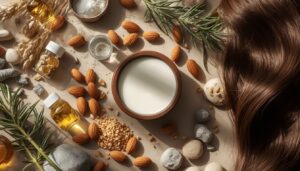
Goat milk is surprisingly rich in nutrients that your hair and scalp actually need. From vitamins and proteins to fatty acids and minerals, it covers a lot of ground.
Here’s a closer look at what’s inside and why it matters for your hair.
From vitamins to fatty acids, the nutrients that make Jamaican black castor oil a hair growth powerhouse each play a distinct role in strengthening and nourishing your strands.
Vitamins That Support Scalp Health
Goat milk packs a full vitamin lineup that your scalp genuinely needs. Vitamins A, B2, C, D, and E each play a specific role in keeping your scalp balanced and your follicles healthy.
- Vitamin A regulates sebum so your scalp stays neither too dry nor too oily
- Vitamin D promotes follicle cycling and helps reduce scalp inflammation
- Vitamin E protects scalp cells from oxidative stress and strengthens the moisture barrier
- B vitamins, including biotin and B2, fuel the cellular energy your scalp relies on daily
Protein and Amino Acids for Keratin
Beyond vitamins, your hair structure depends on protein — specifically keratin, built from sulfur amino acids like cysteine. Goat milk’s casein delivers glutamine and facilitates cysteine disulfide bond formation, giving keratin its tensile strength.
This natural protein hydrolysate and amino acid balance means your follicles receive a steady amino acid supply, directly fueling keratin production from within.
Fatty Acids for Moisture Retention
Protein builds your strands, but fatty acids keep them hydrated. Goat milk’s saturated and unsaturated fats work through emollient fatty softening — literally coating each hair shaft to reduce friction and dryness. Its occlusive lipid film slows moisture loss, while the barrier lipid layer stabilizes hydration between wash days.
The monounsaturated fatty acids are especially moisturizing, helping to reduce transepidermal water loss. Omega fatty acid balance and healthy lipid organization contribute to softer, more manageable hair naturally.
- Smooths raised cuticles for less frizz
- Locks in moisture through an occlusive lipid film
- Acts as a natural conditioner without heaviness
- Enhances fatty acids benefits that improve elasticity
Minerals That Support Follicle Function
Your hair follicles rely on minerals, and goat milk delivers several key ones. Zinc-dependent enzymes support keratin production, while selenium’s antioxidant activity protects growing follicle cells from oxidative damage. Calcium signaling directs keratinocyte development inside the bulb, magnesium energy facilitates ATP metabolism, and phosphorus ATP fuels rapid cell division at the root.
| Mineral | Role in Follicle | Amount per Cup |
|---|---|---|
| Calcium | Calcium signaling for cell growth | 300–330 mg |
| Magnesium | Magnesium energy and protein synthesis | 30–35 mg |
| Zinc | Zinc keratin enzyme support | 0.6–0.7 mg |
Iron further enhances this profile by improving oxygen delivery to scalp tissue, as hair follicle nourishment begins with circulation. Together, calcium, magnesium, and potassium make goat milk a genuinely functional source for hair growth, while its nutritional components supporting scalp health extend far beyond common expectations.
Lactic Acid and Scalp Exfoliation
Lactic acid is one of the quieter stars in goat milk’s nutrient lineup. As an alpha hydroxy acid, it gently loosens dead skin cells on your scalp surface without physical scrubbing — that’s the flake reduction mechanism at work.
This same gentle exfoliation principle is why goat milk and yogurt both shine in a natural hair mask for oily scalp, where lactic acid works quietly to dissolve buildup without stripping essential moisture.
The gentle AHA dosage found naturally in goat milk also helps restore your scalp’s pH balance, impacting conditions to make them less hospitable to irritants.
For sensitive scalps, patch testing before use is always advisable.
How Goat Milk Supports Growth
Getting longer, stronger hair starts at the root — and goat milk works quietly to make that happen. It delivers a mix of proteins, vitamins, and fatty acids that your follicles need to do their job well.
It promotes growth at each stage.
Nourishing Hair Follicles From The Root
Think of your hair follicles like tiny root systems — they only grow strong when they’re well-fed. Goat milk delivers nutritional components that support scalp circulation, improve nutrient delivery to each follicle, and help maintain microbiome balance at the root level.
Hair follicles thrive only when well-fed — and goat milk delivers exactly what roots need to grow
Its vitamins, minerals, casein protein, and fatty acids work together to create the foundation your hair needs for real, lasting growth stimulation.
Supporting The Anagen Growth Phase
Your hair only grows well when follicles stay in the anagen phase long enough. Goat milk facilitates this directly.
Vitamin D signaling helps regulate the hair growth cycle, while iron oxygen transport keeps follicle cells energized. Zinc DNA synthesis drives follicle cell proliferation, and protein keratin synthesis builds each new strand.
These nutritional components of goat milk work together for real hair follicle stimulation.
Reducing Breakage That Slows Length Retention
Growing your hair longer only works if you’re not losing it faster than it grows. Goat milk tackles hair breakage on multiple fronts — its fatty acids support moisture retention and cuticle lubrication, while casein proteins handle protein repair and hair elasticity.
Combining goat milk with gentle detangling, friction-minimizing brushing, and heat damage prevention habits helps your strands survive daily tension release techniques intact.
Improving Hair Strength and Resilience
Strong strands don’t happen by accident — they’re built from the inside out. The nutritional components of goat milk supporting scalp and follicle health include sulfur amino acids from casein proteins, which directly fuel protein repair and hair elasticity.
Vitamins C and E provide oxidative stress defense and UV ray shielding.
Improved circulation delivers a circulatory boost, reinforcing each strand by protecting against heat damage and preventing breakage.
Scalp Benefits of Goat Milk
Your scalp is basically the foundation everything else builds on, so if it’s dry, irritated, or out of balance, your hair feels it too.
Goat milk works on several of those root causes at once, thanks to its natural mix of acids, fats, and vitamins. Here’s what it can actually do for your scalp.
Soothing Dry, Itchy Scalp
A dry, itchy scalp isn’t just uncomfortable — it’s your skin barrier asking for help.
Goat milk’s anti-inflammatory vitamins A, B2, and D calm inflammation and provide relief, while its moisturizing qualities restore what harsh cleansers strip away.
Pair it with fragrance-free cleansing and a warm water rinse to deliver the barrier repair and hydrating serums your scalp needs.
Reducing Dandruff and Flakes
Flakes often signal a scalp that’s overproducing dead skin — and that’s where goat milk genuinely helps. Its lactic acid delivers gentle cleansing and exfoliation, loosening buildup before it clusters. The emollient softening from natural fats reduces dryness-driven shedding too.
- Flake reducing rinse after washing calms residue
- Anti-flake conditioning aids sensitive scalp tolerance
- Anti-inflammatory properties aid dandruff control long-term
Reducing dandruff using goat milk works because it tackles both dryness and turnover.
Balancing Scalp PH Naturally
Your scalp thrives in a slightly acidic range — around 4.5 to 5.5 — and goat milk naturally aids that target. Its lactic acid works as a gentle acidic rinse strategy, helping with alkaline residue reduction after cleansing.
This makes it one of the more microbiome-friendly cleansers available for natural hair care.
Consistent pH maintenance, not occasional correction, is what keeps scalp health steady.
Supporting a Healthy Moisture Barrier
pH balance sets the stage, but your moisture barrier is what keeps the scalp protected long-term. Think of it like a brick wall — corneocytes are the bricks, lipids are the mortar.
Goat milk’s fatty acids support that Lipid Seal, delivering a natural Ceramide Boost and Humectant Balance that locks in Sealed Hydration. That’s real Barrier Repair through natural moisturizers.
Helping Calm Scalp Irritation
When your barrier is stronger, irritation has less of a foothold. Goat milk’s anti-inflammatory properties—especially from vitamins A, B2, and D—work to calm redness and itch at the source.
Try a Gentle Massage while applying, let it sit for a short contact time of 10–15 minutes, and rinse with lukewarm water.
Always do a Patch Test first, since even gentle, low-surfactant formulas affect everyone differently.
Goat Milk for Softer Hair
If your hair often feels rough, frizzy, or just plain thirsty no matter what you try, goat milk might be the ingredient your routine’s been missing. Its fatty acids and proteins work together to soften strands from the inside out.
Here’s what that actually looks like in practice.
Deep Moisture for Dry Strands
Goat milk is a natural humectant, meaning it pulls moisture in and holds it there. For deep conditioning, apply a goat milk hair mask to damp strands, then use heat activation — a warm towel works — to help ingredients penetrate.
Prolonged dwell time of 20–30 minutes aids true hair moisturization. Finish with moisture-locking oils for layered conditioning that keeps brittle hair soft longer.
Smoother Cuticles and Less Frizz
When your hair cuticle lies flat, frizz doesn’t stand a chance. Goat milk’s fatty acids create a natural conditioning film that smooths each cuticle layer, reducing friction and improving ionic slip between strands.
That means less frizz, more softness — even on humid days. Here’s what that cuticle smoothing does for you:
If you’re working with soft waves like 2b hair type, that smoother cuticle also helps your natural texture hold its shape without turning stiff or crunchy.
- Humidity Protection — seals the cuticle so moisture from the air can’t disrupt your strands
- Ionic Slip — lets strands glide past each other instead of catching and lifting
- Conditioning Film — coats the hair cuticle for a consistently smoother surface
- Heat Shield — the protective layer buffers daily thermal stress that worsens frizz
- UV Barrier — guards against oxidative damage that roughens the cuticle over time
Better Shine and Luster
Shine comes down to one thing: how evenly light bounces off your strands. When cuticle alignment is tight and consistent, you get real light reflection instead of scattered, dull patches.
Goat milk’s natural oils deliver lipid gloss that fills surface gaps, triggering sheen amplification you can actually see.
A weekly Goat Milk Hair Mask takes hair shine enhancement further, reducing light scattering and leaving hair softness that glows.
Improved Elasticity and Fewer Split Ends
Brittle hair snaps before it stretches — that’s where elasticity boost matters most. Goat milk’s protein repairs the hair cuticle, improving hair strength and elasticity, improving strand strength strand by strand.
Its hydration flexibility keeps tips pliable, supporting tip bond reinforcement where splits start.
Better slip detangling reduces friction damage prevention issues, and fewer tangles mean less mechanical stress — so split ends form more slowly.
Lightweight Conditioning Without Heaviness
Most conditioners leave your strands coated and roots feeling flat — goat milk works differently. Its natural fats and milk proteins create a featherlight film that delivers weightless moisture without the waxy buildup.
That airy slip makes detangling easier while keeping hair soft and manageable.
As a natural hair conditioner, it promotes scalp health and hair growth stimulation, giving you a clean, soft finish every time.
Ways to Use Goat Milk
Knowing goat milk is good for your hair is one thing — actually using it’s another.
There are several easy ways to work it into your routine, whether you prefer a quick rinse or a more involved treatment. Here are the most practical options to try.
Goat Milk Hair Mask Recipes
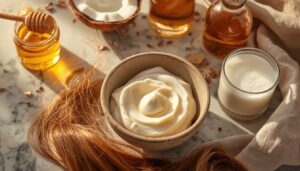
Making a DIY goat milk hair mask is simpler than you’d think. Start with ¼ cup goat milk and 1 tablespoon honey — honey’s thickening property helps the mixture stay workable. Add 1 tablespoon olive oil and 1 teaspoon coconut oil for rich oil pairings.
Stir in ¼ teaspoon guar gum for texture, then wait 15–30 minutes before applying.
Customizable ratios make these hydrating hair treatments with goat milk easy to tailor to your needs.
DIY Goat Milk Conditioner
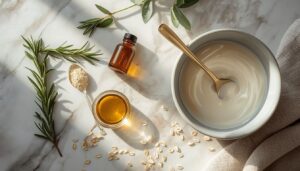
Once you’ve mastered the mask, a DIY goat milk hair conditioner takes your routine further. Mix ¼ cup goat milk with jojoba oil, then add ½ teaspoon guar gum — stir thoroughly and let it hydrate for 20 minutes. Allow your ingredients to reach room temperature for smoother blending.
Customize with your essential oil selection:
- Rosemary for scalp health
- Tea tree for buildup control
- Eucalyptus for an invigorating finish
Goat Milk Final Rinse Method

Your conditioner does the heavy lifting, but a goat milk rinse seals it all in.
Warm your milk slightly — temperature guidelines matter here — then dilute it with equal parts water. This dilution ratio prevents rinse residue from coating your strands. Apply root to tip, use a scalp massage technique to boost circulation, wait two to five minutes, then rinse clean.
Goat Milk Shampoo Bars
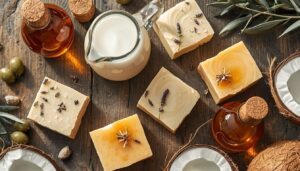
Goat milk shampoo bars take your rinse routine one step further — cleansing without stripping. Bar formulation chemistry combines goat milk with oils like castor, olive, and coconut, plus lye for saponification.
Brands like Beekman 1802’s shampoo line skip parabens and mineral oil, meeting regulatory safety standards.
Prefer DIY goat milk hair care recipes? Frozen goat milk, sodium hydroxide, and your chosen oils work beautifully.
Is Goat Milk Right for Your Hair Type?
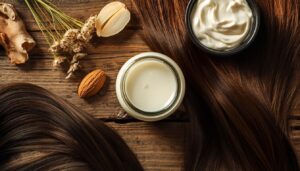
Dry, frizzy, or low-porosity hair responds well to goat milk—fatty acids and proteins support texture improvement and act as a natural conditioner and moisturizer.
Got an oily scalp? Go easy. If dairy allergies are a concern, skip it entirely.
Whether you choose DIY or store-bought, budget-friendly options exist for every routine.
Frequently Asked Questions (FAQs)
What type of milk is best for hair growth?
Regarding hair growth, goat milk edges ahead of cow milk and plant milk alternatives.
Its smaller milk fat globules absorb easily, enhancing nutrient delivery to the scalp.
The protein profile delivers key amino acids vital for strengthening hair structure.
Additionally, mild pH levels suit scalp skin, maintaining a balanced, healthy environment.
How often should you apply goat milk treatments?
Your hair care routine matters as much as what you put in it. For most people, 2 to 3 times per week works well for shampoo frequency and conditioning.
Does goat milk work on color-treated hair?
Yes, absolutely. Dye-friendly conditioning from goat milk aids porosity reduction, gloss retention, and color fade protection — without disrupting your pigment. It’s gentle, moisture-rich, and safe for chemically treated strands.
Can goat milk cause allergic reactions on the scalp?
Yes, it can. If you’re sensitive to casein or other milk proteins, scalp contact may trigger IgE cross-reactivity or contact dermatitis.
People with eczema or atopic skin face the highest risk.
Is fresh goat milk better than canned or powdered?
Fresh wins on enzyme activity and lower oxidation risk, but powdered goat milk works just as well for most DIY hair recipes — the nutritional profile stays solid either way.
Conclusion
The best time to plant a tree was twenty years ago—the second best time is now.
Your scalp and strands don’t need a complicated routine to thrive. Goat milk benefits for hair come down to real nutrients—lactic acid, vitamins, amino acids—that work with your follicles, not against them.
Start with one method, stay consistent, and let the results speak. Healthy hair isn’t built overnight, but it’s built deliberately, one nourishing step at a time.