This site is supported by our readers. We may earn a commission, at no cost to you, if you purchase through links. This content is for general informational and educational purposes only and is not a substitute for professional medical, dermatological, or nutritional advice.
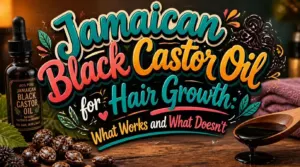
Jamaican black castor oil looks like it belongs in a witch’s cauldron. It’s dark, smoky, and thick enough to cling to a spoon, because farmers still roast the seeds over fire and boil the paste for about three hours.
That ash gives it a pH of 8 to 9, and it’s why people swear by it. But jamaican black castor oil for hair growth is one of those claims with more folklore than proof. It won’t wake dead follicles. It can soften strands and cut breakage, which is a different win. Here’s what it does, how to use it safely, and what works better when thinning is the real problem.
Table Of Contents
- Key Takeaways
- Jamaican Black Castor Oil: Origins and Composition
- Jamaican Black Castor Oil: Hair Growth Evidence
- Applying Jamaican Black Castor Oil Safely
- Side Effects and When to Seek Care
- Better-Supported Alternatives for Treating Hair Loss
- 5 Oils for Jamaican Black Castor Treatments
- Frequently Asked Questions (FAQs)
- Conclusion
Key Takeaways
- Jamaican black castor oil won’t wake up dormant follicles, but it conditions your strands and cuts breakage so you hold onto the length you already have.
- Expect modest, slow results: shine and softness within weeks, fewer snapped ends by weeks four to eight, and fuller-looking hair after two to four months of steady use.
- You’ll get the best results by diluting the oil with a lighter oil, patch testing for 48 hours before it touches your scalp, and stopping if irritation or a delayed allergic reaction shows up.
- If you’re dealing with real thinning, treatments like finasteride, minoxidil, microneedling, or PRP have far stronger evidence, so talk to a doctor rather than relying on the oil alone.
Jamaican Black Castor Oil: Origins and Composition

The story starts with the castor bean, which crossed from Africa to Jamaica during the slave trade and became part of Jamaican heritage by the early 1800s. Rural farmers still grow, harvest, and process it by hand.
Here’s how it’s made. Producers roast the seeds over a fire, crush them in a mortar, add water, and slow-boil the paste for about three hours. The oil floats up and gets skimmed off.
The ash from roasted castor seeds stays in the finished oil. It gives Jamaican black castor oil its dark, smoky look and a higher pH, around 8 to 9, versus 4.5 to 5.5 for cold-pressed castor oil.
Chemically, ricinoleic acid makes up roughly 85 to 90 percent of the fatty acids. That compound is also credited with improving scalp blood circulation, which may help nourish follicles and stimulate growth.
Jamaican Black Castor Oil: Hair Growth Evidence
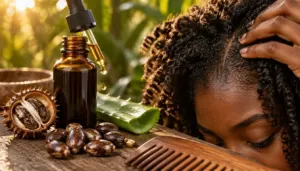
Let’s sort what the evidence says from what the hype promises. Below, I’ve split the topic into two parts so you can see what the oil does and what to expect from it. Think of it as a reality check you can use (no miracle claims required).
Conditioning and Breakage Versus New Growth
A coat of Jamaican black castor oil makes strands look fuller and shinier. That’s hair conditioning, not hair growth. Your hair follicles aren’t doing anything different.
Jamaican black castor oil gives hair a fuller, glossier look, but that’s surface conditioning, since your follicles are working exactly as before
It can reduce hair breakage, so you keep length:
- Less friction while combing
- Less protein loss
- Softer coarse or curly strands
- Extra help for bleached or relaxed hair
- A calmer, less dry scalp
Realistic Results and Timelines
Give it time, and expect modest wins. In the first two to four weeks, you’ll mostly notice shine, softness, and less frizz. Fewer snapped ends usually show up around weeks four to eight.
Fuller-looking hair takes two to four months of steady use. Judge it at three months, using photos every few weeks, same lighting, dry hair.
Applying Jamaican Black Castor Oil Safely
Even if the results are modest, you can still enjoy this oil without wrecking your hair. The trick is restraint. Use about 5 to 7 drops on your scalp once or twice a week, and work a thin layer in with your fingertips.
Pairing it with a mild shampoo and fruits that support hair growth and thickness helps your scalp get more from each drop.
Thin the oil first. Mix one part with two or three parts jojoba, coconut, or argan oil, which makes it easier to spread. Roasted black oil is more alkaline, so patch test on your inner forearm and wait 48 hours before it goes near your scalp.
Cover your hair with a shower cap and leave it on for 30 minutes to an hour. Detangle before rinsing, never after, because rubbing oily wet strands can felt long hair.
Side Effects and When to Seek Care

The most common castor oil side effects are mild, and they usually show up on your scalp. Watch for scalp irritation, an itchy scalp, small bumps, or extra flaking. Allergic reactions tend to appear a day or two after you use it, not right away. If that happens, stop using it. Most mild reactions clear up once the oil is gone.
Keep it away from your eyes. This oil is thick, so use a cotton swab near brows and lashes.
See a dermatologist if you notice sudden or patchy shedding, smooth shiny patches, or pain that lingers after you stop. Get medical help if a rash oozes, spreads, or keeps you awake. Wheezing, facial swelling, or fainting is an emergency.
Better-Supported Alternatives for Treating Hair Loss

I wish castor oil could carry the whole load, but if you’re serious about thinning hair, other options have much stronger evidence behind them.
Start with the proven medical treatments. Finasteride 1 mg daily is FDA-approved for men, and topical minoxidil is the only approved medical option for women. Used together, they beat either one alone.
Next, consider procedures and add-ons:
- Microneedling at 0.5 to 0.6 mm depth, since deeper isn’t better
- Platelet-rich plasma, usually three sessions spaced weeks apart
- Ketoconazole 2% shampoo as an off-label scalp helper
- Low-level laser therapy, which shows modest gains alongside minoxidil or finasteride
Side effects exist, and finasteride needs indefinite use to keep results. Talk with a doctor before choosing a path. You’ll feel far more in control with a plan that fits you.
5 Oils for Jamaican Black Castor Treatments
Here are five oils I’d put next to your castor oil, starting with the castor oil itself. Some help you dilute it so it’s easier to spread, and others go after the scalp support that castor alone can’t promise. Think of this as a short, practical shopping list (and yes, the "enclosure" wording in the task is a typo for oils).
1. Sunny Isle Jamaican Black Castor Oil
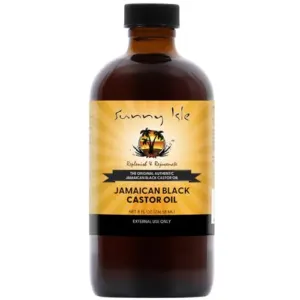
Think of this as the classic made approachable. It’s roasted, manually ground, and boiled from organic Jamaican castor seeds, which gives you a dark brown, high-ash oil with a medium consistency.
At 8 ounces for $13.99, it’s a fair price for a bottle that lasts. It’s naturally rich in vitamin E and omega fatty acids, and it works for scalp massage, edges, brows, lashes, and protective styles.
The scent gets mixed reviews, so expect something light and ashy. Some people find it unpleasant.
| Best For | People with dry skin, damaged hair, or thin edges, brows, and lashes who want an affordable, traditional Jamaican black castor oil for scalp massage and protective styles. |
|---|---|
| Volume | 8 ounces |
| Dimensions | 2.2 x 2.2 x 5.2 inches |
| Model Number | 25204 |
| Certifications | N/A |
| Hair Use | Growth, repair, breakage |
| Price | $13.99 |
| Additional Features |
|
- Made from organic Jamaican castor seeds that are roasted, manually ground, and boiled, and naturally rich in vitamin E and omega fatty acids.
- Supports hair growth, repairs damaged hair, and reduces the look of breakage.
- Works on the scalp, edges, eyebrows, eyelashes, and dry skin, and costs a fair $13.99 for 8 ounces.
- The light, ashy scent gets mixed reviews, and some people find it unpleasant.
- The dark brown, pure oil may not suit everyone’s application preference.
- The medium, high-ash consistency may feel heavier than some people want.
2. Viva Naturals Organic Cold-Pressed Coconut Oil
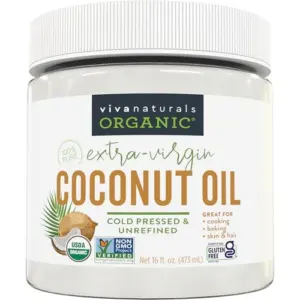
Imagine this: you’re mixing a hair mask on a Sunday night, and your castor oil bottle is nearly empty. Coconut oil to the rescue.
This one is unrefined and cold-pressed from fresh organic coconuts, with coconut oil as the only ingredient. It’s USDA-Certified Organic and Non-GMO Project Verified, too.
Use it as a hair conditioner, detangler, or mask. It also works as a body moisturizer and makeup remover. Expect a rich coconut scent (it’s unrefined, so that’s part of the deal).
In the kitchen, its 350°F smoke point suits baking and sautéing, not searing.
| Best For | Anyone who wants a single-ingredient, organic coconut oil that works for baking and sautéing in the kitchen as well as for hair and skin care. |
|---|---|
| Volume | N/A |
| Dimensions | 3.5 x 3.5 x 4 inches |
| Model Number | N/A |
| Certifications | USDA Organic, Non-GMO |
| Hair Use | Conditioner, detangler, mask |
| Price | N/A |
| Additional Features |
|
- Unrefined and cold-pressed from fresh organic coconuts, with coconut oil as the only ingredient
- USDA-Certified Organic, Non-GMO Project Verified, and Certified Gluten Free, with Keto and Paleo compatibility
- Does double duty as a hair conditioner, detangler, or mask, plus a body moisturizer and makeup remover
- The 350°F smoke point limits high-heat cooking such as searing
- The unrefined nature gives it a distinct, rich coconut flavor and aroma
- Grown and harvested without added chemicals, which limits synthetic modification
3. Cliganic Organic Rosemary Essential Oil
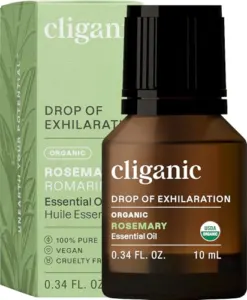
Rosemary has a reputation as the overachiever of the herb garden, and this one earns some of it. It’s USDA Organic, Non-GMO Project Verified, and a single-ingredient oil with no synthetic additives. Each batch is third-party lab tested for purity, and it’s vegan and cruelty-free too.
The bottle holds 0.8 ounces, so it’s small. Use it in a diffuser, or dilute it for your scalp. People mention hair growth, but reviews on effectiveness and scent are mixed, and longevity varies.
| Best For | Shoppers who want a small, certified-organic, single-ingredient rosemary oil for diffuser use or occasional personal care and who don’t mind mixed reviews on results. |
|---|---|
| Volume | 0.8 ounces |
| Dimensions | 1.32 x 1.3 x 2.9 inches |
| Model Number | N/A |
| Certifications | USDA Organic, Non-GMO |
| Hair Use | Reported hair growth aid |
| Price | N/A |
| Additional Features |
|
- USDA Organic and Non-GMO Project Verified, with no synthetic additives
- Each batch is third-party lab tested for purity
- Certified Vegan and Cruelty-Free
- Customer feedback on scent is mixed
- Reviews on overall effectiveness are mixed
- Product longevity varies significantly among users
4. Cliganic Organic Argan Oil 5.64 oz
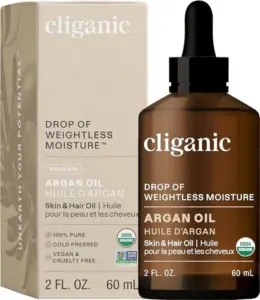
Think of this one as the support act, not the headliner. Argan oil won’t grow new hair, but it can make the hair you have look and feel better.
It’s USDA Organic certified, Non-GMO Project verified, and made from a single ingredient with no synthetic additives. The texture is lightweight and absorbs quickly, though reviewers disagree on whether it feels greasy or not (so patch test and go light). It works as a carrier oil for hair, scalp, beard, and face, and suits sensitive skin. At $9.98 for 5.64 ounces, it’s an easy add-on.
| Best For | People with any skin type, including sensitive skin, who want an affordable, single-ingredient carrier oil to support the look and feel of their hair, scalp, beard, or face. |
|---|---|
| Volume | 5.64 ounces |
| Dimensions | 1.57 x 1.97 x 5.12 inches |
| Model Number | 855102007699 |
| Certifications | USDA Organic, Non-GMO |
| Hair Use | Hair and scalp carrier |
| Price | $9.98 |
| Additional Features |
|
- USDA Organic certified and Non-GMO Project verified, with a single-ingredient formula and no synthetic additives.
- Lightweight texture that absorbs quickly and suits all skin types, including sensitive skin.
- Versatile carrier oil for hair, scalp, beard, and face at a low price of $9.98 for 5.64 ounces.
- Reviewers disagree on whether it feels greasy or non-greasy, so results may vary.
- It won’t grow new hair, so it works best as a supporting product rather than a main treatment.
- A patch test and a light hand are recommended because of the mixed feedback on oiliness.
5. Now Foods Organic Rosemary Essential Oil
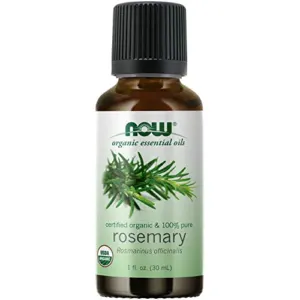
Here’s where the argan oil earns its keep. This rosemary oil is highly concentrated and labeled for aromatic use, so never put it on your scalp straight. Mix a few drops into a carrier first, then patch test.
It’s 100% pure, steam distilled from organic flowering tops, and vegan. The 2.9-ounce bottle is generous.
Expect a warm, camphoraceous scent that reviewers either love or dislike (I’m in the "sniff first" camp). It also works in a diffuser for room fragrance.
| Best For | People who enjoy a strong, warm herbal scent and want a pure, organic essential oil to diffuse for room fragrance in place of aerosol sprays or candles. |
|---|---|
| Volume | 2.9 ounces (85 mL) |
| Dimensions | 2.57 x 2.03 x 4.2 inches |
| Model Number | N7460 |
| Certifications | N/A |
| Hair Use | N/A |
| Price | N/A |
| Additional Features |
|
- 100% pure, steam-distilled from organic flowering tops
- Vegan formulation that is not tested on animals
- Generous 2.9-ounce (85 mL) bottle that works well in a diffuser
- Highly concentrated and intended for aromatic use, so it needs to be diluted in a carrier before it goes near skin or scalp
- Warm, camphoraceous scent gets mixed reactions, so some people won’t like it
- Contains natural camphoraceous compounds that may be too strong for sensitive noses
Frequently Asked Questions (FAQs)
Is it safe for color-treated or chemically processed hair?
Maybe, but go slowly. Jamaican black castor oil is alkaline, which can swell the cuticle and dry out bleached or double-processed strands. Dilute it to 20% with argan oil, strand test first, and use it weekly.
Does it work on all hair types and textures?
Not equally, no. It suits coily, curly and high-porosity hair, where thick, sealing oils help. On fine, straight or low-porosity hair, it often feels greasy and heavy, so dilute it or use it as a pre-shampoo treatment.
How can I spot authentic Jamaican black castor oil?
I once watched someone pour a clear, runny bottle labeled Jamaican black castor oil. It wasn’t. Authentic oil is dark, thick, sticky, smoky-smelling, and lists only castor oil, plus Jamaica, roasting, and a batch number.
Is Jamaican black castor oil safe during pregnancy?
Worried that a hair oil could trigger contractions? Fair question. The risk comes from swallowing castor oil, not rubbing it on. Skin absorption is tiny, so scalp use is likely fine, though check with your doctor first.
Can men use Jamaican black castor oil on beards?
Yes, you can, and it’s mostly a conditioning move. Dilute it first with coconut or almond oil, patch test your inner arm for 24 hours, and skip irritated skin. Expect smoother, shinier hair, not new growth.
How long does Jamaican black castor oil last?
Yes, that "expiration date" on the bottle is a guideline, not a hard stop. Unopened, Jamaican black castor oil lasts up to 24 months. Once opened, aim to use it within 12 to 18 months.
Conclusion
Does roasted ash wake dead follicles? Not quite. The theory crumbles under scrutiny, but Jamaican black castor oil for hair growth still earns a spot in your routine for a simpler reason: it seals moisture and helps strands survive brushing, braiding, and bad weather days.
Think of it as a good bodyguard, not a miracle worker. If thinning keeps winning, see a doctor. Otherwise, oil up, be patient, and enjoy hair that finally stays put.