This site is supported by our readers. We may earn a commission, at no cost to you, if you purchase through links. This content is for general informational and educational purposes only and is not a substitute for professional medical, dermatological, or nutritional advice.
Those tiny, skin-colored bumps clustered across your forehead or jawline aren’t just stubborn—they’re sealed. Unlike blackheads, closed comedones never reach the surface, which means no oxidation, no darkening, and no easy escape route.
They sit quietly beneath the epidermis, patiently waiting for the right conditions to either clear or worsen.
Most people mistake them for dry skin or texture, and reach for a heavy moisturizer, which is exactly the wrong move.
Effective acne treatment for closed comedones starts with understanding what’s actually trapped inside—and which ingredients have the right chemistry to dissolve it.
Table Of Contents
- Key Takeaways
- What Closed Comedones Look Like
- Why Closed Comedones Form
- Skincare Habits That Prevent Buildup
- Best OTC Closed Comedone Treatments
- Top 9 Products for Closed Comedones
- 1. Murad Rapid Relief Acne Spot Treatment
- 2. COSRX Glycolic Acid Whitehead Toner
- 3. Paula Choice Clear Acne Cream
- 4. PanOxyl Antimicrobial Acne Wash
- 5. INKEY List Bioactive Ceramide Repair Plumping Moisturizer
- 6. Skinfix Barrier Restoring Gel Cream
- 7. Cocokind Beginner Retinol Gel
- 8. Differin Acne Retinoid Gel
- 9. Vichy LiftActiv Pure Retinol Serum
- Prescription Options for Stubborn Bumps
- In-Office Treatments That Speed Clearance
- How Long Treatment Takes
- Frequently Asked Questions (FAQs)
- Why am I breaking out with closed comedones?
- What is the best treatment for closed comedones?
- What is the best treatment for comedonal acne?
- What is the best face treatment for comedonal acne?
- Why am I getting so many closed comedones?
- Can stress worsen the appearance of closed comedones?
- Are certain fabrics more likely to irritate comedones?
- How does weather affect closed comedones?
- Does hydration level impact closed comedone severity?
- Can specific hairstyles or accessories cause closed comedones?
- Conclusion
Key Takeaways
- Closed comedones stay sealed beneath your skin — no air exposure, no darkening — which is why heavy moisturizers make them worse, not better, and why oil-dissolving ingredients like salicylic acid are your real starting point.
- Retinoids (adapalene is the easiest OTC entry point) and salicylic acid work best as a team: retinoids normalize how your pores shed dead cells, while salicylic acid clears the buildup already trapped inside.
- Hormones, comedogenic skincare, and follicular hyperkeratinisation (sticky skin cells blocking the pore lining) are the three most overlooked drivers — meaning your cleanser and moisturizer choices matter just as much as your treatment products.
- Results take 12–16 weeks of consistent use, and an early purge around weeks 2–3 is normal — if bumps keep multiplying past week eight despite a solid routine, that’s your cue to see a dermatologist.
What Closed Comedones Look Like
Closed comedones are easy to miss — they don’t look angry or inflamed, which makes them tricky to identify at first.
Knowing exactly what you’re dealing with is the first step toward treating it right.
Whether you’re dealing with dryness, dullness, or breakouts, understanding how water actually hydrates your skin helps you choose the right approach from the start.
Here’s what to look for.
Closed Vs. Open Comedones

Both start the same way — a clogged follicle — but pore oxidation is what separates them.
Open comedones stay exposed to air, so the plug darkens through air exposure, causing that familiar black dot.
Closed comedones, however, stay sealed beneath skin, blocking any color differentiation from occurring.
Understanding this difference matters for treatment sequencing, since closed and open comedones don’t always respond to the same approach.
A common remedy is the use of topical salicylic acid to dissolve sebum within clogged pores.
Flesh-colored, Firm Bump Appearance
Once you know the type, the look becomes easier to spot.
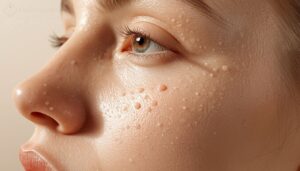
Closed comedones — whiteheads — show up as dome-shaped texture bumps, firm and flesh-colored, usually in a 1–5 mm size range. They often appear in clustered distribution across oily zones.
Unlike molluscum contagiosum, which shares a similar profile but has central umbilication, whiteheads stay smooth — an important differential diagnosis detail worth knowing.
Common Face and Body Locations
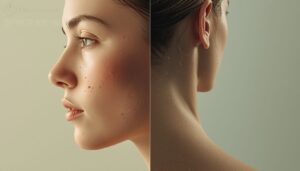
Closed comedones aren’t picky about location. On your face, forehead oil zones and cheek pore concentration areas are prime spots, along with jawline hormonal bumps triggered by androgen shifts.
Your scalp hairline clogs often trace back to hair follicles meeting comedogenic hair products.
Body-wise, back sweat pores and shoulders stay vulnerable — sebaceous glands, friction, and occlusive beauty products make a frustrating team.
How They Differ From Inflamed Acne

Unlike their inflamed cousins, whiteheads — those closed comedones sitting quietly under your skin — don’t announce themselves with redness, pain, or pus. Differentiating between inflammatory and noninflammatory acne lesions really comes down to a few clear signals:
- Redness Absence: Closed comedones stay skin-toned, never angry-looking
- Lack of Pain: They’re bumps, not sore spots
- No Pus Formation: No visible head forms at the surface
- Surface-Level Plug: The blockage stays shallow, sealed beneath a thin skin layer
- Minimal Scarring Risk: Without deep inflammation, lasting damage is far less likely
That’s why a consistent noncomedogenic skincare routine — plus a gentle chemical exfoliant — manages them well before things escalate.
Why Closed Comedones Form
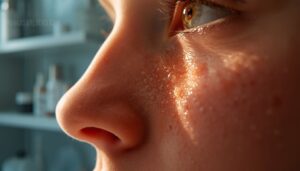
Closed comedones don’t just show up out of nowhere — your skin has a whole storyline going on beneath the surface. Several things can tip the balance, from your hormones to the moisturizer sitting on your bathroom shelf.
Here’s a closer look at the most common reasons they form.
Excess Sebum and Clogged Follicles
Think of your pores as tiny drains — sebum overproduction triggers a backup that nothing can push through. Your sebaceous glands produce oil normally, but hormonal acne shifts that output into overdrive, flooding follicles faster than they can clear.
That follicular occlusion process traps oil and dead cells beneath the surface, forming those stubborn bumps.
A noncomedogenic skincare routine and regular chemical exfoliation for acne help keep things flowing.
Follicular Hyperkeratinisation
Even when oil production isn’t the main culprit, follicular hyperkeratinisation quietly builds a wall inside your pore.
Skin cells lining the follicle — keratinocytes — become stickier than usual, a process called keratinocyte cohesion, and stop shedding normally.
That retention thickens the horn layer, triggers infundibular dilatation, and sparks perifollicular inflammation, nudging closed comedones toward angry breakouts.
Retinoids work by targeting exactly this:
- Normalizing how keratinocytes shed from the follicle lining
- Reducing horn layer thickness so plugs soften and clear
- Reversing infundibular dilatation through the retinoid mechanism
- Supporting chemical exfoliant penetration into congested pores
Hormonal Shifts and Androgen Activity
Hormones are one of the sneakiest drivers of closed comedones — and often the most overlooked. puberty hormone surges, menstrual cycle fluctuations, and stress-induced androgens all ramp up sebum production by activating androgen receptors in your skin. Testosterone converts locally into DHT through 5-alpha reductase, intensifying follicle blockage even when blood levels seem normal.
Hormones quietly drive breakouts through androgen surges, cycle shifts, and stress — often before blood tests ever show a problem
That’s why hormonal acne often reappears predictably, month after month.
Comedogenic Oils and Heavy Skincare
Your moisturizer might be working against you. Many skincare products use Oil Rating Scales (0–5) to flag potential pore blockers, but labels like noncomedogenic aren’t regulated — so heavy butter formulations and occlusive film effects can still quietly clog follicles by trapping sebum beneath the surface.
Watch for these common culprits:
- Oleic-heavy oils (coconut, castor) that sit on skin rather than absorbing.
- Heavy butter formulations — shea-rich creams that create a stubborn occlusive film overnight.
- Oil-based hair products that transfer near your temples, triggering hairline comedones.
- Thick face balms layered over other products, effectively doubling your pore-blocking risk.
Choosing oils with stronger linoleic acid profiles — hemp seed, for example — is a smarter swap for acne-prone skin.
Diet, Humidity, Genetics, and Stress
Some causes of closed comedones are completely out of your hands. Genetic sebum predisposition means your oil glands may simply be wired to overproduce.
Dietary triggers like high glycemic load effects spike insulin, fueling hormonal fluctuations that worsen buildup. Omega-3 anti-inflammatory fats help push back.
Humidity and sweat buildup clogs pores fast, and cortisol stress impacts quietly amplifies all of it.
Skincare Habits That Prevent Buildup

Preventing closed comedones isn’t about a complicated 12-step routine — it mostly comes down to a few daily habits done consistently. The right products and a little discipline go further than any fancy treatment.
Here’s what your skin actually needs.
Gentle Cleansing Twice Daily
Think of cleansing as your skin’s daily reset — simple, but worth doing right. A fragrance-free cleanser with a non-stripping formula keeps your skin barrier intact while clearing the oil and debris that feed closed comedones.
Use gentle massage strokes, rinse with lukewarm water, then pat dry — no rubbing. Twice daily, morning and night, keeps buildup from quietly taking over.
Non-comedogenic Moisturizer Choices
Once skin is clean, it needs hydration — but the wrong moisturizer quietly clogs pores all over again. Look for noncomedogenic skincare products with lightweight gel formulas and silicone slip agents like dimethicone, plus barrier-support actives such as ceramides and niacinamide.
Fragrance-free claims matter too.
Always apply patch testing tips: try a small area first, wait a few days, then commit.
Daily SPF 30 or Higher
Sunscreen isn’t optional — it’s your skin barrier’s daily armor. UV exposure inflames existing microcomedones and triggers post-inflammatory hyperpigmentation, making closed comedones harder to fade.
Choose noncomedogenic skincare products with broad-spectrum protection (SPF 30 or higher) that won’t clog pores:
- Broad-spectrum labels cover both UVA aging mitigation and UVB sunburn prevention
- Water-resistant formulas hold up through commutes and workouts
- Oil-free, lightweight textures keep preventing pore clogging all day
- Apply a full quarter-teaspoon to your face — application amount guidelines matter more than most people realize
Avoiding Picking, Scrubs, and Friction
Protecting what you’ve built with cleanser and SPF means keeping hands away from your face — hand touch control isn’t overthinking it, it’s just smart.
Stress relief distractions, like a stress ball, genuinely help during idle scrolling moments.
Skip scrubs entirely; friction-free clothing, minimalist tool use, and protective barrier application all reduce irritation without sacrificing your skin barrier protection strategies.
Best OTC Closed Comedone Treatments
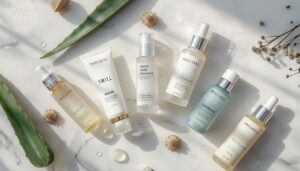
Good news: you don’t need a prescription to start making real progress against closed comedones.
The right over-the-counter ingredients can unclog pores, speed up cell turnover, and keep new bumps from forming — you just need to know which ones actually work.
Here are the five worth adding to your routine.
Salicylic Acid for Pore Clearing
Salicylic acid is clearly the most targeted tool you have against closed comedones — and the reason comes down to penetration mechanics. Because it’s oil-soluble, it actually slips into clogged follicles where pore congestion lives. Once inside, it manages keratin plug dissolution by loosening the sticky buildup holding everything shut.
Here’s how to use it well:
- Choose leave‑on formulas (toners, serums, gels) at 1–2% for sustained chemical exfoliation rather than quick‑rinse cleansers.
- Use pH‑optimized formulas around 3–4 to guarantee real comedolytic activity — not just a label claim.
- Try barrier‑friendly application by pairing it with niacinamide, which calms redness and strengthens the skin barrier as salicylic acid works through comedonal acne over time.
Glycolic Acid for Faster Turnover
Where salicylic acid works deep, glycolic acid cleans house at the surface. At 5–10%, it triggers corneodesmolysis — basically breaking the corneodesmosome bonds that keep dead cells clinging on — which accelerates epidermal turnover and prevents the buildup that feeds closed comedones.
Use it at nighttime application, start with gentle frequency (twice weekly), follow with barrier support, and let consistent skin exfoliation do the work.
Adapalene and Other Retinoids
Think of retinoids as your skin’s reset button — and adapalene (Differin) is one of the most beginner‑friendly options available over the counter. Its retinoid mechanism normalizes how follicle cells behave, preventing the keratin buildup that creates closed comedones.
- FDA-approved topical retinoid for acne vulgaris
- Better adapalene stability than tretinoin or retinol — less light and air degradation
- Better tolerability comparison: less dryness and irritation than older retinoids
- Enables combination formulations, including benzoyl peroxide pairings
- Start 2–3 nights weekly for retinoid safety and gradual skin adjustment
Azelaic Acid for Sensitive Skin
If your skin throws a tantrum at most actives, azelaic acid might be your match. This barrier-friendly formula works as a low irritation dose option — targeting closed comedones through gentle keratolysis while calming redness along the way.
Start with a 10% noncomedogenic skin care product once daily, follow a gradual frequency ramp, and always patch test first. Sensitive skin care rarely gets this forgiving.
Benzoyl Peroxide for Acne Control
Benzoyl peroxide doesn’t negotiate with bacteria — it oxidizes them out of existence through its oxidative mechanism, making it a reliable acne treatment for closed comedones.
- Start at 2.5% for irritation management
- Combine with adapalene for combination therapies
- Follow benzoyl peroxide usage guidelines on frequency
- Mind fabric bleaching risks — old towels only
Strength selection matters; dermatologist recommendations for closed comedones often favor lower concentrations.
Top 9 Products for Closed Comedones
Finding the right product can feel like searching for a needle in a haystack — especially when every label promises clear skin. The good news is that a handful of options actually deliver, using ingredients like salicylic acid, glycolic acid, and retinoids that are proven to work.
nine worth keeping on your radar.
1. Murad Rapid Relief Acne Spot Treatment
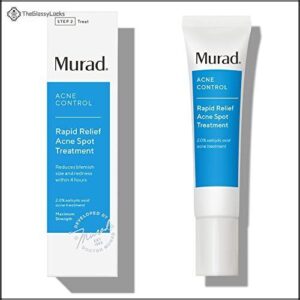
Murad’s Rapid Relief Acne Spot Treatment keeps things simple with 2% salicylic acid, a clear gel finish, and a four-hour window to visibly shrink blemishes and calm redness. Pine and thyme extracts help soothe while the salicylic acid works inside the pore.
It layers invisibly under makeup, eliminating the need to choose between treatment and a polished look.
| Best For | Anyone dealing with mild, occasional breakouts who wants a fast-acting spot treatment they can wear under makeup without it looking obvious. |
|---|---|
| Primary Use | Spot treatment |
| Fragrance-Free | No |
| Key Ingredient | Salicylic acid 2% |
| Price (USD) | $27.00 |
| Net Volume/Weight | 0.01 oz |
| Skin Type Suitability | Mild acne-prone |
| Additional Features |
|
- Works quickly — most people see smaller, less red blemishes within a few hours
- Sits invisibly under makeup, so you can treat and conceal at the same time
- A little goes a long way, so the bottle lasts
- Not much help for moderate or severe acne — it’s really built for smaller blemishes
- Can cause dryness or flaking, especially if your skin runs sensitive
- Some longtime users feel the newer formula doesn’t quite match the original
2. COSRX Glycolic Acid Whitehead Toner
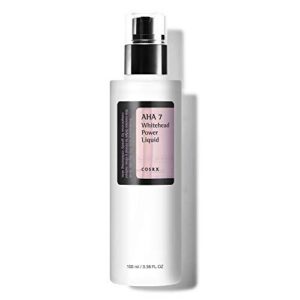
If you want a single product that pulls double duty — exfoliating and clarifying in one lightweight step — the COSRX Glycolic Acid Whitehead Toner is worth a look.
Its 7% glycolic acid concentration loosens the dead skin buildup that keeps closed comedones trapped under the surface.
Fragrance‑free and mild enough for daily use, you apply it like a toner after cleansing — cotton pad, sweep, done.
Start every two to three days, then build up.
Always pair it with SPF in the morning.
| Best For | People with oily or combination skin who want to clear up whiteheads and refine pores without a complicated routine. |
|---|---|
| Primary Use | Chemical exfoliant |
| Fragrance-Free | Yes |
| Key Ingredient | Glycolic acid 7% |
| Price (USD) | $14.11 |
| Net Volume/Weight | 3.38 fl oz |
| Skin Type Suitability | Oily/combination |
| Additional Features |
|
- 7% glycolic acid actually dissolves the gunk causing whiteheads — not just sits on top of it
- Fragrance-free and lightweight, so it plays nicely with the rest of your routine
- At $14, it’s an easy add without much financial commitment
- Sensitive skin types may feel tingling or dryness, especially if you jump in too fast
- You have to wear sunscreen every morning — glycolic acid makes your skin more sun-sensitive
- Won’t cut it for severe or cystic acne; that’s a job for a dermatologist
3. Paula Choice Clear Acne Cream
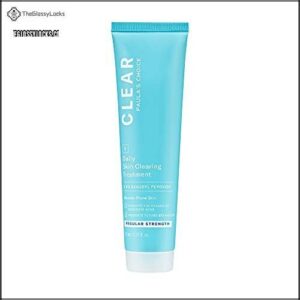
If glycolic acid feels like a lot for your skin, something gentler might be the better move.
Paula’s Choice CLEAR Acne Cream keeps things straightforward — benzoyl peroxide at 2.5% (regular strength) or 5% (extra strength), depending on what your skin can handle.
It’s fragrance-free, non-comedogenic, and dries to a matte finish that plays nicely under makeup.
Apply it as a leave-on treatment after cleansing.
It targets existing breakouts while helping keep new ones from forming.
| Best For | People with mild to severe acne who want a simple, no-frills daily treatment that won’t clog pores or leave a greasy finish. |
|---|---|
| Primary Use | Full-face treatment |
| Fragrance-Free | Yes |
| Key Ingredient | Benzoyl peroxide |
| Price (USD) | Not listed |
| Net Volume/Weight | 2.25 fl oz |
| Skin Type Suitability | Mild to severe acne |
| Additional Features |
|
- Fights existing breakouts and helps stop new ones from forming — often within a day or two
- Fragrance-free and non-comedogenic, so it’s easy to layer into most skincare routines
- Dries to a matte finish that works well under makeup
- Can dry out the skin, especially around the mouth and cheeks, so you’ll likely need a moisturizer
- Sensitive skin types may feel tingling or burning when first using it
- Results aren’t guaranteed — some people find it doesn’t do much or don’t love the texture
4. PanOxyl Antimicrobial Acne Wash
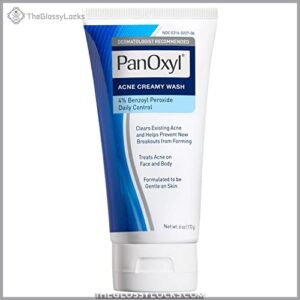
Sometimes a leave-on treatment isn’t what you need — a solid daily wash can do just as much heavy lifting. PanOxyl Antimicrobial Acne Wash uses 4% benzoyl peroxide in a creamy, non-foaming formula that covers your face, chest, and back.
It’s humectants built in with humectants built in, so it cleans without that tight, stripped feeling afterward. Use it once or twice daily, rinse thoroughly, and follow with moisturizer.
One heads-up: keep it away from towels and pillowcases — benzoyl peroxide stains fabric.
| Best For | Teens and adults dealing with hormonal, cystic, or mild-to-moderate acne on the face, chest, or back who want an everyday wash that cleans without over-drying. |
|---|---|
| Primary Use | Cleansing wash |
| Fragrance-Free | No |
| Key Ingredient | Benzoyl peroxide 4% |
| Price (USD) | $10.67 |
| Net Volume/Weight | 6 oz |
| Skin Type Suitability | Dry, oily, combination |
| Additional Features |
|
- Fights acne and prevents new breakouts without stripping your skin dry, thanks to built-in humectants and emollients
- Versatile — works as a full-face wash or a spot treatment, and covers body acne too
- Gentle 4% benzoyl peroxide concentration is effective for most skin types without the harshness of stronger formulas
- Can stain towels, pillowcases, and clothing if you’re not careful about rinsing
- Has a noticeable medicinal smell that not everyone loves
- May not be enough on its own for severe acne — you might need a serum or prescription product alongside it
5. INKEY List Bioactive Ceramide Repair Plumping Moisturizer
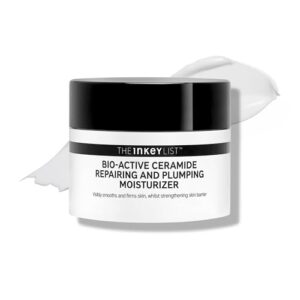
While benzoyl peroxide washes earn their spot in the lineup, your skin still needs something to hold it together — especially when actives start drying things out. The INKEY List Bioactive Ceramide Repair Plumping Moisturizer does that job quietly and well.
It layers ceramide NP, glycerin, and shea butter to rebuild your barrier without clogging pores. It’s fragrance-free, fast-absorbing, and fits into both AM and PM routines — a steady anchor when your skin’s working overtime.
| Best For | Anyone dealing with a disrupted skin barrier — especially if you’re using drying actives like benzoyl peroxide or retinol, or if you have dry, sensitive, or rosacea-prone skin. |
|---|---|
| Primary Use | Moisturizer |
| Fragrance-Free | Yes |
| Key Ingredient | Bio-Active Ceramides |
| Price (USD) | $21.07 |
| Net Volume/Weight | 1.7 fl oz |
| Skin Type Suitability | Dry/sensitive |
| Additional Features |
|
- Ceramides, glycerin, and shea butter work together to restore and protect your skin barrier without feeling heavy or pore-clogging.
- Fragrance-free and vegan, so it’s a safe pick for reactive or sensitive skin types. It’s also a thoughtful choice for those dealing with flaky or irritated patches, as explained in this guide to beard oil for skin conditions and sensitivity.
- Works morning and night — it plays well with sunscreen and makeup, making it easy to slot into any routine.
- No SPF, so you’ll still need a separate sunscreen for daytime.
- The texture can feel a bit thick, which might not sit well under makeup if you have oily or combination skin.
- No niacinamide in the formula, which could be a dealbreaker if that ingredient is on your must-have list.
6. Skinfix Barrier Restoring Gel Cream
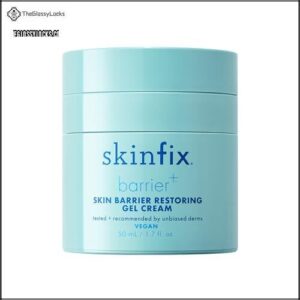
If your skin’s crying out for balance — not just hydration — the Skinfix Barrier Restoring Gel Cream earns its place.
It’s a lightweight gel-cream with a 3% Lipid Complex, niacinamide, peptides, and hyaluronic acid, all without fragrance, silicones, or pore-clogging ingredients.
It’s certified non-comedogenic and plays nicely alongside retinoids and exfoliating acids, so it won’t undo your routine.
Clinically, 91% of users saw reduced shine within a week — solid results for something that doesn’t feel like it’s doing much at all.
| Best For | Normal to combination skin that needs barrier support and shine control without heavy creams or pore-clogging ingredients. |
|---|---|
| Primary Use | Moisturizer |
| Fragrance-Free | Yes |
| Key Ingredient | Niacinamide & peptides |
| Price (USD) | $54.00 |
| Net Volume/Weight | 1.7 oz |
| Skin Type Suitability | Normal to combination |
| Additional Features |
|
- Lightweight, fast-absorbing gel-cream texture that doesn’t feel heavy or greasy
- Packed with niacinamide, peptides, and hyaluronic acid — a solid trio for hydration and pore refinement
- Safe for sensitive and acne-prone skin, and plays well with actives like retinoids and acids
- May fall short for very dry or severely dehydrated skin types
- A few users reported a slight burning sensation or off-putting odor, hinting at possible sensitivity or batch inconsistency
- Packaging differences between retail and online versions have caused some confusion
7. Cocokind Beginner Retinol Gel
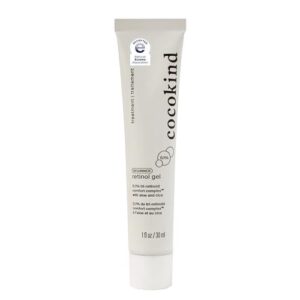
If you’re brand new to retinoids, the Cocokind Beginner Retinol Gel is a smart starting point. Its Tri-Retinoid Comfort Complex combines retinol, time-released retinal, and granactive retinoid at a gentle 0.1% strength — so your skin gets introduced gradually, not overwhelmed.
Aloe, centella asiatica, and squalane help keep dryness and flaking in check.
Apply a pearl-sized amount every other night on clean skin, then build from there.
At $26.99, it’s approachable without cutting corners.
| Best For | Anyone just starting out with retinoids who wants real results without the redness and peeling that usually comes with the territory. |
|---|---|
| Primary Use | Anti-aging serum |
| Fragrance-Free | Yes |
| Key Ingredient | Retinol 0.1% |
| Price (USD) | $26.99 |
| Net Volume/Weight | 1 fl oz |
| Skin Type Suitability | Sensitive/dry |
| Additional Features |
|
- Tri-Retinoid Complex gives you three forms of retinoid in one gentle formula — solid bang for your buck
- Aloe, cica, and squalane do a good job of keeping dryness and irritation down while your skin adjusts
- Fragrance-free, non-comedogenic, and sensitive-skin friendly — plus FSA/HSA eligible
- 0.1% retinol is a beginner dose, so if you’re already used to retinoids, this probably won’t cut it
- Some flaking or dryness can still pop up around sensitive spots like the corners of your mouth
- You’ll need to be consistent with SPF during the day, or you risk undoing all the good work
8. Differin Acne Retinoid Gel
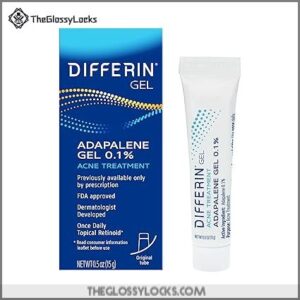
Differin is the retinoid that earned its prescription stripes — then went OTC, and honestly, that’s a win for your skin.
Its 0.1% adapalene works by normalizing how your pores shed dead cells, which is exactly what closed comedones need.
The gel formula is water-based, fragrance-free, and non-comedogenic, so it’s not adding to the problem.
Apply a thin layer nightly after cleansing. Expect some dryness early on — keep a gentle moisturizer nearby — and give it a full 12 weeks before judging results.
| Best For | Anyone dealing with stubborn acne — especially closed comedones and hormonal breakouts — who wants a clinically proven retinoid without a doctor’s visit. |
|---|---|
| Primary Use | Acne retinoid |
| Fragrance-Free | Yes |
| Key Ingredient | Adapalene |
| Price (USD) | $12.03 |
| Net Volume/Weight | 0.48 oz |
| Skin Type Suitability | All acne-prone types |
| Additional Features |
|
- Prescription-strength adapalene at an OTC price ($12 is hard to beat)
- Water-based, fragrance-free, and non-comedogenic — won’t clog pores or irritate sensitive skin
- Clinically shown to cut acne lesions by up to 87% over 12 weeks
- Expect a purging phase early on — more breakouts, dryness, and flaking before things get better
- Can be irritating around the eyes and other delicate areas, so placement matters
- Results take time — you need a full 12 weeks of consistent use to really see what it can do
9. Vichy LiftActiv Pure Retinol Serum
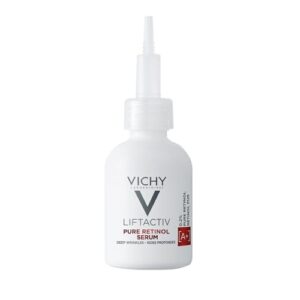
Vichy’s LiftActiv Pure Retinol Serum takes a slightly different angle — it’s built for anti-aging first, but that 0.2% pure retinol still does real work on closed comedones by accelerating cell turnover and loosening those stubborn keratin plugs.
Peptides and hyaluronic acid round out the formula, which helps offset dryness.
Start twice a week at night on clean, dry skin — avoid the eye area — and always follow up in the mornings with SPF 30 or higher.
| Best For | Anyone with mature or aging skin who wants a straightforward retinol serum that tackles fine lines, wrinkles, and uneven texture overnight. |
|---|---|
| Primary Use | Anti-aging serum |
| Fragrance-Free | Yes |
| Key Ingredient | Retinol 0.2% |
| Price (USD) | $44.99 |
| Net Volume/Weight | 1 fl oz |
| Skin Type Suitability | Mature/aged skin |
| Additional Features |
|
- That 0.2% pure retinol concentration is solid — strong enough to actually move the needle on wrinkles and skin texture without being reckless about it.
- The peptide and prebiotic ferment combo is a smart pairing with retinol, helping to keep skin balanced and supported while it adjusts.
- Fragrance-free and silicone-free makes it a cleaner pick for sensitive or reactive skin types.
- Retinol newbies will need to ease in slowly — jumping straight to nightly use is a fast track to redness and irritation.
- The eye area is off-limits, so if orbital wrinkles are your main concern, you’ll need a separate product for that zone.
- At $44.99 for just 1 fl oz, it’s not the most budget-friendly option on the shelf.
Prescription Options for Stubborn Bumps
Sometimes over-the-counter products just aren’t enough, and that’s when a dermatologist can open up stronger options. Prescription treatments target stubborn closed comedones at a deeper level — whether the root cause is hormonal, bacterial, or just plain resistant skin.
Here’s what’s available when your usual routine stops making progress.
Tretinoin and Tazarotene Creams
When OTC retinoids stop moving the needle, prescription-strength tretinoin (0.025–0.05%) and tazarotene (0.05%) are your next step. Both work through the same retinoid mechanism — normalizing how follicle cells shed — but tazarotene is often more potent and more irritating.
Apply either at bedtime, use a moisturizer for irritation management, and know that formulation differences between cream and gel affect tolerability. Both pair well with combination therapy.
Topical Antibiotics for Short-term Use
Topical antibiotics like clindamycin 1% aren’t meant to be your long-term plan — think of them as a short course bridge, not a permanent fixture. Antibiotic resistance is a real concern, so guidelines of care for the management of acne vulgaris are clear: keep use brief and always pair them within a combination regimen.
Smart antibiotic treatment for closed comedones:
- Short course duration — limit use to a few weeks, not months
- Combination regimen — always pair with a retinoid or benzoyl peroxide
- Application protocol — apply only to affected zones, not the entire face
- Resistance risk — monotherapy accelerates bacterial adaptation
- Patient counseling — your dermatologist should map your switch back to maintenance actives
Clascoterone and Spironolactone
When androgen activity is the main driver behind your closed comedones, two prescription options stand out: clascoterone and spironolactone.
| Feature | Clascoterone | Spironolactone |
|---|---|---|
| Systemic vs Topical | Topical cream | Oral tablet |
| Mechanism of Action | Blocks skin androgen receptors locally | Reduces androgen effects systemically |
| Side Effect Profile | Minimal systemic effects | Breast tenderness, dizziness possible |
| Patient Selection | Hormonal acne, any gender | Adult women with hormone fluctuations |
Both target hormonal factors affecting sebum production — clascoterone stays local, spironolactone works body-wide. Your dermatologist will guide Combination Therapy to address the role of hormones in acne development most effectively.
Birth Control for Hormonal Acne
For women where hormone fluctuations are clearly fueling closed comedones, combination birth control pills are worth a real conversation with your dermatologist. Estrogen dosage and progestin selection both matter — FDA-approved options like Yaz and Ortho Tri-Cyclen are designed with acne in mind.
Most people notice fewer bumps within two to three months. Side effect considerations and contraindications screening always come first.
Oral Antibiotics for Widespread Breakouts
When breakouts are widespread and nothing topical has moved the needle, oral antibiotics — doxycycline or minocycline — can quiet inflammation across the face, chest, and back. They’re combination therapy tools, always paired with benzoyl peroxide for resistance management.
Photosensitivity risks are real, so sunscreen isn’t optional. Duration guidelines cap most courses around 12 weeks, with side effect monitoring throughout.
In-Office Treatments That Speed Clearance

Sometimes, over-the-counter products and prescriptions just aren’t enough to clear those stubborn bumps on your own. That’s when a dermatologist’s office becomes your best ally — with targeted procedures that work faster and more precisely than anything on a shelf.
Here’s a look at the in-office options worth knowing about.
Sterile Comedone Extraction
When done right, sterile comedone extraction can clear closed comedones faster than any serum on your shelf. A trained clinician follows strict Instrument Sterilization Protocol — gloves, sterile lancet, single-use tools — then applies safe extraction techniques for comedones with controlled, even pressure.
- Clinical Decision Criteria guide which bumps are safe to extract
- Extraction Technique Training prevents scarring and infection
- Post-Extraction Care keeps your skin barrier calm and supported
- Patient Safety Measures mean no forcing stubborn plugs — dermatologist recommendations for closed comedones always prioritize importance of noncomedogenic skincare products after the procedure
Salicylic or Glycolic Chemical Peels
Peels take what extraction starts a step further. In-office salicylic acid and glycolic acid chemical peels work deeper into clogged follicles, clearing closed comedones more aggressively than your at-home routine can.
Peel Depth Levels vary — superficial peels suit most skin types — and Contraindications Screening happens beforehand.
Session Interval Timing, Side Effects Mitigation, Post-Peel Sun Protection, and best practices for using chemical exfoliants all factor into your tailored plan.
Laser Resurfacing for Stubborn Texture
When peels aren’t enough, laser treatments step in.
Fractional CO2 laser resurfacing creates controlled micro-injuries that trigger collagen remodeling effects — smoothing stubborn texture without full-surface removal.
Nonablative laser options heat deeper layers with less downtime than ablative methods. Pre-treatment skin prep matters, and recovery takes weeks, but the boost in epidermal turnover makes it worthwhile for persistent closed comedones.
Dermatologist-guided Treatment Planning
A board-certified dermatologist doesn’t just hand you a product — they build individualized acne treatment plans using stepwise escalation, starting gently and increasing strength as your skin adjusts.
Expect a full hormone assessment, a barrier support strategy to prevent over-drying, and a clear monitoring timeline.
This combination therapy protocol, grounded in dermatology clinical guidelines for acne management, balances prescription versus over-the-counter acne therapies for your specific skin.
When Procedures Make Sense
Procedures make the most sense when High Congestion isn’t budging despite weeks of consistent topical care. Refractory Bumps — those stubbornly sealed comedones that ignore your retinoid and salicylic acid — respond well to in-office dermatologic procedures for acne like chemical peels or sterile extraction.
Scarring Risk, Hormonal Resistance, and Patient Preference all guide the decision:
- Chemical peels use professional procedures to accelerate epidermal turnover quickly
- Combination treatments for comedonal acne pair extraction with resurfacing for deeper congestion
- Hormonal cases may need systemic support alongside any in-office work
How Long Treatment Takes
Clearing closed comedones isn’t an overnight thing — your skin moves at its own pace, and that’s completely normal.
Knowing what to expect each step of the way makes the process a lot less frustrating.
Here’s a realistic look at how the timeline is likely to unfold.
Weeks 1–4 and Possible Purging
The first few weeks can feel discouraging — that’s completely normal. Early purging signs often appear as a week one bump or two, then a week two breakout as retinoids or salicylic acid push congestion to the surface.
Week three flare is normally the peak.
By week four resolution begins quietly.
Stay consistent, protect your skin barrier, and resist the urge to quit.
Weeks 6–8 and Early Smoothing
Around weeks 6–8, your skin starts rewarding your patience. The texture feels less bumpy, redness calms, and new closed comedones slow down — that’s consistency doing its job. Three things usually shift noticeably:
- Barrier adaptation stabilizes — retinol or adapalene dryness eases with smart product layering.
- Pore visibility reduction begins as salicylic acid and glycolic acid keep clearing debris.
- Irritation management becomes second nature, protecting your skin barrier while progress builds.
Weeks 12–16 for Stronger Results
By weeks 12–16, consistent acne treatment starts delivering real payoff — fewer closed comedones, smoother texture, and skin that finally feels like yours again. Retinol, adapalene, and salicylic acid have had time to normalize cell turnover properly.
Barrier maintenance and irritation management keep progress on track. This is your maintenance phase now — progress tracking helps you understand what’s actually working.
When to Reassess Your Routine
Even steady progress can stall — and that’s your cue to reassess. Reassess your routine when you notice:
- Persistent Irritation lasting beyond 2–3 days after adjusting exfoliation frequency
- Rising Bump Numbers past 6–8 weeks of consistent acne treatment
- New Inflammatory Lesions replacing closed comedones
- Missed Treatment Days breaking the streak
Balancing active ingredients to avoid skin irritation keeps you moving forward.
When to See a Dermatologist
Sometimes OTC treatment just isn’t enough — and that’s not a failure, it’s information. Book a dermatology consultation if you notice any of the following:
| Warning Sign | What It Means | Next Step |
|---|---|---|
| Unresponsive treatment after 8 weeks | Underlying cause needs addressing | See a board-certified dermatologist |
| Persistent scarring or dark marks | Damage is accumulating | Discuss acne scarring prevention |
| Rapid lesion growth or severe pain | Possible cystic or nodular acne | Prompt evaluation needed |
| New mole changes or non-healing sores | Rule out serious skin conditions | Urgent dermatology consultation |
Frequently Asked Questions (FAQs)
Why am I breaking out with closed comedones?
Closed comedones form when excess sebum production and keratin plugging trap debris inside a sealed follicle.
Your skin texture, genetic factors, hormonal shifts, lifestyle habits, and environmental factors all drive these stubborn acne flare-ups.
What is the best treatment for closed comedones?
The best treatment combines retinoids, salicylic acid, and azelaic acid — adapted to your skin type.
Combination therapy with smart ingredient synergy improves patient adherence and stays cost-effective without overcomplicating your routine.
What is the best treatment for comedonal acne?
Topical retinoids like Differin lead comedonal acne treatment, with salicylic acid and azelaic acid close behind. Treatment sequencing, safety profile, and cost effectiveness all shape which option actually sticks long-term.
What is the best face treatment for comedonal acne?
Retinoids and salicylic acid are your strongest starting points — retinoids unclog at the source, while salicylic acid clears buildup inside pores.
Matching both to your skin type makes all the difference.
Why am I getting so many closed comedones?
Hormones, excess oil, comedogenic ingredients, follicular hyperkeratinisation, skin barrier damage, microbiome imbalance, sleep quality, air pollution, medication side effects, travel climate changes, and diet all quietly drive sebum production — stacking reasons your pores stay blocked.
Can stress worsen the appearance of closed comedones?
Yes — stress triggers a cortisol surge that spikes sebum production, worsens barrier disruption, and fuels androgen amplification.
Stress-induced picking and inflammation spike can make closed comedones look angrier than they actually are.
Are certain fabrics more likely to irritate comedones?
Fabrics fundamentally factor into flare-ups.
Synthetic materials like polyester trap sweat and heat against skin, while breathable fabrics like cotton reduce moisture retention, friction pressure, and irritation that silently worsens closed comedones.
How does weather affect closed comedones?
Weather quietly shapes your skin’s behavior.
Humidity’s impact on skin raises sebum regulation challenges, while UV barrier stress and cold dryness effect push environmental triggers that worsen causes of closed comedones — seasonal skincare adjustments help.
Does hydration level impact closed comedone severity?
Think of your skin barrier like cling wrap — when it’s dry and cracked, everything gets in.
Hydration level mildly impacts closed comedone severity, mostly through barrier function and oil compensation.
Can specific hairstyles or accessories cause closed comedones?
Absolutely — tight headgear, hairline friction from snug styles, and oil-based hair product transfer can all trigger closed comedones by trapping sweat accumulation and occlusive residue directly against follicle openings.
Conclusion
Clearing closed comedones isn’t a sprint—it’s a slow, deliberate excavation. The right acne treatment for closed comedones works beneath the surface, where salicylic acid, retinoids, and consistent habits quietly dismantle months of buildup.
Your skin won’t transform overnight, but with every patient weeks, those sealed bumps lose their grip. Stay non-comedogenic, stay consistent, and resist the urge to rush the process.
Smooth skin doesn’t arrive all at once—it earns its way through.