This site is supported by our readers. We may earn a commission, at no cost to you, if you purchase through links. This content is for general informational and educational purposes only and is not a substitute for professional medical, dermatological, or nutritional advice.
That painful bump deep under your skin isn’t a bigger pimple. It’s a nodule, and it’s the type most likely to leave a permanent scar if you squeeze it or wait too long.
Inflammation drives everything in inflammatory acne: the redness, the swelling, the tenderness, and the tissue damage that follows. The good news is you can interrupt that process with the right acne treatment for reducing inflammation, whether that’s benzoyl peroxide tonight or a dermatologist’s injection by Friday.
Here’s what causes the swelling, which treatments work fastest, and how to protect your skin from lasting damage.
Table Of Contents
- Key Takeaways
- Inflammatory Acne Causes, Types, and Risks
- How to Calm Acne Inflammation Fast
- Best Topical Treatments for Inflamed Acne
- Prescription Treatments for Persistent Inflammatory Acne
- Daily Care, Scar Prevention, and Dermatologist Help
- Frequently Asked Questions (FAQs)
- What reduces acne inflammation fast?
- What triggers inflammatory acne?
- Does inflammatory acne ever go away?
- What does inflammatory acne look like?
- Are natural remedies effective for inflammatory acne?
- How quickly should inflammation improve after starting treatment?
- Do acne patches help with inflammation reduction?
- Can exercise impact inflammatory acne flare-ups?
- What are possible side effects of anti-inflammatory treatments?
- Can diet changes reduce acne inflammation?
- Conclusion
Key Takeaways
- Nodules and cysts carry the highest scarring risk because they extend deep into the dermis, so treating them early with a dermatologist—rather than squeezing or waiting—is your best defense against permanent damage.
- Benzoyl peroxide kills acne bacteria through oxidation without triggering resistance, making it the most reliable first-line topical for calming active inflammation fast. Most users notice significant improvement within days, as outlined in this guide on how long spot treatments take to work.
- When topical treatments stop working, prescription options like oral antibiotics, hormonal therapy, isotretinoin, or corticosteroid injections offer targeted control depending on your acne pattern and severity.
- Daily sunscreen is non-negotiable while treating inflammatory acne—UV exposure darkens healing marks and intensifies inflammation, and most active ingredients increase your skin’s sensitivity to the sun.
Inflammatory Acne Causes, Types, and Risks
Inflammatory acne isn’t just a surface issue—it starts deep inside your pores. Understanding what triggers it and how it progresses helps you make smarter treatment choices. Here’s a closer look at the key causes, lesion types, affected areas, and scarring risks.
Pairing benzoyl peroxide with a retinol routine can tackle both the inflammation and the clogged pores underneath—this guide on using retinol with benzoyl peroxide together breaks down how to do it safely.
Follicular Blockage And Bacteria
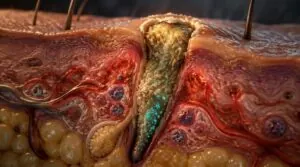
Inside your follicles, acne begins with follicular occlusion. Dead skin cells and excess sebum block the opening, creating a pocket where Cutibacterium acnes multiplies rapidly. It’s this bacterial proliferation that drives inflammation.
Acne begins deep in the follicle, where trapped oil and dead cells let bacteria multiply and spark inflammation
Five key steps:
- Excess sebum production fills the follicle
- Dead cells create clogged pores
- Cutibacterium acnes colonizes the plug
- Bacteria release irritating byproducts
- Immune activation triggers visible inflammation
Inflammatory Lesion Types
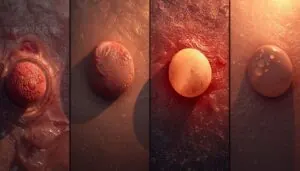
That immune response produces different inflammatory acne lesion types depending on how deep the inflammation travels.
Papules are solid raised red bumps without visible pus. When pus collects at the surface, you get a pustule, recognizable by its yellow-white center.
Deeper inflammation forms nodules, firm lumps beneath the skin, or cysts, softer, fluid-filled lesions that carry the highest scarring risk.
Commonly Affected Areas
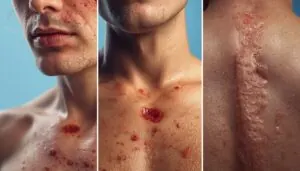
These lesion types can appear anywhere acne develops, but certain areas are far more prone to skin inflammation.
Since these deep breakouts often need targeted care, a guide to the best acne treatment products for clear skin can help you find options that calm inflammation and prevent future flare-ups. Gentle exfoliation also plays a role here, and this esthetician-picked guide to facial exfoliators explains how chemical acids clear blocked pores without irritating inflamed skin.
Your face, chest, and upper back top the list. These regions have a high density of pilosebaceous units, meaning more follicles that can become blocked and inflamed. Friction from clothing and trapped sweat on the back can worsen the inflammatory response there.
Progression And Scarring Risks
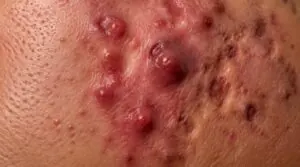
Wherever they form, deeper inflammatory lesions carry the greatest scarring risk. Nodules and cysts extend beyond the follicle, driving tissue injury and triggering wound-healing responses that can leave atrophic acne scarring.
Postinflammatory hyperpigmentation often appears first and can fade on its own. True structural scars won’t. Acne severity classification helps your dermatologist prioritize treatment before cumulative inflammatory damage sets in.
How to Calm Acne Inflammation Fast
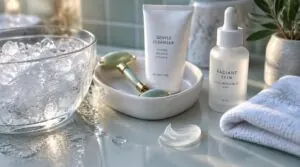
Within the first few days of a flare, your goal is simple: shut down active inflammation before it damages the dermis. Redness and swelling fade faster than the bumps themselves, because vasodilation calms before blocked pores clear.
Try this sequence:
- Ice the area for 1–2 minutes to reduce swelling and pain.
- Apply a benzoyl peroxide wash to cut bacterial triggers.
- Use a hydrocortisone product briefly for red swollen and sore pustules.
- Keep hands, masks, and heat away; friction prolongs inflammation.
- Support skin barrier repair with a plain moisturizer.
Don’t pick or squeeze. Ruptured follicles spread inflammation deeper and raise your scarring risk. Expect visible calming within days, not hours. If deep, painful nodules persist, you’ll need prescription-strength antiinflammatory treatment from a dermatologist.
Best Topical Treatments for Inflamed Acne
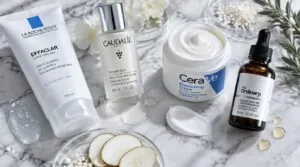
When your acne is red, swollen, and painful, you need treatments that target inflammation directly. Four topical options have strong evidence behind them, and each works differently on your skin. Here’s what you should know about benzoyl peroxide, salicylic acid, retinoids, and azelaic acid.
Benzoyl Peroxide
is a cornerstone dermatological treatment for inflamed acne. It kills acne bacteria through oxidation, so resistance rarely develops, and it also calms inflammatory mediators.
| Strength | Best For |
|---|---|
| 2.5% | Sensitive skin, beginners |
| 5% | Moderate breakouts |
| 10% | Body acne, tolerant skin |
| Wash | Short contact, low irritation |
Start every other night. Expect mild skin irritation, dryness, and bleached fabrics.
Salicylic Acid
Think of salicylic acid as a drain cleaner for clogged pores. It’s oil-soluble, so it slips into follicles and loosens the plugs that fuel breakouts.
- Works best on comedonal acne, not deep nodules
- Common OTC strengths: 0.5–2%
- Leave-on formats outperform wash-off cleansers
- Start low, increase slowly
- Expect mild dryness or peeling; use daily sunscreen
It helps healing but won’t zap inflamed pimples overnight.
Topical Retinoids
Picture a corked bottle: oil and bacteria trapped under pressure. Topical retinoids uncork it. They clear keratin buildup, prevent new comedones, and calm inflamed acne over weeks.
| Retinoid | Strength | Notes |
|---|---|---|
| Adapalene | Mild-moderate | Gentlest, OTC |
| Tretinoin | Moderate-strong | More irritation |
| Tazarotene | Strong | Prescription only |
Expect dryness, peeling. Apply to dry skin at night. Avoid during pregnancy. Retinoid side effects fade with use.
Azelaic Acid
is the underrated multitasker of acne treatment protocols. It fights acne bacteria, unclogs pores, and calms inflammation of the sebaceous glands, so those red sometimes painful lesions fade faster. It also lightens dark marks left behind.
Use topical application once daily at first, then twice daily as your skin adjusts. Expect visible improvement in four to six weeks of consistent use.
Prescription Treatments for Persistent Inflammatory Acne
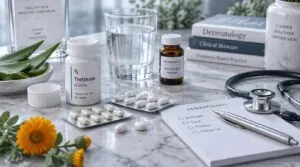
When topicals stop working, it’s time to talk about prescription treatments. Your dermatologist has several systemic options, and the right one depends on your acne pattern.
Oral antibiotics like doxycycline calm inflamed lesions quickly. They’re used for a limited time and always paired with a topical retinoid or benzoyl peroxide to prevent resistance and relapse. Never rely on an antibiotic alone.
For acne tied to your hormonal cycle, options include combined oral contraceptives or spironolactone, which lower androgen-driven oil production. These work gradually over months.
If your acne is severe, scarring, or resistant to everything else, isotretinoin is the most effective systemic treatment. It shrinks oil glands and often delivers lasting clearance. It requires regular blood monitoring and strict pregnancy prevention.
For individual painful nodules, an intralesional corticosteroid injection can flatten a lesion within days.
Daily Care, Scar Prevention, and Dermatologist Help
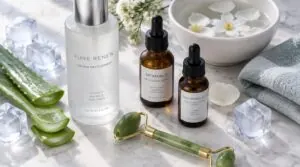
Good daily habits protect your skin while treatments do their work. They also lower your risk of permanent scarring, which is much easier to prevent than to fix. Here’s what to focus on, and when it’s time to see a dermatologist.
Gentle Non-Comedogenic Routine
Products matter as much as actives. Choose noncomedogenic products and a gel-based cleanser to support pore cleansing without stripping lipids. Wash twice daily with lukewarm water, pat dry, and keep your skin hydration steady to protect the barrier.
- Pick oil-free, non-acnegenic formulas
- Limit harsh skin exfoliation
- Introduce one product at a time
- Avoid picking and friction
- Keep the routine consistent
Daily Sun Protection
Sun exposure inflames acne and darkens healing marks, so protect your skin daily. Many topical acne treatments also raise UV sensitivity, making sunscreen nonnegotiable.
| Step | How |
|---|---|
| Apply | Broad-spectrum SPF 30+ every morning |
| Reapply | Every 2 hours outdoors |
| Choose | Gel, noncomedogenic products |
Consistent sun protection backs up your skin care routine, helps prevent acne scars, and keeps results from your topical acne treatment on track.
When to Seek Care
Some breakouts need more than home care. A dermatologist consultation is worth it for deep nodules or cysts, since these carry a higher risk of scarring.
Seek care promptly if you notice rapidly spreading pain, fever, eye-area redness, or marks that don’t fade over months.
Also see a doctor if acne persists after several weeks of consistent treatment, or if it affects your mood or daily life.
Frequently Asked Questions (FAQs)
What reduces acne inflammation fast?
Nothing works overnight, but you can calm inflamed acne within days. Apply a benzoyl peroxide spot treatment, use salicylic acid to unclog follicles, and resist picking, which worsens dermal inflammation and discoloration.
What triggers inflammatory acne?
About 40 million Americans have acne, and many deal with the inflamed kind. Inflammatory acne starts with pore clogging from excess sebum. Hormonal imbalances boost oil, then bacterial infection skin triggers redness and swelling.
Does inflammatory acne ever go away?
About 85% of people aged 12–24 get acne. So, does inflammatory acne ever go away? Yes, many cases clear with consistent acne treatment, but deep or hormonal lesions can persist or recur, so sustained control matters.
What does inflammatory acne look like?
Inflammatory acne shows up as red, swollen bumps. You’ll see papules without a pus head, pustules with a yellow or white center, and deeper, tender nodules or cysts, often on your face, chest, or back.
Are natural remedies effective for inflammatory acne?
A patient once swore tea tree oil cleared her skin, then returned with worse redness. Honest answer: evidence for natural remedies in inflammatory acne is limited. They may soothe, but they rarely control skin inflammation.
How quickly should inflammation improve after starting treatment?
Early redness and tenderness can ease within 2 to 4 days. But expect 6 to 12 weeks for meaningful lesion reduction. If you see no real improvement after 12 weeks, your regimen likely needs adjusting.
Do acne patches help with inflammation reduction?
Picture a weeping pustule treated with a patch overnight. Hydrocolloid patches absorb surface fluid and reduce irritation well. But they won’t calm deeper inflamed acne where no fluid reaches, so swelling and redness often persist.
Can exercise impact inflammatory acne flare-ups?
Like fuel on a fire, exercise can meaningfully add to your inflammatory acne risk. Sweat, friction, and body heat disrupt your skin barrier function and shift your immune response toward increased inflammation, triggering acne flares.
What are possible side effects of anti-inflammatory treatments?
No treatment is a free lunch. Prescription treatments like oral antibiotics can trigger GI upset or yeast infections and contribute to antibiotic resistance over time.
Topicals such as retinoids commonly cause dryness, redness, or peeling.
Can diet changes reduce acne inflammation?
Ironically, food is often the first thing people blame for inflammatory acne. High glycemic load diets and dairy can raise IGF-1 levels, amplifying swelling and redness. But the overall effects are modest and take weeks.
Conclusion
A nodule that appears Monday can leave a scar by the weekend if you ignore it. That’s how fast untreated inflammation does damage.
Catching it early changes everything. The right acne treatment for reducing inflammation, whether benzoyl peroxide, a corticosteroid injection, or a prescription retinoid, gives your skin a real chance to heal clean. Protect it with SPF daily, keep your hands off your face, and loop in a dermatologist if nothing clears within a few weeks.