
This site is supported by our readers. We may earn a commission, at no cost to you, if you purchase through links.

You’ve dropped thousands on laser hair removal sessions, endured the stinging zaps, and followed every pre-treatment rule. Now you’re staring at new stubble sprouting where silky-smooth skin should be, wondering if you got scammed.
The truth? True permanence isn’t what most clinics promise—and the FDA won’t even let them use that word. What laser treatment actually delivers is “permanent hair reduction,” a technical term meaning 80 to 95 percent fewer hairs in treated zones, sustained for years but not necessarily forever.
Your hormones, skin tone, hair color, and even the technician’s skill determine whether you’ll need touch-ups every year or enjoy trouble-free smoothness for decades. Understanding these variables arms you with the knowledge to get the most from your investment and set realistic expectations.
Table Of Contents
- Key Takeaways
- Is Laser Hair Removal Permanent?
- How Does Laser Hair Removal Work?
- Factors Affecting Permanence of Results
- What Maintenance is Required?
- Can Hair Regrow After Laser Removal?
- Tips to Maximize Long-Term Results
- Frequently Asked Questions (FAQs)
- How long does laser hair removal last?
- Can laser hair removal be permanent?
- Does laser hair removal really work?
- Are hair removal treatments permanent?
- What are the results of laser hair removal?
- How long does laser hair removal permanent?
- Are there long-term effects of laser hair removal?
- How long does each treatment session take?
- Can I shave between laser treatments?
- What areas of the body can be treated?
- Conclusion
Key Takeaways
- Laser hair removal delivers “permanent reduction” (80-95% fewer hairs) rather than complete elimination, and the FDA won’t allow clinics to claim true permanence.
- Your results depend on melanin contrast between hair and skin, hormonal stability, and technician expertise—dark hair on light skin responds best, while hormonal shifts from conditions like PCOS can trigger regrowth years later.
- You’ll need 6-10 initial sessions spaced 4-8 weeks apart to catch follicles during their active growth phase, plus maintenance touch-ups every 12-24 months to sustain results.
- Maximizing long-term outcomes requires choosing board-certified dermatologists with proper equipment, avoiding sun exposure before and after treatment, and understanding that factors like pregnancy or menopause can reactivate dormant follicles.
Is Laser Hair Removal Permanent?
You’ve probably heard conflicting answers about whether laser hair removal truly lasts forever. The truth is, the word “permanent” has a specific meaning in the hair removal world, and it’s not quite what most people expect.
Before committing to a procedure, it’s worth exploring different methods to remove facial hair permanently and weighing their safety profiles against your skin type.
Let’s break down what dermatologists mean when they talk about permanent hair reduction, how the process actually works, and what kind of results you can realistically expect long-term.
Definition of “Permanent” in Hair Removal
Permanence in laser hair removal doesn’t mean zero hair forever. When dermatologists discuss permanent hair removal, we’re describing an 80 to 95 percent reduction in treated hairs after completing your full course. The follicle damage disrupts hair growth, but hormonal shifts and longevity factors can trigger regrowth patterns over time.
Laser hair removal delivers permanent reduction—80 to 95 percent fewer hairs—not complete elimination, and hormones can trigger regrowth over time
Here’s what permanence metrics actually measure:
- Sustained reduction in visible hair within treated zones for years
- Minimal regrowth requiring only occasional touch-ups
- Long-term disruption of follicle function, not complete elimination
How Laser Hair Removal Reduces Hair
Your follicles absorb laser energy through melanin, the pigment in your hair shaft. That heat damages the follicle’s growth cells, disrupting hair regeneration for months or longer. Think of it as controlled cellular sabotage—precise enough to spare surrounding skin while shutting down production.
Different hair growth cycles mean you’ll need multiple sessions to catch follicles when they’re vulnerable.
| Laser Hair Science | Treatment Outcomes |
|---|---|
| Energy targets follicle pigment | 60-95% hair reduction typical |
| Heat damages growth cells | Delayed regrowth for months |
| Anagen phase hairs respond best | 6-8 sessions achieve results |
| Skin tolerance varies by tone | Minimal side effects when proper |
| Follicle damage accumulates | Long-term hair suppression |
Long-Term Vs. Permanent Results
Your results depend on how many follicles regenerate after treatment. Most people see hair growth reduced by 60 to 95 percent, which clinicians call permanent reduction rather than complete elimination.
You’ll likely enjoy 6 to 12 months of smooth skin before noticing regrowth. Sustained outcomes require maintenance sessions every 12 to 24 months, especially if hormones shift.
How Does Laser Hair Removal Work?
Understanding the science behind laser hair removal helps you take control of your treatment expectations. The process relies on precise targeting of hair follicles, timing your sessions with natural growth cycles, and committing to multiple appointments for best results.
Before committing to laser treatments, it’s worth exploring safe hair removal techniques to compare how different methods work for your skin and hair type.
Here’s what happens during treatment and why it works the way it does.
Targeting Hair Follicles With Laser

You’re ready to break free from constant shaving, and understanding laser precision is your first step. During laser therapy, the beam locks onto hair melanin, using selective photothermolysis to target hair follicles beneath your skin.
A skilled dermatologist adjusts energy settings based on:
- Follicle depth across different body zones
- Your unique hair color and skin tone
- Wavelengths like Alexandrite 755 nm or Diode 810 nm
- Spot sizes ranging from 6 to 12 millimeters
- Real-time feedback for ideal treatment outcomes
Hair Growth Cycles and Effectiveness
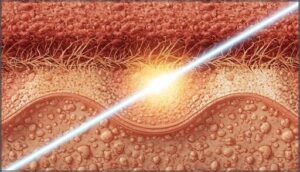
Timing matters more than power when you’re targeting follicles. Hair grows in cycles: anagen (active growth lasting two to six years), catagen (brief shift), and telogen (resting about three months). Laser hair removal only damages follicles during the anagen phase when melanin concentration is highest.
Since your hair density reflects follicles in different stages, multiple treatments capture each hair’s regeneration cycle, ensuring thorough hair reduction under a dermatologist’s guidance.
Number of Sessions Needed

You’ll need six to ten laser hair removal sessions for strong hair reduction across most body areas, though treatment frequency and hair density shift that range. Hormonal zones like your face may push closer to twelve visits, while your legs usually stay near the lower end of session duration counts.
Sessions space four to eight weeks apart to catch follicle stages as hair cycles through regrowth patterns. For more about the science and process, see this overview of the.
Factors Affecting Permanence of Results

Not everyone gets the same results from laser hair removal, and that’s not about luck. Your body’s unique characteristics, the expertise of your provider, and even your hormones all play a role in whether those follicles stay quiet for good.
Let’s break down the three biggest factors that determine how permanent your results will actually be.
Skin Tone and Hair Color
Your skin tone and hair color create a pigment contrast that laser technology relies on. Melanin levels in dark hair absorb laser energy effectively, while light skin provides ideal color contrast for targeting follicles.
If you have dark skin or light hair colors, you’ll face more challenges with follicle density response. A dermatologist can assess your skin pigmentation changes risk and adjust settings to match your skin undertones safely.
Hormonal Influences
Your body’s hormonal landscape can sabotage even the best laser treatments. Hormone regulation directly controls hair density, which means androgen effects from testosterone can trigger stubborn regrowth months after you’ve finished sessions. Conditions like polycystic ovary syndrome create hormonal imbalances that override laser results, while pregnancy shifts estrogen impact and progesterone role dramatically.
- Androgens spark new follicles during menopause despite previous treatments
- Hormonal changes from birth control can reactivate dormant hair
- Testosterone surges create coarser, darker regrowth patterns
Technician Skill and Equipment Quality
Think of laser hair removal like surgery—you wouldn’t trust just anyone holding the scalpel. A dermatologist or technician with proper laser certification and technician training makes all the difference in this cosmetic procedure.
Equipment maintenance and device calibration guarantee laser technology delivers consistent results, while strict safety protocols protect your skin care investment. Outdated devices or rushed treatments sabotage permanence before you’ve even started.
What Maintenance is Required?

Even after you’ve completed your initial laser hair removal sessions, the work isn’t completely over. Most people will need occasional follow-up treatments to maintain their results, though the frequency varies based on your individual hair growth patterns and hormonal factors.
Understanding what to expect for maintenance, when to schedule touch-ups, and your options for keeping unwanted hair at bay will help you plan ahead and stay satisfied with your results.
Frequency of Follow-Up Treatments
After your initial laser hair removal sessions, you’ll schedule maintenance treatments to lock in long-term hair reduction. Most people return every 12 to 18 months for touch-ups, though session intervals vary by body zone and individual hair growth cycle. Here’s what typical follow-up plans look like:
- High-growth areas (bikini line, underarms) may need touch-ups every 6 to 12 months
- Facial zones often require more frequent follow-ups due to finer, faster regrowth
- Back and legs usually need fewer maintenance timings once initial clearance is achieved
Signs You May Need Touch-Ups
Between maintenance schedules, watch for these signals that you’re ready for your next touch-up:
| Signal | Timing | What It Means |
|---|---|---|
| Persistent stubble | 2–4 weeks post-session | Hair cycle mismatch—follicles need another pass |
| New patches | 6–12 months later | Hormonal shifts or dormant follicles activating |
| Uneven borders | Variable | Treatment density gaps requiring targeted follow-up care |
Sudden regrowth after clear months signals your body’s calling for laser hair removal maintenance treatments to sustain permanent hair reduction.
Home Vs. Professional Maintenance
Once those signals appear, you can tackle regrowth at home or at a clinic. Home‑use laser hair removal devices run $200–$600 upfront with lower session intervals—every 12–16 weeks—yet safety standards and treatment efficacy lag behind medical‑grade systems.
Dermatologists use technician expertise and sophisticated cooling to achieve faster permanent hair reduction. Hair removal maintenance at professional clinics ensures stricter safety and measurable results.
Can Hair Regrow After Laser Removal?

Yes, hair can regrow after laser removal, and understanding why this happens will help you set realistic expectations. Several factors influence whether follicles recover and start producing hair again, from hormonal shifts to the natural limits of the treatment itself.
Here’s what causes regrowth, what patterns you might see, and how to keep new hair under control.
Causes of Hair Regrowth
Hair regrowth after laser hair removal happens when your body refuses to play by the rules. Hormonal fluctuations can wake up dormant hair follicles, while nutrient deficiencies slow the process altogether. Genetic predisposition and androgenetic factors determine how your hair follicles respond, and scalp inflammation can disrupt the cycle.
A skilled dermatologist can identify these triggers and adjust your treatment plan accordingly.
Typical Regrowth Patterns
Once follicles start firing up again, you’ll notice patterns in how your hair regrowth unfolds. Facial regions typically show quicker, lighter hair cycle activity within 4 to 12 weeks, while legs and underarms lag behind.
Regrowth density drops markedly—expect thinner, patchier strands clustered in zones where follicle damage wasn’t complete. Coarse, dark hair stays down longer than blonde or fine hair, which can reappear stubbornly after laser hair removal.
Managing and Minimizing Regrowth
When you catch early signs of regrowth, quick action works best. Schedule touch-up sessions every 6 to 12 months to knock down those stubborn hair follicles before they gain momentum. Keep treatment intervals consistent with your natural hair growth cycle to interrupt the regrowth patterns effectively.
Your defense strategy includes:
- Applying broad-spectrum SPF 30+ daily to prevent skin reactions and pigment changes
- Booking follow-ups at the first sign of fine downy hair reappearance
- Documenting energy levels and treatment zones to improve future sessions
- Coordinating with your provider to adjust laser settings for hormonal fluctuations
Proper aftercare lowers maintenance costs long-term, since healthier skin responds better to follow-up laser hair removal. Sun avoidance before and after each session protects treated areas from complications that could delay your hair regrowth control. Your written maintenance plan should map out realistic expectations, contact information, and session spacing customized to how your hair growth responds.
Tips to Maximize Long-Term Results

Getting the most out of your laser hair removal treatments isn’t just about showing up for sessions. Your results depend heavily on what you do before, during, and after the procedure.
Here’s how to take control and make those results last.
Pre-Treatment Preparation
Your dermatology consultation sets the stage for successful treatment. Medical clearance identifies photosensitive medications, while patch testing reveals how your skin reacts to laser energy.
Skin preparation includes avoiding sun exposure for two to four weeks and shaving 24 to 48 hours before your session. Medication adjustments, like pausing retinoids or certain antibiotics, reduce irritation.
A pre-procedure checklist ensures you’re ready—topical anesthetic can minimize discomfort during treatment.
Aftercare and Skin Protection
After treatment, your skin needs defense and care to lock in results. Skin Care Tips include applying fragrance-free moisturizer twice daily and using SPF 30 sunscreen to prevent pigment changes. Post Treatment routines matter:
- Wash with cool water and mild soap 6 to 12 hours after sessions
- Avoid exfoliating products for 72 hours to minimize Skin Irritation
- Skip retinoids and acids for 3 to 5 days
- Monitor Hair Regrowth patterns and report unexpected changes
- Contact your provider if blistering or itching worsens
Sun Protection with shade-seeking and protective clothing shields treated areas for two weeks. Gentle Cleansing with pat-drying prevents Skin Texture Changes, while tracking regrowth helps time maintenance sessions.
Choosing a Qualified Provider
Your provider’s credentials can make or break your results. Verify Practitioner Licensure through state boards, and confirm Clinic Accreditation meets Equipment Standards for Laser Hair Removal. The American Association of Dermatology recommends board-certified dermatologists trained in Aesthetic Medicine and Cosmetic Treatments.
Check Patient Reviews for Safety Protocols, consistent outcomes, and transparent communication. Don’t settle—your skin deserves expertise that delivers permanent reduction, not empty promises.
Frequently Asked Questions (FAQs)
How long does laser hair removal last?
After a full course of 6 to 8 sessions, you’ll see lasting results with 70 to 90 percent hair reduction. Most treated follicles stay dormant for years, though occasional touch-ups maintain best possible outcomes.
Can laser hair removal be permanent?
Yes, laser therapy can deliver permanent reduction—meaning 80 to 90 percent of treated hair follicles stay disabled long-term. However, hormonal shifts or new growth may require occasional touch-ups to maintain results.
Does laser hair removal really work?
You’ll see 70 to 90 percent hair reduction after completing your treatment series.
Laser hair removal effectiveness depends on targeting hair follicles during active growth, delivering long-term hair reduction that transforms your skin and freedom.
Are hair removal treatments permanent?
Most laser hair removal delivers permanent hair reduction, not total erasure. You’ll usually see a 70 to 90 percent drop in treated areas after completing your full course of sessions.
What are the results of laser hair removal?
After your laser hair removal procedure completes its full course, you’ll see a long-lasting hair reduction—usually 80 percent or more treated hairs won’t return, though individual treatment outcomes vary based on your body’s response.
How long does laser hair removal permanent?
Most people enjoy long-term hair reduction lasting several years after completing 6 to 8 sessions. Hormonal shifts, aging, and treatment quality affect permanence, so touch-ups every 12 to 24 months help maintain smooth results.
Are there long-term effects of laser hair removal?
When performed correctly, long-term hair reduction and improved skin texture are the main effects. Follicle damage minimizes hair regeneration, while longevity factors like skin health and proper technique support sustained results with minimal laser side effects.
How long does each treatment session take?
Most laser hair removal sessions last between 15 and 60 minutes, depending on the treatment area.
Small zones like your upper lip take about 10 minutes, while larger areas like your back require closer to an hour.
Can I shave between laser treatments?
You can shave between laser hair removal sessions without disrupting hair follicles or treatment results. Shaving keeps skin smooth and reduces irritation, but avoid waxing or plucking—those methods remove the hair root lasers target.
What areas of the body can be treated?
From head to toe, your body is fair game. Laser hair removal targets facial hair, sensitive areas, arms, legs, back, chest, and bikini zones—working across diverse skin tones with modern treatment options.
Conclusion
Think of your follicles as dimmer switches, not on-off buttons. Laser hair removal delivers permanent reduction—usually 80 to 95 percent fewer hairs—but hormones, genetics, and your body’s resilience can reignite dormant follicles years later.
Whether you need annual touch-ups or coast for decades depends on variables you now control: choosing skilled providers, understanding your biology, and maintaining realistic expectations.
You’ve invested in freedom from razors; protect that investment by staying informed and proactive.