This site is supported by our readers. We may earn a commission, at no cost to you, if you purchase through links. This content is for general informational and educational purposes only and is not a substitute for professional medical, dermatological, or nutritional advice.

Your face feels oily by noon, so you skip toner, worried it’ll just add more moisture to skin that’s already producing plenty on its own. That logic makes sense on the surface, but it misses how oily skin actually works.
Excess sebum often signals a damaged barrier or bacterial imbalance, not simply "too much oil." So the real question isn’t whether toners are effective for oily skin, it’s whether you’re choosing the right formula for what’s happening underneath the shine.
The right ingredients can rebalance your skin’s pH, calm sebaceous glands, and tighten the look of pores, without stripping the moisture you need.
Table Of Contents
- Key Takeaways
- What Does Toner Do for Oily Skin?
- Yes, Toners Can Help Oily Skin
- Best Toner Ingredients for Oily Skin
- How to Use Toner Effectively
- How to Choose an Oily Skin Toner
- Frequently Asked Questions (FAQs)
- Is toner really necessary for oily skin?
- What type of toner is best for oily skin?
- When should you not use toner?
- What is the best toner for very oily skin?
- Are toners beneficial for oily skin?
- Should you use a toner if you’re oily or acne prone?
- Should you use a toner in your skincare routine?
- Is Farmacy toner good for oily skin?
- What is the best toner for oily skin?
- What ingredients should I look for in a toner for oily skin?
- Conclusion
Key Takeaways
- Excess shine often means your skin’s barrier is out of balance, not that you’re overproducing oil, so the right toner can help rather than hurt.
- Look for niacinamide, salicylic acid, green tea, and aloe vera, since these ingredients calm sebum, clear pores, and hydrate without clogging your skin.
- Skip alcohol-based and heavily fragranced toners, since they strip your skin and can trigger even more oil production afterward.
- Apply toner right after cleansing, focus on your T-zone, ease into exfoliating formulas slowly, and always follow up with a lightweight moisturizer and sunscreen.
What Does Toner Do for Oily Skin?

If you have oily skin, you’ve probably wondered what toner actually does besides feel nice. It turns out this step works harder than most people realize, tackling everything from leftover oil to your skin’s pH balance. Here’s a closer look at the four main jobs a good toner does for you.
Beyond store-bought options, you can whip up your own with these natural skin toner recipes, which balance pH while skipping harsh additives.
Removes Residual Oil and Impurities
Even after cleansing, your skin holds onto oil your cleanser missed. Toners pick up where cleansing left off.
- Micellar molecules lift leftover oil
- Salicylic acid clears pore buildup
- Witch hazel tightens and controls shine
- Oil-absorbing particles reduce residue
- Targeted T-zone swipes catch problem areas
Think of it as a double cleansing step, refining what soap alone can’t reach. For oily and acne-prone skin, choosing toners with salicylic acid or niacinamide can make this step even more effective at controlling shine and buildup.
Supports Skin’s Natural PH
Cleansing strips away oil, but it also disrupts your skin’s natural pH, which sits between 4.5 and 5.5 when healthy. That mild acidity forms your acid mantle, the barrier keeping moisture in and bacteria out.
A quality toner restores this balance fast. Ingredients like aloe vera support pH restoration, helping your skin bounce back to a state where it can actually defend itself.
Provides Lightweight Hydration
Oily skin still needs water, just not heavy creams. A gel-textured toner with multi-weight hyaluronic acid delivers hydration without heaviness, sinking in fast with zero sticky residue.
Fresh aloe adds cooling comfort, while an oil-free botanical mix of witch hazel and rose water keeps things pH-balanced and soothing, never greasy.
Improves Serum and Moisturizer Absorption
Think of toner as priming a wall before paint. That hydrating layer softens the skin’s surface, supporting barrier function and easier molecular movement for whatever comes next.
Because absorption depends on skin condition, a pH-balanced, oil-free toner sets up better product absorption overall. This layering sequence matters:
- Toner first, thin and hydrating
- Serum second, active ingredients sink in
- Moisturizer last, locking everything in
Yes, Toners Can Help Oily Skin

So, do toners actually work for oily skin? The short answer is yes, but the how matters just as much as the yes. Here’s what a good toner can realistically do for you.
Reduces Shine and Excess Sebum
That midday shine isn’t inevitable. Ingredients like niacinamide and green tea catechins regulate sebum at the source, while witch hazel and silica offer a quick mattifying effect.
If you’re building a routine around these actives, a good natural skin toner can lock in that balance and keep shine from creeping back by afternoon.
| Ingredient | Oil Control Action |
|---|---|
| Niacinamide | Reduces sebum production |
| Green Tea | Inhibits sebaceous activity |
| Witch Hazel | Tightens pores, absorbs oil |
| Zinc PCA | Decreases oiliness |
| Silica | Absorbs surface shine |
Helps Prevent Clogged Pores
Clogged pores start with trapped oil and dead skin, and toners tackle both. Salicylic acid works through oil solvent action, dissolving debris deep inside pores. Witch hazel and gentle exfoliation methods clear the surface without stripping skin.
Look for noncomedogenic formulations that support pore refining while maintaining barrier support. Paired with niacinamide, this combo keeps oil control steady and pores genuinely clearer over time.
Improves Pore Appearance
Here’s the thing about pores: they don’t actually shrink, but they can look a lot smaller.
Keeping oil in check with a natural skincare routine for oily skin and pores can starve acne-causing bacteria and make pores look tighter.
Pores don’t actually shrink, but with the right care, they can look a lot smaller
Toners support light reflection balance by controlling excess surface oil, so pores catch less shine.
Humectants add lightweight hydration that smooths texture, while gradual exfoliation and niacinamide’s sebum regulation work together for genuine, visible pore refinement over time.
Calms Redness and Irritation
Redness isn’t just a texture problem, it’s inflammation talking. Anti-inflammatory properties in Chamomile Extract, Aloe Vera, and Witch Hazel calm irritated skin fast, while Niacinamide helps barrier repair.
- Chamomile Extract: soothing botanical relief
- Aloe Vera: cooling sensory comfort
- Witch Hazel: gentle astringent calm
- Niacinamide: reduces redness, aids microbiome balance
Together, they quiet flare-ups without stripping skin.
Results Depend on Formulation
Not all toners work the same, and that’s the honest truth. Active ingredient balance matters more than any single star ingredient. A pH balanced, fragrance-free formula with lightweight texture absorbs fast and helps your skin barrier.
Heavier or alcohol-based versions can backfire, triggering rebound oil. Match exfoliation level to your skin’s tolerance for real, lasting oil control and pore refinement.
Best Toner Ingredients for Oily Skin
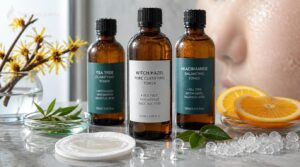
Not every toner earns a spot on your shelf, and the ingredient list tells you why. Some compounds actually regulate oil and clear pores, while others just sit there. Here are the five worth checking for on any label.
Niacinamide for Sebum Control
Few ingredients pull double duty like niacinamide. It targets your sebaceous glands directly, lowering sebum output while strengthening your skin barrier.
Studies show 2% niacinamide reduces sebum within weeks, calms redness, and hydrates without greasiness. That’s real oil control, not just a temporary matte look, backed by consistent clinical results.
Salicylic Acid for Clogged Pores
While niacinamide works on oil at the source, salicylic acid grips what’s already stuck. This oil-soluble BHA slips into pores to dissolve trapped debris, a key part of its pore unclogging effects.
That penetration mechanism drives real exfoliation, clearing blackheads and whiteheads. Stick to 0.5% to 2% concentrations for daily use, and expect gradual, steady clog removal rather than overnight results.
Green Tea for Oiliness
Green tea brings antioxidant support alongside its oil control powers. EGCG, its main catechin, calms inflammation while helping regulate sebum production.
Studies using a 3% topical green tea extract showed steady sebum reduction over 8 weeks. Look for it alongside witch hazel or salicylic acid for layered, oil-controlling benefits without stripping your skin.
Aloe Vera for Hydration
Not every oil-controlling ingredient needs to fight your skin. Aloe vera gel is roughly 96% water, offering lightweight hydration without clogging pores.
It helps your moisture barrier while soothing redness, thanks to compounds like acemannan.
Why it works:
- Noncomedogenic texture absorbs fast
- Natural humectant draws in moisture
- Calms irritation from active ingredients like salicylic acid
AHAs for Smoother Texture
Once your skin’s hydrated, exfoliation can go further. AHAs like glycolic acid and lactic acid dissolve dead cells for real skin texture improvement, smoothing rough patches while brightening tone.
Look for toners around 5% AHA concentration, a gentle start compared to peels. Stronger doesn’t always mean better here.
The FDA suggests staying under 10% to avoid irritation.
How to Use Toner Effectively
The right toner only works if you use it the right way. Timing, technique, and a little patience all matter more than people realize. Here’s exactly how to build toner into your routine step by step.
Apply Toner After Cleansing

Timing matters more than people think. Toner works best right after cleansing, while skin is still slightly damp and ready to absorb.
Applying toner in this brief window helps replenish what cleansing removes, which is why understanding the right steps for using facial toner correctly can make a real difference in your results.
This cleansing follow-up step clears leftover residue and preps skin for what’s next. Skipping it, or waiting too long, means serums won’t sink in as well, leaving oily skin concerns like excess sebum production unmanaged.
Focus on The T-Zone

Why does your forehead shine by noon while your cheeks stay matte? Blame the T-zone, your forehead, nose, and chin, packed with more sebaceous glands than anywhere else on your face.
- Forehead: largest oily area, needs consistent oil control
- Nose: prone to congested pores and blackheads
- Chin: breakout-prone, benefits from gentle sebum balance
- Cheeks: lighter touch, less product needed
- Combination skin: treat zones differently, not uniformly
Focus toner here for real shine reduction.
Introduce Exfoliating Toners Gradually

If your toner contains salicylic acid or glycolic acid, ease in slowly. Patch test first behind your ear, then try a diluted version on your face.
Start low frequency, just once or twice weekly, and watch for stinging or redness. Once tolerated, increase gradually.
Always allow absorption before layering serums, and monitor irritation signals closely during those early weeks.
Follow With Lightweight Moisturizer

Once toner absorbs, seal things in with a lightweight, oil-free moisturizer. This restores hydration balance without adding shine or a greasy feel.
Look for gel-based formulas with hyaluronic acid or glycerin. They support your skin barrier while refining pores, not clogging them.
- Water-based gels
- Fast-absorbing textures
- Non-comedogenic labels
- Hydrating without heaviness
This combo keeps oily skin calm, balanced, and comfortable all day.
Wear Sunscreen During Daytime
Acids and actives that fight oiliness also make your skin more sun-sensitive, so daytime protection isn’t optional.
Choose a broad-spectrum SPF 30 or higher, apply it as your final step, and reapply every two hours.
| Step | What to Do | Why It Matters |
|---|---|---|
| Choose | SPF 30+ | Blocks 97% UVB |
| Apply | Generous layer | Full coverage |
| Reapply | Every 2 hrs | Sustains protection |
How to Choose an Oily Skin Toner

Not every toner on the shelf deserves a spot in your routine. The right pick comes down to a few key checks before you buy. Here’s what to look for.
If a new product leaves your skin looking worse at first, it helps to know whether it’s true breakouts from sheet masks and similar products or purging, since the two follow different timelines.
Choose Alcohol-Free Formulas
Check the label for "alcohol-free" before anything else. Traditional alcohol dries out skin fast, which backfires into more oil later.
Alcohol-free benefits include gentle hydration without stripping your barrier. Look for water or aloe-based formulas with witch hazel for oil-controlling, pH balancing support, non-irritating for sensitive skin care, and barrier support your face actually needs.
Look for Non-Comedogenic Labels
Alcohol-free is only half the label check. Non-comedogenic meaning matters too: it signals lower pore clogging risk, though it’s not a guarantee for every face.
Do your own ingredient safety check. Comedogenicity ratings run 0 to 5, and a noncomedogenic formula that’s also oilfree and lightweight gives oily, pH-balanced skin the best odds against breakouts.
Avoid Fragrance and Harsh Astringents
Ingredient labels tell one more story: scent. Fragrance, even "natural" versions with limonene or linalool, can spark reactions on already-stressed skin.
Witch hazel deserves caution too. It’s astringent and drying, prone to overdoing oil control.
Look for:
- Fragrance-free formulas
- Alcohol-free bases (no sting or tightness)
- Niacinamide over witch hazel
- Salicylic acid at gentle strengths
Match Ingredients to Skin Concerns
Not every oily complexion has the same triggers, so match ingredients to your specific concern.
| Concern | Best Ingredient | Why It Works |
|---|---|---|
| Shine | Niacinamide | Lowers sebum production |
| Clogged pores | Salicylic acid | Pore refining, unclogs debris |
| Redness | Green tea | Calms irritation |
| Dehydration | Aloe vera | Lightweight hydration |
| Persistent oil | Zinc PCA | Oil-controlling, limits bacteria |
Patch Test Before Regular Use
Once you’ve matched ingredients to your concern, do a patch test first, even on products labeled "dermatologist tested."
Apply a quarter-sized amount to your inner arm twice daily for 7-10 days. Watch for redness, burning, or hives. If irritation shows up, wash it off and skip regular use, especially with sensitive skin or known ingredient sensitivity.
Frequently Asked Questions (FAQs)
Is toner really necessary for oily skin?
Not strictly, but it’s genuinely useful. Toner with salicylic acid or niacinamide targets sebum production directly, something a minimalist routine often skips. For oily, acne-prone skin, this extra step can mean real, noticeable balance.
What type of toner is best for oily skin?
Look for lightweight oil-free toners with mattifying, oil-controlling benefits, like niacinamide or salicylic acid. Choose alcohol-free formulations with non-comedogenic labels, hydrating yet oil-free, for sebum production, pore refining, and mattifying results.
When should you not use toner?
If the shoe doesn’t fit, don’t force it. Skip toner during skin barrier compromise, active breakouts, or a sensitive skin flare. Fragrance irritation and over-exfoliation risk also signal it’s time to pause and let skin recover.
What is the best toner for very oily skin?
For very oily skin, choose an alcohol-free toner with 5-2% salicylic acid for pore refining and oil control, plus niacinamide or witch hazel. Check for non-comedogenic labels, and always patch test before daily use.
Are toners beneficial for oily skin?
Yes, they genuinely help. A good oil-controlling toner balances sebum production, refines pores, and delivers light hydration.
Choose salicylic acid or witch hazel formulas, non-comedogenic and alcohol-free, for a mattifying finish without stripping your skin’s barrier.
Should you use a toner if you’re oily or acne prone?
Skipping toner is a myth worth retiring. If you’re oily or acne prone, add one with salicylic acid or witch hazel to control sebum, tighten pores, and calm breakouts, without stripping your skin dry.
Should you use a toner in your skincare routine?
A well-chosen toner earns its spot in your routine. Pick a non-comedogenic, alcohol-free formula with niacinamide or salicylic acid, patch test first, apply once daily, and confirm it’s sunscreen-compatible for daytime use.
Is Farmacy toner good for oily skin?
Clear pores, calmer skin, controlled shine: Farmacy’s Deep Sweep toner delivers all three. Its 2% salicylic acid works as an oil-controlling exfoliant, while witch hazel soothes. Alcohol-free and gentle, though newcomers should ease in gradually.
What is the best toner for oily skin?
Look for Paula’s Choice Skin Balancing Pore-Reducing Toner. It pairs niacinamide with witch hazel for oil-controlling, pore refining results, calms redness, suits most skin types, and delivers trusted, budget-friendly performance backed by strong user reviews.
What ingredients should I look for in a toner for oily skin?
Your shortlist for shine control: salicylic acid to clear congested pores, witch hazel and niacinamide for oil-controlling balance, green tea extract for antioxidant calm, aloe vera hydration, and glycolic acid to smooth texture without stripping skin.
Conclusion
Here’s the part most people never expect: your oiliest days might be your skin asking for balance, not less moisture.
So, are toners effective for oily skin? Yes, when the formula fits your barrier and your needs.
Niacinamide, salicylic acid, and aloe vera work together to calm sebum without stripping you dry.
Skip the guesswork and the harsh astringents.
Choose ingredients with purpose, apply consistently, and watch your skin settle into a quiet, lasting equilibrium.