This site is supported by our readers. We may earn a commission, at no cost to you, if you purchase through links. This content is for general informational and educational purposes only and is not a substitute for professional medical, dermatological, or nutritional advice.

Your beard isn’t the problem. The skin underneath it usually is.
That tight, itchy feeling by 3 p.m. or the white flakes on your black sweater come from skin that needs something different than your buddy’s skin does. Oily skin clogs under heavy balm. Dry skin cracks under a harsh wash. Sensitive skin stings at the first whiff of fragrance. And even a thick beard blocks only 50 to 95 percent of UV rays, so sunburn still finds you.
Master beard care for different skin types and you’ll stop guessing. Start by finding out what you’re working with.
Table Of Contents
- Key Takeaways
- Identify Your Skin and Beard Type
- Choose Beard Products for Your Skin
- Build Your Skin-Specific Beard Care Routine
- Prevent Beard Flakes, Itch, and Ingrowns
- Exfoliate and Sun-Protect Skin Beneath Your Beard
- Know When Beard Problems Need Dermatologists
- Frequently Asked Questions (FAQs)
- Can beard dye damage sensitive skin types?
- How does humidity affect different beard textures?
- Are silicone-based products safe for bearded skin?
- Does hard water impact beard and skin health?
- Can facial massage improve beard growth rate?
- How often should I trim my beard?
- Can diet affect beard health and growth?
- Does beard length change how I should care for it?
- How should I care for my beard while traveling?
- Conclusion
Key Takeaways
- Test your skin type first by washing gently and waiting 30 to 60 minutes, then match every wash, oil, and balm to that result, since lightweight jojoba suits oily skin, richer argan or shea suits dry skin, and fragrance-free formulas suit sensitive skin.
- Wash with a sulfate-free cleanser in lukewarm water, only as often as your skin type allows (two to three times a week for oily, dry, and acne-prone skin, daily for sensitive), because hot water, bar soap, and over-washing strip your skin and trigger flakes and extra oil.
- Exfoliate gently once or twice a week and wear a lightweight SPF 30+ under your beard, because even a thick beard blocks only 50 to 95 percent of UV rays and dead skin builds up beneath the hair.
- Patch test new products and add them one at a time, and see a dermatologist if redness, scaling, or itching lasts after you stop a suspected product, or get prompt care if you notice pain, pus, fever, or spreading redness.
Identify Your Skin and Beard Type

How well do you actually know your face? Most guys guess, then wonder why their beard itches. Skip the guessing. Skin type matching starts with a simple test.
Once you know your skin type, pair it with a beard maintenance and care routine so washing, conditioning, and trimming actually ease the itch instead of fighting it.
Wash with a gentle cleanser, then wait 30 to 60 minutes. Shine all over means oily. Shine only on your forehead and nose means combination. Tight or flaky means dry. Burning or stinging from products? That’s sensitive skin. If your skin runs oily, reach for non-comedogenic beard oils instead of heavy balms or butters, which can clog pores.
Now check the hair. Coarse strands feel stiff and stand at odd angles. Curly ones spiral, so oil pools at the roots and leaves the ends dry. Straight hairs hang long, while wavy ones need regular combing.
Patch test anything new on your inner arm for 24 hours. Get this right and your beard wash, beard oil, and beard dandruff prevention plan all fall into place.
Choose Beard Products for Your Skin

You know your skin type now, so it’s time to match your products to it. The right wash, oil, moisturizer, and dye can make your beard look sharp while the wrong ones leave you itchy, greasy, or flaky. Here’s what to look for in each category, so you can buy with confidence and skip the guesswork.
Beard Washes and Gentle Cleansers
A good beard wash does one job: it cleans without stripping. Pick a sulfate-free beard wash with a pH of 4.5 to 6.5, built on mild glucosides or glutamates.
Skin type matching matters here. Sensitive skin? Go fragrance-free and wash one to three times weekly in lukewarm water. Skip standard shampoo, which dries facial skin.
Solid beard hygiene needs gentle exfoliation.
Beard Oils by Skin Type
Clean beard, ready for oil. Here’s where Beard Care for Different Skin Types gets personal.
If your beard still feels patchy or slow to fill in, this Beard Grow XL review breaks down whether the supplement is worth adding to your routine.
Oily skin? Choose lightweight jojoba or grapeseed, and use a few drops. Dry skin needs richer argan or sweet almond, ideally on slightly damp skin. Sensitive skin should skip fragrance and scented oils. Nut allergy? Avoid almond. Beard oil softens hair; it won’t grow it.
Moisturizers, Balms, and Conditioners
Oil softens, but it doesn’t seal. That’s the job of beard balm and conditioner.
Dry skin? Reach for a shea butter balm. Oily skin does better with a light leave-in beard conditioner, used sparingly. Sensitive skin needs fragrance-free formulas.
Apply after washing, while your beard’s slightly damp. Massage down to the skin. Want SPF 30? Use a moisturizer.
Beard Dye for Sensitive Skin
A gentle beard dye for grays starts with the label. Skip ammonia, PPD, and peroxide, since they’re the usual culprits behind skin irritation on sensitive skin. Pick unscented formulas or fragrance-free products, ideally henna-based.
Before you commit:
- Patch test 48 hours ahead.
- Skip hot water and sun for 24 hours.
- Moisturize daily.
Expect softer, shorter-lived color.
Build Your Skin-Specific Beard Care Routine
You’ve picked your products, so now it’s time to put them to work. A routine that fits your skin beats a generic one every time. Find your skin type below and follow the step-by-step routine built for it.
Oily Skin Routine

Oily skin under a beard is a slippery problem, but you can control it.
Wash with a gel or foaming beard wash containing salicylic acid or charcoal, just two to three times weekly. More than that strips your skin, and it’ll overproduce oil to compensate.
Then tone with witch hazel or niacinamide. Finish with two or three drops of noncomedogenic oils like jojoba. That’s sebum control.
Dry Skin Routine

Think of dry skin as a thirsty garden: water alone won’t fix it, you need mulch to hold the moisture in.
Dry skin is like a thirsty garden: water alone won’t help, so seal in moisture the way mulch does
Wash your beard just two or three times weekly with a mild, fragrance-free cleanser. Then apply beard oil with jojoba or argan. Follow with a beard balm to seal it in. Exfoliate gently once weekly, and use a beard conditioner for beard dandruff control.
Sensitive Skin Routine

Picture a guy who switches to a "natural" beard oil and wakes up red, stinging, and flaky. The culprit? Essential oils.
With sensitive skin, simplicity wins. Wash once daily with lukewarm water and a mild, non-soap cleanser. Pick fragrance-free products, since unscented formulas can still hide masking scents.
For beard itch relief and beardruff prevention, moisturize lightly and add one new product at a time.
Combination Skin Routine

Combination skin plays two games at once, so your routine should too.
Here’s the daily plan:
- Morning: Wash with a gentle beard wash, then use a light moisturizer on your T-zone and a richer cream on your cheeks. Finish with SPF 30+.
- Evening: Cleanse, then work beard oil into dry cheek areas first.
- Weekly: Try exfoliation with 2% BHA on oily zones only.
Use beard balm sparingly.
Acne-Prone Skin Routine

Beard acne treatment starts with cleaning up, not piling on. Wash with a sulfate-free beard wash two or three times weekly, and use a non-comedogenic salicylic acid cleanser underneath.
Dab benzoyl peroxide on active spots, wait ten minutes, then add two or three drops of jojoba oil. Keep products fragrance-free, and stick to gentle exfoliation once or twice weekly.
If your beard tends to be oily or thick, this step-by-step guide to exfoliating your beard can help you fine-tune how often and how gently to scrub.
Prevent Beard Flakes, Itch, and Ingrowns

Even the best routine won’t save you if your daily habits fight it. Flakes, itch, and ingrowns usually come from small mistakes you can fix fast.
Wash your face and beard every day with lukewarm water. Hot water strips oils, and dry skin flakes fast. Skip bar soap too, since it dehydrates the skin underneath. Apply moisturizer while your skin is still damp, then add a few drops of beard oil to soften coarse hair and cut down friction.
If you’re fighting beard dandruff that won’t budge, the culprit may be Malassezia, a fungus that loves oily skin. Over-the-counter care can help, but stubborn cases need medicated treatment.
For ingrown hairs, stop plucking and picking. Let curly hairs grow out, and never pull them free. Skin irritation only gets worse when you dig at it.
Exfoliate and Sun-Protect Skin Beneath Your Beard

Daily habits keep flakes away, but dead skin still piles up under all that hair.
Aim for gentle exfoliation once or twice a week. Sensitive skin gets once weekly, while oily or thick beards can handle up to three times. Use fingertips in small circles, and skip the hard scrubbing.
Pick one method:
- Physical scrubs with sugar crystals that dissolve as you work
- A damp boar bristle brush, used for one to two minutes
- Mild chemical exfoliants, if your skin tolerates them
Then protect what you uncovered. Your beard blocks only 50 to 95 percent of UV, so skin underneath still burns. Choose a lightweight gel beard sunscreen, rub it in circles, and comb it through. Reapply every two hours.
Know When Beard Problems Need Dermatologists
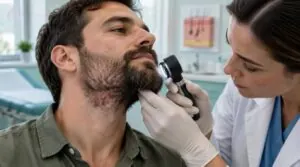
Even with perfect habits, some problems won’t budge. If you’ve stopped a suspected product and the rash, itching, or scaling sticks around, get a dermatologist consultation. Contact dermatitis, fungal infections, and plain beard dandruff can look nearly identical, and guessing wrong wastes weeks.
Watch for deep, painful bumps after shaving. Those may be infected ingrown hairs, not simple skin irritation, and repeated flare-ups can leave scars or dark marks. Pustules that keep returning deserve a look too.
Pain, pus, fever, or redness spreading across your face means prompt medical attention. Diabetes, a weakened immune system, or chemotherapy raises the stakes.
Facial swelling or trouble breathing is an emergency. Call for help immediately.
Frequently Asked Questions (FAQs)
Can beard dye damage sensitive skin types?
Yes, it can. Beard dye on sensitive skin often triggers skin irritation, from redness and itching to blisters, mostly thanks to PPD and ammonia. Patch test first, pick fragrancefree products, and see a dermatologist consultation if reactions persist.
How does humidity affect different beard textures?
Beard humidity hits each texture differently. Coarse, curly beards swell and frizz. Fine, straight ones go limp. Low porosity hair repels water, so beard oil absorption stalls, and heavy balms just sit there.
Are silicone-based products safe for bearded skin?
Mostly, yes. Silicone-based products like dimethicone are generally safe for bearded skin, but your skin barrier decides the real answer. Oily or sensitive? Patch test first, skip heavy silicones, and check beard product compatibility.
Does hard water impact beard and skin health?
Yes, it does. Hard water leaves mineral residue on your beard and skin, so your skin feels tight, your beard turns dry and brittle, and beard oil can’t work properly. Sensitive skin and dry skin suffer most.
Can facial massage improve beard growth rate?
Think massage will make your beard grow faster? Not quite. No beard-specific studies back it, and genetics and hormones set your pace. Still, massaging boosts beard hydration, moisture retention, and helps oil spread through your facial hair grooming routine.
How often should I trim my beard?
Your beard trimming frequency depends on growth speed and style. Short beards need a trim every 1-2 weeks, medium ones every 2-3, long ones monthly. Skip beard neckline definition touch-ups, and you’ll look scruffy fast.
Can diet affect beard health and growth?
Think of your beard as a garden: diet is the soil, not the seed. Fix a real nutrient deficiency and growth recovers, but extra supplements won’t beat genetics or hormones. Your beard diet needs balance, not megadoses.
Does beard length change how I should care for it?
Think your routine stays the same at every stage? It doesn’t. Beard length changes how deep you clean, how much beard balm you need, and how you reach the skin underneath.
How should I care for my beard while traveling?
Pack light and keep it simple. Carry a solid beard balm, a travel-size beard oil with a screw cap, and a beard comb. Skip the trimmer in your carry-on. Stick to morning and night routines.
Conclusion
Picture two guys with identical beards. One swears by a rich balm and glows. The other uses the same jar and breaks out by Thursday. Same hair, different skin.
That’s why beard care for different skin types works when generic advice doesn’t. Match your wash, oil, and moisturizer to what’s underneath, wear sunscreen, and exfoliate. If redness or bumps hang around, see a dermatologist. Your beard only looks as good as your skin lets it.