This site is supported by our readers. We may earn a commission, at no cost to you, if you purchase through links. This content is for general informational and educational purposes only and is not a substitute for professional medical, dermatological, or nutritional advice.
Most men grab whatever’s nearby and call it grooming. A comb one day, a brush the next, sometimes a fork in a pinch. But your beard notices the difference, even when you don’t. The brush and comb sitting on your bathroom shelf aren’t interchangeable—they do completely different jobs, and using the wrong one at the wrong time is quietly working against you.
Choosing between a beard comb versus beard brush comes down to your beard length, texture, and what you’re actually trying to fix. Get that right, and everything else gets easier.
Table Of Contents
- Key Takeaways
- Beard Comb Versus Beard Brush
- What Beard Brushes Do Best
- What Beard Combs Do Best
- Brush or Comb by Length
- Materials That Matter Most
- Beard Health and Skin Benefits
- Daily Beard Grooming Routine
- Common Brush and Comb Mistakes
- Choosing Your Best Beard Tool
- Frequently Asked Questions (FAQs)
- Does a beard reduce asthma?
- Do beard combs actually work?
- Is it better to brush or comb your beard?
- Is it better to use a comb or brush?
- Should guys use a comb or brush?
- When should I start using a beard brush?
- How often should I replace my beard tools?
- Can beard brushes cause hair breakage or damage?
- Whats the ideal grooming routine timing and frequency?
- Do expensive beard tools perform significantly better?
- Conclusion
Key Takeaways
- Your beard brush is for conditioning and control — it spreads natural oils, trains the growth direction, and smooths frizz, making it the go-to tool for short beards and daily maintenance.
- Your beard comb handles detangling, precise shaping, and trimming guidance, so it earns its place once your beard reaches a medium to long length.
- Material matters more than most guys realize — wooden or horn combs and boar bristle brushes outperform plastic tools in every way, from static reduction to long-term durability.
- Using both tools together, comb first then brush, gives you the optimal results regardless of beard length, texture, or styling goal.
Beard Comb Versus Beard Brush
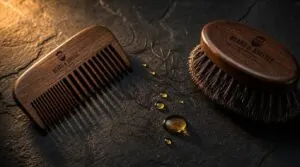
Both tools look similar sitting on a bathroom shelf, but they do very different things for your beard. Knowing which one to reach for — and when — makes a real difference in how your beard looks and feels.
A good beard grooming kit usually includes both, so understanding the difference helps you actually use each one right.
Here’s a quick breakdown of the key differences, best uses, and what to look for when buying.
Key Differences
So what actually separates a beard brush from a beard comb? It comes down to what each tool is built to do.
- A beard brush uses bristles for oil distribution and product distribution across your skin
- A beard comb helps with detangling with smooth teeth, offers static reduction and precise control
- Material matters — eco materials like wood and horn beat plastic every time
- Tool weight, grip ergonomics, and cost comparison all factor into which feels right daily
Best Uses
Knowing the difference is one thing — knowing when to reach for each tool is where it gets practical.
| Situation | Best Tool | Why It Works |
|---|---|---|
| Morning oil activation | Beard brush | Spreads sebum evenly |
| Detangling knots | Beard comb | Wide teeth glide through |
| Seasonal texture management | Both | Brush smooths, comb separates |
Use your brush for oil distribution, your comb for detangling and control.
Quick Buying Advice
For most guys, a mid-range boar’s bristle beard brush and a wooden or horn beard comb cover everything. Check for hair-type compatibility before buying — curly and thick beards need different tools than fine ones. Size options matter too, especially if you travel.
Skip cheap plastic, look for warranty coverage, and treat material durability as a long-term investment.
What Beard Brushes Do Best
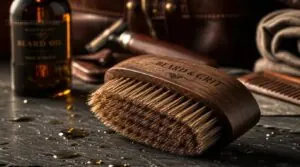
A brush does more than just tidy things up — it actually works with your skin and hair at the same time. Once you understand what it’s built to do, it becomes the hardest-working tool in your grooming kit.
Here’s what a beard brush genuinely does best.
Distribute Natural Oils
Your skin produces natural oils every day — a beard brush puts them to work. Instead of letting sebum sit at the roots, boar bristles drive it from root to tip, enabling migration across every strand. For optimal results, apply thin layers of oil with directional flow, particularly when your beard is warm after a shower. Layered oil passes over time outperform a single heavy dose.
A beard brush drives your skin’s natural oils from root to tip, putting every drop to work
- Apply a pea-sized amount, then brush from root to tip.
- Use gentle, consistent strokes to maintain even directional oil flow.
- Perform a second light pass to address any remaining dry patches.
Exfoliate Skin
Most guys forget that a beard brush does double duty — it exfoliates dead skin hiding beneath your beard while grooming. Those boar bristles apply gentle pressure as they sweep through, handling dead cell removal without irritating the skin underneath.
Adhere to the recommended exfoliation frequency: a few strokes daily works best. Follow up with moisturizing aftercare to maintain your skin’s barrier support.
Train Beard Direction
Training your beard is really about repetition. Every time you use downward strokes with your brush, you’re reinforcing root alignment — nudging each hair to lay the way you want it to. That’s growth memory building over time.
Apply a little balm for product locking, stay consistent with direction daily, and your beard training technique gradually shapes a cleaner, more intentional look. Incorporating daily downward brushing further trains follicle orientation for a smoother look.
Add Volume
Most guys underestimate what a good brush can do for volume. Using a boar bristle brush with circular dry-brushing motions lifts hair at the root, which is where beard volume enhancement actually starts.
Smart product placement matters, too—apply lightweight texturizers at the roots only. This ensures lift without added weight.
Heat-set styling briefly locks that lift in place, delivering real hair density improvement while maintaining a natural, unburdened look.
Smooth Surface Frizz
A boar bristle brush effectively combats frizz, as its dense bristles mimic cuticle sealing techniques to smooth raised strands and reduce static greatly. This tool forms the foundation of a frizz-fighting routine.
Pairing the brush with silicone anti-frizz spray on damp hair and microfiber towel drying enhances results, ensuring your hair glides through smoothly. These complementary methods work synergistically to minimize friction and maintain control.
What Beard Combs Do Best
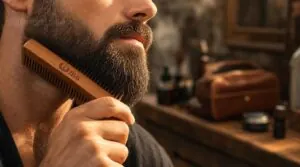
A brush handles a lot, but a comb has its own strengths — especially once your beard starts gaining real length. It gives you control that a brush simply can’t match.
Here’s what a beard comb does best.
Detangle Longer Beards
Long beards demand a comb — full stop. A wide-toothed comb is your go-to for detangling beard hair because it separates strands without tearing them apart.
Once your beard is detangled, you’ll want to trim and shape your neckline to keep everything looking clean and intentional.
Use an end-first technique, working from the tips upward in small sections. Sectioned detangling with gentle teasing strokes, paired with beard oil’s conditioning slip, keeps your routine smooth and your beard’s texture control on point.
Prevent Knots
Knots don’t just happen — they build up when you ignore the small stuff. Dry hair, rough handling, and the wrong tool all set the stage. For knot-prone beards, prevention starts before you even pick up a comb.
- Apply beard oil — conditioning before grooming cuts friction fast
- Use wide teeth and an end-first combing approach
- Work in sectioned detangling passes with a light grip
- Mind your storage handling — a clean, dry beard tangles less overnight
Shape Beard Lines
Once your detangling work is done, the comb becomes your best precision tool for shaping and defining the beard. Neckline definition, cheek line contouring, and edge finishing techniques all rely on the comb’s controlled tooth tension to guide exactly where your lines fall.
Run the comb slowly along each boundary, perform quick symmetry checks side-by-side, and trim only what sits outside your defined edge. This ensures clean, intentional lines while maintaining balance.
Style Mustaches
Your comb isn’t just for the beard below—it’s your go-to for mustache styling too. A fine-tooth comb provides the pencil precision needed for a clean lip line, handlebar shaping control to coax curls outward, and chevron maintenance to ensure symmetry.
Walrus grooming and horns definition both rely on the same tooth-guided tension a brush simply can’t offer, making it indispensable for defining sharp lines and textured styles.
Guide Trimming
A comb also doubles as your most reliable trimming partner. Hold it flat against your beard and run your trimmer along the teeth — instant Guard Length Settings without guesswork. It’s your Visual Guide Alignment tool for Symmetry Reference Lines along the jaw.
- Use Adjustable Blade Guides with comb teeth for consistent length
- Apply Precision Edge Mapping along the cheek line
- Comb against growth first to reveal true beard shaping techniques
- Check beard trimming preparation by combing both sides before cutting
- In the brush vs comb debate, tool selection for trimming always favors the comb
Brush or Comb by Length
The right tool really does come down to how much beard you’re working with. A two-inch beard has completely different needs from a six-inch one.
Here’s how to match your brush or comb to your length.
Stubble and Short Beards
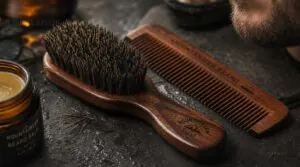
Short beards are where a brush truly earns its place. At stubble length, your skin needs attention just as much as the hair does. A brush manages skin hydration by distributing natural oils evenly, assists your beard maintenance routine, and guides hair growth direction—all in one pass. Forget wide teeth for now; bristles win here.
| Goal | Best Tool | Why It Works |
|---|---|---|
| Skin hydration | Boar bristle brush | Spreads natural oils evenly |
| Daily grooming | Soft-bristle brush | Gentle on short beards |
| Product compatibility | Brush | Pushes balm into skin |
Medium Beard Lengths
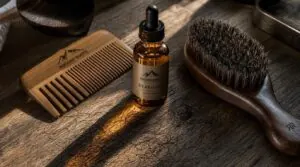
Once your beard hits that 10–20mm sweet spot, you need both tools working together. Medium-length beards tangle easily — especially with seasonal care shifts or lifestyle impacts from wind and humidity.
- Start with a beard comb to handle detangling
- Follow with a beard brush to spread oils
- Adjust your product choice based on texture and climate
That’s your daily rhythm.
Long Beard Care
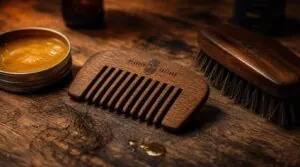
Once your long beard reaches past the 8-cm mark, hair detangling becomes the priority. Begin with a wide-tooth comb to work through knots, then distribute natural oils using a light brush pass.
Balm layering adds moisture locking and beard texture control.
Don’t skip split-end trimming, and adjust your seasonal care routine when weather changes dry things out.
Curly Beard Needs
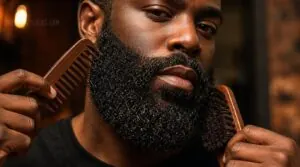
Curly beards play by different rules. Hydration Balance is everything — daily beard oil keeps frizz under control and softens tight curls. Use a wide-tooth beard comb on damp hair for detangling, then follow with a beard brush to spread moisture evenly for Moisture Lock.
Key habits for Curl Definition and beard texture control:
- Apply lightweight oil or balm after washing for lasting curl softness
- Sleep on a Satin Pillowcase to preserve curl pattern overnight
- Air-dry instead of rubbing with a towel to reduce frizz
Thick Beard Control
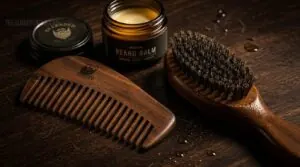
A thick beard can feel like it has a mind of its own. Start detangling with a wide-tooth beard comb — it manages knot-prone beards without yanking. Then use a boar bristle beard brush for static reduction and even product layering.
Focus balm on the midsection for thinning and volume reduction. Maintain consistent skin hydration, and skip heavyweight styling products that flatten everything out.
Materials That Matter Most
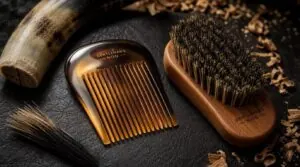
The tools you pick matter, but so does what they’re made of. A cheap plastic comb and a solid ox horn one might look similar, but they perform completely differently on your beard.
Here’s what you need to know about the materials behind the best brushes and combs on the market.
Boar Bristle Brushes
Regarding boar bristle brush quality, not all bristles are created equal. A boar bristle brush — made from natural boar hair — is the benchmark for a reason. Here’s why it earns its spot in your grooming kit:
- Bristle density and stiffness grading mean the natural boar bristles match your beard type; firm enough for coarse hair, gentler for fine strands.
- The oval paddle shape gives you broad, even coverage across your face in fewer strokes.
- Natural boar’s hair beard brush bristles carry anti-static properties, so frizz stays under control without product overload.
Many quality options now emphasize sustainable sourcing too, which is worth looking for.
Wooden Beard Combs
A good wood comb does more than just look nice. Crafted using handcrafted techniques from natural materials like beech and cherry wood, it glides through your beard without static or snagging. The natural oil finish enhances wood grain aesthetics, adding a smooth feel against your skin.
This comb represents a sustainable material choice that lasts. To maintain its quality, follow seasonal care instructions to prevent warping.
Ox Horn Combs
Ox horn combs elevate grooming beyond wood, offering handcrafted durability that plastic cannot replicate. Each comb is shaped by hand from natural materials, ensuring a unique, long-lasting tool.
Functionally, moisture retention keeps beard hair supple during detangling, while the surface naturally resists static, preventing frizz and flyaways.
Over time, patina development transforms the comb into a uniquely personalized item, reflecting individual use and care.
Plastic Tool Drawbacks
Ox horn and wood earn their reputation. Plastic? Not so much. A cheap plastic comb or brush with synthetic bristles might seem like a smart save, but it often causes skin irritation and tugging hair instead of smoothing it.
Here’s what plastic alternatives get wrong:
- Heat Deformation — warps in warm environments
- Brittle Cracking — snaps under everyday pressure
- UV Warping — degrades with sunlight exposure
- Slippery Grip — loses traction when wet
Rapid wear makes replacements frustratingly frequent.
Handle Comfort
Beyond the bristles and teeth, the grip is what you’re actually holding. Wood grips — beech wood especially — feel warm in hand and naturally contour to your grip. Ergonomic grip shapes and textured surfaces keep control steady even on damp mornings.
Weight balance matters too: a well-balanced wooden comb or brush reduces fatigue, making grooming ergonomics feel seamless rather than an afterthought.
Beard Health and Skin Benefits
Good grooming tools do more than just style your beard — they actively work for your skin and hair health. The right brush or comb can make a real difference in how your beard looks and feels over time.
If you want to build a routine that keeps your beard healthy day after day, this beard maintenance and care guide breaks down exactly which habits matter most.
What’s actually happening beneath the surface when you use them consistently.
Sebum Distribution
Your skin’s sebaceous glands produce sebum constantly, but without assistance, this oil pools near the follicles instead of coating the full shaft. A beard brush acts as your distribution tool — its boar bristles pull natural oils along each strand, improving follicle coating efficiency and regional oil balance.
Temperature influence also matters: warmth reduces sebum viscosity, making post-shower brushing the ideal moment for even natural oil distribution.
Beard Dandruff Reduction
Beard dandruff usually comes down to dry, flaking skin hiding underneath your hair. A soft bristle beard brush gently helps exfoliate dead skin without aggravating the surface. Pair that with an Anti-Dandruff Shampoo and focus on the timing of product absorption—apply right after washing for better skin penetration.
This flake-reducing routine, combined with consistent skin hydration, can noticeably calm the condition within weeks.
Follicle Stimulation
Every time you brush your beard, you’re doing more than just smoothing hair — you’re giving your skin a root-level massage. That rhythmic motion delivers a microcirculation boost, triggering increased blood flow deep in the tissue.
Better blood circulation in the skin means your hair follicles get more nutrients. Think of it as scalp stimulation that quietly drives follicle activation and long-term follicle health.
Less Breakage
The right tools and detangling techniques make a real difference in keeping your beard intact. Start with a wide-tooth comb, using sectioned detangling and gentle pressure — working from ends to roots cuts breakage risk significantly.
Boar bristle brushes handle the rest, employing gentle strokes to spread oils and reduce friction.
Pair this brushing habit with a gentle wash routine, since knowing how to properly wash a human hair weave keeps both your scalp and strands healthy between styling sessions.
Anti-static materials, heat avoidance, and a conditioning boost keep strands flexible and far less prone to snapping.
Irritation Prevention
Grooming on sensitive skin is less about what you use and more about how you use it. Zone Tool Matching matters here — brushes suit reactive cheeks, while combs give precise control around the neckline.
Light Pressure and Brief Grooming Sessions reduce friction that causes redness.
Anti-static materials prevent itch, tugging, and pain.
A solid Tool Hygiene Routine rounds out smart grooming hygiene.
Daily Beard Grooming Routine
Getting the most out of your beard tools comes down to order and timing. A solid routine doesn’t take long, but the sequence and timing make a real difference.
Build one that actually works by focusing on when and how you use each tool daily. This approach ensures efficiency without sacrificing results.
Post-shower Grooming
Your post-shower routine sets the tone for the whole day. Pat your beard dry with a towel first—never rub. Wet hair breaks easily, so lighter hands matter here. Then detangle with a comb using light strokes through each section before brushing begins. Controlled drying minimizes frizz later.
- Towel patting removes excess moisture without roughing up the hair shaft
- Work in sectioned brushing passes from root to tip
- Damp beards respond better to detangling than dry beard hair
- Controlled drying locks in shape before the beard fully sets
Oil Application
Oil application is where most guys go wrong—too much, too soon. Warm a few drops between your palms, then work the beard oil into the roots first with a Root Massage. This targets natural oils for beard health right at the follicle.
Hand Wiping excess before styling controls Residue Prevention. Give it a moment for Oil Absorption, then move to combing.
Comb Before Brushing
Now that the oil has absorbed, reach for your beard comb first. The Comb First Strategy is simple but effective — combing creates Hair Alignment that makes every brush stroke count.
Your beard comb detangles resistance points, so the brush glides through with Reduced Tugging. That means Even Product Distribution and Enhanced Volume when the beard brush finishes the job with comb precision.
Touch-ups During Day
Your morning work holds up — but life happens. Sweat, wind, and movement all mess with your beard by noon. That’s where spot grooming technique saves you.
- Run a beard comb from root to tip for rapid static reduction
- Apply a light product refresh — one small drop of oil, mid-lengths only
- Use targeted brush strokes to lift stray hairs back into place
- Wipe your tools dry to avoid product buildup between uses
Midday moisture control keeps your daily grooming routine sharp without undoing product absorption from the morning.
Nighttime Beard Care
Night is when your beard actually recovers. A quick evening beard wash clears the day’s buildup, ensuring products absorb properly while you sleep. After patting dry, apply bedtime oil layering — oil first, balm second — then detangle with a beard brush or comb to prevent knots.
| Step | Tool | Purpose |
|---|---|---|
| Evening beard wash | Hands | Removes sweat and debris |
| Bedtime oil layering | Fingertips | Seals moisture overnight |
| Pre-sleep detangling | Beard comb | Prevents sleep-friction knots |
| Surface smoothing | Beard brush | Distributes products evenly |
| Night tool sanitizing | Damp cloth | Protects skin health long-term |
A satin pillowcase completes the routine.
Common Brush and Comb Mistakes
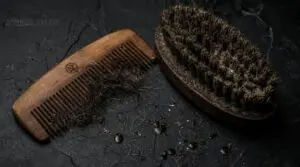
Even the right tools can let you down if you’re using them the wrong way. A few small habits — things most guys don’t even think about — can quietly damage your beard over time.
Here are the most common mistakes to avoid.
Brushing Wet Beard Aggressively
Brushing a wet beard hard is one of the fastest ways to wreck it. Moisture swelling makes each strand weaker and more elastic — so instead of detangling, you’re creating excessive tension that leads to hair snapping, split ends, and real hair breakage. Friction irritation follows quickly too.
Always let your beard dry partially first, then work through it gently for effective preventing tangles.
Using Cheap Plastic
Cheap plastic tools might seem like a cost-effective replacement, but they’ll quietly work against you. Static, snagging, and rough edges are just the start. UV degradation makes plastic brittle over time, while poor heat resistance leads to warping.
There’s also additive safety and environmental footprint to take into account. These factors compound the long-term drawbacks of inferior materials.
A quality acetate comb or cellulose acetate comb with wide teeth, paired with solid brush materials, simply performs better. This combination ensures durability, safety, and reduced environmental impact compared to cheap alternatives.
Overbrushing Sensitive Skin
More pressure doesn’t mean better results — especially for sensitive skin. Overdoing it triggers redness, barrier damage, and stinging that lingers long after you’ve put the brush down. Follow these frequency guidelines to stay on the right side of skin health:
- Use gentle strokes — no scrubbing
- Limit sessions to once daily
- Apply light pressure control throughout
- Watch for redness management signals like flushing or skin flaking reduction needs
Back off if tugging and pain appear.
Ignoring Tangled Ends
Leaving tangles unaddressed is a slow form of self-sabotage. Knots tighten overnight, so by morning, you’re fighting Morning Styling Delays before your coffee cools. This friction leads to Hair Thinning, split ends, and Reduced Grooming Efficiency across every session.
Product Buildup worsens Increased Skin Flakiness underneath.
For knot-prone beards, comb through tangles gently before reaching for your beard brush.
Skipping Tool Cleaning
Your tools are doing quite damage if you never clean them. Oil residue and dead skin cells build up fast — bacteria can colonize bristles within 24 hours. That’s hygiene decline you’re brushing straight back into your beard.
- Tool friction increases, snagging hair and causing breakage
- Follicle clogging worsens, triggering irritation and flakes
- Microbial growth spreads, undermining every grooming habit vs function
Weekly cleaning isn’t optional — it’s what keeps your brush and comb actually working. Control oil buildup, replace your brush or comb when they stop performing, and your beard stays genuinely healthy.
Choosing Your Best Beard Tool
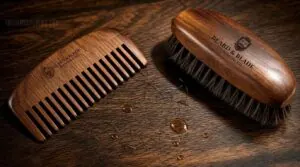
Not every beard is the same, and neither is the tool that works best for it.
The right pick comes down to your beard length, lifestyle, and what you’re actually trying to do.
Here’s a breakdown to help you figure out exactly what you need.
Best for Beginners
Starting simple is the smartest move. A beginner brush with soft bristles and a lightweight handle gives you full control without the learning curve. Pair it with an entry-level comb for a quick start to your beard grooming routine.
These grooming tools cover the basics well — daily brushing trains your beard early, and that foundation pays off fast.
Best for Travel
A pocket beard comb averaging three to four inches fits anywhere, and travel-friendly grooming brushes with secure locking bristles protect your bag from damage.
Compact packaging and smart weight considerations keep your carry-on light, ensuring practicality without sacrificing essentials.
Look for temperature resistance in wooden or horn tools to maintain durability across climates.
Pack a simple travel cleaning kit to stay fresh on the road, addressing hygiene with minimal effort.
Best for Styling
Styling facial hair is where these two beard styling tools really show their personalities. Want to boost shine and create flow? Your beard brush manages that, spreading oils for a polished finish. Need to define silhouette and sculpt profile? Reach for the beard comb.
- Brush first for texture balance and root lift
- Comb to shape edges and beard lines cleanly
- Use beard brush strokes to smooth surface frizz
- Finish with fine comb teeth for a crisp profile
Best for Beard Growth
Want real beard growth support? A beard brush wins here.
Its bristles boost microcirculation, nudging follicles awake through hair growth stimulation and natural oil distribution. Growth memory training keeps strands aligned through hair shaft alignment, while root area hygiene clears buildup that slows progress.
Add a beard comb for product penetration, and you’ve built a solid foundation for beard growth.
When to Use Both
Both tools together? That’s your move when your beard has mixed textures or you’re going from wet to dry.
Use your beard comb to detangle first, then follow with the beard brush to seal everything in place.
This dual-tool approach boosts styling longevity, keeps oils balanced, and makes your alternating daily routine feel less like a chore and more like a system that actually works.
Frequently Asked Questions (FAQs)
Does a beard reduce asthma?
Facial hair might help a little by trapping allergens like pollen and dust before they reach your airways.
But the evidence is limited, and it is no substitute for proper asthma treatment or medication.
Do beard combs actually work?
Yes, beard combs genuinely work.
Wide teeth detangle without snagging, and fine teeth enable precise styling.
Comb efficiency tests and user satisfaction rates consistently back them as essential grooming accessories worth every penny.
Is it better to brush or comb your beard?
Like choosing between a spatula and tongs, neither beard brush nor beard comb wins outright.
Beard length, tangles, and skin sensitivity decide — your personal factors determine the ideal tool. Both grooming tools for beard care earn their place.
Is it better to use a comb or brush?
Neither a beard brush nor beard comb wins outright — your hair texture, length, and user preference decide. For most, using both grooming tools for beard care covers everything from detangling to distributing products evenly.
Should guys use a comb or brush?
Both, honestly. A beard brush manages daily brushing, oil distribution, and skin care. A beard comb detangles hair tangles and shapes. Your beard needs both — just at different moments.
When should I start using a beard brush?
Start around the three-month mark. That’s when short beards hit a length where daily brushing actually trains direction. If uneven growth or bedhead shows up earlier, that’s your cue too.
How often should I replace my beard tools?
Don’t bristle at this — good tools don’t last forever. Replace your brush every 6–12 months when bristles shed or lose stiffness. Swap your comb when teeth show warping or snagging.
Can beard brushes cause hair breakage or damage?
Yes, a beard brush can cause hair breakage — but only when used incorrectly.
Bristle stiffness, knot stress, friction heat, and excessive over-brushing on dry or wet hair all increase the risk of damage greatly.
Whats the ideal grooming routine timing and frequency?
Your beard care routine doesn’t need to be complicated. A quick Morning Routine brush after oil application and an Evening Refresh comb-through form the core of daily maintenance.
Pair these with Weekly Tool Cleaning and a Biweekly Skin Check to ensure consistency. This streamlined approach keeps your beard healthy and your skin happy.
Do expensive beard tools perform significantly better?
Generally, yes — but not always. Boar’s hair beard brushes and ox horn combs offer real material advantages in longevity benefits and user experience.
Cheaper plastic tools snag, crack, and fade fast.
Spend smart, not big.
Conclusion
One tool detangles and defines. The other conditions and controls. Together, they cover everything your beard actually needs.
The mistake isn’t choosing wrong—it’s thinking you only need one. Work out your beard’s length and texture, then let that guide your hand.
The beard comb versus beard brush debate doesn’t have a single winner. It has a right answer for your beard, on any given day. Find that, and you’re already ahead.
- https://www.beardbrand.com/blogs/urbanbeardsman/beard-brush-vs-comb?srsltid=AfmBOorwYZtrljqXyjfdqjiwzii4rBo-snbeq7n75JL4bOqjp-6ADRfP
- https://thebeardclub.com/blogs/beard-culture/beard-brush-vs-comb?srsltid=AfmBOorlL7OIeUSWzsCu9mKiyWxMKoiuZ0pp4UglQRX-O1coHFkDlqFB
- https://cremocompany.com/blogs/blog/beard-brush-vs-beard-comb