This site is supported by our readers. We may earn a commission, at no cost to you, if you purchase through links. This content is for general informational and educational purposes only and is not a substitute for professional medical, dermatological, or nutritional advice.
Most beards don’t fail from bad genetics. They fail from bad tools and worse timing.
Grab the wrong guard size or trim against the grain on a stubborn jawline, and you’ll spend weeks growing out a mistake. Split ends, patchy edges, and a neckline that creeps toward your collarbone all start the same way: skipped steps and guesswork.
A solid beard maintenance trimming guide fixes that. Get the right tools in hand, prep your beard properly, and follow a shaping method built around your face, not a one-size trim. From stubble to a full six-inch beard, the techniques ahead will get you a sharp, consistent look every time you pick up the trimmer.
Table Of Contents
- Key Takeaways
- Essential Beard Trimming Tools and Guard Sizes
- How to Prepare Your Beard for Trimming
- How to Trim and Shape Your Beard Step by Step
- Beard Trimming Techniques by Length
- Beard Maintenance Schedule and Common Problems
- Frequently Asked Questions (FAQs)
- Can you provide a guide to trimming my beard?
- What is the 3-month beard rule and how does it work?
- Should I brush my beard up before trimming?
- How often should you trim a beard?
- Can I trim my beard while wet?
- What causes beard hair to curl unexpectedly?
- Should I trim against the grain direction?
- How to fix accidentally over-trimmed areas?
- Can cold weather affect beard trimming?
- Can beard oil replace balm for daily use?
- Conclusion
Key Takeaways
- Always start with a longer guard than your target length, since you can trim more off but can’t glue hair back on.
- Match your trim frequency to your beard’s length: stubble every 2-4 days, short beards every 1-3 weeks, medium beards every 10-14 days, and long beards every 6-8 weeks.
- Prep matters as much as the trim itself, so wash with sulfate-free shampoo, rinse with lukewarm water, pat dry, and fully detangle before you pick up any blade.
- Fix split ends and patchiness with scissors and shorter guards on the spot, since conditioners only mask the damage instead of stopping it.
Essential Beard Trimming Tools and Guard Sizes
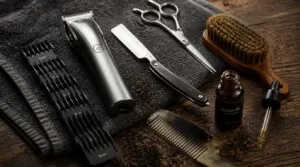
Good trimming starts with the right gear, not guesswork. Skip a tool or use the wrong one, and you’ll fight your beard instead of shaping it. Here’s what belongs in your kit before you make a single cut.
A solid comb, brush, and pair of scissors form the foundation, and this guide to essential men’s beard grooming accessories breaks down exactly what each tool does best.
Adjustable Trimmers and Guard Sizes
Your trimmer is the workhorse of the whole kit. Guards run roughly 0.5mm to 16mm, and each interlocking guard clicks into place for a locked, consistent cut. Adjustable trimmers add a taper lever, letting you shift lengths mid-trim without swapping guards. That hybrid setup, fixed guards plus dial control, gives you precision without slowing down your rhythm.
Guard materials matter too, since plastic versus metal guards affects durability and how well they hold up to thicker, coarser hair over time.
Scissors for Precision Detailing
Guards handle bulk work, but scissors finish the job. Pick a pair with fine tip precision, 4-6 inches, for stray hairs down to 0.2mm.
Look for:
- Micro serration grip on the blades
- Spring tension control for steady pressure
- Ergonomic offset grips to cut fatigue
Stainless steel holds its edge up to six months with proper care.
Combs for Safe Detangling
Scissors handle stray hairs, but a wide-tooth comb does the heavy lifting first. Wide spacing glides through thick, tangled growth without snapping strands.
Switch to a fine-toothed comb for shaping once knots clear. Check for rounded tips and stainless steel or acetate build, both hold up daily. Wet or dry compatibility and a comfort grip round out real beard manageability.
Brushes for Hair Alignment
Once the comb clears knots, a good brush finishes the job. A boar bristle brush spreads natural oils for shine and softness, while nylon pin brushes glide through coarse, curly hair without snagging.
Vented brushes boost airflow for faster styling. Cushion base designs shape hair gently, and beveled edges keep jawline strokes comfortable during precision detailing.
Oils, Balms, and Conditioners
Once your tools are sorted, products finish the job. Beard oil should go on damp skin after a shower, a few drops rubbed into palms first. Jojoba oil mimics your skin’s own sebum, while argan brings vitamin E for softening coarse hair.
Balms lean on beeswax, roughly 30% of the mix, for hold and a protective seal.
Conditioner experiences frizz and coarseness directly.
- Beard oil: hydration plus skin health
- Beard balm: light hold, damp application
- Beard conditioner: softens and detangles
Keep essential oils under 2% dilution. Your skin will thank you.
If you’re mixing skincare routines with grooming, choosing the right tool matters just as much as dilution ratios—check out this beard trimmer vs razor shaping guide to keep your edges as gentle on your skin as your oils are.
How to Prepare Your Beard for Trimming

Never trim a dirty, tangled beard. Your trimmer needs clean, straight hair to cut evenly, and skipping prep leads to snags and uneven lines. Here’s the five-step routine to get your beard ready.
Wash With Beard-Specific Shampoo
Regular shampoo strips the oils your beard needs. Use a beard-specific shampoo instead, sulfate-free with jojoba or argan oil.
Wash 2-3 times weekly. Work lather into your palms first, then massage into skin and jawline with fingertips.
Thorough lathering prevents residue that causes dryness and irritation later.
Rinse With Lukewarm Water
Once the lather’s worked through, rinse with lukewarm water only. Hot water strips oils and irritates skin; cold won’t loosen buildup.
No thermometer? Test it on your wrist first.
- Keeps skin from drying out
- Loosens leftover residue
- Feels comfortable against your face
- Preps hair for detangling
Rinse thoroughly. Clean, damp facial hair is where every good beard care routine starts.
Pat Dry Without Rubbing
Rubbing scrambles hair cuticles and invites frizz. Grab a clean towel and pat gently, working the face first, then the neckline.
Thicker patches hold more water, so give them extra attention. Stop once surface moisture is gone. You want damp, not dripping, since that’s the sweet spot for detangling next.
Skip the rough terry cloth. It snags and stresses strands you’re trying to protect.
Detangle From Ends Upward
Knots left unchecked turn trimming into torture, so work them loose before any blade touches your beard.
Start with the finger pre-comb technique on clean damp facial hair, then section into quarters. Mist a detangling spray, then run your beard comb ends-upward, section by section.
Finish with a boar brush to smooth strands before shaping.
Brush Beard Into Shape
Think of your beard brush as the compass that points every hair where you want it to go.
- Boar bristle for oil distribution and shine
- Synthetic bristles if your skin runs sensitive
- Palm-sized ovals for cheek and jawline control
Brush downward from chin to cheeks to set your silhouette, then upward at the neckline for lift. This alignment preps hair for cleaner trimmer guard accuracy.
How to Trim and Shape Your Beard Step by Step
Your beard’s washed, detangled, and ready to go. Now comes the part that actually shapes your look. Follow these five steps in order, and you’ll avoid the rookie mistakes that turn a trim into a disaster.
Choose Your Target Beard Shape
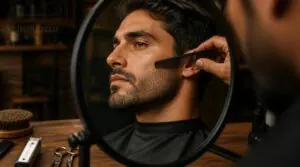
Every great beard starts with a plan, not a pair of clippers. Measure your face shape first: length, cheekbones, and jawline decide whether you need a point beard for a leaner look or fuller cheeks for balance.
Match the style to your growth pattern and head shape, not just trends. Neckline and cheek line placement will shape everything from here.
Start With a Longer Guard

Once you’ve picked your shape, grab your beard trimmer and set the guard longer than your target length. This safety buffer approach gives room to fix mistakes.
Test with a 9mm guard first. You can always drop down in 1-2mm increments, but you can’t glue hair back on.
Trim Sides, Chin, and Jawline
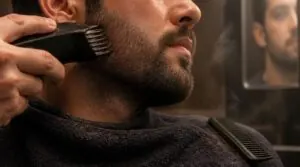
With your guard set, work section by section. On the sides, trim downward with the grain for smoother results, tapering gradually toward the chin.
For chin trimming, switch direction. Chin hair grows upward and inward, so trim against the grain with a shorter guard for cleaner jawline contouring.
Comb and check symmetry often.
Define Neckline and Cheek Lines

Now find your neckline. Use the Two Finger Rule: two fingers above the Adam’s apple mark your lowest point. Curve a soft U-shape ear to ear, never straight across.
If your neck hair grows higher than expected, this step-by-step guide to shaving a neckbeard shows how to clean up the area without cutting into your beard line.
Once your neckline is mapped out, this guide to trimming long beards walks you through blending the chin and cheeks so everything flows naturally.
For cheek lines, follow the natural cheekbone angle from sideburn to mustache corner.
- Guardless trimmer for precision
- Trim center-outward
- Blade flat against skin
- Curved U, no sharp V
- Fade into jawline
Detail Mustache and Stray Hairs
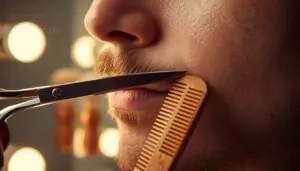
Grab your pointed scissors for this part. Mustache corners need small, controlled snips to stop hairs spreading past the lip line.
Comb dry hair first so stray hairs reveal themselves, then spot-trim only the protruding length. Check length consistency between mustache and cheek hair.
Brush again from another angle. If it looks uneven, take another small snip, not a big correction.
Beard Trimming Techniques by Length

Every beard length demands its own approach, and guard size is where that starts. What works for stubble will wreck a longer beard, and vice versa. Here’s how to trim yours right, no matter where you’re starting from.
Stubble: 1–3 Mm Guards
Stubble rewards precision. Set your adjustable guard between 1 and 3mm, then trim every 2-3 days to control fast regrowth.
Work against the grain for even coverage, and always cleanse skin daily to prevent irritation and buildup beneath short hairs. Sharp blades matter here, dull edges tug and cause razor burn instead of clean, defined stubble.
Short Beards: 4–10 Mm Guards
Move up to a 4-10mm guard once your beard clears the shadow stage. Set adjustable guards longer first, then step down if it looks bulky.
Shape cheek lines along your natural cheekbone, and define the neckline two fingers above your Adam’s apple.
Trim weekly, brush daily, and detail the mustache last.
Medium Beards: 12–16 Mm Guards
Twelve to sixteen millimeters is where a beard gets real presence. Guard 4 (12-13mm) gives that natural, polished look, while a 5 (16mm) fills out a fuller shape.
Trim weekly since edges lose definition fast. Longer chin hair with shorter sides flatters oval faces.
Brush daily, apply beard oil or balm to control frizz and shape.
Long Beards: Clippers and Scissors
Past 19mm, clippers alone won’t cut it. Use a comb-over clipper method: comb angled 45 degrees, blade fully open, lifting longer strands as you go for gradual tapering.
Switch to scissors for the ends. Quick, light cuts preserve volume while removing split ends without thinning density.
Clean blades after every session. Oil weekly, replace every 12-18 months for clean, coarse-hair cutting power.
Blend Uneven Growth Patterns
No beard grows perfectly even. Run your hand against the grain first, this is Growth Direction Mapping, then use reverse C-motion strokes for Shift Zone Blending. Fix patchy spots with shorter guards nearby, longer guards elsewhere for Patch Coverage Strategies. Overlap each pass by half for Length Equalization Methods. Check both sides constantly. Beard symmetry isn’t luck, it’s disciplined blending.
Beard Maintenance Schedule and Common Problems

Trimming your beard right is only half the job. Keeping it right day after day is where most guys drop the ball. Here’s what your maintenance routine actually needs to cover.
Trim Frequency by Beard Length
Rarely does one schedule fit every face.
Stubble needs a trim every 2 to 4 days, short beards every 2 to 3 weeks, medium beards every 10 to 14 days for edge control, and long beards just every 6 to 8 weeks. Growth rate runs 0.3 to 0.5 inches monthly, so adjust your trimming frequency as your follicles dictate.
Signs Your Beard Needs Trimming
A calendar only gets you so far. Your beard will tell you when it’s overdue, if you know what to look for.
Watch for split ends, flyaways, and uneven length across the jawline. Loss of shape, muddy edges, and unruly sideburn growth are red flags too. These signs mean your growth pattern and beard thickness have outpaced your last trim.
Daily Brushing and Moisturizing
Trimming keeps shape, but daily habits keep it healthy. Grab your boar bristle brush each morning to align hairs and work oils toward the tips.
Pick one moisturizer, oil or balm, and apply it to clean, slightly damp skin. This routine seals hydration, softens hair, and keeps the skin underneath from feeling tight or flaky.
Prevent Itch, Dandruff, and Breakage
Itchy skin under the beard usually means dryness, not dirt. Keep moisture balance steady with daily oil and lukewarm rinses, never hot water.
Beard dandruff often involves fungal activity, so use anti-fungal shampoo weekly for real anti-fungal care.
Rinse residue fully to avoid irritation. Dry gently, don’t rub, to cut breakage risk and protect follicles from unnecessary friction.
Fix Patchiness and Split Ends
Patchy spots and split ends aren’t fixed with wishful thinking. Even out uneven regrowth by trimming longer sections down to match thinner patches, don’t just wait it out.
Split ends only come off one way: cut them. Conditioners mask damage temporarily, but scissors above the frayed tip stop it from splitting further up the shaft. Regular trims prevent both problems before they take hold.
Split ends only come off one way: cut them, since conditioners only mask the damage
Frequently Asked Questions (FAQs)
Can you provide a guide to trimming my beard?
Grab your grooming tools and let’s build a real trimming guide: wash, detangle, pick adjustable guards for your target length, then shape the neckline and jawline before detailing the mustache with scissors.
What is the 3-month beard rule and how does it work?
Let your beard grow untouched for 90 days, skipping shape-ups while genetics and growth patterns fill patchy spots. You’ll still wash, oil, and brush daily, just no edging beyond the neckline’s two-finger rule.
Should I brush my beard up before trimming?
Brush before you cut. Dry beard prep keeps hairs true to length, and brushing toward your chin lifts flat strands for even trimming, better detangling, and a sharper outline your trimmer won’t miss.
How often should you trim a beard?
Stubble needs a trim every 2-4 days, short beards every 1-3 weeks, and long beards every 6-8 weeks. Match frequency to your beard growth, adjust for patchiness, and book a barber visit when edges blur.
If you’re unsure whether your beard has hit that sweet spot, this step-by-step beard trimming and shaping tutorial can help you spot the right moment and technique before you reach for the trimmer.
Can I trim my beard while wet?
Water plays tricks on your eyes, stretching hair like taffy. Damp trimming works for blade control, but skip soaking wet. Dry first for true length shrinkage, or you’ll cut short-sighted and regret it later.
What causes beard hair to curl unexpectedly?
Curling comes down to follicle shape genetics, moisture loss, friction from brushing, and heat styling damage. Curved follicles twist hair naturally, while dry, dehydrated strands shrink and kink.
Proper beard conditioning and gentle handling keep texture predictable and frizz-free.
Should I trim against the grain direction?
Closeness tempts you, comfort protects you. Go with the grain first to limit irritation, then finish lightly against it if you want a closer trim. Minimal pressure keeps the against-grain pass safe and controlled.
How to fix accidentally over-trimmed areas?
Give it 7-14 days before touching scissors again. Mix with progressively shorter guards, work in strategic styling with balm, and if it’s bad, a barber can fold the mistake into a fresh shape.
Can cold weather affect beard trimming?
Jack Frost isn’t just nipping at your nose, he’s nipping at your beard too. Cold weather causes winter beard dryness, brittle strands, and static, so switch to sharper blades, gentler pressure, and heavier oils for moisture retention.
Can beard oil replace balm for daily use?
Not fully. Oil absorbs fast and hydrates skin, but it lacks balm’s wax and butter hold. For daily taming and shape, layer both: oil first for moisture, balm second for styling control.
Conclusion
What separates a sharp beard from a sloppy one? Discipline, not luck. Follow this beard maintenance trimming guide, and every trim becomes routine instead of a gamble. Right tools, proper prep, consistent technique: that’s the whole formula.
Skip a step and you’ll pay for it in patchy edges or a botched neckline. Master the basics once, and your beard stops being a chore. It becomes a craft you control, blade in hand, confidence on your face.