
This site is supported by our readers. We may earn a commission, at no cost to you, if you purchase through links. This content is for general informational and educational purposes only and is not a substitute for professional medical, dermatological, or nutritional advice.

Your beard looks great, but the skin underneath is quietly falling apart. Tight, flaky, and itchy, it scratches back at you every time you towel off.
Here’s the good news. Beard oil benefits skin underneath your whiskers by slowing water loss and helping your moisture barrier repair itself, and that calms the itch at its source. Think of it like oiling a leather glove: the surface only looks good when what’s beneath it stays supple.
But dry skin and seborrheic dermatitis can look alike, and the wrong oil makes either one worse. Here’s how to tell them apart, pick the right oil, and apply it so it reaches skin.
Table Of Contents
- Key Takeaways
- How Beard Oil Benefits The Skin Underneath Your Beard
- Can Beard Oil Reduce Itchiness and Beard Dandruff?
- Choosing Beard Oil Ingredients for Your Skin Type
- How to Apply Beard Oil to The Skin Underneath
- Signs Beard Oil is Irritating Your Skin
- Frequently Asked Questions (FAQs)
- Does beard oil moisturize the skin underneath?
- How to keep skin healthy under a beard?
- Is beard oil good for pubic hair?
- Does beard oil help your skin?
- Can beard oil cause acne breakouts?
- Which skin types should avoid beard oil?
- How long before seeing skin improvement results?
- Does beard oil interact with skincare products?
- Can overuse damage facial skin underneath?
- How often should beard oil be applied daily?
- Conclusion
Key Takeaways
- Beard oil helps the skin under your beard by slowing water loss and supporting your moisture barrier, which calms dryness-related itch when you massage it into damp skin right after washing.
- Dry skin and seborrheic dermatitis can look alike, so if you’ve got greasy yellowish scales or redness that keeps returning around your eyebrows and nose, oil alone won’t fix it and you’ll need an antifungal shampoo or a dermatologist.
- Match your oil to your skin type (jojoba for most people, grapeseed or sunflower for oily or acne-prone skin, argan or avocado for dry skin) and skip coconut oil if you break out.
- Use three to five warmed drops once or twice daily, work them down to the skin rather than just the hair, patch test first, and stop right away if you notice burning, spreading redness, or new breakouts.
How Beard Oil Benefits The Skin Underneath Your Beard

Your beard looks great, but the skin underneath is doing all the hard work. Beard oil helps that skin in three clear ways, and you’ll see each one below. Think of it as skin care that happens to smell good, not just a grooming habit.
If your skin tends to react easily, this guide to choosing beard oil for sensitive skin explains which ingredients to look for and which signs of irritation to watch.
Skin Hydration
is the foundation of a comfortable beard. Beard oil moisturizes the skin underneath by slowing transepidermal water loss, so your face keeps the water it already has. Think of it like a lid on a simmering pot.
Better moisture retention means less tightness, and it nudges skin barrier repair along. Apply it right after washing while skin’s damp.
Beginners can start every other day and then adjust based on how the beard feels and the climate.
Moisture Barrier Support
Hydration only helps if it stays put, and that’s where your skin barrier comes in. Oils like jojoba and meadowfoam sit on top and seal in moisture, while vitamin E guards the barrier’s lipids from damage.
Choose noncomedogenic oils so pores stay clear. A steady barrier means better moisture retention, calmer skin, and real beardruff prevention.
Timing matters too, so if you’re unsure whether beard wash before or after oil works better, the order can change how well your oil actually absorbs.
Dryness-Related Itch Relief
A steady barrier keeps your skin from sending distress signals, and that’s the heart of beard itch relief. When skin hydration drops, nerve endings fire off itch signals like a cranky smoke alarm.
When skin dries out, its nerve endings sound off like a cranky smoke alarm, and a steady moisture barrier keeps the itch quiet
Massage a few drops of jojoba into damp skin each evening. Better skin moisturization means stronger moisture retention overnight, so you wake up calmer, not scratching.
Can Beard Oil Reduce Itchiness and Beard Dandruff?

Yes, beard oil can calm that itch and cut down the flakes, but only when dryness is the real culprit. Your skin underneath is either simply dry or dealing with seborrheic dermatitis, and the two need different handling. Let’s sort out which one you’ve got and when a bottle of oil won’t be enough.
Dry Skin Vs. Seborrheic Dermatitis
Dry skin feels tight and flakes fine and white. Seborrheic dermatitis looks red and flares in waves, with yellowish, greasy scale.
If flaking and itching keep coming back, it helps to try natural itchy scalp relief solutions alongside learning which type of scale you’re actually dealing with.
Both cause beardruff, so flake color won’t settle it. Check your eyebrows and nose sides. If redness keeps returning there too, think seborrheic dermatitis. Dry skin simply wants skin hydration and a calmer skin barrier.
Dermatitis needs inflammation reduction.
When Moisturizing Alone Isn’t Enough
Why does flaking stick around even when you moisturize daily? Because Malassezia yeast may be feeding on your sebum.
Beard oil can’t fix that alone. Look for these signs:
- Greasy, yellowish scales
- Red patches on the skin underneath
- Beard dandruff despite hydration
- Itch that keeps returning
Use antifungal shampoo, restore sebum balance, and let beard oil support the protective barrier.
Choosing Beard Oil Ingredients for Your Skin Type

The right oil depends on the skin under your beard, not the beard itself. Get that wrong and you’ll feel it by Friday.
Here’s a quick match:
- Oily or acne-prone: grapeseed or sunflower, and skip coconut oil.
- Dry: argan or avocado for deeper skin hydration.
- Sensitive: sweet almond or argan, kept fragrance-free.
- Not sure: jojoba oil works for nearly everyone and helps balance sebum.
- Any type: add 0.5 to 2% vitamin E to protect your skin barrier.
Keep tea tree and peppermint at 0.5 to 1%, and steer clear of citrus oils in daytime blends.
Think of it like picking a work boot: comfort matters more than looks, every single time. Choose well and beard itch prevention gets much easier.
How to Apply Beard Oil to The Skin Underneath
Picture Mark, who rubs oil on his whiskers and wonders why his chin still itches. He’s coating the hair, not the skin underneath.
Don’t be Mark. Start with a clean, slightly damp beard after your shower. Warm three to five drops between your palms, like softening butter for toast. Then use these massage techniques to reach the skin:
- Press fingertips to your neck and work upward toward your chin.
- Dig in with small circles, especially over itchy or flaky spots.
- Comb through afterward to push oil toward the roots.
- Style downward with your fingers or a brush.
Stick to daily application, twice if the air’s cold and dry. This keeps skin hydration steady. A new oil? Do patch testing first.
Signs Beard Oil is Irritating Your Skin
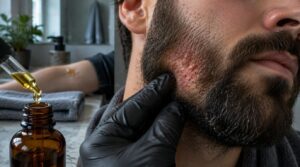
Your skin talks, and it isn’t shy. Picture a tomato ripening under your beard. That’s redness, and it’s your first warning.
Watch for burning, stinging, or itching that gets worse after you apply oil. Swelling and inflammation count too. New pimples, flaking, or greasy yellow scales mean the oil may be clogging pores or stirring up seborrheic dermatitis.
A rash, hives, or puffiness that spreads past your beard is different. Stop using it immediately. Fragrance and essential oils can trigger delayed allergic reactions, so sensitivity can show up days later.
Do a patch test first, every time. Dab a little oil on your inner forearm, wait 24 hours, and check for irritation. Flares happen. A dermatologist can sort it out.
Frequently Asked Questions (FAQs)
Does beard oil moisturize the skin underneath?
Think of your beard as a forest and your skin as the soil. Yes, beard oil moisturizes the skin underneath. It seals in skin hydration, cuts transepidermal water loss, and calms itch, so soil stays fertile.
How to keep skin healthy under a beard?
Wash your beard two or three times a week with a gentle cleanser, then follow with beard oil that moisturizes the skin underneath. It reduces beard itch, prevents beardruff, promotes healthier beard growth, and softens coarse wiry beard hair.
Is beard oil good for pubic hair?
Say you’re out of fur oil and grab your beard oil instead. Don’t. Pubic skin is thinner and more reactive, so patch testing matters first. Choose beard oil for sensitive skin, skip essential oils, and protect skin barrier function.
Does beard oil help your skin?
Think of your beard as a forest, and the skin underneath as the soil. Yes, beard oil helps. It’s moisturizing, helps your skin barrier function, and delivers real itch relief when dryness is the culprit.
Can beard oil cause acne breakouts?
Mark tried coconut oil and got chin bumps fast. Beard oil and acne can clash when the comedogenic rating runs high.
Patch test first, use less, keep facial hair moisturization light, protect skin pH balance.
Which skin types should avoid beard oil?
If you’ve got sensitive skin, eczema prone skin, or acne, skip heavy oils.
Check the comedogenic scale, watch for fragrance sensitivity, and stop if contact dermatitis ever shows up. Your jawline breakouts will thank you.
How long before seeing skin improvement results?
Most men stop scratching within one week. That’s your first win.
With daily application, skin improvement results in hydration and flaking show up around weeks two to three. Dry skin may need six. Patch testing helps.
Does beard oil interact with skincare products?
Ironically, beard oil plays nicely with everything you own. Layer it after moisturizer, since carrier oil absorption seals hydration in. Pick fragrancefree formulas, patch test first, and your skin barrier and sebum regulation stay happy.
Can overuse damage facial skin underneath?
Overuse leaves an occlusive film that traps sebum and bacteria, clogging pores and weakening your skin barrier. Cut your beard oil application frequency, wash two or three times weekly, and watch for beard oil irritation.
How often should beard oil be applied daily?
Think more oil means more moisture? Not quite. Your beard oil application frequency is once daily for most men, ideally after your shower. Dry climate or itchy skin? Go twice. Greasy? Back off.
Conclusion
Worried oil will clog pores or make you greasier? Not if you pick a light, non-comedogenic formula and use a few drops. That’s how beard oil benefits skin underneath: steady hydration, a stronger barrier, and an itch that quiets down.
Watch for flaking that won’t budge or redness that spreads. Those signs mean it’s time to see a dermatologist, not buy another bottle. Until then, massage it into skin, and your beard takes care of the rest.