This site is supported by our readers. We may earn a commission, at no cost to you, if you purchase through links. This content is for general informational and educational purposes only and is not a substitute for professional medical, dermatological, or nutritional advice.
Your skin stings after washing your face. Redness shows up out of nowhere. And that "hydrating" lotion you bought last month? It’s making the tightness worse, not better. Sound familiar?
Dry, reactive skin doesn’t need more products thrown at it, it needs the right ones, chosen for what they leave out as much as what they put in. After years of watching patients react to "gentle" formulas loaded with fragrance and drying alcohols, I’ve narrowed down the best sensitive skin care products for dry skin that actually calm, hydrate, and protect without the guesswork.
Table Of Contents
- Key Takeaways
- Best Sensitive Dry Skin Products
- 1. Cetaphil Gentle Skin Cleanser
- 2. Alaffia Coconut Face Toner
- 3. Hydrating HA Serum with Ceramides
- 4. Neutrogena Hydro Boost Face Moisturizer
- 5. Dermasil Oil Free Facial Cream Set
- 6. ISDIN Eryfotona Actinica Mineral Sunscreen SPF 50
- 7. La Roche-Posay Anthelios Melt-In Milk SPF 60
- 8. Neutrogena Hydro Boost Sunscreen SPF 30
- 9. CeraVe Hydrating Cleanser Bar
- 10. AmLactin Dry Skin Healing Lotion
- How We Chose Products
- Key Ingredients to Look For
- Ingredients Sensitive Skin Should Avoid
- Best Cleansers for Dry Sensitivity
- Best Moisturizers and Serums
- Best Sunscreens for Sensitive Dry Skin
- Sensitive Dry Skin Routine Tips
- Frequently Asked Questions (FAQs)
- What is the best skincare for dry and sensitive skin?
- Which skincare brand is best for dry and sensitive skin?
- What should my skincare routine be while on accutane?
- Which product is best for dry and sensitive skin?
- Which skincare brand is best for dry, sensitive skin?
- What products to use for dry and sensitive skin?
- What is best for sensitive dry skin?
- What products do dermatologists recommend for dry skin?
- What’s the best Moisturiser for dry sensitive skin?
- Can I use regular skincare products on sensitive skin?
- Conclusion
Key Takeaways
- Choose fragrance-free, ceramide-rich cleansers and moisturizers over "gentle-sounding" products, since fragrance, dyes, drying alcohols, and harsh sulfates are common hidden irritants that strip the skin barrier.
- Effective sensitive-skin routines pair humectants like hyaluronic acid (which draws water into skin) with occlusive sealants like petrolatum or dimethicone (which lock that moisture in) to reduce water loss and rebuild the lipid barrier.
- Daily mineral sunscreen with at least SPF 30 and zinc oxide is essential for dry, sensitive skin because it protects without the chemical irritation risk of other sunscreen formulas.
- Simple daily habits—lukewarm (not hot) water, layering products from thinnest to thickest, using a humidifier, and tracking irritation triggers—matter as much as product choice in keeping reactive skin calm.
Best Sensitive Dry Skin Products
I’ve tested countless formulas on my own patients over the years, and these ten actually earn their spot on a sensitive skin shelf. Each one fights dryness without triggering redness, stinging, or those tight, uncomfortable flare-ups you’re trying to avoid. Here’s what I reach for, and what I tell my patients to look for too.
If you want the full rundown before stocking up, this guide to the best moisturizers for dry, sensitive skin breaks down exactly which ceramides and lipids to look for.
1. Cetaphil Gentle Skin Cleanser
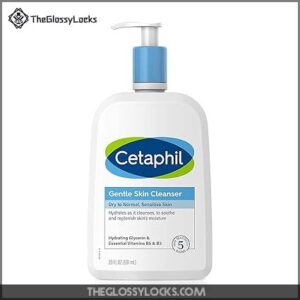
Cetaphil Gentle Skin Cleanser has earned its spot in dermatology offices for good reason. This non-foaming, soap-free formula cleans without stripping your skin’s natural oils, which matters if your barrier’s already compromised.
It’s pH-balanced, fragrance-free, and gentle enough for face and body alike. You can even use it without water if your skin’s feeling raw.
One catch: it won’t lock in moisture on its own. Follow with a proper moisturizer, and this cleanser becomes a genuinely reliable first step for dry, reactive skin.
| Best For | People with dry, sensitive, or easily irritated skin who need a gentle daily cleanser that won’t disrupt their skin barrier. |
|---|---|
| Fragrance-Free | Yes |
| Skin Type | Dry, Sensitive |
| Format | Cream cleanser |
| Barrier Support | Moisture barrier |
| Dermatologist Tested | Hypoallergenic |
| Key Size | 1.5 lbs |
| Additional Features |
|
- Non-foaming, soap-free formula cleans without stripping natural oils
- PH-balanced, fragrance-free, and hypoallergenic for sensitive skin
- Flexible to use, since it works with or without water
- Doesn’t provide lasting hydration on its own, so a moisturizer is still needed afterward
- Not built for deep exfoliation, just gentle cleansing
- Cream formula may feel too rich for those with oily skin
2. Alaffia Coconut Face Toner
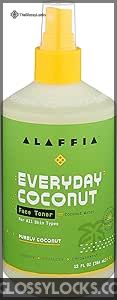
Once you’ve cleansed, your skin’s a little thirsty, and that’s where this toner steps in. Alaffia’s version leans on coconut water as its main hydrator, backed by neem and papaya leaf extracts for gentle toning.
It’s sulfate-free and skips synthetic fragrance, though it does contain lavender oil, so patch-test first if you’re extra reactive. Mist it on, let it sit a beat, then move to your next step while skin’s still damp.
| Best For | anyone with normal-to-combination skin who wants a lightweight, hydrating toner to layer in right after cleansing. |
|---|---|
| Fragrance-Free | No (lavender oil) |
| Skin Type | All skin types |
| Format | Facial mist |
| Barrier Support | Hydration |
| Dermatologist Tested | Cruelty-free |
| Key Size | 12 oz |
| Additional Features |
|
- Coconut water base hydrates without feeling heavy or sticky
- Neem and papaya extracts help tone and firm skin naturally
- Free of sulfates, parabens, phthalates, and silicones
- Contains lavender oil, which can irritate very sensitive skin
- Spray mist is better for refreshing than for deep-cleaning pores
- Some users report irritation or breakouts with regular use
3. Hydrating HA Serum with Ceramides
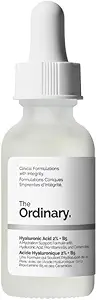
While that toner’s soaking in, layer this next: five weights of hyaluronic acid pull water into every skin layer, from surface to deep, while three ceramides patch up the barrier itself.
Texture’s lightweight and fast-absorbing, no stickiness. Apply to damp skin so it locks in what’s already there. Fragrance-free and non-comedogenic, it plays nicely with actives like glycolic acid, though extremely dry patches will still want a heavier cream layered on top.
| Best For | People with dry or sensitive skin looking for a lightweight, fragrance-free serum that delivers deep hydration and helps repair their skin barrier. |
|---|---|
| Fragrance-Free | Unscented |
| Skin Type | Dry, Sensitive |
| Format | Serum |
| Barrier Support | Ceramides |
| Dermatologist Tested | Patch test recommended |
| Key Size | 1 oz |
| Additional Features |
|
- Five forms of hyaluronic acid hydrate multiple layers of skin, from surface to deep
- Ceramides help strengthen and repair the skin’s natural barrier
- Lightweight, fast-absorbing texture that layers well with other actives like glycolic acid
- Needs to be applied to damp skin, or it may not lock in moisture effectively
- Extremely dry areas may still require a heavier moisturizer on top
- Sensitive skin types should patch test before regular use
4. Neutrogena Hydro Boost Face Moisturizer
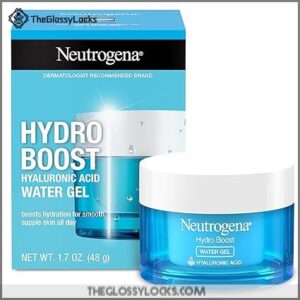
If you want something lighter for daytime, this water gel’s the move. Hyaluronic acid pulls in up to 1,000 times its weight in water, and the gel-not-cream texture absorbs in seconds without pilling under makeup.
It’s oil-free and non-comedogenic, so acne-prone or combo skin won’t feel weighed down. One catch for sensitive types: it carries a light signature fragrance, which isn’t nothing if your skin flags scent as a trigger. No SPF here, so you’ll still need that step separately.
If you’re building out a simple lineup around it, this no-fuss skincare routine for teens shows how just a few well-chosen steps beat a crowded shelf of products you’ll never finish.
| Best For | People with normal, oily, or combination skin who want a lightweight daytime moisturizer that hydrates without feeling heavy or greasy. |
|---|---|
| Fragrance-Free | Signature fragrance |
| Skin Type | Normal, Oily, Combination |
| Format | Water gel |
| Barrier Support | Moisture barrier |
| Dermatologist Tested | Allergy tested |
| Key Size | 6.56 oz |
| Additional Features |
|
- Absorbs quickly into a weightless water-gel texture that layers well under makeup
- Delivers 24-hour hydration and strengthens the skin’s moisture barrier from the first use
- Oil-free, non-comedogenic formula that’s dermatologist and allergy tested
- Contains a signature fragrance that may bother those with sensitive or reactive skin
- Doesn’t include SPF, so a separate sunscreen is still needed
- Container size feels small given the price point
5. Dermasil Oil Free Facial Cream Set
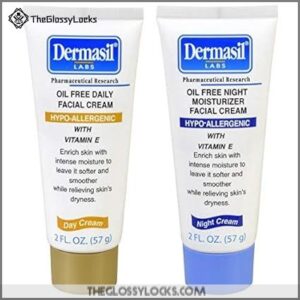
Two tubes, one purpose: keep oily-prone, sensitive skin hydrated without tipping into greasy territory. The oil-free formula leans on hyaluronic acid and dimethicone to hold moisture in while glycerin and squalane soften without heaviness.
It’s fragrance-free and non-comedogenic, so daily wear under makeup or sunscreen won’t clog pores. TSA-approved sizing makes it a smart travel pick, though a few users notice mild irritation or a slightly greasy first minute before it fully absorbs.
| Best For | People with sensitive or acne-prone skin who want a lightweight, fragrance-free moisturizer for daily use and travel. |
|---|---|
| Fragrance-Free | Fragrance-free |
| Skin Type | All, incl. Sensitive |
| Format | Lotion |
| Barrier Support | Barrier repair |
| Dermatologist Tested | Dermatologist-developed |
| Key Size | 2×2 oz |
| Additional Features |
|
- Hydrates and softens skin with hyaluronic acid and dimethicone, without a heavy or greasy after-feel
- Paraben-free, dye-free, and fragrance-free formula makes it gentle enough for sensitive skin
- Compact, TSA-approved packaging makes it easy to bring along when traveling
- Some users may experience minor localized irritation
- Can feel slightly greasy right after application, before it fully absorbs
- Perceived value may vary depending on where it’s purchased
6. ISDIN Eryfotona Actinica Mineral Sunscreen SPF 50
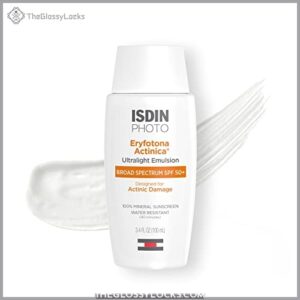
Sunscreen that actually repairs, not just blocks—that’s the pitch here, and it holds up. This 100% mineral formula uses 11% zinc oxide for broad-spectrum SPF 50, plus patented DNA Repairsomes to target existing UV damage at the cellular level.
The emulsion feels genuinely lightweight, absorbing fast without the chalky cast you’d expect. Vitamin E adds antioxidant backup. Downsides: it’s pricier, needs shaking, and carries a faint scent—minor tradeoffs for sensitive, sun-damaged skin needing real repair alongside protection.
| Best For | People with sensitive or sun-damaged skin who want a mineral-only sunscreen that also helps repair existing UV damage, whether for daily wear or as a makeup primer. |
|---|---|
| Fragrance-Free | Light scent |
| Skin Type | Sensitive, Sun-damaged |
| Format | Sunscreen lotion |
| Barrier Support | N/A |
| Dermatologist Tested | N/A |
| Key Size | 2.65 oz |
| Additional Features |
|
- 100% mineral formula with 11% zinc oxide delivers broad-spectrum SPF 50 protection
- Patented DNA Repairsomes technology works to repair existing sun damage, not just prevent new damage
- Lightweight, fast-absorbing texture that doubles as a makeup primer
- Higher price point than many competing sunscreens
- May leave a white cast depending on skin tone
- Requires shaking before each use and has a light scent
7. La Roche-Posay Anthelios Melt-In Milk SPF 60
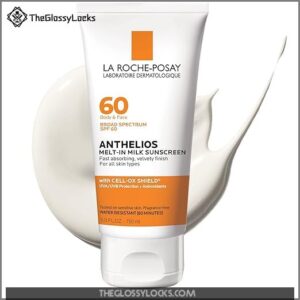
High SPF, low fuss sums this one up nicely. Anthelios Melt-In Milk delivers broad spectrum SPF 60 with Cell-Ox Shield antioxidants, and the texture genuinely melts in—fast-absorbing, velvety, no white cast on most skin tones.
Pair this daily sunscreen with a gentle cleanser for sensitive skin to keep your moisture barrier intact while you protect against sun damage.
It’s water resistant up to 80 minutes and skips octinoxate and oxybenzone, which matters if you’re chemical-filter cautious. Dermatologist tested for sensitive skin, it layers well under makeup. The tradeoff? It costs more, and overdoing it can leave a faint sheen.
| Best For | Anyone wanting high-level sun protection with a lightweight, no-fuss feel—great for daily wear, beach days, or as a makeup base, especially for sensitive or dry skin. |
|---|---|
| Fragrance-Free | Unscented |
| Skin Type | Sensitive, All |
| Format | Sunscreen lotion |
| Barrier Support | N/A |
| Dermatologist Tested | Dermatologist tested |
| Key Size | 5 oz |
| Additional Features |
|
- Broad spectrum SPF 60 protection with Cell-Ox Shield antioxidants
- Fast-absorbing, velvety texture that leaves no white cast on most skin tones
- Free of octinoxate and oxybenzone, dermatologist tested for sensitive skin
- Higher price point than many competing sunscreens
- Can leave a slight white sheen if applied too heavily
- Needs regular reapplication to maintain water resistance
8. Neutrogena Hydro Boost Sunscreen SPF 30
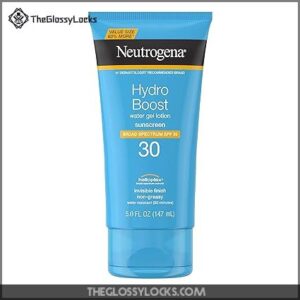
Gel-textured and hyaluronic acid-packed, this one feels like a moisturizer that happens to protect. It absorbs quickly, leaves a dewy (not greasy) finish, and layers nicely under makeup without pilling for most skin types.
SPF 30 is the floor I recommend for daily wear, and the hydrating base genuinely helps dry, sensitive skin hold onto moisture post-sun. My caveat: some patients notice a soapy scent, and it can turn oily on combination skin by midday.
| Best For | People with dry or sensitive skin who want a daily SPF 30 that doubles as a hydrating moisturizer under makeup. |
|---|---|
| Fragrance-Free | Soap-like scent |
| Skin Type | Combination, Acne-prone |
| Format | Sunscreen lotion |
| Barrier Support | N/A |
| Dermatologist Tested | N/A |
| Key Size | 5 fl oz |
| Additional Features |
|
- Lightweight gel texture absorbs quickly and leaves a dewy, non-greasy finish
- Hyaluronic acid base helps dry or sensitive skin retain moisture after sun exposure
- Layers smoothly under makeup without pilling for most skin types
- Some users notice a soapy or strong scent
- Can turn oily on combination skin by midday
- SPF 30 may not be enough protection for fair skin during long, intense sun exposure
9. CeraVe Hydrating Cleanser Bar
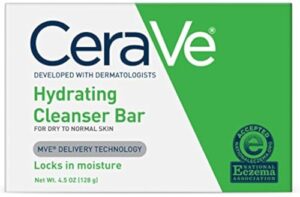
A bar of soap that doesn’t leave skin tight? That’s the whole appeal here. This one skips the usual foaming culprits and leans on sodium cocoyl isethionate, a mild surfactant that lathers without stripping.
You still get CeraVe’s signature three ceramides, plus hyaluronic acid and glycerin for surface hydration during the wash itself. It’s soap-free and non-comedogenic.
One patient told me it feels "less like washing, more like rinsing off lotion." Fair description, honestly.
| Best For | People with normal to dry or sensitive skin who want a gentle, non-stripping cleanser for their face, body, and hands. |
|---|---|
| Fragrance-Free | Fragrance-free |
| Skin Type | Normal to Dry, Sensitive |
| Format | Cleansing bar |
| Barrier Support | Ceramides |
| Dermatologist Tested | NEA Seal |
| Key Size | 4.59 oz |
| Additional Features |
|
- Contains three essential ceramides plus hyaluronic acid to help restore and maintain the skin barrier
- Fragrance-free, non-comedogenic formula that has earned the National Eczema Association Seal of Acceptance
- Cleanses thoroughly without stripping natural moisture, making it a more eco-friendly alternative to liquid gel cleansers
- Pricier than many drugstore alternatives
- Some users may not love the scent profile, even though it’s technically fragrance-free
- Mainly designed for normal to dry skin, so it may not be the best fit for oily or combination skin types
10. AmLactin Dry Skin Healing Lotion
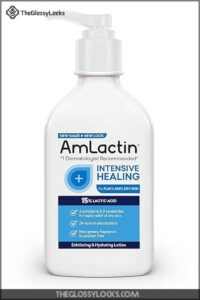
Keratosis pilaris and those permanently ashy shins finally meet their match. This lotion uses 15% lactic acid, a serious exfoliating concentration that dissolves dead skin buildup while ceramides work to rebuild what’s underneath.
It’s not for your face, and definitely skip freshly shaved legs. But for rough elbows, cracked heels, or scaly patches that won’t budge, the payoff is real, smoother skin within days.
Fair warning: the scent is medicinal, and it can leave feet slick. Worth it for stubborn dryness.
| Best For | People dealing with extremely dry, flaky, or rough skin conditions like keratosis pilaris or ashy shins who want a strong exfoliating treatment for their body. |
|---|---|
| Fragrance-Free | Medicinal scent |
| Skin Type | Extremely Dry |
| Format | Body lotion |
| Barrier Support | Ceramide 3 |
| Dermatologist Tested | Dermatologist formulated |
| Key Size | 7.84 oz |
| Additional Features |
|
- 15% lactic acid delivers serious exfoliation for stubborn dry patches, cracked heels, and rough elbows
- Ceramide 3 helps rebuild the skin barrier while the formula exfoliates, so skin isn’t left more vulnerable
- Non-greasy, fast-absorbing, and free of dyes, parabens, phthalates, and fragrance
- Has a noticeably medicinal or unusual scent that some users find off-putting
- Can irritate sensitive areas or skin that’s been freshly shaved
- May leave feet very slick if applied too heavily
How We Chose Products

Not every product that claims to be gentle actually earns that label, so I put each one through a real vetting process. My picks had to prove themselves on more than just pretty packaging or a soothing name. Here’s exactly what I looked for before anything made this list.
Sensitive Skin Suitability
Your skin doesn’t lie—if a product causes stinging or redness, that’s contact dermatitis knocking. As a dermatologist, I lean on ingredient safety data and real tolerance monitoring, not marketing claims.
What we check:
- Fragrance-free, gentle formulas
- Patch test results on the inner arm
- Microscopic irritation assessment
- History with reactive, dry sensitive skin
Products passing this scrutiny support genuine skin barrier repair, not just temporary comfort. It is also important to recognize symptoms of eczema such as scaling or peeling.
Dryness Relief Performance
Passing a patch test is only step one—your skin also needs to prove it can hold onto moisture.
I score each moisturizer on transepidermal water loss reduction, humectant water retention, and how well it seals in hydration over a full day.
Products combining glycerin’s moisture-drawing pull with true occlusive sealing consistently beat single-ingredient formulas.
That’s real, measurable dry skin relief, not just a soft-feeling swipe.
Barrier-supporting Ingredients
Once hydration checks out, I look for actual lipid matrix restoration—ceramides, cholesterol, fatty acids working together, not just one lonely ingredient.
Niacinamide earns its spot too, boosting triglyceride synthesis so your skin barrier rebuilds itself. Squalane adds a non-comedogenic emollient layer, while colloidal oatmeal’s beta-glucans soothe on contact. As a dermatologist, that combo tells me a moisturizer means business.
Fragrance-free Formulas
Fragrance-free isn’t just a nice claim, it’s non-negotiable in my book. Essential oils and masking agents cause real irritation, even in "natural" products. I check for:
- True fragrance-free labeling
- Non-fragrance preservatives (safer profiles)
- No masking agents
- Transparent INCI lists
For dry, sensitive skin, this scrutiny protects your barrier while keeping every moisturizer stable and trustworthy.
Daily Use Comfort
Rarely do we think about how a product feels going on until it stings or pills under makeup. That’s the real test I use daily: texture application experience, non-sticky hydration, and skin movement comfort when you smile or squint.
A good moisturizer or cleanser should vanish into skin, fragrance-free, lightweight, and steady for long-term wearability on sensitive, dry skin.
Key Ingredients to Look For
Once you know how a product’s tested, the next step is knowing what’s actually in it. Not every ingredient on a label deserves your trust, but a handful genuinely earn their spot on sensitive, dry skin. Here are the five I look for first.
Ceramides
Think of ceramides as mortar between bricks, filling the tiny gaps between corneocytes to keep your skin barrier sealed. They make up nearly half your stratum corneum’s lipids, working alongside cholesterol and fatty acids in specific ratios to slow transepidermal water loss.
Different ceramide species (NP, AP, EOP) each play a role, but for dry skin, more is simply better.
Niacinamide
Versatility is niacinamide’s calling card. This vitamin B3 derivative helps lipid production while calming inflammatory cytokines, so dry, sensitive skin gets both barrier repair and redness relief.
It also modulates sebum and inhibits pigment transfer, evening tone over time. As a dermatologist, I love seeing it in moisturizers—stable, non-irritating, and it even fuels cellular energy production. Look for it around 5%.
Hyaluronic Acid
A single gram of hyaluronic acid can hold up to 1,000 times its weight in water—wild, right? That’s why I recommend it for dry skin.
A single gram of hyaluronic acid can hold up to 1,000 times its weight in water
- Surface hydration from high molecular weight forms
- Deep penetration with low molecular weight variants
- Extracellular matrix support for lasting bounce
- Compatible with ceramides in any moisturizer
Your skin hydration improves within hours, no matter your routine.
Squalane
Your skin actually makes something close to this naturally, which is why it feels so at home on dry, sensitive skin.
Plant-derived squalane (not squalene—that’s the unstable cousin) helps your lipid matrix without clogging pores.
As a dermatologist, I love its oxidation stability—it won’t turn rancid on your shelf or your face.
Lightweight, non-comedogenic, effective.
Colloidal Oatmeal
Ever notice how oatmeal calms an upset stomach and an angry rash? Same soothing logic applies here.
Avenanthramides fight inflammation directly, while beta glucan locks in hydration. Oat phenols add antioxidant support, and saponins cleanse gently without stripping your barrier.
As a dermatologist, I recommend colloidal oatmeal constantly for dry, reactive skin—it’s one of the few soothing ingredients that actually regulates epidermal lipids too.
Ingredients Sensitive Skin Should Avoid
Knowing what to look for is only half the battle, since knowing what to steer clear of matters just as much. Some ingredients sound harmless but leave sensitive, dry skin red, itchy, or worse. Here’s what I tell my patients to check labels for before anything touches their face.
Added Fragrance
Fragrance is a trust issue as much as a skin one. Labels often just say "perfume," hiding hundreds of aroma chemicals underneath. Even products marketed fragrance-free can sneak in masking scents.
As a dermatologist, I tell patients with dry, reactive skin: essential oils count too. If a label’s vague, skip it—your moisturizer shouldn’t be a guessing game.
Synthetic Dyes
Color that pretty pink swirl in your cleanser? It’s often an azo dye, the same synthetic colorant class used in textiles, and some can break down into aromatic amines linked to toxicity concerns. Skin doesn’t need color to work.
- Skip products with "FD&C" or "D&C" color codes
- Choose visibly clear or naturally-tinted formulas
- Check ingredient safety data, not just marketing
- Ask your dermatologist about reactive dye sensitivity
Drying Alcohols
Not all dyes are the problem child, alcohols are. Look for SD alcohol or denatured alcohol high on the label; they evaporate fast, pulling moisture with them and leaving skin sensitivity behind.
| Alcohol Type | Skin Effect | Better Swap |
|---|---|---|
| SD/Denatured | Strips barrier | Alcohol-free toners |
| Isopropyl | Dehydrated skin | Glycerin-based |
| Ethanol | Irritation risk | Witch hazel |
Harsh Sulfates
Sulfates get the foamy lather you love, but that suds action comes from stripping natural oils straight off your skin.
Sodium lauryl and laureth sulfate cause sulfate-induced dryness and scalp barrier disruption through surfactant lipid stripping.
Better picks:
- Decyl glucoside
- Coco-glucoside
- Cocamidopropyl betaine
- Sulfate-free gentle cleanser
- Plant-based alternatives
Your skin barrier will thank you.
Strong Exfoliating Acids
Glycolic and salicylic acids work wonders for texture, but strength matters more than type here. Alpha hydroxy acids (AHAs) exfoliate the surface; beta hydroxy acids (BHAs) penetrate pores; PHAs offer gentler chemical exfoliation.
| Acid Type | Sensitive Skin Fit |
|---|---|
| Glycolic (AHA) | Too strong |
| Salicylic (BHA) | Often irritating |
| PHA/Mandelic | Better tolerated |
| Azelaic | Gentle option |
| High-concentration any | Avoid—photosensitivity risk |
Best Cleansers for Dry Sensitivity
Cleansing is where most sensitive skin trouble starts, since the wrong formula strips your barrier before you even get to moisturizer. You want something gentle enough to use twice a day without that tight, squeaky feeling afterward.
Here’s what actually works, and why each one earns its spot on your shelf.
Cream Cleanser Benefits
Think of a cream cleanser as a hug for your face, not a scrub. Unlike foaming washes that strip everything (including the good stuff), creams work with your skin’s natural sebum dissolution while preserving lipids in that all-important moisture barrier.
You’ll notice better post-wash comfort almost immediately, less tightness, and over weeks, real texture improvements as microbiome stability returns. It’s one of my go-to dermatologist recommendations for genuinely dry, reactive skin.
Low-foam Formulas
Ever notice how some cleansers barely bubble, yet your skin feels just as clean? That’s mild surfactant technology at work, sometimes paired with silicone agents that suppress excess foam. Less lather means less stripping, minimal residue, and a gentler ride for your moisture barrier.
Fragrance-free, low-foam formulas are my top pick for reactive, dry skin needing daily facial hydration without the drama.
PH-balanced Cleansing
Your skin’s surface sits at a naturally acidic pH, around 4.5 to 5.5, and that acid mantle is your first line of defense against bacteria and moisture loss. A pH balanced cleanser respects that chemistry instead of fighting it.
- Prevents post-wash tightness
- Preserves your skin microbiome
- Keeps natural oils intact
Alkaline soaps disrupt this balance fast, leaving dry, reactive skin worse off than before.
Non-stripping Cleansing Bars
A bar of soap and a bar cleanser aren’t the same animal at all. Soap-free formulations use mild surfactants instead of harsh detergents, so lipid replenishment happens even while you cleanse. You get a creamy lather, a pH balanced finish, and skin that feels soft, not tight. For sensitive, dry skin, that’s the nonirritating trade-off worth making.
Makeup Removal Tips
Rubbing at your lash line is how you end up with fine lines, not clean lids. Soak a cotton pad with fragrance-free micellar water or a dedicated eye remover, press for 5–10 seconds over closed eyes, then swipe downward and outward. This is the first step in a double-cleanse routine: melt makeup with a gentle balm, follow with your cleanser, then moisturize immediately.
Best Moisturizers and Serums
Once your skin is clean, the real repair work starts with what you put back into it. Not all moisturizers do the same job, so picking the right texture and ingredients matters more than you’d think. Here’s what actually helps dry, sensitive skin hold onto moisture.
Barrier Repair Creams
Barrier repair creams are your nighttime workhorse. Look for a ceramide lipid matrix paired with cholesterol and fatty acids—this trio rebuilds cell pliability and cuts transepidermal water loss within weeks. Multi-weight hyaluronic acid hydrates at multiple depths, while an occlusive sealant like petrolatum locks it all in.
Dermatologists favor this combo because it calms reactive skin without stinging, making barrier repair feel easy.
Lightweight Gel Moisturizers
Not every night calls for a rich cream, especially in summer heat or humid climates. Gel moisturizers use water as their base, so they feel cool going on and absorb in under a minute, leaving no greasy film.
Hyaluronic acid and glycerin pull in moisture, while noncomedogenic formulas suit oily-combination skin prone to breakouts. Layer one under sunscreen for comfortable, dermatologist-tested hydration without heaviness.
Humectant-rich Serums
Serums are where humectants really shine. Look for hyaluronic acid at multiple molecular weights—it hydrates surface and deeper layers at once. Glycerin draws water fast; sodium PCA balances pH while boosting moisture. Panthenol soothes as it hydrates.
Humidity affects performance, so in dry climates, layer serum under a heavier moisturizer for lasting comfort.
Occlusive Moisture Sealing
Once your serum sinks in, seal it with an occlusive—this stops transepidermal water loss by forming a thin film over skin. Petrolatum and dimethicone work best, trapping moisture rather than adding it.
Nighttime sealing helps repair fissures while you sleep.
- Petrolatum
- Dimethicone
- Shea butter
- Beeswax
- Ceramide-based balms
Unlike emollients, occlusives lock everything in.
Lotion Versus Cream
Grab a lotion in summer, a cream come winter—texture should shift with your climate. Lotions absorb fast, feel light, layer easily under sunscreen.
Creams run richer in ingredient density, sealing moisture overnight for real barrier-repairing power. Higher viscosity means slower absorption, but better nighttime moisture sealing. As a calming moisturizer for parched skin, cream wins; for daytime nourishment, lotion keeps you comfortable.
Best Sunscreens for Sensitive Dry Skin
Sunscreen is non-negotiable, but for sensitive dry skin, the wrong formula can leave you red, itchy, or flaking by noon. You need something that protects without provoking your skin, and that still feels good under a moisturizer. Here are the sunscreens I actually trust for that job.
Mineral Sunscreen Benefits
Think of zinc oxide and titanium dioxide as a tiny suit of armor sitting on top of your skin.
This physical barrier protection works instantly, no 20-minute wait. Because it deflects rather than absorbs UV rays, there’s reduced chemical interaction with other products, less irritation risk, and better reef safety impact too.
It’s why dermatologist tested mineral sunscreen tops my list for reactive, dry skin.
SPF 30 Minimum
SPF 30 blocks about 97% of UVB rays, the bare minimum I recommend to patients with dry, reactive skin. Anything lower just isn’t worth the risk.
Always pair it with broad spectrum protection for UVA coverage, since UVA rays drive premature aging even on cloudy days. Reapply every two hours, especially if you’re sweating or swimming.
Pairing daily sunscreen with nutrient-rich foods can boost your results, since salmon’s omega-3s alone were shown to raise sunburn resistance by 36%, a strategy detailed in this guide on natural ways to prevent wrinkles.
Zinc Oxide Formulas
Zinc oxide sits on top of your skin rather than soaking in, forming a mineral barrier that reflects and absorbs UV rays instead of triggering chemical reactions. Most dermatologists favor it for reactive skin because it’s stable and non-irritating.
Micronized particles (5-100nm) improve application without sacrificing protection—look for 15-25% zinc concentration, and nano-particle safety is well-documented for topical use.
Hydrating Sunscreen Textures
Ever slathered on sunscreen only to feel like you’re wearing a wetsuit? Texture matters as much as SPF.
- Gel: fast absorption, cooling, satin finish
- Milky lotion: dewy, no white cast
- Creamy emulsion: rich hydration retention
- Milky serum: featherlight, layers well
- Cream-gel hybrid: plump feel, non-sticky
Whichever mineral sunscreen you choose, matching texture to your skin’s mood keeps daily sun protection factor use comfortable, not a chore.
Daily Reapplication Tips
Here’s the part nobody wants to hear: one morning swipe isn’t enough. Reapply every two hours outdoors, immediately after swimming, and near snow or water where glare doubles UV exposure.
| Situation | Reapply | Best Format |
|---|---|---|
| Outdoors | Every 2 hrs | Spray/stick |
| Over makeup | Tap, don’t rub | Powder SPF |
| By windows | Extended sitting | Any mineral |
Set a phone reminder—your skin sensitivity management shouldn’t rely on memory alone.
Sensitive Dry Skin Routine Tips
The right products only get you so far if your daily habits work against them. A few small tweaks to how you wash, layer, and protect your skin can make all the difference between calm and cranky. Here are the habits I tell every sensitive-skin patient to build into their routine.
Avoid Hot Water

Turn that shower dial down. Hot water feels great, but it strips your lipid layer fast, leaving redness and tightness behind. Dermatologists see this daily with eczema-prone patients.
Lukewarm water protects moisture retention while still cleansing thoroughly. If water stings or burns, it’s too hot. Finish with a cooler rinse to calm skin and prevent irritation before your skin care products go on.
Layer Hydration Gently
Once your skin’s cooled down, think product viscosity order: thinnest to thickest. Pat on a hyaluronic acid serum while skin’s still damp—it grabs that extra moisture.
Follow with a ceramide-rich cream to lock in hydration layers without pilling. On dry nights, seal everything with a few drops of oil.
Adjust thickness based on humidity; muggy days need less.
Use Humidifiers Seasonally

All those layered products work harder when the air around you isn’t stealing moisture back. Aim for 30-40% indoor humidity in winter, higher (40-60%) in summer—a cheap hygrometer takes the guesswork out.
Place the humidifier away from your bed, clean it weekly to prevent mineral buildup, and dial output down as outdoor humidity rises each spring.
Track Irritation Triggers

Getting your environment right only helps if you actually know what’s setting off your skin in the first place. That’s why I tell patients to keep it simple:
- Log daily triggers — new products, weather, stress
- Note timing—minutes or days after exposure
- Rate severity—mild sting versus visible redness
Comparing "on" and "off" days catches delayed reactions dermatologists often miss otherwise.
Frequently Asked Questions (FAQs)
What is the best skincare for dry and sensitive skin?
Sometimes less really is more: the gentlest products often deliver the deepest hydration.
Fragrance-free cleansers, ceramide-rich moisturizers, and mineral sunscreens support your skin barrier while calming redness, dryness, and reactivity, letting dermatologists recommend simplicity over stacked, irritating routines every time.
Which skincare brand is best for dry and sensitive skin?
CeraVe stands out for dry, sensitive skin, thanks to barrier-repairing ceramides, dermatologically tested formulas, and budget-friendly pricing that rivals luxury brands.
La Roche-Posay is a close runner-up, offering soothing, fragrance-free options with proven ingredient combinations for long-term barrier health.
What should my skincare routine be while on accutane?
Gentle in, gentle on: use a fragrance-free cleanser with finger cleansing, lukewarm water, and damp-skin moisturizing with ceramides. Apply lip balm hourly, wear SPF 30 daily, and skip actives entirely while your barrier heals.
Which product is best for dry and sensitive skin?
For true barrier repair, Cetaphil Gentle Skin Cleanser paired with a ceramide-rich moisturizer wins—fragrance-free, pH-balanced, dermatology approved.
It respects sensitive skin and dry skin alike, easing seasonal dryness without triggering irritation.
Always patch test first.
Which skincare brand is best for dry, sensitive skin?
No single winner takes it all here. Comparing brand efficacy, La Roche-Posay and CeraVe consistently rank highest for barrier repair, fragrance-free formulas, and dermatologist-tested safety, making them my go-to trusted brands for reliably calming dry, reactive skin.
What products to use for dry and sensitive skin?
Stick to a fragrance-free cleanser, ceramide-rich moisturizer, hyaluronic acid serum, and mineral SPF 30+. Patch test new products first, layer light to heavy, and adjust seasonally.
Dry, sensitive skin needs consistent, barrier-repairing hydration to stay calm and comfortable.
What is best for sensitive dry skin?
Funny enough, two patients asked me this same question yesterday. My answer: pair a humectant (hyaluronic acid) with an occlusive moisturizer to trap it in, plus barrier-repairing ceramides—together they cut transepidermal water loss and rebuild your lipid matrix.
What products do dermatologists recommend for dry skin?
Most dermatologists lean on gentle, fragrance-free cleansers, ceramide-rich moisturizers, and mineral sunscreens with zinc oxide, favoring mild surfactants and barrier-repairing formulas that pass clinical irritation scoring for sensitive, dry skin without stripping natural oils.
What’s the best Moisturiser for dry sensitive skin?
As the old saying goes, an ounce of prevention beats a pound of cure. CeraVe Moisturizing Cream wins for barrier-repairing ceramides and hyaluronic acid. Its rich, non-greasy texture suits year-round seasonal moisture needs without clogging pores.
For a complete grooming routine that pairs well with healthy, moisturized skin, many users round things out with reliable tools like the best nose hair clippers with built-in safety guards.
Can I use regular skincare products on sensitive skin?
Sometimes, but check the label first. Regular skincare routines often hide fragrance, dyes, or drying alcohols that trigger irritation. Patch test anywhere on your face, and watch for hidden irritants before fully committing during a routine change.
Conclusion
Think of your skin barrier like a brick wall: ceramides are the mortar, and harsh products chip away at it one wash at a time.
Once that mortar starts to crumble, switching to hypoallergenic skin care for your face helps you avoid the fragrances and sensitizing preservatives that keep triggering the damage.
The best sensitive skin care products for dry skin aren’t flashy, they’re just quietly effective, showing up daily without stinging, tightening, or turning your cheeks red. Build your routine slow, watch how your skin responds, and trust the calm. That’s not just glowing skin. That’s a barrier that finally holds.
- https://link.nbcnews.com/join/5cj/nbc-news-select-signup-pd
- https://ncls1.com/irk?o=nthd73&s=515050&subid=nbcnews.com&bkd=glowbar.com&di=sensitiveskin100rcna254025&d=https%3A%2F%2Fglowbar.com
- https://ulta.ztk5.net/15nWLa?subId1=sensitiveskin100rcna254025&u=https%3A%2F%2Fwww.ulta.com%2Fp%2Fadvanced-snail-96-mucin-power-essence-xlsImpprod15641052%3Fsku%3D2577440