This site is supported by our readers. We may earn a commission, at no cost to you, if you purchase through links. This content is for general informational and educational purposes only and is not a substitute for professional medical, dermatological, or nutritional advice.
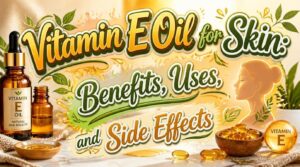
Somewhere between folk remedy and pharmacy staple, vitamin E oil has occupied bathroom shelves for decades—pressed into service for everything from chapped lips to stretch marks. Walk down any skincare aisle and you’ll find it tucked into serums, lotions, and standalone oils, often carrying quiet promises about healing and glow.
The reality is more nuanced: vitamin E oil for skin does offer genuine benefits, but it also carries real limitations that most labels won’t mention. Knowing the difference between what it can and can’t do helps you use it where it actually works.
Table Of Contents
- Key Takeaways
- What Vitamin E Oil Is
- Vitamin E Skin Benefits
- How Vitamin E Helps Skin
- Using Vitamin E Oil Safely
- Vitamin E Oil for Face
- Scars, Spots, and Photoaging
- Skin Conditions and Irritation
- Side Effects and Precautions
- Top 5 Vitamin E Skin Oils
- Choosing and Storing Vitamin E Oil
- Frequently Asked Questions (FAQs)
- Do dermatologists recommend vitamin E?
- Is vitamin E oil good for the face?
- What does vitamin E do to the skin?
- Does vitamin E tighten your skin?
- What does vitamin E oil do for your skin?
- Can you apply vitamin E oil directly to face?
- Does vitamin E remove dark spots?
- Can vitamin E oil be used during pregnancy?
- Does vitamin E oil have a shelf life?
- Can vitamin E oil be mixed with other skincare products?
- Conclusion
Key Takeaways
- Vitamin E oil genuinely supports your skin’s moisture barrier and neutralizes free radicals, but it won’t erase scars or wrinkles — clinical trials show 90% of users see no scar improvement, and its smoothing effect on fine lines disappears once you stop using it.
- If you’re acne-prone or have oily skin, Vitamin E oil can clog your pores and trigger breakouts, so stick to 1% concentration or less, and always patch test for 48 hours before applying it to your face.
- The form on the label matters — look for d-alpha tocopherol (natural) near the top of the ingredient list, choose an amber glass bottle, and store it away from heat and humidity to prevent it from going rancid before you’ve used it up.
- Pairing Vitamin E with Vitamin C extends its antioxidant protection and helps address hyperpigmentation more effectively, but neither ingredient replaces a broad-spectrum SPF — Vitamin E offers zero UVA protection on its own.
What Vitamin E Oil Is

Vitamin E oil isn’t just one thing — it’s actually a family of eight related compounds that work together in different ways. Understanding what’s actually in the bottle helps you make smarter choices for your skin. Here’s what you need to know about its key forms and how they function.
Each of these compounds plays a distinct role in skin health, from neutralizing free radicals to stimulating collagen — and pairing them with the best carrier oils for skin firming can amplify those benefits significantly.
Tocopherols and Tocotrienols
Vitamin E isn’t a single ingredient — it’s actually a family of eight distinct compounds: four tocopherols and four tocotrienols.
Tocopherols carry a saturated tail, while tocotrienols have an unsaturated one, which changes how each behaves in your skin. That structural difference matters more than most labels suggest, and it shapes everything from antioxidant protection to anti-inflammatory mechanisms. This allows tocotrienols to penetrate membranes more effectively than tocopherols.
Natural Versus Synthetic Forms
Not all vitamin E oils are created equal — and the label "natural" versus "synthetic" matters more than you might think. Natural vitamin E (labeled d-alpha-tocopherol) comes from plant oils, while synthetic vitamin E (dl-alpha-tocopherol) is manufactured chemically and has a tendency to deliver less consistent biological activity. Here’s how they differ practically:
- Natural forms show batch-to-batch variation due to source material differences.
- Synthetic forms are manufactured to tighter purity specifications for consistency.
- Regulatory labels vary by country and don’t always confirm the exact chemical form inside.
Alpha-tocopherol Activity
Of the eight compounds in vitamin E, alpha-tocopherol stands out as the most biologically active. It works by interrupting chain reaction blocking in cell membranes — stopping lipid peroxidation before it spreads. Its chromanol ring donates electrons to neutralize free radicals, supporting free radical neutralization that protects your skin’s fats from oxidative breakdown.
Beyond that, it influences gene expression modulation, bolsters immune cell health, and moves through anti-inflammatory pathways that calm cellular stress — making it genuinely photoprotective and central to skin repair.
Tocopheryl Acetate in Cosmetics
When alpha-tocopherol meets air and light, it degrades fast. That’s where tocopheryl acetate steps in — it’s the ester form of vitamin E most commonly used in cosmetics.
The ester bond shields active tocopherol from oxidation, dramatically improving formulation stability and shelf life. Your skin’s enzymes then break it down, triggering enzymatic activation that restores its antioxidant, barrier-supporting benefits.
Vitamin C Synergy
Pairing vitamin E with vitamin C isn’t just good skincare advice — it’s basic antioxidant biology.
Vitamin C Recycling works by regenerating oxidized vitamin E back into its active form, extending its protective lifespan on your skin. Together, they create layered photoprotection that guards collagen against free radical breakdown, supporting long-term skin rejuvenation more effectively than either ingredient alone.
Once oxidation sets in, the process accelerates quickly, which is why understanding why vitamin C serum turns brown can help you catch degradation before your antioxidant protection is compromised.
Vitamin E Skin Benefits

Vitamin E oil doesn’t just sit on the surface — it actually works with your skin’s natural structure to keep it healthy. Most of its benefits come down to how well it protects and reinforces your skin barrier. Here’s what it can do for your skin.
Moisture Barrier Support
Your skin’s moisture barrier is a lot like a brick wall — and vitamin E oil helps seal the mortar between those bricks.
As a fat-soluble emollient, it forms a barrier film on the surface that slows water escaping from deeper layers, a process called transepidermal water loss. This hydration lock mechanism keeps skin from drying out between washes.
Softer, Smoother Texture
Running your fingertips over smooth, hydrated skin — that’s the quiet reward of consistent vitamin E oil use.
Its emollient properties work by filling microscopic gaps between skin cells, reducing the rough, uneven texture that dry skin creates. The oil slip experience starts immediately on contact, coating your surface in a lubricating film that makes skin feel noticeably softer after just one application.
| Technique | What Happens | How Skin Feels |
|---|---|---|
| Thin layer application | Oil spreads as a fine film | Smooth, not greasy |
| Massage application | Even coverage across surface | Softer, uniform texture |
| Layering technique | Micro-roughness gradually fills | Progressively smoother |
| Absorption timeline | Oil settles into skin | Natural, "melted-in" softness |
| Reapplication | Comfort restores without buildup | Consistently hydrated |
Skin texture improvement is most noticeable once the oil absorbs fully — usually within 20–30 minutes — when that initial tackiness fades into genuinely comfortable softness.
Antioxidant Protection
Free radicals are fundamentally rogue molecules that damage your skin at the cellular level — and vitamin E is your first line of defense against them.
Tocopherols neutralize these unstable compounds through tocopherol radical scavenging, interrupting lipid peroxidation before it spreads through your skin’s membranes. This keeps your barrier intact, reduces oxidative stress, and limits the UV damage that quietly accelerates skin aging.
Reduced Dryness and Flaking
Dry, flaky patches are a signal that your skin barrier is losing moisture faster than it can hold on.
Vitamin E oil works as an emollient, settling into the gaps between skin cells to slow that water loss. A consistent hydration boost routine using 2–3 drops after cleansing helps prevent dryness from rebounding and keeps visible flaking under control.
Improved Skin Flexibility
Tight, stiff skin isn’t just uncomfortable — it’s often a sign your barrier is struggling. Vitamin E oil helps restore skin flexibility through three key pathways:
- Elastic Fiber Support: its antioxidant activity reduces oxidative stress that breaks down elastin over time
- Barrier Film Effect: the occlusive layer locks in moisture, keeping skin pliable rather than rigid
- Surface Glide: the oily texture cushions micro-movement, so skin deforms and recovers more smoothly
How Vitamin E Helps Skin

Vitamin E doesn’t just sit on the surface of your skin — it actually gets to work at a cellular level. Understanding the mechanics behind it helps you appreciate why it shows up in so many skincare formulas. Here’s a closer look at the specific ways it nourishes your skin.
Fills Skin Cell Gaps
[ORIGINAL TEXT]
Think of your skin’s surface like a mosaic — when the pieces dry out, tiny gaps appear between cells. Vitamin E oil’s emollient action fills those spaces, smoothing texture through lipid film formation. This creates a moisture seal effect that bolsters skin barrier function and skin cell health, keeping the surface cohesive.
| Mechanism | What It Does | Skin Benefit |
|---|---|---|
| Emollient Action | Fills gaps between skin cells | Smoother surface texture |
| Lipid Film Formation | Coats the outer skin layer | Reduces flaking and tightness |
| Moisture Seal Effect | Limits water evaporation | Sustained surface hydration |
| Oxidative Barrier Support | Protects lipids from breakdown | Maintains skin cell health |
| Application Technique | 2–3 drops spread evenly | Uniform coverage, no pore overload |
[/ORIGINAL TEXT]
Supports Lipid Barrier
Your skin’s lipid barrier is built from ceramides, cholesterol, and free fatty acids working together. Vitamin E oil reinforces this structure through its tocopherol antioxidant action, protecting those lipids from oxidative breakdown.
When skin lipid repair is needed, its moisturizing properties help restore the barrier’s organized layers — keeping your skin resilient, balanced, and better equipped to defend itself.
Limits Moisture Loss
Once your lipid barrier is reinforced, the next job is keeping water where it belongs — inside your skin.
Vitamin E oil forms an occlusive surface layer that slows evaporation, acting like a breathable seal over the stratum corneum. Apply it after a moisturizer, and that humectant-friendly layering keeps water locked in much longer than oil alone can manage.
Neutralizes Free Radicals
Keeping water inside your skin matters, but so does protecting it from invisible daily damage. Every time your skin faces pollution or UV exposure, free radicals form — unstable molecules that steal electrons from nearby lipids, triggering a destructive chain reaction called lipid peroxidation.
- Electron donation from α-tocopherol stabilizes radicals before they spread.
- Lipid radical interception stops oxidative chain termination from accelerating.
- Regeneration cycle efficiency improves when paired with Vitamin C.
This synergistic antioxidant pairing keeps your skin’s defenses working longer against oxidative stress.
Calms Visible Redness
Redness can make your skin feel as reactive as it looks. Vitamin E oil works through anti-inflammatory signaling, helping tocopherols calm oxidative stress that drives that visible irritation — including flare-ups tied to eczema or general skin sensitivity. Its barrier-coating effect also reduces moisture loss, which often makes redness appear more intense. Most users notice a cooling comfort perception within minutes of application.
| Factor | Without Vitamin E | With Vitamin E |
|---|---|---|
| Skin barrier recovery | Slower, more reactive | Supported, more resilient |
| Redness reduction timeline | Prolonged inflammation | Gradual calming over days |
| User experience feedback | Tight, uncomfortable skin | Softer, more soothed feeling |
Using Vitamin E Oil Safely
Vitamin E oil is potent, and a little goes a long way — but only if you’re using it correctly. Before you work it into your routine, there are a few simple guidelines worth knowing. Here’s what dermatologists actually recommend.
Patch Test First

Before you apply Vitamin E oil to your face, run a simple patch test — think of it as a handshake between your skin and a new ingredient.
- Choose a clean test site like the inner forearm or behind the ear
- Apply a small amount to dry, unbroken skin
- Leave it undisturbed for 48 hours
- Check for redness, swelling, or itching at 48 and 96 hours
- Discontinue immediately if a clear reaction appears
This matters because Vitamin E triggers allergic contact dermatitis in roughly 3% of users. Don’t test during a skin flare-up or right after sun exposure — both confound results. A negative patch test gives you a reliable green light before full topical application.
Use Two to Three Drops

Two to three drops is your ideal drop ratio for vitamin E oil — enough to cover targeted areas without the greasy residue that clogs pores.
| Drop Amount | Coverage Area | Feel After Spreading |
|---|---|---|
| 1 drop | Small spot or blemish | Light, barely noticeable |
| 2 drops | Cheeks or forehead | Thin, absorbable layer |
| 3 drops | Full face coverage | Slight sheen, no tackiness |
Oil spread efficiency improves when you warm the drops between your fingertips first, then press gently into skin rather than rubbing.
Apply at Night

Night is the best time to use vitamin E oil for skin — your face is away from sunlight, and your skin isn’t immediately heading under makeup or SPF.
- Clean skin first before applying
- Use after any water-based serum
- Let it absorb a few minutes before lying down
- Blot shiny areas to limit pillow transfer
- Finish with moisturizer to lock in moisture
Dilute Concentrated Oils

High-concentration vitamin E oil — anything above 70,000 IU — is too potent to apply directly to your face. Think of it like espresso: you wouldn’t drink it straight every morning. Blending it with a carrier oil like jojoba, rosehip, or argan creates a gentler, skin-friendly mix that still delivers real moisturization without the irritation risk.
| Skin Type | Dilution Ratio |
|---|---|
| Sensitive skin | 1–2% |
| Dry or normal skin | 3–5% |
| Body application | 5–10% |
| High-concentration oils | Up to 15% carrier blend |
| Acne-prone skin | 1% or less |
Mix thoroughly before each use to guarantee even dispersion — no concentrated "hot spots" landing on one patch of skin.
Avoid Broken Surgical Wounds

Vitamin E oil won’t help your surgical wound heal faster — clinical trials found that 90% of participants saw no benefit or actually worsened their scars with topical application. Your incision needs:
- Sterile dressing technique to block bacteria
- Mechanical stress prevention — no lifting or straining
- Wound healing hygiene — keep it clean and dry
- Postoperative nutrition support for tissue repair
- Follow-up monitoring for warning signs
Skip the oil. Trust your surgeon’s plan.
Vitamin E Oil for Face

Your face deserves a little extra thought before you reach for the bottle. Vitamin E oil works differently depending on your skin type, and knowing your skin’s needs makes all the difference. Here’s what to keep in mind before adding it to your routine.
Dry Skin Routines
If dry skin is your daily battle, fitting vitamin E oil into your routine doesn’t need to be complicated. Use it as an occlusive sealing step at night — just 2–3 drops after your humectant.
| Step | Product Type |
|---|---|
| Cleanse | Gentle, low-foam cleanser |
| Hydrate | Humectant on damp skin |
| Seal | Vitamin E oil emollient |
Its moisturizing properties lock in skin hydration and soothe dry patches effectively.
Sensitive Skin Caution
Sensitive skin needs extra caution with vitamin E oil. Before applying it to your face, patch test for 24–48 hours on your jawline or behind your ear. Watch for stinging, burning, or redness — these are early signs of skin irritation or contact dermatitis. If any reaction appears, stop use and consult a dermatologist.
- Choose fragrance-free formulas
- Avoid alcohol-based products
- Use only 2–3 drops
Acne-prone Skin Risks
If sensitive skin warrants caution, acne-prone skin warrants even more. Vitamin E oil is naturally comedogenic, meaning it can clog pores and trap sebum inside your follicles. That blocked environment is where breakouts thrive.
For skin already struggling with excess sebum production, adding a thick oil can worsen congestion, trigger inflammation, and extend healing time.
Nighttime Facial Use
Acne-prone skin may need to skip vitamin E oil altogether, but for everyone else, nighttime is genuinely the best window to use it.
- Nighttime absorption peaks while you sleep
- Occlusive oils seal in hydration effectively overnight
- Skin barrier repair and cell turnover are most active during sleep
- Morning skin feels noticeably softer after overnight skincare benefits
Mixing With Moisturizer
Blending vitamin E oil into your moisturizer is a simple way to customize hydration without overhauling your whole skincare routine. Use two to three drops, mixed in your palm just before applying — this palm mixing technique prevents oil separation and keeps the texture consistent. Adding too much shifts absorption speed, leaving a heavier, greasier film on skin.
| Mixing Factor | Practical Tip |
|---|---|
| Blend ratio control | Start with 2–3 drops |
| Oil separation prevention | Mix fresh in palm each time |
| Texture adjustment | Add fewer drops for lighter feel |
| Absorption speed impact | Expect slower settling with oil added |
| Side effects watch | Stop if stinging or breakouts occur |
Scars, Spots, and Photoaging
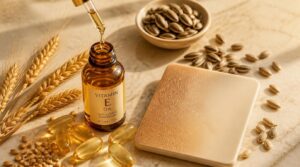
Vitamin E gets a lot of credit for fading scars and fighting the signs of aging, but the science tells a more complicated story. Some of those claims hold up better than others, and a few fall apart under clinical scrutiny. Here’s what the research actually says about each one.
Scar Evidence Limitations
Many people reach for vitamin E oil hoping it will quietly erase postsurgical marks, but clinical evidence tells a different story. In trials, 90% of participants saw no benefit — and some scars actually worsened. Results varied widely due to trial outcome variability, time since injury, and measurement scale bias, making reliable conclusions difficult.
- Scar color shifts from red to brown over time
- Raised, hypertrophic scars respond differently than flat ones
- Environmental factors like sun exposure alter healing appearance
- Scar massage and silicone sheets have stronger research support
Topical vitamin E on postsurgery scars is clinically discouraged.
Hyperpigmentation Support
Fading dark spots takes more than one ingredient. Vitamin E oil offers mild antioxidant effects that may help reduce the appearance of hyperpigmentation by calming oxidative stress linked to UV damage.
Pair it with niacinamide for pigment transfer reduction, tyrosinase inhibitors like kojic acid for melanin production control, and a daily sunscreen routine — because sun protection is the real foundation here.
UVB Damage Defense
UVB rays, which fall in the 280 to 320 nm range, reach your skin’s surface and trigger a cascade of oxidative stress that damages proteins, disrupts your lipid barrier, and spurs inflammation.
- Alpha-tocopherol absorbs UVB light directly, limiting free radical formation
- Antioxidant effects help calm the redness and swelling UVB exposure causes
- Maintains barrier lipid integrity after UV-induced membrane disruption
- Works best applied before prolonged sun exposure, as surface defense timing matters
No UVA Protection
Here’s something worth knowing before you reach for Vitamin E oil as your sun shield: it offers no UVA protection. UVA rays span 320 to 400 nm, penetrate deeper, and drive photoaging year-round — even through windows.
Vitamin E oil offers zero UVA protection, leaving skin silently exposed to the rays that drive photoaging year-round
Without broad-spectrum coverage, that gap stays open. Always check your sunscreen label beyond SPF, since UVA filter gaps leave skin silently exposed.
Wrinkle Claim Limitations
Vitamin E is an antioxidant — not a wrinkle eraser. It helps reduce oxidative stress, but oxidative stress isn’t the only driver of wrinkles. Collagen loss and reduced skin elasticity also play major roles that topical vitamin E simply can’t reverse.
What you’re often seeing is temporary. The emollient film softens skin, which can blur fine lines short-term, but stop using it and that smoothing fades.
Skin Conditions and Irritation

Vitamin E oil doesn’t just moisturize — it can also take some of the edge off certain skin conditions that cause daily discomfort. That said, it’s not a cure, and knowing where it actually helps versus where it falls short will save you a lot of frustration.
Here’s what the research says about eczema, psoriasis, irritation, and when it’s time to bring in a dermatologist.
Eczema Dryness Relief
Eczema can feel like a never-ending cycle of dryness, cracking, and itch. Vitamin E oil helps interrupt that cycle through barrier lipid replacement, restoring the fatty layer that eczema-prone skin constantly loses. Here’s how to put that to work:
- Post-bath seal technique: Apply vitamin E oil immediately after bathing while skin is still damp
- Moisturizer application timing: Don’t wait — every minute of delay lets moisture escape
- Eczema moisturizer types: Pair vitamin E oil with an ointment for stronger sealing on very dry patches
- Itch hydration strategies: Continuously moisturizing the skin reduces the tight, reactive feeling that triggers scratching
Its mild anti-inflammatory properties also calm visible redness, supporting skin barrier repair from the outside in.
Psoriasis Support Limits
Psoriasis is a different story than eczema. While vitamin E oil can soften dry plaques and ease surface discomfort, it doesn’t address the immune-driven inflammation underneath. Thick plaques also limit how deeply the oil penetrates, reducing its barrier benefits. It’s a comfort aid, not a treatment.
| Factor | What Vitamin E Offers | Its Limit |
|---|---|---|
| Plaque Thickness Impact | Surface softening | Poor emollient penetration |
| Immune Response Interaction | Mild antioxidant support | Can’t stop psoriatic signaling |
| Treatment Adherence Challenges | Easy to apply | Greasy feel reduces consistency |
Itching and Redness
When skin becomes inflamed, your body releases histamine, a chemical that widens blood vessels and fires up nerve endings — which is why itching and redness so often arrive together.
Vitamin E’s antioxidant properties can help calm these inflammation pathways, offering mild relief for pruritus and visible redness linked to dry skin irritation, allergic reactions, and conditions like eczema or atopic dermatitis.
Barrier Repair Support
When itching and redness quiet down, the next goal is rebuilding what was damaged. That means barrier lipid replenishment — restoring the skin’s outer layer with ceramides, cholesterol, and fatty acids.
Vitamin E helps this by acting as an emollient that fills gaps between cells, while pairing it with humectants like glycerin improves moisture retention for longer-lasting comfort.
When to Ask Dermatologists
Vitamin E oil can do a lot, but it’s not a substitute for professional care.
If you notice mole changes — new growth, irregular borders, or shifting color — see a dermatologist promptly. The same goes for non-healing wounds, severe cystic acne risking scarring, spreading rashes with fever, or sudden facial swelling, which needs urgent attention.
Early action truly matters — catching skin cancer in its earliest stage can mean the difference between a quick procedure and a much harder road ahead.
Side Effects and Precautions

Vitamin E oil has real benefits, but it’s not for everyone. Like most things you put on your skin, it comes with a few risks worth knowing before you commit. Here’s what to watch for.
Allergic Contact Dermatitis
Roughly 3.1% of women develop allergic contact dermatitis from vitamin E oil — and it’s not a simple surface irritation.
This is a delayed hypersensitivity reaction, meaning your immune system doesn’t react immediately. Instead, T cells drive the response days after exposure. The culprit is a hapten-protein complex formed when vitamin E molecules bind to skin proteins, triggering sensitization.
Clogged Pores Risk
One underappreciated risk of vitamin E oil is how its thick, occlusive consistency can interfere with your pores. Because it’s oil-based, it can trap sebum, dead skin cells, and debris inside the pore opening — fundamentally creating the ideal environment for blockages.
- Oil-based texture adds a film that slows natural pore clearing
- Comedogenic ingredients interact with existing sebum to thicken pore plugs
- Infrequent exfoliation worsens buildup when heavy oils are used regularly
- Weakened skin barrier changes how sebaceous glands regulate sebum output
Acne Flare-up Concerns
For acne-prone skin, vitamin E oil can make breakouts worse. Its thick texture sits on top of the skin, and when your pores are already stressed — from poor sleep, hormonal shifts, or daily stress — that extra occlusion can tip a minor flare into something bigger.
Scratching irritated skin or sleeping on rough fabrics only adds fuel.
Blood Thinning Interactions
If you’re taking a blood thinner, vitamin E supplements deserve a second look before you add them to your routine. Oral vitamin E can raise your bleeding risk, especially at high doses, and that effect compounds when combined with anticoagulants, aspirin, or NSAIDs. Here’s what to keep in mind:
- Check your dosage — high-dose vitamin E is most flagged for clotting interference
- Tell your pharmacist before starting any new supplement
- Watch for warning signs like unusual bruising or prolonged bleeding
Oral Supplement Side Effects
Swallowing vitamin E capsules is a different story from putting the oil on your skin. GI upset — nausea, diarrhea, stomach discomfort — is the most common complaint, especially at high doses. Some people also notice skin reactions or breakouts.
Fat-soluble vitamins accumulate in the body, so more isn’t safer. Always check your label before doubling up.
Top 5 Vitamin E Skin Oils
With so many options on the market, choosing the right vitamin E oil can feel overwhelming. The five picks below stand out for their formulation quality, concentration levels, and skin compatibility. Here’s a closer look at each one to help you find your best match.
1. Plant Based Vitamin E Skin Oil
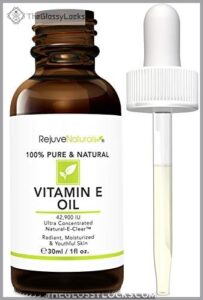
Plant-based vitamin E oil commonly uses vegetable oils — like sunflower seed oil — as the carrier, blending them with tocopherols to deliver antioxidant benefits in a fat-soluble formula. This particular option is derived from non-GMO olives and formulated with d-alpha tocopherol, the naturally occurring form your skin absorbs most efficiently. At 42,900 IU, it’s potent enough for dry or damaged skin without crossing into territory that requires dilution.
It’s also vegan, cruelty-free, and free from parabens and synthetic fragrances.
| Best For | Anyone dealing with dry or damaged skin, scars, wrinkles, or rough patches like calluses who wants a clean, plant-based option without synthetic additives. |
|---|---|
| Non-GMO | Yes |
| Volume | 1 oz |
| Skin Moisturizing | Yes |
| Scar Support | Yes |
| Oil Texture | Thick |
| Cruelty-Free | Yes |
| Additional Features |
|
- Packed with 42,900 IU of d-alpha tocopherol — the form your skin actually absorbs well
- Clean formula: vegan, cruelty-free, no parabens, no synthetic fragrances
- Versatile — works on dry skin, scars, age spots, and even rough feet
- Thicker consistency, so it can feel heavy or greasy on skin
- You won’t see results overnight — consistent use is a must
- 1-ounce bottle is small, which may not last long with daily use
2. Cliganic Organic Vitamin E Oil
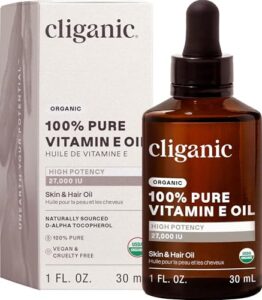
If you want something straightforward and clean, Cliganic Organic Vitamin E Oil is worth a look. It’s 100% pure d-alpha tocopherol sourced from organic, non-GMO soybean oil — no fillers, no synthetic fragrances.
At 27,000 IU, it’s concentrated enough to nourish dry skin, hair, and nails without overwhelming sensitive complexions. It’s also vegan and cruelty-free, with third-party lab testing to back up its purity claims.
Just note that soybean-derived oils can occasionally carry a faint odor.
| Best For | Anyone who wants a clean, no-fuss vitamin E oil that’s certified organic and easy to trust. |
|---|---|
| Non-GMO | Yes |
| Volume | 2.89 oz |
| Skin Moisturizing | Yes |
| Scar Support | Yes |
| Oil Texture | Standard Oil |
| Cruelty-Free | Yes |
| Additional Features |
|
- 100% pure d-alpha tocopherol — no fillers or synthetic additives
- Vegan, non-GMO, and cruelty-free with third-party lab testing for peace of mind
- Concentrated at 27,000 IU, so a little goes a long way for skin, hair, and nails
- Soybean oil base may put off anyone with soy sensitivities
- Can have a faint rancid or fishy smell, which some people find off-putting
- Stock availability isn’t always consistent, so it can be hard to reorder reliably
3. Concentrated Vitamin E Skin Oil
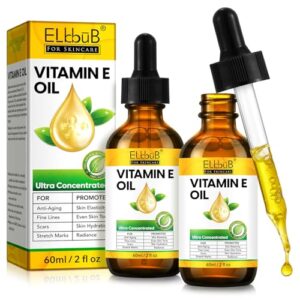
If you’re after something with serious potency, this oil steps things up. The ultra-concentrated antioxidant formula delivers a higher vitamin E load per drop than most everyday oils, making it a practical choice for very dry or rough-textured skin.
It’s hexane-free, non-GMO, and cruelty-free — no parabens, no shortcuts. Because it’s highly concentrated, you only need a drop or two. Overapply, and it can leave a greasy film, so less is genuinely more here.
| Best For | Anyone with very dry, rough, or textured skin who wants a high-potency vitamin E oil without a lot of fillers or questionable ingredients. |
|---|---|
| Non-GMO | Yes |
| Volume | 9.14 oz |
| Skin Moisturizing | Yes |
| Scar Support | Yes |
| Oil Texture | Concentrated |
| Cruelty-Free | Yes |
| Additional Features |
|
- Ultra-concentrated formula means a little goes a long way — one or two drops is all you need
- Clean ingredients: hexane-free, non-GMO, paraben-free, and cruelty-free
- Versatile enough to use on face, body, hair, and nails — or mix into your daily moisturizer
- Easy to overapply, which can leave a greasy film on the skin
- Takes some time to fully absorb, so patience is key
- Results on scars and stretch marks vary — don’t expect the same outcome for everyone
4. Dr Joe Lab Vitamin E Oil
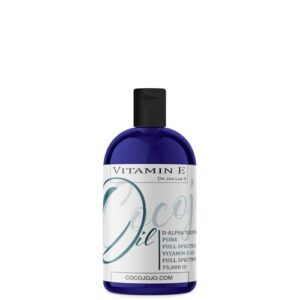
Dr. Joe Lab takes a different angle by blending D-alpha tocopherol with carrier oils like sunflower, soybean, and argan — giving you a nutrient-rich formula rather than a single-ingredient oil. At 75,000 IU, it delivers real potency for dry skin, hair, nails, and cuticles.
It’s USDA certified organic, non-GMO, and free from synthetics. The thick consistency means two to three drops is plenty — more than that and you’ll feel it sitting on your skin.
| Best For | Anyone who wants a multi-nutrient vitamin E oil for skin, hair, and DIY cosmetic projects. |
|---|---|
| Non-GMO | Not Specified |
| Volume | 8 oz |
| Skin Moisturizing | Yes |
| Scar Support | Yes |
| Oil Texture | Thick Liquid |
| Cruelty-Free | Not Specified |
| Additional Features |
|
- Blends D-alpha tocopherol with carrier oils like sunflower, soybean, and argan for a richer, more nourishing formula
- Works across multiple uses — dry skin, hair shine, scar fading, and as a base for homemade scrubs and body butters
- Made in the USA with high quality standards and real potency at 75,000 mg
- Thick, greasy consistency can stain clothes and fabrics if you’re not careful
- High viscosity makes it easy to over-apply — takes a little practice to get the amount right
- Packaging may vary, so what shows up might not match what you see online
5. Majestic Pure Natural Vitamin E Oil
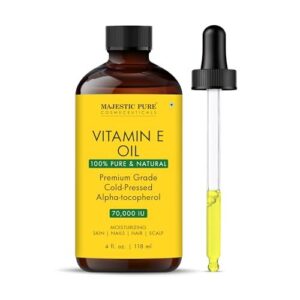
Majestic Pure keeps things straightforward — 100% pure, cold-pressed vitamin E oil with no synthetic additives, artificial colors, or fragrances. At 70,000 IU, it’s potent enough to hydrate dry skin, nourish your scalp, and strengthen brittle nails. Because it’s unscented, it also works well as a bath or massage oil.
Just remember: at this concentration, diluting it with a lighter carrier oil prevents that heavy, sticky feeling most people notice when they use too much.
| Best For | Anyone looking for a pure, multipurpose vitamin E oil to hydrate skin, strengthen nails, or use as a base for DIY beauty products. |
|---|---|
| Non-GMO | Yes |
| Volume | 4 oz |
| Skin Moisturizing | Yes |
| Scar Support | Yes |
| Oil Texture | Thick and Sticky |
| Cruelty-Free | Not Specified |
| Additional Features |
|
- 100% pure and cold-pressed — no synthetic additives, fragrances, or hexane
- High potency at 70,000 IU, making it effective for skin hydration, scalp nourishment, and nail care
- Versatile enough to use as a bath oil, massage oil, or DIY cosmetic base
- Thick and sticky texture that absorbs slowly compared to lighter oils
- Can feel heavy on the face if you apply too much
- Not great for daytime wear under makeup
Choosing and Storing Vitamin E Oil
Picking the right Vitamin E oil isn’t just about what’s inside the bottle — it’s also about how you store it once it’s home. A few simple checks can save you from wasting money on a product that’s already gone bad or isn’t potent enough to do its job. Here’s what to look for before you buy and how to keep it fresh longer.
Check Ingredient Labels
Reading a vitamin E oil label is easier than it looks. Ingredients are listed by descending weight, so whatever appears first makes up most of the formula. Look for tocopherol or tocopheryl acetate in the top five — if it’s buried near the bottom, you’re mostly paying for filler.
- Check for dl-alpha tocopherol, which signals a synthetic form rather than natural d-alpha tocopherol
- Scan the allergen statement for hidden irritants, especially if your skin runs sensitive
- Flag any fragrance or parfum listing — both can trigger reactions on delicate skin
- Confirm whether a carrier oil percentage appears, and look for hexane-free on the label
Compare IU Potency
IU numbers aren’t as straightforward as they seem. Two oils can share the same IU claim yet deliver very different amounts of active vitamin E — because the IU-to-mg conversion shifts depending on whether the product uses natural d-alpha-tocopherol or synthetic dl-alpha-tocopherol.
A blended formula with carrier oils dilutes that potency further.
Prefer Dark Glass Bottles
The bottle your oil comes in matters more than you’d think. Amber glass blocks over 90% of UV light, which directly slows photo-oxidation — the process that turns vitamin E oil rancid and strips its skin benefits.
Clear glass simply can’t offer that protection. When topical vitamin E degrades, you lose both its nutrient stability and bioavailability, making it far less effective on your skin.
Store Cool and Dry
Where you store your vitamin E oil is just as important as what’s inside it. Heat, humidity, and light all accelerate oxidative damage, breaking down tocopherol acetate before it ever reaches your skin.
- Seal the container properly after every use to limit air contact
- Avoid heat sources like stovetops or radiators
- Control humidity levels by skipping bathroom storage
A cool, dry cabinet keeps nutrient stability intact.
Watch for Rancid Odor
Your nose is one of the most reliable quality controls you have.
If your vitamin E oil smells sour, stale, or bitter — think stale popcorn or a musty basement — that’s oxidative damage at work. Rancid oil has already broken down chemically, meaning its nutrient stability is gone.
Don’t use it on your skin. Discard it immediately.
Frequently Asked Questions (FAQs)
Do dermatologists recommend vitamin E?
Yes, dermatologists recognize topical vitamin E as a well-established cosmetic ingredient. It’s valued for its antioxidant and barrier-supporting properties, though professional guidance treats it as a supportive tool, not a standalone treatment.
Is vitamin E oil good for the face?
Vitamin E oil can be genuinely good for your face — it bolsters moisture retention, softens skin texture, and offers antioxidant protection. That said, it doesn’t suit every skin type.
What does vitamin E do to the skin?
Think of your skin as a shield. Vitamin E neutralizes free radicals, reduces inflammation, preserves collagen, boosts elasticity, and enhances moisture retention — keeping your skin resilient, protected, and visibly healthier over time.
Does vitamin E tighten your skin?
It can, but not in the way most people expect. Vitamin E oil promotes skin elasticity indirectly — better hydration makes skin appear firmer, not because it rebuilds collagen or elastin directly.
What does vitamin E oil do for your skin?
It works on multiple levels — strengthening your barrier, locking in hydration, and neutralizing free radicals. Its anti-inflammatory and anti-aging properties also help reduce itching, protect collagen, and gently support skin elasticity over time.
Can you apply vitamin E oil directly to face?
Yes, you can — but it’s not for everyone. Patch test first, use 2–3 drops at night, and mix into your facial moisturizer to avoid clogged pores, especially on sensitive or acne-prone skin.
Does vitamin E remove dark spots?
Vitamin E oil doesn’t reliably remove dark spots, but it can help limit further discoloration by fighting oxidative stress. Paired with vitamin C, it shows better results for hyperpigmentation.
Can vitamin E oil be used during pregnancy?
Topical vitamin E oil is generally considered safe during pregnancy when applied to the skin in small amounts. Keep use minimal, patch test first, and ask your doctor before taking any oral supplements.
Does vitamin E oil have a shelf life?
Like all good things, vitamin E oil doesn’t last forever. It has a shelf life of 12 to 36 months, though oxidation can shorten that window well before the expiration date.
Can vitamin E oil be mixed with other skincare products?
You can mix it into lotions or carrier oils, but concentration and compatibility matter. Too much can separate in water-based formulas, feel heavy, or irritate skin.
Conclusion
Take someone with chronically dry, cracked hands—knuckles split, skin pulled painfully tight after every single wash. Two drops of vitamin E oil for skin applied nightly, layered under a basic moisturizer, can quietly shift that cycle within weeks. That’s not magic; that’s the barrier doing its job.
Used correctly, on the right skin type, vitamin E earns its place. Used blindly, it clogs pores and disappoints. The difference always starts with knowing your skin.