This site is supported by our readers. We may earn a commission, at no cost to you, if you purchase through links. This content is for general informational and educational purposes only and is not a substitute for professional medical, dermatological, or nutritional advice.
The skin around your eyes measures roughly 0.5 millimeters thick, nearly ten times thinner than skin on the rest of your face, and it has almost no oil glands to protect it. That’s why a moisturizer you tolerate everywhere else can leave this area red, stinging, or flaking within minutes.
Patients tell me this constantly: "I reacted to something, but I can’t figure out what." Finding real sensitive skin care products for sensitive eyes means learning which ingredients calm this fragile zone and which ones quietly damage it.
Ahead, you’ll find dermatologist-vetted picks, the labels worth trusting, and application habits that protect your eyes for years to come.
Table Of Contents
- Key Takeaways
- Best Sensitive Eye Care Products
- 1. La Roche-Posay Hyaluronic Acid Eye Cream
- 2. Cetaphil Hydrating Eye Gel Cream
- 3. Burt’s Bees Calming Eye Cream
- 4. CeraVe Skin Renewing Eye Cream
- 5. Biossance Squalane Marine Algae Eye Cream
- 6. Ordinary Caffeine Eye Serum
- 7. Innisfree Green Tea Caffeine Eye Serum
- 8. Aveeno Age Renewal Eye Gel
- 9. Paulas Choice Anti Aging Eye Gel
- 10. Roc Retinol Correxion Eye Cream
- How to Choose Eye Products
- Best Ingredients for Sensitive Eyes
- Ingredients Sensitive Eyes Should Avoid
- Safe Sensitive Eye Care Routine
- Frequently Asked Questions (FAQs)
- What skincare does not irritate your eyes?
- What to use on sensitive skin around eyes?
- What brand is best for sensitive eyes?
- What is good for very sensitive eyes?
- Why are my eyes so sensitive to skincare?
- What can I use for sensitive under eyes?
- What moisturizer doesn’t irritate the eyes?
- What can I use for very sensitive eyes?
- What skincare products cause eye irritation?
- What causes sensitive skin around the eyes suddenly?
- Conclusion
Key Takeaways
- Eye-area skin is roughly ten times thinner than the rest of your face and has almost no oil glands, so it reacts fast to harsh ingredients that other skin tolerates.
- Look for proven ingredients like hyaluronic acid, ceramides, squalane, caffeine, and niacinamide, since each targets a specific concern such as hydration, barrier repair, or puffiness.
- Avoid fragrance, denatured alcohol, harsh preservatives, strong exfoliating acids, and essential oils or menthol, since these commonly trigger irritation, stinging, or barrier damage around the eyes.
- Labels like "hypoallergenic" aren’t regulated, so always patch test new products for 48–96 hours and apply with a pea-sized amount using your ring finger, staying clear of the lash line.
Best Sensitive Eye Care Products
Your under-eye skin doesn’t forgive harsh formulas the way the rest of your face might, so every product on this list earns its spot for a reason.
If you’re rethinking your grooming routine altogether, this guide to the best aftershave options for sensitive skin applies the same gentle-formula logic worth knowing.
I’ve narrowed things down to ten options that balance gentle ingredients with real results, from hydration to puffiness to fine lines.
Here’s what actually works, and why your eyes deserve this level of care.
1. La Roche-Posay Hyaluronic Acid Eye Cream
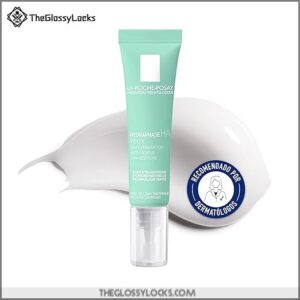
If your under-eyes feel perpetually parched, this one deserves a look. It relies on fragmented hyaluronic acid, molecules small enough to penetrate quickly and plump skin from within, holding onto moisture longer than standard HA formulas.
Caffeine helps with puffiness, while La Roche-Posay’s signature thermal spring water calms reactive skin. The gel-cream texture absorbs fast, no greasy residue.
It’s fragrance-free and dermatologist-tested, though heavy-cream lovers might find it lighter than expected.
| Best For | Anyone with dry, dehydrated under-eyes who wants a fast-absorbing, fragrance-free gel that also tackles puffiness without irritating sensitive skin. |
|---|---|
| Hyaluronic Acid | Yes |
| Fragrance-Free | Yes |
| Dermatologist Tested | Yes |
| Targets Puffiness | Yes |
| Net Weight | 0.53 oz |
| Sensitive Skin Suitable | Yes |
| Additional Features |
|
- Fragmented hyaluronic acid absorbs quickly and keeps moisture locked in longer than typical HA formulas
- Caffeine and thermal spring water team up to visibly reduce puffiness while soothing reactive skin
- Lightweight gel texture layers well under makeup or over other treatments like retinol
- Gel formula may feel too light for those who prefer richer, heavier creams
- Not formulated to target deep wrinkles or fine lines
- Hydration results can vary from person to person
2. Cetaphil Hydrating Eye Gel Cream
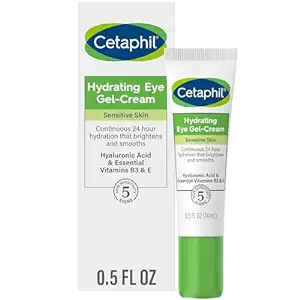
Where La Roche-Posay leans on fragmented HA, Cetaphil takes a simpler route, and simple often wins with reactive skin. This gel-cream hybrid pairs hyaluronic acid with niacinamide and vitamin E, absorbing fast without tugging on fragile lids.
Licorice extract helps brighten dullness, though results build gradually rather than overnight.
It’s fragrance-free, ophthalmologist-tested, and safe for contact lens wearers. Worth knowing: it can shorten waterproof eyeliner’s staying power, and very dry skin may need something richer alongside it.
| Best For | This eye gel-cream is best for people with sensitive skin or contact lens wearers who want lightweight, all-day hydration without irritation. |
|---|---|
| Hyaluronic Acid | Yes |
| Fragrance-Free | Not specified |
| Dermatologist Tested | Yes |
| Targets Puffiness | Yes |
| Net Weight | 0.51 oz |
| Sensitive Skin Suitable | Yes |
| Additional Features |
|
- Absorbs quickly thanks to its lightweight gel-cream texture, without tugging on delicate skin
- Hypoallergenic formula tested by both dermatologists and ophthalmologists, making it gentle enough for sensitive eyes
- Combines hyaluronic acid, licorice extract, and vitamins E and B to hydrate while gradually brightening the under-eye area
- May not deliver enough moisture for very dry or aging skin, which could need a richer product
- Can shorten how long waterproof eyeliner lasts throughout the day
- Brightening and de-puffing effects take time to show, so it’s not a quick fix
3. Burt’s Bees Calming Eye Cream
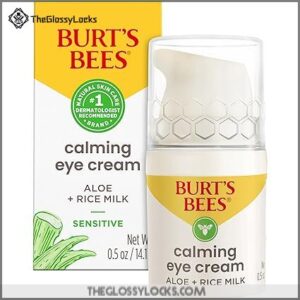
If Cetaphil’s approach is minimalist, Burt’s Bees leans into botanicals, pairing aloe and rice milk for lightweight hydration without heaviness.
Glycerin and olive oil round out the barrier support, while the fragrance-free, ophthalmologist-tested formula suits daily use.
At 0.5 ounces, it’s a small tube, and reviewers appreciate that it plays well with other Sensitive Solutions products. If your under-eyes just need gentle moisture rather than heavy-duty repair, this one’s worth a look.
| Best For | Anyone with sensitive under-eyes looking for a gentle, botanical-based cream that hydrates without feeling heavy. |
|---|---|
| Hyaluronic Acid | Yes (via rice milk/aloe) |
| Fragrance-Free | Yes (natural formula) |
| Dermatologist Tested | Yes |
| Targets Puffiness | No |
| Net Weight | 0.5 oz |
| Sensitive Skin Suitable | Yes |
| Additional Features |
|
- Formulated with aloe and rice milk for lightweight, effective hydration
- Fragrance-free and hypoallergenic, making it gentle on sensitive skin
- 98.7% natural origin and free from parabens, phthalates, and SLS
- Small 0.5-ounce container means it won’t last as long as larger products
- Formulated specifically for the eye area, so it can’t be used elsewhere on the face
- Offers gentle hydration rather than targeted repair for deeper concerns like fine lines
4. CeraVe Skin Renewing Eye Cream
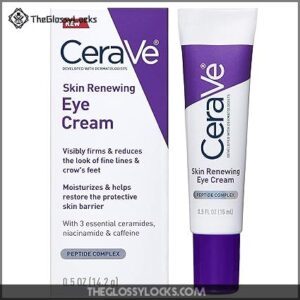
Barrier repair is the main focus here, with three ceramides (1, 3, and 6-II) working alongside hyaluronic acid to restock lipids the eye area loses fast.
Niacinamide steps in for texture and brightness, while the fragrance-free formula keeps irritation risk low.
Reviewers note it layers well under makeup without pilling. If your under-eyes feel tight or flaky rather than puffy, this ceramide-forward formula targets barrier repair specifically, making it a solid pick for anyone whose main complaint is dryness, not swelling.
| Best For | Anyone dealing with dry, tight, or flaky under-eye skin who wants a fragrance-free formula focused on barrier repair rather than puffiness. |
|---|---|
| Hyaluronic Acid | Yes |
| Fragrance-Free | Yes |
| Dermatologist Tested | Not specified |
| Targets Puffiness | Yes |
| Net Weight | 0.5 oz |
| Sensitive Skin Suitable | Yes |
| Additional Features |
|
- Three ceramides (1, 3, 6-II) plus hyaluronic acid help restore lipids and lock in moisture
- Niacinamide improves texture and brightness without irritating sensitive skin
- Layers smoothly under makeup without pilling, and is safe for contact lens wearers
- Formulated mainly for barrier repair, so it may be less targeted for those whose main concern is puffiness
- Requires consistent twice-daily use to see best results
- Small 0.5 ounce size may not last as long as other options
5. Biossance Squalane Marine Algae Eye Cream
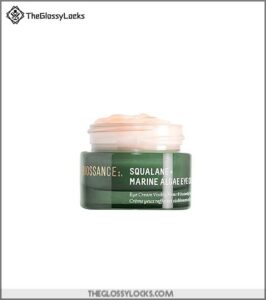
Marine ingredients set this one apart, particularly the pink marine algae extract and Dunaliella Salina, which work to hydrate and smooth crepey under-eye skin.
Paracress extract offers a subtler, natural-lift alternative to injectables, while plant-derived squalane locks in moisture without weighing down thin skin.
It’s fragrance-free, vegan, and eczema-friendly, though the 0.5-ounce tube runs pricey. Some users report stinging from sodium benzoate, so patch-test first if you’re prone to preservative sensitivities.
| Best For | This eye cream is best for anyone with dry, sensitive, or eczema-prone skin who wants a lightweight, fragrance-free option to firm and hydrate the delicate under-eye area. |
|---|---|
| Hyaluronic Acid | Yes |
| Fragrance-Free | Not specified |
| Dermatologist Tested | Not specified |
| Targets Puffiness | Yes |
| Net Weight | 0.5 oz |
| Sensitive Skin Suitable | Yes |
| Additional Features |
|
- Paracress extract gently lifts and firms skin elasticity, offering a natural alternative to more intense treatments
- Hyaluronic acid and squalane deliver immediate moisture and long-lasting hydration without feeling heavy
- Gentle enough for daily use on dry, sensitive, or eczema-prone skin
- Small 0.5-ounce size comes at a higher price point, meaning frequent repurchasing
- Some users report stinging or irritation, particularly from sodium benzoate
- A few customers have noted mismatches between the ingredient list on the packaging and the one listed online
6. Ordinary Caffeine Eye Serum
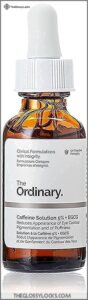
Five percent caffeine is a serious dose for such a small bottle, and that’s the whole appeal of this water-based serum. EGCG, a green tea antioxidant, works alongside hyaluronic acid to hydrate while caffeine constricts vessels to ease puffiness.
It’s alcohol-free and fragrance-free, absorbing fast without a greasy finish. The dropper applicator helps with precise, minimal dosing—key for skin this thin. Layer it under your regular eye cream in the morning for a quick de-puffing boost before makeup.
For a richer body-care alternative, see this Tree Hut Tropic Glow Firming Whipped Body Butter review, though its fragrance may not suit sensitive users.
| Best For | Anyone dealing with morning puffiness or dark circles who wants a lightweight, fast-absorbing serum they can layer under their regular eye cream. |
|---|---|
| Hyaluronic Acid | Yes |
| Fragrance-Free | Not specified |
| Dermatologist Tested | Not specified |
| Targets Puffiness | Yes |
| Net Weight | 1.06 oz |
| Sensitive Skin Suitable | Yes |
| Additional Features |
|
- 5% caffeine concentration gives a noticeable de-puffing effect
- Hyaluronic acid and soybean extract keep the under-eye area hydrated, not just treated
- Alcohol-free, fragrance-free formula absorbs quickly with no greasy residue
- Dark circle improvement takes several weeks of consistent use, not an overnight fix
- Patch testing is required before first use, so you can’t dive right in
- Must avoid any contact with broken or irritated skin
7. Innisfree Green Tea Caffeine Eye Serum
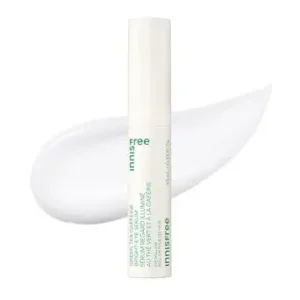
Five types of hyaluronic acid work together here to lock in moisture, while a cooling rollerball massages puffiness away and boosts lymphatic drainage. Caffeine and 3% niacinamide team up to brighten dullness and calm redness, backing the barrier without fragrance-related irritation.
The gel texture absorbs fast, won’t migrate onto lashes, and antioxidant-rich green tea polyphenols add a protective layer. It’s a gentle, botanical-leaning option for anyone wanting daytime freshness without heaviness.
| Best For | Anyone with tired, puffy eyes or mild dark circles who wants a lightweight, fragrance-free serum to layer into a morning or night routine. |
|---|---|
| Hyaluronic Acid | Yes |
| Fragrance-Free | Not specified |
| Dermatologist Tested | Not specified |
| Targets Puffiness | Yes |
| Net Weight | 1.06 oz |
| Sensitive Skin Suitable | Yes |
| Additional Features |
|
- Cooling metal-tip roller instantly de-puffs and feels refreshing on contact
- Hyaluronic acid and green tea deliver noticeable hydration from the very first use
- Lightweight serum texture layers easily under other skincare without feeling heavy
- Visible brightening and depuffing results take about two weeks of consistent daily use
- Requires manual massage with the applicator for the formula to fully absorb
- Clinical claims are based on a small study of just 30 women, so results may vary
8. Aveeno Age Renewal Eye Gel
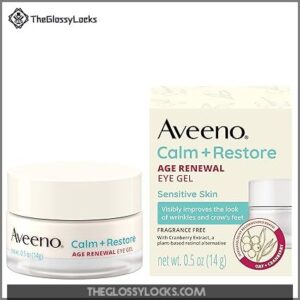
Sometimes the gentlest formulas come from brands you already trust in your medicine cabinet. This lightweight gel leans on oat-derived compounds and niacinamide to calm irritation while brightening dullness, with cranberry extract adding antioxidant support.
Glycerin keeps delicate skin hydrated without clogging pores, and dimethicone forms a light protective barrier against moisture loss.
Fragrance-free and ophthalmologist-tested, it’s suitable even for contact lens wearers, though patients with highly reactive skin should still patch test before daily use.
| Best For | This eye gel is best for anyone with sensitive skin who wants a gentle, fragrance-free treatment to address wrinkles, puffiness, and dark circles around the eyes. |
|---|---|
| Hyaluronic Acid | No |
| Fragrance-Free | Yes |
| Dermatologist Tested | Not specified |
| Targets Puffiness | Yes |
| Net Weight | 0.5 oz |
| Sensitive Skin Suitable | Yes |
| Additional Features |
|
- Uses cranberry extract as a gentle, plant-based alternative to retinol
- Formulated with soothing oat and niacinamide to support skin health
- Hypoallergenic and free of fragrance, parabens, phthalates, dyes, and alcohol
- Only formulated for use around the eye area, not the full face
- Requires daily, consistent use before visible results appear
- Comes in a small 0.5 ounce size, which may not last long with regular use
9. Paulas Choice Anti Aging Eye Gel
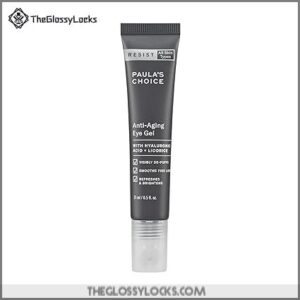
This gel-cream hybrid earns its keep through a peptide-rich formula, combining Palmitoyl Tripeptide 38 with Caprooyl Tetrapeptide 3 to support collagen signaling around the eye contour.
Hyaluronic acid and glycerin plump and hydrate, while licorice root brightens dark circles without added fragrance or harsh preservatives. The lightweight, non-sticky texture absorbs quickly, layering well under makeup.
Ophthalmologist-tested and non-comedogenic, it’s a solid pick for patients wanting visible anti-aging results without compromising their sensitive eye barrier.
| Best For | Anyone with sensitive skin looking for a fragrance-free, peptide-powered eye treatment to target wrinkles, fine lines, and dark circles. |
|---|---|
| Hyaluronic Acid | No |
| Fragrance-Free | Yes |
| Dermatologist Tested | Not specified |
| Targets Puffiness | No |
| Net Weight | 0.5 oz |
| Sensitive Skin Suitable | Yes |
| Additional Features |
|
- Peptide-rich formula supports collagen around the delicate eye area
- Fragrance-free and non-comedogenic, making it gentle on sensitive skin
- Lightweight, fast-absorbing texture that layers well under makeup
- Small 0.5-ounce size means it won’t last as long as larger products
- Formulated specifically for the eye area, so it’s not meant for full-face use
- Premium peptide ingredients may come with a higher price point
10. Roc Retinol Correxion Eye Cream
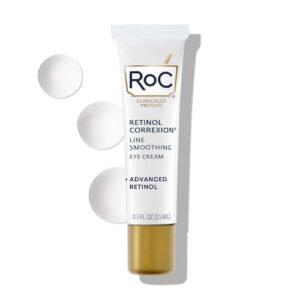
Retinol earns its reputation as the ideal anti-aging ingredient, and RoC’s version delivers it through time-released technology that limits irritation. Paired with a mineral complex and glycerin, it targets crow’s feet, dark circles, and puffiness alike.
Start every other night, since dryness during adjustment is common. Daily SPF 30+ is non-negotiable here, and skip pairing it with other retinol products. Hypoallergenic and non-comedogenic, it’s a solid pick once your skin’s ready for stronger actives.
| Best For | Anyone dealing with visible signs of aging around the eyes—like fine lines, crow’s feet, dark circles, and puffiness—who wants a gradual, well-tolerated introduction to retinol. |
|---|---|
| Hyaluronic Acid | No |
| Fragrance-Free | Not specified |
| Dermatologist Tested | Not specified |
| Targets Puffiness | Yes |
| Net Weight | 0.64 oz |
| Sensitive Skin Suitable | Yes |
| Additional Features |
|
- Time-released retinol technology helps minimize irritation compared to traditional formulas
- Hypoallergenic and non-comedogenic, making it gentle enough for daily use across skin types
- Mineral complex and glycerin add comfort while targeting multiple under-eye concerns at once
- Requires a slow introduction (every other night) before regular use
- Daily SPF 30 is mandatory, adding an extra step to your routine
- Some dryness is likely during the initial adjustment period
How to Choose Eye Products
Picking the right eye product isn’t just about the ingredients list, it’s also about what’s not in the formula and how it’s labeled. Your skin around the eyes is thinner and more reactive, so the claims on that bottle actually matter. Here’s what to look for before you buy.
Fragrance-free Formulas
Perfume-free doesn’t mean weaker—it means safer for eyes that can’t tolerate hidden allergens. Fragrance-free formulas skip masking agents and rely on neutral base ingredients, reducing eye irritation risk.
Choosing fragrance-free options helps prevent cosmetic contact dermatitis caused by volatile molecules.
- Redness after applying a new cream
- Itchy, watery eyes by midday
- Uncertainty about what’s really in the jar
- Reactions with no clear cause
- Fear of trying anything new
Check labeling transparency and confirm true preservative safety systems before buying eye creams for sensitive skin.
Ophthalmologist-tested Labels
Ophthalmologist-tested means real eye doctors oversaw safety trials on human volunteers, watching for stinging, redness, or swelling before and after use.
| Label Claim | What It Means | Limitation |
|---|---|---|
| Ophthalmologist-tested | MD-supervised trial | Protocols vary by brand |
| Clinically tested | General safety check | No eye-specific oversight |
| Dermatologist-tested | Skin tolerance only | Not eye-focused |
Testing depth differs, so patch-test regardless for genuine eye irritation relief.
Hypoallergenic Product Claims
Here’s the catch: "hypoallergenic" isn’t a regulated term. The FDA confirms no federal standard exists, so brands can print it without independent testing. Same gap in the EU.
Hypoallergenic isn’t a regulated term, so brands can print it without any independent testing to back it up
Instead of trusting the label alone, check for third-party certifications or fragrance-free, dye-free indicators, and read the full ingredient list for known irritants before trusting your eye area sensitivity to marketing claims alone.
Non-comedogenic Eye Care
Milia—those stubborn little white bumps—often trace back to heavy, pore-clogging bases. Non-comedogenic eye creams for sensitive skin use lightweight emulsions instead, delivering oil-free hydration without suffocating pores near the delicate eye contour.
Look for:
- Water-based or gel textures
- "Non-comedogenic" on the label
- Oil-free formulations
- Dermatologist-tested claims
- Ingredients supporting skin texture, not clogging it
Your eye area sensitivity deserves formulas that hydrate, not congest.
Eczema-friendly Seals
Look for a National Eczema Association seal on eye creams for sensitive skin—it signals real scrutiny, not marketing.
Seal criteria demand fragrance-free formulas, strict ingredient exclusions, and safety verification through clinical testing like patch testing or repeat-insult trials.
Dermatologist-tested claims help too, but eczema varies person to person. Even certified products deserve a personal test run before trusting them near sensitive eyes.
Best Ingredients for Sensitive Eyes
Not every ingredient belongs near your eyes, but a handful have earned their spot through solid research and real results. Knowing what to look for on a label makes shopping so much easier, and it stops you from second-guessing every purchase. Here are the five ingredients I tell my patients to seek out first.
Hyaluronic Acid Hydration
Hyaluronic acid can hold up to 1,000 times its weight in water, making it one of the most effective humectants for soothing hydration around sensitive eyes.
Smaller molecular weight versions penetrate deeper, supporting the extracellular matrix, while larger molecules sit on the surface, plumping fine lines.
Apply eye creams for sensitive skin to slightly damp skin for maximum moisture retention and lasting comfort.
Ceramides for Barrier Repair
Strength starts at the cellular level. Ceramides rebuild the lipid matrix binding skin cells together, cutting transepidermal water loss and reinforcing the barrier around sensitive eyes.
Subtypes like NP and AP restore lamellar layers, so skin tolerates actives better. Look for dermatologist-tested eye creams pairing ceramides with cholesterol and fatty acids—that trio mimics your skin’s natural architecture for genuine barrier repair.
Squalane for Moisture
Skin already makes squalene naturally, so squalane (its stable, hydrogenated form) works through lipid mimicry rather than fighting your barrier. It cuts water loss, feels weightless, and resists breakdown from heat or light.
Look for:
- Dermatologist-tested eye creams
- Squalane paired with hyaluronic acid
- Non-greasy serum textures
Bonus: it offers mild antioxidant protection for sensitive eyes.
Caffeine for Puffiness
Caffeine works through vasoconstriction, tightening blood vessels so they leak less fluid into surrounding tissue. Apply a dermatologist-tested eye cream after waking, when overnight puffiness peaks, for the best results. It also helps with microcirculation and offers mild antioxidant protection. The effect is temporary, so consistent morning use matters most for sensitive eyes.
Niacinamide for Redness
Niacinamide calms redness by dampening inflammatory cytokine activity in keratinocytes, easing flushing without harsh side effects. Look for concentrations around 5%, a strength well-tolerated by sensitive eyes while still supporting barrier health.
Consistency matters most—apply a dermatologist-tested formula daily within your skincare routine, pairing it with moisturizer and sunscreen for calmer, less reactive skin over time.
Ingredients Sensitive Eyes Should Avoid
Knowing what to look for is only half the battle, you also need to know what to steer clear of. Your under-eye skin is thinner and more reactive than skin anywhere else on your face, so certain ingredients can cause irritation fast. Here are the five culprits dermatologists most often flag as trouble for sensitive eyes.
Fragrance and Parfum
Vanity often wins over caution when a product smells beautiful, but your eyes don’t share your nose’s enthusiasm. Even at 20-30% concentration, parfum releases top, heart, and base notes that irritate thin periorbital skin. Choose fragrance-free formulas instead.
- Skip floral or citrus blends near lids
- Verify dermatologist-tested labeling
- Pick hypoallergenic formulas for eye irritation relief
Denatured Alcohol
That lightweight, quick-dry feel some serums promise? Often it’s denatured alcohol doing the work—ethanol blended with additives like methanol to discourage drinking. It evaporates fast, stripping natural oils and weakening your skin barrier with every application.
For sensitive eyes, that’s a real problem: dryness, stinging, worsened irritation. Check labels carefully, and favor dermatologist-tested sensitive skin care products that skip this drying solvent entirely for genuine eye irritation relief.
Harsh Preservatives
Alcohol isn’t the only shelf-life trick that backfires near your eyes. Preservatives prevent microbial growth, but some cause more harm than the bacteria they block.
Formaldehyde donors raise cancer concerns over time. Benzalkonium chloride triggers contact dermatitis easily.
- Formaldehyde-releasing agents
- Benzalkonium chloride (BAK)
- High-concentration phenoxyethanol
- Undisclosed preservative blends
Choose dermatologist-tested, hypoallergenic formulas meeting strict preservative regulation standards for genuine eye contour care.
Strong Exfoliating Acids
Preservatives aren’t the only sneaky offenders—chemical exfoliants deserve caution too. Glycolic and salicylic acids work wonders on facial skin, but their small molecular size penetrates too deeply around sensitive eyes, damaging the barrier and increasing sun sensitivity risks.
Save high-concentration acids for cheeks and forehead. For eye contour care, dermatologist-tested formulas with gentler PHAs support safe exfoliation frequency without compromising this fragile skin.
Essential Oils and Menthol
That crisp tingle you feel from peppermint oil? It’s your TRPM8 receptors reacting to menthol, not actual healing. This cooling sensation can mask irritation already brewing underneath.
Peppermint oil risks include real sensitization near sensitive eyes, even in small essential oil concentrations. Choose menthol-free, dermatologist-tested eye cream instead—skip the minty scent benefits and protect your skin’s barrier from unnecessary irritation triggers.
Safe Sensitive Eye Care Routine
Even the best eye cream can backfire if you apply it the wrong way. Your skin here is thinner and more reactive, so technique matters just as much as ingredients. Here’s how to build a routine that keeps your eyes safe from irritation.
Patch Test First
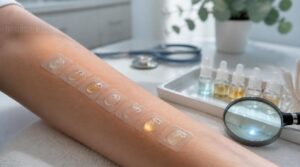
Ever wonder why dermatologists always say, “Patch test first”? Sensitive eyes can react unpredictably, so a patch test acts like a safety net. Secure a patch along your orbital bone or inner arm, leave it for 48–96 hours, and watch for redness, itching, or graded reaction scores. That way, you’ll spot irritants before risking your delicate eye area.
- Maintain patch contact with tape
- Label each allergen panel
- Record irritant versus allergy reactions
Use Tiny Amounts
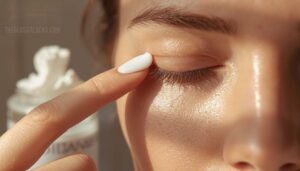
A little goes a long way here. Start with pea-sized dosing, dab gently along the orbital bone using your ring finger, and wait 30 seconds before layering anything else.
| Sensitivity Level | Amount | Frequency |
|---|---|---|
| Very sensitive | 0.25 pea | Once daily |
| Typical | 0.5–1.0 pea | AM/PM |
| Excess dryness | Up to 2 peas | As needed |
Overdoing it risks product transfer into the eye itself—something dermatologist-tested formulas can’t fully prevent.
Avoid The Lash Line
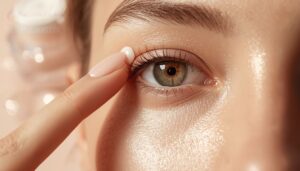
That half-centimeter gap near your lashes isn’t just a suggestion—it’s your defense against irritation and clogged follicles.
Products applied too close risk transfer into the eye and disrupted lash follicle health.
- Keep eye cream near the orbital rim, not the roots
- Wipe liner outward, never scrubbing lashes
- Choose hypoallergenic, dermatologist-tested formulas
- Watch for stinging as an early warning sign
Apply With Ring Finger
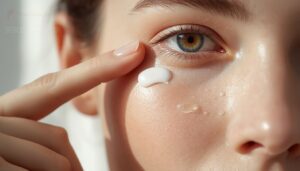
Your ring finger isn’t chosen by accident—it’s naturally the weakest presser among your fingers, which makes it ideal for pressure control around delicate orbital skin.
Ring Finger Mechanics keep application force between 0.5 and 1.0 newtons, gentle enough to prevent micro-tears.
Try the Orbital Bone Technique: pat, don’t drag, your eye cream. Tapping vs sweeping—both work, as long as sensitive eyes stay protected with hypoallergenic, dermatologist-tested formulas.
Frequently Asked Questions (FAQs)
What skincare does not irritate your eyes?
Think of your eye area as a silk scarf among cotton towels — it demands gentler care.
Choose fragrance-free, dermatologist-tested formulas with hyaluronic acid or ceramides, always patch testing first.
Skip alcohol, essential oils, and harsh preservatives to prevent irritation around this delicate skin.
What to use on sensitive skin around eyes?
Reach for a fragrance-free eye cream with hyaluronic acid, ceramides, and squalane for hydration vs puffiness.
Choose dermatologist-tested, non-comedogenic formulas over harsh serums, always patch testing new products to prevent skin irritation around sensitive eyes.
What brand is best for sensitive eyes?
Is there really a single "best" brand for sensitive eyes? Not exactly—it depends on your needs. Clinique suits dermatologist-recommended, allergen-free formulas; Almay offers budget-friendly, hypoallergenic options; and mineral-based brands work well for contact lens wearers.
What is good for very sensitive eyes?
For very sensitive eyes, choose a fragrance-free eye cream or eye serum that’s dermatologist-tested and hypoallergenic, focusing on barrier lipid replacement, reducing ocular inflammation, protecting thin tissue, and minimizing physical stress while managing product migration toward the lash line.
Why are my eyes so sensitive to skincare?
Your eyelid skin is dramatically thinner than facial skin, with a fragile skin barrier and unstable tear film, making it prone to product migration, irritant reactions, and ocular surface sensitivity, even from formulas labeled gentle or hypoallergenic.
What can I use for sensitive under eyes?
Look for a fragrance-free eye cream with hyaluronic acid for hydration, ceramides for gentle barrier support, and caffeine to ease puffiness—choose dermatologist-tested, ophthalmologist-tested formulas designed specifically for sensitive skin care around the delicate under-eye area.
What moisturizer doesn’t irritate the eyes?
Your best bet is a fragrance-free, ophthalmologist-tested eye cream with a simple ingredient list—think ceramides, hyaluronic acid, or an eye contour complex. Skip essential oils and dyes; they’re common culprits behind eyelid redness and stinging.
What can I use for very sensitive eyes?
Funny how the itchiest eyes often react to the "gentle" products marketed for them. For very sensitive eyes, choose fragrance-free, dermatologist-tested formulas with hyaluronic acid or ceramides, patch-test first, then apply gently to rebuild your barrier without irritation.
What skincare products cause eye irritation?
Products with hidden parfum, denatured alcohol, harsh preservatives like benzalkonium chloride, strong exfoliating acids, or essential oils and menthol commonly trigger irritation.
Choose a dermatologist-tested eye cream instead, since these ingredients disrupt the delicate barrier and dry out sensitive eyes quickly.
What causes sensitive skin around the eyes suddenly?
Talk about eye-openers: sudden sensitivity often stems from allergic contact dermatitis, weather shifts, illness, or medication reactions. Physical irritation, fragrance exposure, and stress can also trigger flare-ups, so switch to dermatologist-tested eye cream fast.
Conclusion
Think of your eye area like a Victorian pocket watch: delicate, precise, and easily ruined by rough handling. Your skin deserves that same gentle care.
The right sensitive skin care products for sensitive eyes aren’t about chasing trends; they’re about protecting a barrier that can’t repair itself overnight. Choose fragrance-free formulas, patch test every time, and apply with a light touch. Your eyes will thank you, one gentle application at a time.