This site is supported by our readers. We may earn a commission, at no cost to you, if you purchase through links. This content is for general informational and educational purposes only and is not a substitute for professional medical, dermatological, or nutritional advice.

Your shaving soap sits there, hard and unimpressive, and somehow you’re supposed to turn it into thick, glossy foam. Most people add too much water too fast, then wonder why the result looks like dish suds and feels like nothing.
The best way to lather shaving soap in a bowl comes down to patience. A well-loaded brush and a few drops of water at a time build a dense, yogurt-like cushion that protects your skin and helps the razor glide.
Here’s how to prep, build, and judge your lather, plus quick fixes for when it goes wrong.
Table Of Contents
- Key Takeaways
- Prepare Your Bowl, Brush, and Shaving Soap
- Load Your Brush With Enough Shaving Soap
- Build Bowl Lather by Adding Water Gradually
- Check Lather for Gloss, Density, and Slickness
- Apply Lather and Refresh Between Razor Passes
- Fix Common Shaving Soap Lather Problems
- Frequently Asked Questions (FAQs)
- Conclusion
Key Takeaways
- Load your brush on the soap for 20 to 30 seconds (30 to 60 for harder pucks) until the bristles clump and look pasty, since a well-loaded brush is what makes a dense lather possible.
- Add water to the bowl a few drops at a time while working the brush in small circles, because too much water at once gives you thin, bubbly foam that’s hard to fix.
- Your lather is ready when it looks glossy like yogurt, holds soft peaks, and feels slick between your fingers, so check it before every razor pass and add a few drops of water if it turns tacky.
- Most lather problems trace back to water: add drops to rehydrate dry, pasty lather, load more soap and use tight circles to crush bubbles in thin lather, and use filtered water if hard water makes it collapse.
Prepare Your Bowl, Brush, and Shaving Soap
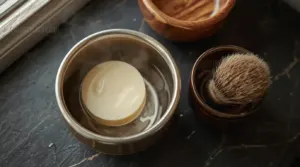
Choose a bowl that suits you. Stainless steel holds heat best, ceramic holds it well but can chip, and wood looks great but needs drying after each shave.
If you’re leaning toward ceramic, this roundup of the best shaving bowls is a handy way to compare options that keep lather warm without costing much.
Warm the bowl with hot water briefly, then dump it out. Soak a natural brush in warm water for 3 to 5 minutes, never hot, since heat can loosen the glue. Synthetic brushes need just a rinse. Shake the soaked brush until it’s damp rather than dripping, since excess water dilutes the soap, and loading the brush by swirling it on the soap for 20 to 30 seconds builds a concentrated paste in the knot.
Then press your soap firmly into the bowl, flush with or just below the rim.
Load Your Brush With Enough Shaving Soap
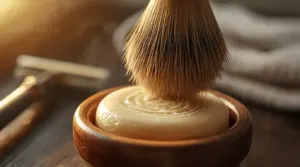
Your soap’s ready, so now it’s time to put the brush to work. Set the damp brush on the soap and swirl it in small circles, switching between clockwise and counterclockwise so the whole face gets coated. Use gentle but firm pressure, and don’t try to make foam yet.
Keep going for 20 to 30 seconds, or 30 to 60 seconds for a harder soap. You’ll know it’s enough when the bristles clump together and look pasty. If the puck feels stubborn, sprinkle a little warm water on it first.
Build Bowl Lather by Adding Water Gradually
With your brush loaded, move it to the bowl and start the lather. Add water in drops, not splashes, then work the brush in small circles or back and forth to mix it in.
Once the lather looks creamy and holds its shape, you can apply it to your face with these shaving cream techniques for better coverage.
- Add a few drops, or half a teaspoon at most.
- Work the brush for several seconds.
- Pause and look at the surface.
- Repeat until the paste turns glossy.
Slow going is the point. Too much water at once gives you thin, bubbly foam, and it’s hard to undo.
Check Lather for Gloss, Density, and Slickness
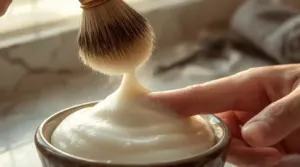
Once the paste looks glossy, stop and test it before you reach for the razor. Look first. A glossy sheen with a dense, yogurt-like body and no big bubbles means you’ve hit the mark. Lift the brush and check that soft peaks hold briefly, then sag.
When your lather gleams like glossy yogurt, free of large bubbles and holding soft peaks that slowly settle, it’s ready for the razor
Now touch it. Rub a bit between your fingers. It should feel slick, not sticky, with no squeak or drag. If it spreads easily in a thin, even coat, you’ve got proper cushion and glide waiting for your skin.
Thick, waxy balms like Naturopathica’s Gotu Kola Repair Balm turn slick once warmed between your fingers, which suits any gentle natural skincare routine.
Apply Lather and Refresh Between Razor Passes
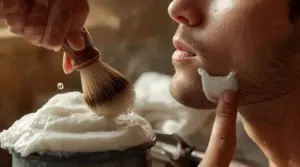
Load your brush from the bowl and paint a thin, even layer across your damp face, working in small circles. The motion lifts whiskers and spreads lather evenly.
Before each razor pass, follow these steps:
- Test the lather between your fingers for drag.
- Add a few drops of warm water to the brush.
- Rework the bowl lather until it turns glossy.
- Reapply with light pressure.
Your goal is slick, dense cushion. If skin feels tacky, hydrate again.
If your skin still feels tacky after layering, this guide to caring for dehydrated skin explains how to rebuild moisture without overdoing it.
Fix Common Shaving Soap Lather Problems

Even with good technique, a lather can go wrong, and that’s normal. Most problems come down to water, so the fixes are quick once you know what you’re looking at. Here are the three common lather problems you’ll run into and how to correct each one.
Rehydrate Dry, Pasty Lather
Dry lather looks like cake frosting: thick, dull, and sticky on your face. Don’t panic. Add water in fingertip amounts, then work it in with brisk circular strokes for 10 to 20 seconds before you reassess.
| Sign | Fix |
|---|---|
| Pasty, dull | Add a few drops |
| Sticky, drags | Brush 15 seconds |
| Collapses | Reload soap |
Stop once it turns glossy and feels slick.
Rescue Thin, Bubbly Lather
Say you’ve whipped up a bowl of foam that looks big and airy but slides off your face the second the razor touches it. Don’t dump it out. That’s a thin lather, and it’s fixable.
Load more soap onto your brush, then work it into the bowl. Add water in tiny splashes, and use gentle, tight circles to crush the large bubbles into a creamy texture.
Adjust for Hard Water
Say your lather looks fine for ten seconds, then collapses into flat, chalky foam that drags across your cheek. That’s often hard water at work, since calcium and magnesium bind the soap and weaken lather stability.
Load your brush longer, add water in drops, and use filtered water. A pinch of citric acid in your soak water helps too.
Frequently Asked Questions (FAQs)
What is the best brush size for bowl lathering?
Picture a soft, dense knot swirling inside your shaving bowl, lather rising like cream. For most setups, pick a 22-24mm knot. It balances lather formation, water control, and maneuverability, and fits comfortably in the bowl.
Can I use shaving soap without a bowl?
Plenty of shavers skip the bowl entirely, and it works. Swirl a damp brush on the puck for 20 to 40 seconds, then lather directly on skin with circular motions, adding water drop by drop.
Can I lather shaving soap without a brush?
Yes, you can. Wet your hands, rub the soap between them until a thick layer transfers, then work it in circles, adding drops of water as needed. You can also lather directly on skin.
How often should I clean my shaving bowl?
Picture a bowl you lathered Monday and left damp until Friday: by then, a grey film clings to the sides. Rinse your shaving bowl after every use, then deep clean monthly to clear soap residue.
How should I store my brush after shaving?
Your brush deserves a spa day, every single time! Rinse out the soap with warm water, squeeze gently, then hang it bristles down on a stand. Let air circulate until it’s completely dry.
How long does a shaving soap puck last?
Most pucks last four to eight months of daily shaving, or roughly 100 to 150 shaves. Soap type, loading time, and water hardness shift that a lot, so shaving a few times weekly stretches one puck toward a year.
Conclusion
Load the brush, add the water, and give it time. That rhythm is the best way to lather shaving soap in bowl, and it works because each step controls the next. Too dry, and the lather turns pasty. Too wet, and it collapses into bubbles. You now know how to spot both and fix them.
Your first bowls might wobble. Stay patient, adjust a drop at a time, and your face will notice the difference.