
This site is supported by our readers. We may earn a commission, at no cost to you, if you purchase through links. This content is for general informational and educational purposes only and is not a substitute for professional medical, dermatological, or nutritional advice.
Your razor shouldn’t tug at your face like a dull pair of scissors on wrapping paper. If it does, the blade is done, and you’re paying for it in nicks, patchy shaves, and redness that lingers into lunch.
Most guys cling to a blade far longer than they should, because it still looks fine. Edges fail before your eyes can catch it. Coarse beards can wear one down in as few as five shaves, and rust turns a cheap blade into a real infection risk.
Knowing how to tell if your safety razor blade is dull keeps your skin safe and your shave sharp. Here are the signs, the lookalike problems, and five blades worth buying.
Table Of Contents
Key Takeaways
- Watch for tugging, patchy spots, extra nicks, and post-shave burning, because a dull edge fails long before your eyes can spot it.
- Rule out a clogged razor head and thin lather first, since hard-water film and weak prep can fake every dull-blade symptom.
- Toss any blade with rust, discoloration, or dents right away, and expect coarse beards to wear one out in about five to seven shaves.
- Swap in a fresh blade rather than sharpening or flipping it, and pick one that matches your skill level, since sharper options like Feather reward careful technique while milder ones forgive mistakes.
Signs Your Safety Razor Blade Is Dull
How do you know when a blade has quit on you? The clearest signs of a dull blade start with a tugging or pulling sensation, especially on cross-grain and against-grain passes, where skin is touchy. A sharp edge slices. A tired one drags.
Pairing a fresh blade with proper shaving preparation steps for women helps the razor glide instead of drag, so you can tell dullness apart from a rushed prep.
Next comes an uneven or patchy shave. If stubble survives multiple passes over the same spot, the edge can no longer track evenly along your skin. You’ll also notice increased shaving time, because you’re redoing work a fresh blade finishes in one pass.
Nicks go up too. A worn edge adds friction instead of slicing cleanly, and friction is how nicks and cuts happen. Soreness or a burning feeling afterward is another giveaway, and a dull blade’s skin irritation can often be eased by rinsing your face thoroughly and applying an aftershave splash or balm. Check for visible rust or discoloration. Either one means the blade is done.
Rule Out Clogs and Poor Shave Prep
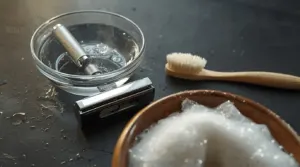
Before you blame the blade, check the razor and your routine. A clogged head and weak lather can fake every symptom above, including the tugging or pulling sensation and an uneven or patchy shave.
Start with the razor. Hard water leaves a chalky mineral film that cuts blade exposure and adds drag. Soak it in 1:4 vinegar and water for 10 minutes, and brush out the center hole with a soft toothbrush. Rinse every few strokes, back to front, before lather and hair harden into paste.
Check your pre-shave preparation. Wet your face for 30 seconds, build dense lather, and re-lather before each pass. Thin foam turns repeated strokes into scraping.
Fix those first. The blade often wasn’t the villain.
Replace Rusty or Damaged Blades Immediately
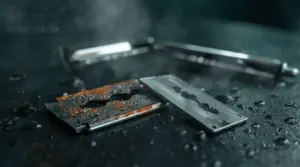
If your razor is clean and your prep is solid, the blade itself is next. Dull is one thing. Damaged is another.
Any visible rust or discoloration means the blade is finished. Rust roughens the edge, harbors bacteria, and turns a small nick into an infection risk. It can’t be wiped away either, because leftover residue returns almost instantly.
The same goes for dents, jagged spots, or tiny visible nicks along the cutting edge. Replace rusty or damaged blades immediately, because a chipped edge is a cut waiting to happen.
Corrosion between shaves starts with a wet razor left in the shower. Rinse, shake, and dry it, and blade oxidation prevention is mostly handled.
What Affects Safety Razor Blade Lifespan
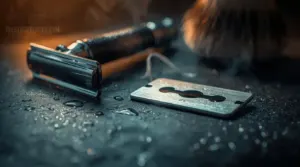
Even a clean blade has an expiration date, and you control more of it than you think. Two guys can shave with the same brand and get wildly different results.
Hair density is the big one. Coarse beards can wreck an edge in 5 to 7 shaves, while fine hair stretches past 12. Hairs are softer than steel, but they flex against the edge and chip it, like steady rain wearing down a stone.
Coarse whiskers dull a blade in a handful of shaves, while fine ones last twice as long, because even soft hair slowly erodes steel
Three habits you can fix today:
- Hold a steady angle. Drifting past 15 degrees from perpendicular raises micro-fractures by 40%.
- Rinse and dry every time. Mineral film from water hardness, sebum, and hair protein chew the edge.
- Keep pressure light and even. Let it cut.
5 Replacement Safety Razor Blades
Once you’ve confirmed the blade is the problem, a fresh one is the fix. Here are five trusted replacement blades that work in most standard double-edge razors. Pick one, give it a few shaves, and let your skin be the judge.
1. Feather Platinum-Coated Double Edge Razor Blades
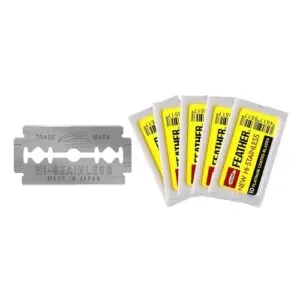
If your current blades feel like a dull butter knife, this pack is the fix. These blades are made from platinum-coated high-stainless steel in Japan, by a maker with over eighty years of production history behind it.
The edge is extremely sharp, so you’ll need fewer passes and less irritation. Expect two to five shaves per blade, and the box holds fifty.
They fit most standard double edge razors. Fair warning: the first shave can feel harsh, and sloppy technique means nicks. Go slow, let the blade work.
| Best For | Experienced wet shavers with a standard double edge safety razor who want a very sharp, close shave and are comfortable using careful technique. |
|---|---|
| Blade Count | 50 blades |
| Blade Type | Double edge |
| Compatibility | Most standard safety razors |
| Coating | Platinum |
| Weight | 2.47 oz |
| Shaves Per Blade | 2-5 shaves |
| Additional Features |
|
- Extremely sharp platinum-coated blades give a close shave with fewer passes and less irritation.
- Made in Japan by a maker with over eighty years of production history.
- The pack of fifty blades lasts a long time, with an average of two to five shaves per blade.
- The first shaves can feel harsh, especially if you’re used to duller blades.
- The sharp edge takes proper technique to avoid nicks and cuts.
- Some users report that blade durability varies compared to other brands.
2. Wizamet Super Iridium Safety Razor Blades
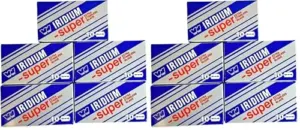
Iridium coating gives these 50-count blades a smooth, forgiving glide, which suits you if nicks make you flinch. They fit Merkur, Edwin Jagger, Parker, and Muhle razors, and barbers and home shavers both use them. Expect close, comfortable shaves with fewer cuts and steady performance.
Here’s the catch. Production ended when Gillette left its Russian plant, so stock is steadily dwindling. They’re pricey for what you get, and they’re milder than Feather blades. Think of a butter knife, not a scalpel.
| Best For | Shavers who are nervous about nicks and want a mild, forgiving blade for a Merkur, Edwin Jagger, Parker, or Muhle razor. |
|---|---|
| Blade Count | 50 blades |
| Blade Type | Double edge |
| Compatibility | Merkur, Edwin Jagger, Parker, Muhle |
| Coating | Iridium |
| Weight | 2.82 oz |
| Shaves Per Blade | N/A |
| Additional Features |
|
- Iridium coating gives a smooth glide with fewer nicks and cuts
- Fits Merkur, Edwin Jagger, Parker, and Muhle razors
- Works well for both barbers and home shavers, with steady, comfortable performance
- Discontinued after Gillette left its Russian production plant, so supply is limited
- Pricey for the performance you get
- Milder than ultra-sharp options like Feather blades
3. Astra Platinum DE Razor Blades
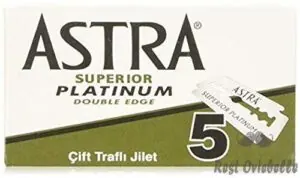
Say you’ve been paying $15 for a pack of cartridges every month. Then someone hands you a 100-count box of blades that could outlast your next few years of Saturday shaves. That’s the Astra pitch.
These stainless steel blades carry a platinum-coated edge and fit any standard double edge handle. They’re oiled, wrapped in paper, and made in India. Expect three to seven shaves per blade, with a close cut that needs less pressure, which helps with coarse stubble and sensitive skin.
The catch: some users find them flimsier than Timor blades. Gentle hands win.
| Best For | Shavers with coarse facial hair or sensitive skin who already use a double edge safety razor and want a low-cost, long-lasting supply of blades. |
|---|---|
| Blade Count | 100 blades |
| Blade Type | Double edge |
| Compatibility | All standard safety razors |
| Coating | Platinum |
| Weight | 6.0 oz |
| Shaves Per Blade | 3-7 shaves |
| Additional Features |
|
- Platinum-coated stainless steel edge gives a close shave with less pressure, which lowers the risk of nicks and irritation.
- Fits all standard double edge safety razor handles.
- The 100-count pack is very cost-effective, with some users reporting it lasts for years.
- Each blade typically lasts only three to seven shaves, and longevity varies by user.
- Some users find the blades flimsier than other brands like Timor.
- Gillette (P&G) ownership and production in India (or Russia, by some accounts) may not suit shoppers who prefer US-made products.
4. Gillette Silver Blue Safety Razor Blades
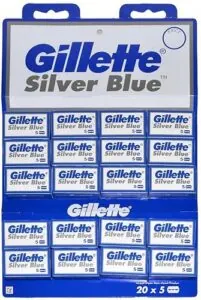
Picture a guy with a thick, wiry beard who burns through blades by Thursday and hates paying per-blade prices. He buys one pack and doesn’t think about it for months.
That’s the pitch here. This 100-count box runs $19.99, and each blade delivers 5 to 6 shaves while holding its edge with minimal drop-off. The close cut takes on thick or hard growth well.
They fit all standard razors, but they’re not for beginners. Sharp edges mean nicks if you rush.
| Best For | Experienced wet shavers with thick or coarse beards who want a long-lasting, low-cost supply of sharp blades. |
|---|---|
| Blade Count | 100 blades |
| Blade Type | Double edge |
| Compatibility | All standard safety razors |
| Coating | N/A |
| Weight | 3.84 oz |
| Shaves Per Blade | 5-6 shaves |
| Additional Features |
|
- Each pack holds 100 blades, and each blade gives 5–6 shaves, which keeps the cost per shave very low at $19.99.
- The close cut handles thick or hard beard growth well.
- The edge stays sharp across multiple uses with minimal drop-off.
- Not recommended for beginners, since good technique is required.
- Needs adequate protective shaving soap to stay comfortable.
- The very sharp edges raise the risk of nicks if the blades are handled improperly.
5. Gillette Platinum Double Edge Razor Blades
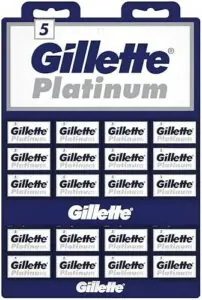
Think of this pack as the budget workhorse of your shave kit. You get 100 platinum-coated blades, packed as 20 dispensers of five, each blade sealed in its own wax paper envelope. They fit all brands of safety razors, so there’s no matching game.
Barber shops and wet shavers both use them, and plenty of users get multiple shaves per blade. Others say one shave is all they get. They’re made in Russia, and feedback runs mixed, so test a few before you commit.
| Best For | Wet shavers and barber shops who want a large, budget-friendly supply of platinum-coated blades that fit any double edge safety razor. |
|---|---|
| Blade Count | 100 blades |
| Blade Type | Double edge |
| Compatibility | All safety razor brands |
| Coating | Platinum |
| Weight | 3.88 oz |
| Shaves Per Blade | Mixed, some one shave |
| Additional Features |
|
- Fits all brands of safety razors, so there’s no need to match blades to your razor
- Comes as 100 blades in 20 dispensers of five, each blade sealed in its own wax paper envelope
- Many users report multiple shaves per blade with a smooth feel and minimal skin irritation
- Customer feedback on blade lifespan is mixed
- Some users say each blade is only good for one shave
- Manufactured in Russia, which may matter to some buyers
How to Dispose of Used Razor Blades

A loose blade in the trash is a paper cut waiting for a sanitation worker. Don’t be the reason someone’s day ends at urgent care.
Start with the sleeve. Slide the used blade back into the paper or PVC cover it shipped in, and fold it shut. Feather packs even have a slot for exactly this.
Then pick a home for the blades you collect:
- A hard plastic bottle with a slot cut in the cap (coffee can lids pop off in compactors)
- A purpose-built blade bank with a narrow drop slot
- A metal tin you can recycle as scrap when it’s full
Rules vary by city, so check yours before you toss anything. Some accept sealed containers in regular trash. Others want sharps drop-offs, and pharmacies often take them. Curbside recycling won’t, so skip that bin.
Seal it, label it, and send it off. Safe and boring is the goal.
Frequently Asked Questions (FAQs)
Can you sharpen safety razor blades?
Technically, yes, but it’s rarely worth it. Stropping realigns a folded edge without removing metal, and it only helps with minor fold-back. Modern DE blades are disposable, so replace them.
Does flipping the blade restore its sharpness?
Flipping a blade is a bit like turning a worn tire around and calling it new. It’s the same edge, same mechanical dulling. Flipping doesn’t restore sharpness, so skip it and swap in fresh steel.
Should you replace a blade after dropping it?
Think of a blade edge as a sheet of ice on a pond: one hard knock and it cracks where you can’t see. Yes, swap out any blade that hits tile. It costs pennies.
Does isopropyl alcohol help prevent blade corrosion?
Think of isopropyl alcohol as a sponge, not a shield. It wipes away moisture, then vanishes. Use it to dry and degrease, but it protects nothing. Follow with a thin film of oil.
Conclusion
Would you keep wearing shoes with a hole in the sole? Then don’t keep shaving with a blade that’s past its prime.
Knowing how to tell if your safety razor blade is dull comes down to a few cues: tugging, skipped patches, irritation, and visible rust. Rule out clogs and sloppy prep, then swap the blade.
Blades cost pennies. Your face has no spare. Change the edge early, and every shave stays smooth and safe.