This site is supported by our readers. We may earn a commission, at no cost to you, if you purchase through links. This content is for general informational and educational purposes only and is not a substitute for professional medical, dermatological, or nutritional advice.
Stand in any drugstore aisle and you’ll face the same standoff: a bottle of lotion in one hand, a bottle of oil in the other. They look like they do the same job, but they don’t even work the same way.
One pulls water into your skin. The other locks it there. Pick the wrong one for your skin type or the season, and you’ll wonder why your skin still feels tight by lunchtime.
The body oil vs lotion debate isn’t about which is "better" — it’s about which one your skin is asking for right now.
Table Of Contents
- Key Takeaways
- Body Oil Vs Lotion: Key Differences
- How Body Oil Works
- How Body Lotion Works
- Moisture, Hydration, and Skin Barrier
- Best Choice by Skin Type
- Best Choice by Season
- How to Apply Both Products
- Which Should You Buy?
- Frequently Asked Questions (FAQs)
- Can I apply body oil without lotion?
- Is it better to use body oil or lotion?
- Do dermatologists recommend body oil?
- Is it okay to use body oil every day?
- Should you put body oil or lotion on after shower?
- Should you use body oil every day?
- Is body oil or moisturiser better for dry skin?
- What is the best oil for the body?
- Can body oil help with eczema?
- Is body lotion suitable for tattoos?
- Conclusion
Key Takeaways
- Lotion hydrates by pulling water into your skin with humectants, while oil seals that moisture in by forming a protective barrier on top.
- Applying either product to damp skin right after a shower dramatically boosts how well it works, since damp skin absorbs ingredients more deeply.
- For the best results, layer lotion first to hydrate, then follow with oil to lock that moisture in and prevent it from escaping.
- Your skin type and the season should guide your choice: dry or mature skin benefits from both products together, oily or acne-prone skin does better with lightweight lotion, and winter calls for oil while summer favors lotion.
Body Oil Vs Lotion: Key Differences
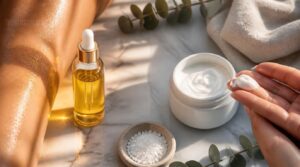
Body oil and lotion aren’t just different textures — they work in genuinely different ways. Understanding those differences helps you pick the right one for your skin, not just the one that smells better. Here’s what sets them apart.
If you’re leaning toward lotion, checking out this guide to the best body lotions for men can help narrow down a formula that actually suits your skin type.
Formula and Ingredients
The difference starts in the bottle. Body lotion is mostly water — usually 60–80% — which means it needs emulsifiers to bond with oils, thickeners like carbomer to control consistency, and preservatives to stay safe over time. Body oil, on the other hand, is pure lipids. No water, no emulsifiers, no preservatives needed.
| Feature | Body Lotion | Body Oil |
|---|---|---|
| Base | Water + emulsifiers | 100% botanical oils |
| Preservatives | Required | Not needed |
| Added extras | Fragrance, fillers, humectants | Antioxidants like vitamin E |
That’s a meaningful distinction. Lotions can carry actives like niacinamide and panthenol well, but they often include synthetic fragrances and dyes. Fragrance-free formulas are the smarter pick for anyone with reactive skin. Oils act as natural emollients and occlusives without the additives — just lipids doing exactly what your skin barrier needs. Ultimately, the quality of formulation determines how effectively these ingredients are delivered to the skin.
Texture and Finish
Ingredients shape how a product feels the moment it touches your skin. Lotion’s lightweight cream texture delivers a cool, thin emulsion that levels out quickly and dries to a soft, near-matte finish. Body oil offers a smooth slip finish — a dewy, satin sheen that stays visible on dry patches.
| Property | Body Lotion | Body Oil |
|---|---|---|
| Consistency | Thin, water-based emulsion | Medium to thick lipid blend |
| Finish | Matte to powdery | Dewy, luminous |
| Feel on skin | Non-sticky, quick-settling | Silky, slightly slippery |
That contrast matters for your routine. A mattifying lotion finish suits oily or combination skin, while a dewy oil blend enhances glow on dry or mature skin.
Absorption Speed
How fast a product absorbs comes down to formula, not finish. Lightweight lotions usually sink in within 2 to 5 minutes — humectants and water spread quickly across your skin’s surface. Body oils move slower, though damp skin and warmer temperatures noticeably speed up dermal absorption by reducing surface tension.
| Factor | Body Lotion | Body Oil |
|---|---|---|
| Absorption time | 2–5 minutes | 5–15 minutes |
| Damp skin impact | Moderate boost | Significant boost |
| Skin temperature effect | Minimal | Speeds diffusion |
| Fatty acid chain length | N/A | Shorter = faster |
| Residue after absorption | None | Light sheen |
Moisture Mechanism
Absorption speed tells you when a product works. Moisture mechanism tells you how.
Body oils act as occlusives — they form a lipid barrier on your skin’s surface, slowing transepidermal water loss rather than adding moisture directly. Lotions use humectants like glycerin to attract water into the stratum corneum, actively pulling hydration inward.
| Mechanism | Body Oil | Body Lotion |
|---|---|---|
| Primary action | Occlusive sealing | Humectant attraction |
| Targets | Moisture retention | Skin hydration |
Best-use Scenarios
Knowing when to reach for each product makes all the difference. Use lotion for daily hydration during your Urban Living Routine — it absorbs fast and layers cleanly under clothing. Reach for body oil post-shower to seal in moisture while skin is still damp.
| Scenario | Best Choice |
|---|---|
| Winter Dryness Relief | Body oil |
| Exercise Recovery | Lotion |
| Nighttime Hydration | Body oil |
How Body Oil Works
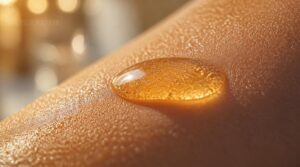
Body oil works differently than you might expect — it’s not actually adding water to your skin. Instead, it locks in the moisture that’s already there, acting like a seal over your skin’s surface. Here’s a closer look at exactly how it does that.
Body oil doesn’t add moisture—it seals in the hydration your skin already has
Seals Existing Moisture
Think of body oil as a seal, not a source. When you apply it to damp skin after a shower, it forms a thin occlusive film that slows water from evaporating off your skin’s surface. That trapped moisture stays where it belongs — in your outer skin layers — for anywhere between 12 and 24 hours.
Supports Skin Barrier
Beyond sealing in moisture, body oil actively strengthens your skin barrier by replenishing the lipids your skin naturally needs. Quality botanical oils deliver ceramides, cholesterol, and fatty acids — the same building blocks your barrier uses to hold cells together and prevent water leakage.
If you’re also dealing with thirsty strands, the same lipid-replenishing logic applies—check out these tips for restoring moisture to damaged hair for a similar approach.
Strengthen that foundation daily, and your skin stays softer, calmer, and far more resilient against environmental stress.
Adds Dewy Glow
Body oil gives your skin that lit-from-within glow you can’t fake with lotion alone. The oils create a reflective surface that catches light softly — no shimmer, no sparkle, just a clean dewy finish.
Squalane smooths texture so light bounces evenly. That’s the light reflection mechanism working quietly in your favor every time you apply.
Best on Damp Skin
The best time to apply body oil is right after your shower, when skin is still slightly damp. That window matters. Damp skin amplifies moisturization — the oil blends with surface water and locks it in, delivering up to 8 hours of hydration instead of evaporating freely.
- Ideal application timing: apply within 60 seconds of stepping out
- Enhanced hydration duration: up to 8 hours when sealed on damp skin
- Barrier reinforcement: fatty acids reinforce lipid layers while moisture is present
- Oil-lotion synergy: layering lotion underneath before sealing with oil deepens the effect
- Dewy finish longevity: the reflective sheen from the previous step lasts longer on hydrated skin
As an occlusive, body oil traps those water droplets against your skin before they escape.
Common Natural Oils
Not all body oils are created equal — the one you choose shapes everything from how your skin feels to how long that moisture actually lasts.
Carrier oils like jojoba, almond, and argan form the base of most body oils. Jojoba is especially smart: it mimics your skin’s sebum, making it compatible with nearly every skin type. Argan delivers deep moisture through oleic and linoleic acids, while almond softens rough patches with vitamin E.
Some formulas blend in essential oils like lavender or frankincense for added skin benefits — lavender soothes irritation, and frankincense calms sensitive areas gently.
| Oil | Key Benefit |
|---|---|
| Jojoba | Mimics natural sebum |
| Argan | Deep moisturization |
| Rosehip | Skin renewal support |
| Fractionated coconut | Lightweight barrier protection |
| Amla / Kakadu Plum | Natural vitamin C brightening |
Cold-pressed, unrefined oils retain the most nutrients — more phytonutrients, more fatty acids, more real benefit. Fractionated coconut oil is a lighter option that absorbs cleanly without heaviness. If you’re trying something new, always patch test first on a small area before going full-body.
How Body Lotion Works
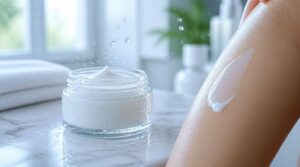
Body lotion takes a different approach to skin care — it works from the inside out by pulling water into your skin. Unlike oil, it’s built around a water base packed with ingredients that work together to hydrate, soften, and absorb quickly. Here’s what actually happens when you smooth it on.
Water-based Hydration
Lotion works differently than oil from the ground up. Its formula is water-based hydration — meaning water is the first and most dominant ingredient. That water content gives lotion its signature lightweight, fluid texture, allowing it to spread across skin quickly and comfortably without drag or heaviness.
That’s why lotion feels so familiar and easy as a daily hydration practice.
Humectants Attract Moisture
What makes lotion genuinely hydrate — not just coat — comes down to humectants. These are ingredients that attract and bind water, pulling moisture directly into your skin. Glycerin, hyaluronic acid, and sodium PCA are the workhorses here.
- Glycerin hydration power draws water from the air into your skin
- Hyaluronic acid binding holds multiple water molecules per molecule
- Moisture from air depends on ambient humidity above roughly 50%
- Sodium PCA mimics your skin’s own natural moisturizing factors
- Humidity dependent performance means results vary by climate
The result? Real skin plumpness effects — softer texture, reduced dry tightness, and visibly smoother skin over time.
Lightweight Daily Feel
After humectants pull water into your skin, what keeps that hydration from feeling heavy is the water-based formula itself.
| Feel Factor | Body Lotion |
|---|---|
| Texture | Feather Light Texture |
| Daily Comfort | All Day Comfort |
Lightweight, noncomedogenic, and waterbased — lotion sits comfortably under clothes without tackiness, giving your skin a cool fresh sensation that carries through your day.
Fast Absorption
Speed is where lotion quietly wins. Its small molecular structure lets it slip through your skin’s surface fast — often feeling absorbed within 5 to 15 minutes.
Lightweight esters like caprylic/capric triglyceride leave almost no surface oil behind. Apply on warm, damp skin after your shower and that heat-boosted absorption kicks in even quicker, leaving nothing heavy, nothing greasy.
Easy Product Layering
Layering is where lotion really earns its place in your routine. Because it’s water-based and fast-absorbing, it fits naturally between your skin prep and heavier products without creating slip or pilling.
Follow this layering sequence for best results:
- Cleanse and pat skin slightly damp
- Apply lotion for water-based hydration
- Follow with body oil to seal in moisture
- Focus heavier balms on dry spots like elbows
- Finish nighttime routines with a barrier-locking cream
Texture match matters too — pair a lightweight lotion with a fast-absorbing oil so nothing feels tacky. Application timing is simple: move quickly while skin is still warm and damp for maximum moisture lock.
Moisture, Hydration, and Skin Barrier
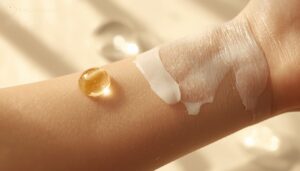
Most people use "moisture" and "hydration" interchangeably, but they actually describe two different things your skin needs. Understanding the gap between them — and how your barrier holds it all together — changes how you choose your products. Here’s what’s really going on beneath the surface.
Dry Versus Dehydrated Skin
Most people use "dry" and "dehydrated" interchangeably — but they’re actually two different problems. Dry skin lacks oil, while dehydrated skin lacks water. One is a skin type, the other is a condition. That distinction matters when you’re deciding between a body oil and a lotion.
Dry skin often looks flaky and rough, feels tight after cleansing, and can tip into redness or irritation. It’s about a lipid deficiency — your skin simply isn’t producing enough natural oils to hold its surface together.
Dehydrated skin, on the other hand, might still look somewhat oily but feel dull and tight. A simple test: pinch a small area. If it doesn’t snap back smoothly, poor skin elasticity is signaling water loss. Fine lines can also look more pronounced when the skin’s water content drops.
Environmental triggers like cold winds, low humidity, or hot showers can worsen dehydration fast. Even low water intake plays a real role. For dry skin, an oil-rich formula or thick lotion helps restore the lipid barrier. For dehydrated skin, a humectant-forward lotion with glycerin or hyaluronic acid pulls water back in.
Preventing Moisture Loss
Losing moisture happens quietly — and faster than you’d think. Every hour, water evaporates from your skin’s surface through a process called transepidermal water loss. Occlusive layer formation is your best defense, whether that’s a body oil or an occlusive-rich lotion physically slowing that evaporation down.
Hydration retention strategies combine both steps: a humectant lotion draws water in, then an emollient or lipid-rich oil seals it there. Cold, dry air accelerates loss, making winter moisture retention non-negotiable — that’s exactly when oils earn their place in your routine.
Barrier Lipid Support
Think of your skin barrier as a brick wall — the bricks are skin cells, and the mortar holding them together is made of barrier lipids: ceramides, cholesterol, and fatty acids. Ceramides alone make up roughly half that mortar. When they’re depleted, the wall cracks. That’s when TEWL measurement reveals the damage — water escapes faster, skin feels tight, and sensitivity spikes.
Biomimetic lipid blends and ceramide replenishment formulas rebuild that mortar directly, while ingredients like phytosphingosine calm inflammation during lipid barrier repair. A rich body oil used as an occlusive emollient locks everything in while restoration happens underneath.
Humectants Versus Occlusives
Two ingredients do completely opposite jobs — yet your skin needs both. Humectants like glycerin and hyaluronic acid pull water into the skin, acting like a sponge. Occlusives seal that moisture in, preventing it from evaporating.
Without an occlusive layered on top, humectants can actually draw water out of your skin in dry climates — undermining your entire routine.
Long-lasting Softness
Soft skin isn’t luck — it’s the result of a sustained moisture barrier working around the clock. Ceramides, fatty acids, and other barrier lipid renewal agents fortify your skin’s natural shield, extending softness well beyond your morning routine. Layer an occlusive oil over a humectant lotion and you’re giving your skin everything it needs to stay smooth all day.
- Emollients fill surface gaps, creating a noticeably silkier feel
- Skin barrier function improves with consistent use of lipid-rich products
- Extended softness duration reaches up to 24 hours with the right combination
Best Choice by Skin Type
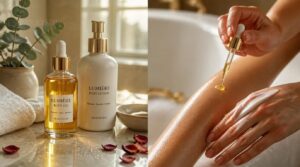
Not every skin type needs the same thing, and choosing between oil and lotion really comes down to what your skin is asking for. The right pick can make a noticeable difference in how your skin feels day to day. Here’s how to match the best option to your specific skin type.
Dry Skin
Dry skin craves both hydration and a proper barrier repair strategy. Since dry skin struggles to hold moisture, you need more than surface-level help.
Sheet masks can give dry skin a quick, temporary plumpness, but whether facial sheet masks actually work depends on realistic expectations, since they won’t rebuild collagen.
A body oil vs lotion combo works best here — apply lotion first for a hydration boost, then seal it with oil. Together, they deliver lipid-based nourishment, long-lasting softness, and real itch relief.
Oily Skin
Oily skin plays by different rules. Excess sebum already acts as a natural barrier, so heavy oils are the last thing you need. Instead, stick to a lightweight, non-comedogenic lotion — it hydrates without adding more grease to the mix.
Here’s what actually works for oily skin sebum control:
- Choose water-based, oil-free lotions to avoid comedogenic ingredients that clog pores.
- Look for squalane oil if you want oil benefits without breakouts.
- Apply products to clean, dry skin to prevent shine from building up faster.
- Pick fragrance-free, dye-free formulas to reduce irritation without triggering more oil production.
- Time heavier applications at night when hormonal influence management matters most and sebum output naturally shifts.
Makeup compatibility is another win for lotion here — lightweight formulas won’t break down your foundation the way a heavy body oil might.
Sensitive Skin
Sensitive skin doesn’t follow oily skin’s rulebook — it writes its own, unpredictable one.
Fragrance-free formulas are non-negotiable here. Fragrances, dyes, and alcohol are common triggers that cause stinging, redness, and itching almost instantly. Your skin barrier is already compromised, so anything inflammatory makes it worse.
| Sensitive Skin Need | Best Choice |
|---|---|
| Itch relief | Fragrance-free lotion |
| Redness calming | Lavender-infused body oil |
| Barrier repair | Ceramide-rich lotion |
| Environmental trigger management | Lightweight, dye-free lotion |
Acne-prone Skin
Acne-prone skin has a tricky relationship with moisture. Skip it entirely, and your skin overproduces sebum — which actually clogs pores faster.
The fix? Noncomedogenic lotions beat heavy body oils here, since oils can sit on already-oily skin and block follicles. For unavoidable dryness, squalane oil is your safest bet — it hydrates without triggering breakouts.
Mature Skin
Mature skin is fighting on multiple fronts — thinning barriers, slower collagen production, and reduced skin elasticity all compound daily dryness.
A rich lotion provides deep hydration while a body oil locks it in. Together, they support barrier repair and keep skin supple longer.
For age spots, look for formulas with vitamin C-rich oils like amla.
Best Choice by Season

Your skin doesn’t need the same thing in July that it needs in January. The season you’re in plays a bigger role in your product choice than most people realize. Here’s how to match your moisturizer to the weather you’re actually dealing with.
Winter Dryness
Winter turns your skin into a battlefield. Indoor humidity drops as heating runs nonstop; dry air pulls moisture from your skin faster than you can replenish it. Cold wind strips away your barrier lipids, and hot showers — however tempting — make things worse.
Reach for a body oil after bathing to seal in warmth-softened moisture before seasonal itch and flaking take hold.
Summer Humidity
Summer flips the script entirely. Instead of sealing in warmth, your skin fights sweat and sticky heat. When dew points climb into the 70s °F, even light movement leaves you damp — and a heavy body oil layered over that? It traps heat and can clog pores fast.
Reach for a lightweight, water-based lotion instead.
Post-shower Routines
Your post-shower window is short — moisture starts escaping the moment you step out. Pat dry gently, leaving skin slightly damp, then move quickly. Three habits that lock in results:
- Apply lotion first to hydrate
- Seal immediately with body oil
- Focus on damp skin for better absorption
This layering order reinforces your skin barrier with lipids that hold softness longer.
Elbows and Knees
Elbows and knees take a beating. Their extensor surfaces stretch and compress constantly with every bend, which wears down the skin faster than almost anywhere else on your body. That repeated tension thins the barrier, leaving behind rough, flaky patches that lotion alone struggles to fix.
Body oil is your best tool here — its occlusive barrier locks in deep hydration where it’s needed most.
Travel Skincare Needs
Travel strips your skin of its rhythm. Airplane cabins run notoriously low in humidity, which means skin hydration drops fast before you even land.
- Apply lotion before departure to jumpstart moisturization
- Carry a travel-size body oil for in-flight sealing
- Pack both in TSA-compliant, leak-proof containers
- Reapply SPF to exposed skin during layovers
- Use oil overnight at your destination for barrier recovery
How to Apply Both Products
Knowing which product to use is only half the battle — how you apply them matters just as much. The right order and timing can make a real difference in how your skin feels and holds onto moisture. Here’s how to get the most out of both.
Apply Lotion First

Start with lotion — always. Apply lotion first to damp skin right after your shower, while there’s still a little moisture clinging to your body. That timing matters more than most people realize. Your lotion’s humectants, like glycerin, draw that surface water straight into your skin.
Use a small amount, spread it in long strokes, and massage until it fully disappears.
Seal With Oil
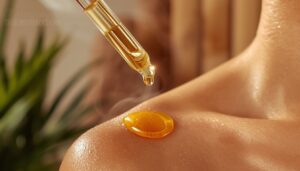
Once lotion sinks in, follow with body oil to lock everything in place. Think of it like a mechanical seal: the oil forms a barrier, trapping moisture while blocking outside dryness. Botanical oils contain lipids that mimic your skin barrier, repairing gaps just like a garter spring keeps constant pressure.
Choose oil viscosity wisely — lighter oils glide easier without feeling heavy.
Use on Damp Skin

Timing after shower matters more than you’d think. Damp skin has tiny micro channels that form in its outer layer, letting body oil and lotion sink in deeper.
Use a gentle patting technique instead of rubbing dry. This boosts enhanced ingredient penetration, reduces evaporation, and locks in epidermal hydration — giving your skin barrier a real moisture advantage from the start.
Massage Thoroughly
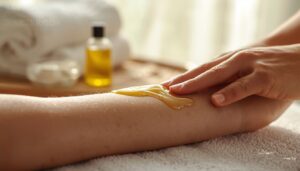
How you rub it in matters. Use gentle pressure depth, moving with smooth stroke direction across arms and legs.
Good lubricant selection (oil or lotion) helps hands glide without dragging skin. Keep a steady speed rhythm, and let proper hand posture guide even, full-coverage massaging.
This boosts skin moisturization, strengthens your skin barrier, and helps topical skincare absorb fully — not just sit on top.
Nighttime Bodycare Routine
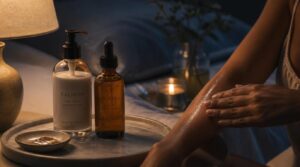
Night is when your skin does its best repair work, so build a routine around that.
Cleanse first, then apply body lotion for hydration while skin’s still damp. Follow with a thin layer of body oil for layering and lasting barrier repair.
Choose fragrance-free formulas to avoid irritation while you sleep, and give everything a few minutes to settle before bed.
Which Should You Buy?
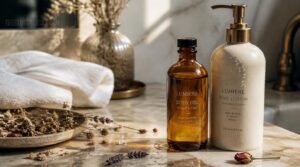
So now you know how oils and lotions work. The real question is what to actually put in your cart. Here’s how to make that call.
Choose Oil for Sealing
Think of body oil like a topcoat on a freshly painted wall—it locks everything in. Reach for oil when your skin barrier needs reinforcement, not just a drink.
Oil seals existing moisture using lipids that mimic your skin’s natural oils, creating real moisturize power for dry patches.
- Elbows and knees craving overnight repair
- Skin that feels tight after showering
- Cold months when temperature stability matters
Choose Lotion for Hydration
Grab body lotion when your skin is just thirsty, not cracked. Water-based hydration delivers moisture fast, with humectants like glycerin pulling water in for rapid skin plumping.
| Ingredient | Type | Benefit |
|---|---|---|
| Glycerin | Humectant | Quick hydration |
| Ceramides | Lipid | Barrier repair |
| Dimethicone | Occlusive layer | Reduces water loss |
Pick fragrance-free options for sensitive skin, and match your lotion to the season.
Use Both for Dryness
Why pick one when dry skin needs both? This is your Dryness Relief Combo — the Barrier Repair Duo working together.
- Lotion hydrates with humectants
- Oil seals it in
- Together they fight moisture loss
- Skin stays soft for hours
This Oil Lotion Synergy offers layered moisture benefits no single product matches alone.
Check Fragrance-free Options
Fragrance-free" sounds simple, but the label can lie. Whether you’re eyeing a body oil or body lotion, check for masking fragrances like essential oils hiding under "natural aroma."
Look for third-party certification and full ingredient disclosure—every preservative listed by name. Patch-test on your wrist first. Real fragrance-free protects your skin barrier; fake claims (with shea or cocoa butter blends) can still irritate sensitive skin.
Compare Ingredients Carefully
The label is just the start—flip the bottle and read the ingredient list. A good label breaks down each component’s job: humectants, emollients, occlusives.
Check fatty acid profiles in oils, preservative safety ratings, and sourcing sustainability labels. Allergen disclosure matters too.
Whether it’s body oil or lotion, those lipids and moisturizing agents determine how well your skin barrier actually gets supported.
Frequently Asked Questions (FAQs)
Can I apply body oil without lotion?
Yes, like locking a door without checking it’s heated inside.
An oil-only routine works for sealing without lotion on damp skin, but if you have deep hydration needs or acne-prone considerations, oil alone won’t fully support your skin barrier’s moisture-locking ability.
Is it better to use body oil or lotion?
It depends on your skin type and goals. Lotion delivers quick hydration with humectants, while body oil reinforces skin barrier repair and moisture longevity through pure ingredients. For best results, layer lotion first, then oil to seal it in.
Do dermatologists recommend body oil?
Absolutely. Dermatologists often suggest body oil as a moisturizer for damp skin post-shower, supporting skin barrier repair with nourishing lipids. They recommend non-comedogenic oils for moisture retention and lasting softness.
Is it okay to use body oil every day?
Daily use is fine if it suits your skin type and absorbs well without clogging pores. Patch test new oils first, watch for breakouts, and adjust frequency if your skin feels heavy or irritated—your barrier will thank you.
Should you put body oil or lotion on after shower?
Right after showering, while skin’s still damp, apply lotion first to moisturize, then layer body oil on top. This locks in moisture, suits most skin types, and makes a simple, effective skincare routine.
Should you use body oil every day?
Yes, for most skin types. Daily use offers solid skin barrier support, locking moisture in while skin absorbs oil. Oily skin should go lighter to avoid breakout risk—try evening application instead of morning, so skin isn’t greasy all day.
Is body oil or moisturiser better for dry skin?
Neither wins alone. For dry skin remedies, layer both: lotion delivers hydration and barrier repair, while oil locks it in for moisture longevity and lasting skin barrier protection—especially during seasonal application like winter.
What is the best oil for the body?
Jojoba, squalane oil, and argan top the list for natural oil benefits, a non-greasy finish, and a rich vitamin content profile.
For quality plus eco-friendly packaging, AUM Restorative Body Oil delivers great price versus quality, supporting your skin barrier beautifully.
Can body oil help with eczema?
Body oil can ease eczema by creating an occlusive barrier that locks moisture in. Try anti-inflammatory oils like coconut, do a patch test first, and ask your dermatologist before adding a nighttime seal routine.
Is body lotion suitable for tattoos?
A fragrance free lotion with a non comedogenic formula works well during tattoo healing moisture support. Choose hypoallergenic, lightweight options, follow proper aftercare application timing, and balance occlusive humectant needs to protect your skin’s barrier and overall health.
Conclusion
Here’s a truth worth testing tonight: damp skin changes everything. Apply either product on dry skin, and you’re just adding a layer on top. Apply it on damp skin, and you’re locking moisture in where it counts. That’s the real secret behind the body oil vs lotion question.
Your skin isn’t loyal to one product—it’s loyal to whatever keeps it comfortable. Some days that’s lotion, some days oil, some days both. Listen to what your skin tells you, and you’ll never guess wrong again.