This site is supported by our readers. We may earn a commission, at no cost to you, if you purchase through links.
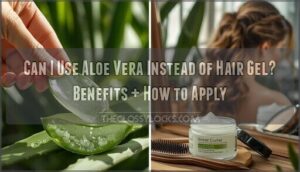
Aloe vera isn’t just for sunburns—lately, it’s turning up in hair routines everywhere, quietly challenging the grip of traditional styling gels. If you’ve ever wrestled with flakes, crunch, or sticky residue, you know the struggle of finding a product that shapes your hair without sacrificing comfort.
Aloe vera offers a gentler touch, smoothing flyaways and defining curls, all while nourishing your scalp. Whether you’re chasing a sleek ponytail or a soft, natural look, you might be wondering: Can I use aloe vera instead of hair gel? Let’s break down how this plant-based alternative fits into your styling routine.
Table Of Contents
Key Takeaways
- Aloe vera gel can replace traditional hair gel, offering a lighter, flexible hold without stiffness, flakes, or sticky residue.
- It nourishes your hair and scalp with vitamins and moisture, helping manage frizz, define curls, and add shine.
- Aloe vera is especially gentle for sensitive scalps, with a low risk of irritation and a pH that matches your scalp’s natural balance.
- For best results, apply aloe vera gel to clean, damp hair in sections, and store homemade gel in the fridge to keep it fresh.
Can I Use Aloe Vera Instead of Hair Gel?
Yes, you can use aloe vera instead of traditional hair gel, though it works differently than what you might be used to. Aloe vera delivers a lighter, more flexible hold that keeps your hair looking natural without the stiffness or crunchiness.
Let’s look at how it stacks up against regular gel, which hairstyles it works best for, and what kind of texture you can expect.
How Aloe Vera Compares to Traditional Hair Gel
While traditional hair gel often creates a stiff, crunchy finish, aloe vera gel delivers flexible hold with a natural texture. You’ll appreciate that aloe vera matches your scalp’s pH balance (4.5–5.5), unlike synthetic gels that sit higher at 6.5–7.5.
Plus, this styling alternative won’t leave flaky residue behind, costs less than commercial products, and offers ingredient safety for sensitive scalps. For a softer hold, consider using aloe vera gel, as it adds slip to hair.
Types of Hairstyles Suitable for Aloe Vera Gel
Aloe vera gel works beautifully as a styling alternative for several hairstyles. It’s especially effective for:
- Curly definition – 87% of users report reduced frizz in twist-outs and braid-outs
- Sleek styles – 72% achieve smooth, slicked-back ponytails with frizz control
- Natural looks – 79% prefer it for air-dried hair texture management
- Protective styles – 71% notice longer-lasting sheen in braids
- Fine volumizing – 67% experience increased fullness
You’ll find it addresses diverse hair styling needs without the crunch. It also contains essential vitamins for hair health.
Hold and Texture You Can Expect
Understanding what aloe vera gel delivers matters before you commit. You’ll get a light hold—usually rated below 2 out of 5—that lasts around 2 to 4 hours on finer hair.
The hair finish feels soft and touchable, never stiff or crunchy like traditional styling products. It’s a styling alternative that prioritizes movement and natural hair texture over rigid structure.
Benefits of Aloe Vera for Hair Styling
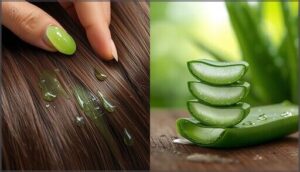
Aloe vera does more than just hold your hairstyle in place. It actually works to improve the condition of your hair and scalp while you style.
Aloe vera styles your hair while nourishing and improving the health of your hair and scalp
Let’s look at the key benefits that make aloe vera a smart choice for everyday styling.
Moisturizing and Nourishing Properties
Think of aloe vera as your hair’s personal hydration coach. Its 99% water composition delivers deep scalp hydration while creating a protective lipid barrier that locks in moisture.
You’ll notice nutrient delivery through vitamins A, C, and E that nourish each strand, plus protein protection from amino acids that strengthen your hair.
The result? Shine enhancement that makes your hair look healthier, and you can genuinely feel the moisturizing difference after just a few weeks.
Reducing Flakiness and Dandruff
When you’re dealing with dandruff, you’ll find that aloe vera’s pH balance (4.5 to 5.5) naturally aligns with your scalp’s needs. Clinical studies show a 58% improvement in scaling and itchiness, making it an effective dandruff treatment.
While its antifungal properties don’t directly target Malassezia, the anti-inflammatory effects deliver genuine flake reduction—often matching standard scalp treatments for noticeable scalp health improvement.
Promoting Scalp and Hair Health
Beyond styling, you’re actually investing in long-term scalp health when you choose aloe vera over conventional hair gel. Its multifunctional benefits address underlying issues that affect hair quality:
- Scalp inflammation relief from enzymes and fatty acids
- Hydration retention through moisture-binding polysaccharides
- Follicle strength via vitamins A, C, E, and essential minerals
- Sebum regulation that balances oiliness without stripping natural oils
- Oxidative stress protection from powerful antioxidants
This combination promotes healthier hair growth while you style.
How to Apply Aloe Vera Gel for Styling
Getting the most out of aloe vera gel starts with knowing how to use it. Here’s what you need to know before you get started.
Just like prepping extensions with a clarifying wash and strand test ensures even color, patch-testing your aloe vera gel first helps you avoid surprises, and if you’re working with dyed extensions, this guide on how to safely dye hair extensions covers the prep steps that keep both your color and strands in good shape.
Just as properly oiling an electric razor keeps its blades gliding smoothly, applying aloe vera gel correctly ensures your skin gets the same soothing, friction-free care.
A few easy steps can help you style your hair and keep it healthy.
Preparing Aloe Vera Gel for Hair Use
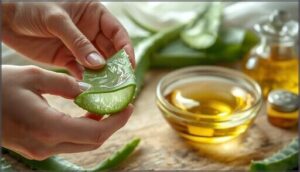
Did you know freshly harvested aloe vera gel can be a powerful hair styling alternative, but only if you prep it right? Start with gel purification and careful latex removal to avoid skin irritation.
For shelf stability, refrigerate your DIY mix and blend with natural oils. Keep the best pH between 4.2 and 5.0 for healthy, nourished hair.
Step-by-Step Application Technique

Ever tried sectioning methods for gel application? Divide your hair into manageable parts, then warm a teaspoon of Aloe Vera Gel between your palms. Massage gently from roots to ends, ensuring every strand gets coverage.
Let it set for 30–60 minutes—longer for deeper conditioning. Rinse with lukewarm water. For best results, adjust application frequency to suit your hair’s needs.
Tips for Even Distribution and Best Results
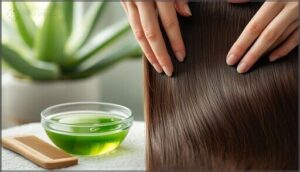
Want smoother styling and less patchiness? Start with a solid Sectioning Technique—divide hair into 4–6 parts for better Aloe Vera Gel coverage.
Scalp Prep matters, so work on clean, slightly damp hair. Use Application Tools like a wide-tooth comb for even spread.
Layering Strategies and Quantity Control—thin coats, not heavy globs—help Aloe Vera outperform synthetic Hair Gel alternatives.
Aloe Vera Gel for Different Hair Types
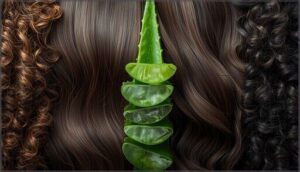
Aloe vera gel isn’t a one-size-fits-all solution, but it works well with many hair types. You’ll find its benefits and styling results can vary depending on your texture and scalp needs.
Here’s how aloe vera gel can support different kinds of hair.
Curly Hair Definition and Frizz Control
Curly hair often feels like a puzzle, but Aloe Vera is a key piece. Its deep Aloe hydration boosts shine improvement and curl clumping, making definition easier.
You’ll notice real frizz reduction—especially in humid weather—thanks to aloe’s humidity resistance. Unlike regular hair gel, it leaves curls smooth and defined, with lasting frizz control and bounce.
Fine and Straight Hair Styling
If you’re working with fine and straight hair, Aloe Vera offers a gentle touch. You’ll see a light polymer film that gives a soft hold retention, perfect for everyday sleek looks. With protein conditioning effects, frizz control improves and shine increases. For best results, follow usage frequency advice:
- Smooth ponytails
- Slicked-back buns
- Tamed flyaways
- Noticeably glossier strands
Safe Use for Sensitive Scalps
Just as Aloe Vera brings shine to fine hair, it’s a gentle scalp soother for sensitive skin. Allergy prevention starts with patch testing—especially if you’re prone to skin irritation or have existing conditions. Pure gel beats product additives for scalp health. Overuse effects are rare, but always listen to your skin’s signals.
Here’s a practical comparison:
| Allergy Prevention | Patch Testing | Overuse Effects |
|---|---|---|
| Less than 1% react | Always wise | Rare, reversible |
| Avoid additives | Pure gel best | Watch for dryness |
| Consult for eczema | Redness, itch | Stop if irritated |
| Liliaceae allergy | Each new batch | Quick recovery |
DIY Aloe Vera Hair Gel Recipes and Tips
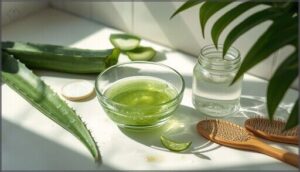
If you want to make your own aloe vera hair gel at home, there are a few easy ways to get started. You can combine aloe with other natural ingredients or use it as a base for nourishing treatments.
Here’s what you’ll need to know before you begin.
Mixing Aloe Vera With Other Natural Ingredients
With a little creativity, you can boost your DIY hair gel by mixing Aloe Vera Gel with natural ingredients. Essential Oil Blends add aroma and scalp stimulation, while Carrier Oil Benefits like coconut or almond oil improve shine and strength. For better hold, try Thickening Agent Options such as xanthan gum. Humectant Hair Masks with honey or yogurt lock in moisture.
- Essential Oil Blends
- Carrier Oil Benefits
- Thickening Agent Options
- Humectant Hair Masks
Creating Leave-in Conditioners and Masks
If you’re exploring DIY Conditioner Recipes, blending Aloe Vera with shea butter and argan oil creates a nourishing leave-in you can whip up in minutes. For a simple Hair Mask, mix aloe gel, honey, and coconut oil—then apply after shampooing.
These Homemade Hair Care projects offer lasting moisture, scalp comfort, and shine, reflecting current Market Trends and Aloe Mask Benefits.
Storing and Preserving Homemade Aloe Gel
Whenever you’re making your own hair gel, smart container selection is key—choose airtight and opaque. Natural preservatives like vitamin E or grapefruit seed extract help. Watch for spoilage signs: odd smells or color.
For Homemade Hair Care, refrigeration duration is about a week, while freezing methods stretch shelf life to six months. These steps keep your DIY beauty projects safe and effective.
Frequently Asked Questions (FAQs)
Can aloe vera gel cause allergic reactions?
Did you know Allergy Prevalence for Aloe Vera Gel is about 1% to 1%?
Reaction Symptoms range from redness and itchiness to rare blisters, often triggered by proteins or latex in the Aloe Vera Leaf.
Diagnosis Methods include patch testing.
How long does aloe vera gel last in hair?
Aloe Vera Gel’s hold duration usually lasts 2–6 hours, depending on humidity and hair type.
For application duration, rinse out after 30 minutes to 1 hour to avoid residue buildup and maintain scalp health. Gel freshness matters for best results.
Conclusion
It’s no coincidence that aloe vera’s rise in hair care mirrors your search for gentler, more effective solutions. When you ask, “Can I use aloe vera instead of hair gel?” you’re opening the door to healthier styling, free from harsh chemicals and buildup.
Aloe’s natural hold, moisture, and scalp benefits work together, quietly transforming your routine. Sometimes, the simplest swaps create the biggest difference—your hair’s comfort and health might just begin with this green, soothing alternative.
- https://www.webmd.com/beauty/benefits-of-aloe-vera-for-your-hair
- https://www.archivemarketresearch.com/reports/aloe-vera-based-skin-and-hair-products-532077
- https://ceremonia.com/blogs/scalp-treatment-products/aloe-vera-s-hidden-powers-for-scalp-and-strand-health
- https://www.rev-320.com/blogs/hair-care-blogs/the-benefits-of-aloe-vera-in-natural-hair-care-a-comprehensive-study
- https://www.sciencedirect.com/science/article/abs/pii/S1773224722000399