This site is supported by our readers. We may earn a commission, at no cost to you, if you purchase through links. This content is for general informational and educational purposes only and is not a substitute for professional medical, dermatological, or nutritional advice.
Coconut oil reduces protein loss by 39% in damaged hair, and that single statistic has convinced millions of people to coat their strands in it. But when your hair repels water like a waxed canvas, that same oil can sit on the surface, blocking moisture and leaving a dull, waxy film.
Low-porosity hair’s tightly sealed cuticles resist both water and oils, which makes coconut oil for low-porosity hair far more complicated than most tutorials suggest. Understanding how it interacts with your specific strands, and where the real risks lie, separates a routine that works from one that weighs your hair down.
Table Of Contents
- Key Takeaways
- Is Coconut Oil Good for Low-Porosity Hair?
- Potential Benefits of Coconut Oil for Low-Porosity Hair
- Why Coconut Oil Can Make Low-Porosity Hair Dry, Stiff, or Greasy
- How to Use Coconut Oil on Low-Porosity Hair Without Buildup
- Best Lightweight Coconut Oil Alternatives for Low-Porosity Hair
- Frequently Asked Questions (FAQs)
- Conclusion
Key Takeaways
- Coconut oil cuts protein loss by 39% in damaged hair thanks to lauric acid binding to keratin, but low-porosity hair’s tightly sealed cuticles mean it mostly coats the surface rather than sinking in.
- Its best use on low-porosity hair is as a pre-shampoo treatment—apply 15–30 minutes before washing to shield strands from water and surfactant damage while detangling gets easier.
- To avoid a greasy, waxy film, apply a pea-to-dime-sized amount to damp (not wet or dry) hair, focus on lengths and ends only, use gentle heat like a steamer or thermal cap, and clarify every two to three weeks.
- If coconut oil still feels heavy, switch to lighter options like argan, jojoba, grapeseed, or fractionated coconut oil, which absorb better without blocking moisture or leaving buildup.
Is Coconut Oil Good for Low-Porosity Hair?
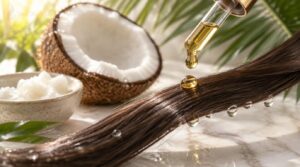
How well coconut oil performs on your hair comes down to one thing: your cuticle structure. Low-porosity hair has tightly sealed cuticles that naturally resist both moisture and oil absorption, making it more selective than higher-porosity strands.
This same selectivity means that choosing the right Cantu products for low-porosity hair matters just as much as the ingredients themselves.
If you’re torn between the two, this shea butter vs. coconut oil comparison breaks down which one suits your hair type best.
Coconut oil’s relatively low molecular weight gives it an edge over heavier fats, allowing it to get closer to the hair shaft. But it’s still limited on this hair type. It sits mostly on the surface, forming a thin film that can reduce water evaporation and support moisture retention without altering the strand internally.
So, can it work for you? Yes, with the right approach. Product amount, application method, and your cleansing frequency all determine whether you get soft, conditioned hair or buildup.
Potential Benefits of Coconut Oil for Low-Porosity Hair
Coconut oil isn’t a total write-off for low porosity hair—it does offer a few real advantages when used correctly. Knowing what those benefits actually are helps you make smarter choices about if and how you incorporate it into your routine. Here’s what the science backs up.
Reduced Protein Loss
Thirty-nine percent less protein loss in damaged hair, and seventeen percent less in healthy strands. That’s what coconut oil can actually deliver.
Lauric acid, which makes up nearly half the oil, penetrates your hair shaft and binds directly to your keratin proteins, forming an internal protective shield.
That bonding keeps your essential proteins locked inside, not washing down the drain.
Its effectiveness comes from reducing protein loss in hair, where it outperformed mineral and sunflower oils across undamaged, bleached, chemically treated, and UV-exposed hair samples.
Pre-Wash Damage Protection
Here’s where coconut oil becomes a true blessing: a prepoo treatment. Coat your strands before shampooing, and the oil forms a hydrophobic film that blocks water and surfactants from roughing up your hair cuticle structure. It also lubricates fibers, so detangling causes less snagging.
For beard wearers, the same pre-shampoo trick works well — this beard care kit guide shows how to prep, oil, and wash without stripping your facial hair.
For hair damage prevention on low porosity hair, apply 15–30 minutes before washing.
Limited Cortex Penetration
That prepoo film does something clever: it stays put. Coconut oil’s lauric acid binds to protein, but low porosity hair resists hair penetration, so you get limited cortex penetration. Don’t panic, that’s actually protective. Your strands keep most of the oil as a hydrophobic barrier on the surface, shielding the cuticle while the fragile inner cortex stays untouched.
Moisture Sealing Potential
Oil sits on the surface of low-porosity hair, and that’s actually where it shines.
Because your tightly sealed cuticles already limit water entry, coconut oil works as a hydrophobic barrier that helps you seal moisture in and slow evaporation.
Apply it to damp strands and you’ll boost moisture retention noticeably.
Just remember: it locks in what’s there, so hydrate first.
Why Coconut Oil Can Make Low-Porosity Hair Dry, Stiff, or Greasy
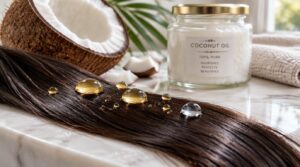
Three things collide here: tightly sealed cuticles, lauric acid’s heavy molecular weight, and repeated re-dosing. Because low-porosity hair resists water uptake, coconut oil mostly sits on the surface instead of sinking in, creating a greasy residue that blocks your next conditioner from absorbing.
Watch for these telltale signs:
- Hair feels crisp or stiff, even right after moisturizing
- Water beads up instead of soaking in during washes
- Your roots turn greasy within a day
- Leave-ins just sit on top and pill
- Strands look coated, dull, and heavy
Warm application can worsen this, encouraging over-saturation of the outer shaft. And if you’re pairing oil with protein-rich products, watch for protein overload, which adds stiffness on top of surface buildup. A periodic clarify resets everything.
How to Use Coconut Oil on Low-Porosity Hair Without Buildup
Here’s the good news: you don’t have to give up coconut oil entirely. With the right technique, you can enjoy its protein-saving wonders without the greasy film or crunchy texture. Follow these four simple steps to keep buildup away and your low-porosity hair happy.
Start With Damp Hair

Here’s the secret: timing changes everything. Coconut oil is hydrophobic, so it repels water. Apply it to soaking wet hair and you block hydration; apply it to dry strands and it just sits there, greasy. Damp hair is your sweet spot. Towel-dry gently first.
Coconut oil repels water, so apply it to damp—not wet or dry—hair for perfect moisture sealing
| Hair State | What Happens |
|---|---|
| Soaking wet | Water blocked out |
| Damp | Moisture sealed in |
| Dry | Oil sits on top |
| Air-dried damp | Even, light coverage |
That dampness slightly dilutes the oil, helping it spread evenly and absorb better. Your cuticles relax just enough for the oil to trap water inside the shaft, boosting moisture retention. This single step transforms your entire hair care routine, and your low porosity hair will thank you for it.
Apply a Small Amount
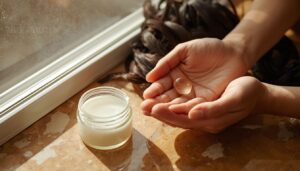
Picture a raincoat in drizzle: a light mist beads off, but a soaked coat gets heavy and stiff. Low porosity hair reacts the same way to coconut oil. A small amount means a thin, rub-in coating, never saturation.
Here’s what a true small amount looks like: A hair oil dropper bottle makes portion control effortless, since one drop is usually all low porosity hair needs.
- Warm a pea-to-dime-sized drop in your palms
- Smooth oil over your hands first, not straight from the jar
- Glide it along lengths and ends only
- Skip roots and scalp entirely
- Stop while hair still feels soft, not slick
This keeps hair oil penetration realistic, since coconut oil mostly sits on the surface of low porosity hair. Too much creates greasy residue and buildup fast. Remember: you can always add more later, but stripping excess means another wash day.
Use Gentle Heat

Here’s the trick: low porosity hair repels oil, so you need warmth on your side. Try these:
- Sit under a steamer for 10–15 minutes.
- Slip on a thermal cap after applying.
- Use steam therapy weekly for even heat.
Warm coconut oil stays fluid, spreads evenly, and won’t leave waxy clumps. Cool oil just sits stiff on top.
Wash and Clarify Regularly

Here’s the wonder of a truly clean wash: your coconut oil finally behaves! Low porosity hair holds onto residue, so regular hair cleansing matters. Alternate gentle shampoos with clarifying shampoos to melt away product buildup and restore that soft, predictable feel.
- Rinse thoroughly after every wash
- Clarify every two to three weeks
- Follow with lightweight conditioner
Your hair care routine will thank you!
Best Lightweight Coconut Oil Alternatives for Low-Porosity Hair

If coconut oil still feels like a fight, switching to a lightweight oil can make a real difference. These alternatives absorb through tightly sealed cuticles without the heavy coating that coconut oil leaves behind, working with your hair’s natural behavior instead of against it. For those wearing protective styles, the best hair growth serums for braids pair beautifully with lightweight oils to nourish the scalp without buildup.
- Jojoba oil mimics scalp sebum very closely, keeping moisture balanced without buildup
- Squalane provides a non-greasy seal that never weighs low-porosity hair down
- Grapeseed oil absorbs the fastest in warm, humid summer conditions, leaving zero residue
- Argan oil delivers richer winter nourishment and glossy shine in just a few drops
- Fractionated coconut oil gives you coconut oil’s benefits at a lighter weight
Pick the oil that fits your season and strand thickness for the best results.
Frequently Asked Questions (FAQs)
What is the best oil for low porosity hair?
Argan oil is your best bet. It’s ultra-light, packed with antioxidants, and slips past tightly sealed cuticles without buildup. Jojoba and grapeseed are wonderful alternatives, boosting moisture absorption and keeping your hair soft, balanced, and truly buildup-free.
What oils should you avoid with low porosity hair?
Like a locked door, low porosity hair keeps out what you pour on it.
Avoid coconut oil, mineral oil, petrolatum, lanolin, and thick butters. They form a hydrophobic barrier on tightly sealed cuticles.
Choose lightweight oils like grapeseed, sunflower, or safflower instead.
Is fractionated coconut oil better for low porosity?
Yes, often. Fractionated coconut oil stays liquid, feels lighter, and rinses more easily, which helps low porosity hair with tightly sealed cuticles. But it still sits on the surface, so use sparingly and clarify regularly.
Does coconut oil work as a pre-shampoo treatment?
Pre shampoo treatments are where coconut oil truly shines. Applied before washing, it forms a protective barrier that limits water absorption and cuts protein loss, even on low porosity hair. Keep it to 20–60 minutes, then rinse thoroughly.
Can I mix coconut oil with leave-in conditioner?
You can, and many do. Mix a tiny amount of melted coconut oil into your leave-in conditioner for extra slip and moisture sealing. For low porosity hair, keep it light; heavy blends cause waxy buildup and block hair product absorption.
Conclusion
Think of coconut oil as a raincoat, not a drink. It shields your strands from water loss, but it can’t hydrate them on its own.
That’s the truth about coconut oil for low porosity hair: it works wonders as a pre-wash protector when you apply it sparingly to damp hair with gentle heat.
Respect your cuticles, clarify regularly, and this oil becomes a true blessing instead of a waxy burden.