This site is supported by our readers. We may earn a commission, at no cost to you, if you purchase through links. This content is for general informational and educational purposes only and is not a substitute for professional medical, dermatological, or nutritional advice.
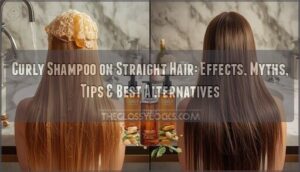
You won’t find curly shampoo marketed to straight-haired users, yet hair stylists regularly recommend it for clients battling frizz and dryness—regardless of their natural texture. The reason lies in formulation: curly shampoos pack humectants like glycerin and emollients such as argan oil that seal the cuticle and lock in moisture, benefits that aren’t exclusive to coiled strands.
But there’s a catch. While these rich ingredients can deliver striking shine and flyaway control, they can also weigh down fine or straight hair, leaving it limp and dull from product buildup.
Understanding which ingredients support your hair goals and which sabotage them determines whether curly shampoo becomes your secret weapon or your styling nemesis.
Table Of Contents
- Key Takeaways
- How Curly Shampoos Differ From Straight Shampoos
- Effects of Curly Shampoo on Straight Hair
- Can Curly Shampoo Change Hair Texture?
- When to Use Curly Shampoo on Straight Hair
- Tips for Using Curly Shampoo on Straight Hair
- Best Alternatives for Straight Hair Care
- Frequently Asked Questions (FAQs)
- Can I use curly shampoo daily on my straight hair?
- What happens if I accidentally get curly shampoo in my eyes?
- Can I alternate curly and regular shampoo weekly?
- Will curly shampoo affect hair dye or color?
- Does curly shampoo work on chemically straightened hair?
- Can curly shampoo help with static electricity issues?
- Conclusion
Key Takeaways
- Curly shampoos pack humectants like glycerin and emollients such as argan oil that smooth the cuticle and lock in moisture, delivering shine and frizz control for straight hair—but these rich ingredients can weigh down fine strands, leaving them limp from product buildup.
- Your hair’s natural texture is determined by genetics and follicle shape, which no shampoo can permanently alter, though film-forming polymers in curly formulas create temporary smoothing effects that vanish within one to three days after washing.
- Use curly shampoo on straight hair only when you have thick, coarse texture, chemically damaged locks, or high-porosity strands—limit application to two or three times weekly and pair with lightweight conditioners applied only to mid-lengths and ends to prevent volume loss.
- Integrate a clarifying shampoo every one to two weeks to remove product residue and restore scalp balance, then switch to volumizing formulas with sulfate-free surfactants and pH levels between 4.5–5.5 that deliver shine without the weight of moisturizing ingredients designed for curls.
How Curly Shampoos Differ From Straight Shampoos
Curly shampoos aren’t built the same as straight hair formulas, and the differences matter more than you might think. It’s all in the ingredients and how they treat your hair’s texture.
If you’re curious about what sets them apart, here’s what you need to know before choosing your next bottle.
Key Ingredients in Curly Hair Shampoos
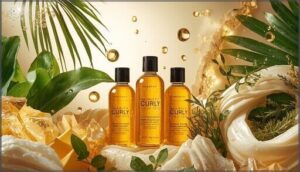
Curly shampoo is engineered with humectant properties like glycerin and hydrating agents such as argan oil, ensuring moisture retention and cuticle smoothing. You’ll find moisturizing ingredients, emollients, and cationic polymers woven in to tackle frizz reduction.
For those managing 4A hair types, these film-forming polymers help define tight coils while preventing the breakage that often comes with dryness.
Unlike sulfate-heavy formulas, these shampoos gently cleanse, prioritizing hydration and manageability—ideal for curls but potentially heavy for straight hair.
Moisturizing Vs. Volumizing Formulas
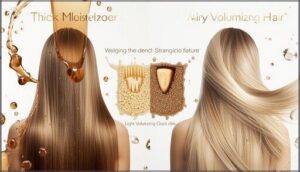
You’ll notice moisturizing ingredients like humectants boost hair moisturization, raising water content and sealing cuticles—great for high porosity but risky for straight hair’s moisture balance.
Volumizing shampoo relies on lightweight volumizing agents and pH-tuned formulas, swelling strands for lift. Overusing heavy formulas risks product buildup, leaving straight hair limp, while lighter blends maintain volume without excess weight.
Understanding the importance of methodological rigor is essential for evaluating hair care products.
Effects on Hair Cuticle and Texture
Beyond moisture balance, curly shampoos directly influence hair cuticle smoothing through their higher conditioning agents and milder surfactants—this minimizes cuticle abrasion during washing. Film-forming polymers create a temporary glide layer that reduces friction between strands, while near-neutral pH formulas help close the cuticle upon rinsing.
The result? Enhanced moisture balance and frizz control, though these effects on hair texture remain temporary rather than permanent. Understanding the language patterns can also help in finding the right hair care products.
Effects of Curly Shampoo on Straight Hair
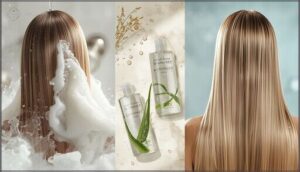
Using curly shampoo on straight hair creates a paradox, since you’re applying a hydration-heavy formula to hair that doesn’t naturally need that level of moisture retention.
This mismatch can trigger both unexpected benefits and frustrating consequences, depending on your hair’s porosity, density, and oil production.
If you’re considering a perm, knowing the full benefits of perming hair can help you decide whether it’s the right fit for your texture and lifestyle.
Understanding these effects helps you decide whether curly shampoo benefits your straight hair or sabotages it.
Potential Benefits (Shine, Frizz Reduction)
You might be surprised to learn that curly shampoo can actually deliver notable shine enhancement and frizz control for straight hair. The humectants and film-forming polymers in these sulfate-free formulas smooth your cuticle, improving light reflection and reducing surface roughness.
Hair moisturizing agents create a protective barrier that tames flyaways, while emollients support moisture balance for sleeker, shinier strands—especially beneficial if you struggle with frizz or dullness.
For curly hair that needs extra care, hydrating hair treatments can help restore bounce and definition while locking in essential moisture.
Common Drawbacks (Weigh Down, Limpness)
The downside? Heavy conditioning agents in curly formulas often trigger hair weight issues your straight strands simply weren’t built to handle. Here’s what you’re up against:
A solid hair care routine for long hair focuses on lightweight moisture that won’t drag down finer textures or strip away protective oils.
- Volume loss from film-forming polymers that flatten roots and suppress natural lift
- Product buildup accumulating wash after wash, making hair appear dull and limp
- Limpness causes tied to emollients disrupting sebum flow, leaving your crown weighted down
A lightweight conditioner and clarifying rinse restore bounce fast.
For straight or fine hair types, the best shampoo for healthy scalp keeps strands light while preventing buildup that weighs you down.
Impact on Scalp Health
Your scalp comfort hinges on shampoo formulation—curly products often skip sulfates, favoring gentle surfactants that preserve sebum balance and support dermal health. This reduces scalp irritation in sensitive types, though rich emollients can leave residue that disrupts natural oil flow.
Watch for allergen exposure if fragrance-heavy; patch-test first. If you notice tightness or flaking, clarify immediately to restore scalp health and hair vitality.
Can Curly Shampoo Change Hair Texture?

You’ve probably heard the claim that curly shampoo can transform straight hair into waves or curls, but that’s more myth than reality. Your hair’s natural texture is determined by genetics, specifically the shape of your hair follicle, which no shampoo can alter.
Curly shampoo can’t transform straight hair into curls—your texture is determined by genetics, not products
However, certain ingredients in curly formulas can create temporary textural changes that might confuse you into thinking your hair structure has shifted.
Myth Vs. Reality of Curl Formation
You’ve likely heard claims that curly shampoo can transform straight hair into cascading curls, but this notion contradicts biological influence and hair follicle structure. Your curl pattern genetics determine whether hair grows straight or curly, rooted in the follicle’s shape.
While curly shampoos with humectants might amplify temporary curling effects or reduce frizz, they can’t permanently alter hair texture. Curl formation requires structural changes beyond what any curl defining shampoo achieves.
Role of Film-Forming Polymers
Film-forming polymers in curly shampoo create a flexible layer on your hair shaft, smoothing cuticle surfaces and reducing frizz—but on straight hair, they can add unwanted weight.
These acrylates copolymers boost shine through uniform surface interaction, yet polymer concentration determines whether you’ll experience glossy smoothness or limp, lifeless strands that lack volume and movement.
Temporary Vs. Permanent Effects
Curly shampoo won’t permanently alter your hair texture—those moisturizing effects of curly shampoo on straight hair vanish within one to three days after washing. The conditioning films that smooth your cuticle layer rinse away completely, restoring your natural moisture balance.
Product buildup from repeated use can temporarily weigh down strands, but clarifying treatments quickly reverse this without causing hair damage or compromising scalp health.
When to Use Curly Shampoo on Straight Hair
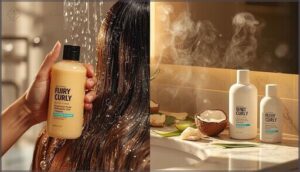
You don’t need to swear off curly shampoo entirely if you have straight hair, but knowing when it actually makes sense matters.
Certain hair conditions and specific situations can benefit from the extra hydration and smoothing agents these formulas provide.
Here’s how to recognize when curly shampoo works for your straight hair—and when it’s time to step away.
Suitable Hair Conditions and Types
Your hair’s porosity level holds the key to understanding whether curly shampoo will enhance or sabotage your straight hair care routine. Not all straight hair responds the same way—texture, damage history, and scalp balance determine compatibility.
Four hair conditions that benefit from curly shampoo:
- Thick, coarse texture – Absorbs moisture-rich formulas without excessive weigh-down
- Chemically damaged locks – Bleached or permed strands gain manageability from conditioning agents
- High-porosity hair – Retains hydration better with emollient-heavy products
- Dry, frizz-prone fine hair – Occasional use smooths without flattening (monitor buildup carefully)
Occasions for Extra Moisture or Smoothing
Beyond your baseline hair condition, specific moments call for curly shampoo’s hydrating ingredients and emollients. Post-color treatments demand moisture balance to counteract chemical processing damage—your strands need recovery time.
Climate adaptation matters too: humid weather requires smoothing techniques for frizz control, while dry environments benefit from enhanced hair moisturization.
Pair these occasions with lightweight conditioner to maintain body without sacrificing the hair hydration straight locks occasionally crave.
Signs Curly Shampoo Isn’t Right for You
When the formula doesn’t match your hair types, your scalp sends warning signals you shouldn’t ignore. Watch for these red flags that curly shampoo isn’t compatible with straight hair:
- Scalp irritation or persistent itching develops after washing
- Greasy feel emerges within 24-48 hours despite cleansing
- Hair limpness steals volume you normally maintain
- Dry ends or buildup issues accumulate despite rinsing thoroughly
Switch back to shampoo for straight hair when these symptoms appear—your hair care routine demands formulas matched to your texture’s actual needs.
Tips for Using Curly Shampoo on Straight Hair
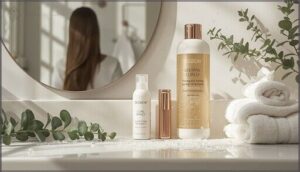
If you’ve decided curly shampoo suits your straight hair needs, you’ll want to use it strategically to avoid the common pitfalls of product build-up and lifeless strands.
The key lies in adjusting your application frequency, choosing complementary products, and maintaining scalp clarity through periodic deep cleansing.
Here’s how to make curly shampoo work for your hair type without sacrificing volume or freshness.
Frequency and Application Techniques
Using curly shampoo on straight hair demands thoughtful wash frequency—aim for two to three times weekly to sidestep product buildup and maintain scalp balance.
Apply a modest amount directly to your scalp, work through with a gentle massage for 20–30 seconds, then rinse thoroughly with lukewarm water.
This hair care routine preserves natural oils while preventing the limpness that undermines your hair type considerations.
Pairing With Lightweight Conditioners
After establishing your wash routine, you’ll want to balance moisturizing effects with Volume Preservation by selecting a silicone-free Lightweight Formula.
Apply conditioner only to mid-lengths and ends to protect your Hair Cuticle without flattening roots—this Conditioner Balance shields straight hair from the heavier Silicone Effects found in many curly shampoo systems, keeping your hair care routine smart and effective.
Using Clarifying Rinses to Prevent Build-Up
To counteract Product Residue from moisturizing formulas, integrate a clarifying shampoo every one to two weeks. This Buildup Removal strategy preserves Scalp Hygiene and resets Hair Porosity, allowing your straight hair to breathe without dulling shine.
Choose chelating agents like citric acid over harsh sulfates, then follow with a lightweight conditioner to restore suppleness—your Clarifying Benefits protect volume while maintaining the balance your shampoo formulation and ingredients demand.
Best Alternatives for Straight Hair Care
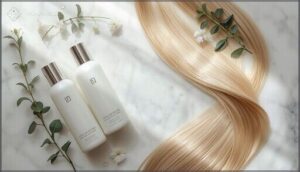
If curly shampoo isn’t cutting it for your straight hair, you don’t need to settle for limp, lifeless strands.
The right products can give you volume, shine, and manageability without the weight of moisturizing formulas designed for curls.
Here’s what actually works for straight hair care.
Volumizing and Lightweight Shampoo Options
When straight hair demands lift without the drag, volumizing shampoos with lightweight surfactants become your secret weapon. Look for sulfate-free options featuring gentle cleansing agents like sugar-derived surfactants and amphoteric compounds that remove buildup without stripping your scalp.
These pH-balanced formulas often skip silicones in favor of silicone alternatives—lightweight polymers that boost hair volumization at the roots while keeping your strands bouncy, not burdened.
Recommended Ingredients for Straight Hair
Your straight hair thrives when you choose ingredients that respect its natural texture. Lightweight surfactants cleanse without residue, while pH balance between 4.5–5.5 keeps your cuticle sealed and frizz-free.
- Panthenol and amino acids for moisture control that won’t flatten volume
- Sulfate-free formulas with gentle cleansers protecting scalp health
- Hydrolyzed proteins (silk, wheat) adding slip without weight
- Light esters and silicone alternatives delivering shine in volumizing shampoo blends
Enhancing Shine and Health Without Heaviness
You can achieve radiant shine enhancement without sacrificing volume by choosing sulfate-free formulas with lightweight moisturizers like glycerin and aloe. These gentle cleansing agents support hair health maintenance while pH-balanced ingredients close your cuticle for maximum light reflection.
Silicone-free emollients deliver hair smoothening and moisture balance, proving that straight hair doesn’t need curly shampoo’s heavy conditioning for effective hair moisturizing techniques.
Frequently Asked Questions (FAQs)
Can I use curly shampoo daily on my straight hair?
Like watering a cactus daily, using curly shampoo daily on straight hair overwhelms it with moisture it doesn’t need.
This causes product buildup, scalp irritation, and increased hair weight, especially for fine or oily straight hair types.
What happens if I accidentally get curly shampoo in my eyes?
If curly shampoo contacts your eyes, you’ll experience stinging, redness, and tearing from surfactants. Rinse immediately with lukewarm water for 5–10 minutes—don’t rub. Persistent pain requires medical attention.
Can I alternate curly and regular shampoo weekly?
Yes, you can rotate formulas weekly—it’s a balancing act. Use curly shampoo 1–2 times for moisture, then switch to lightweight shampoo to prevent product buildup and maintain volume on straight hair.
Will curly shampoo affect hair dye or color?
Sulfate-free curly shampoo formulations won’t strip hair dye as aggressively as harsher cleansers. However, residue buildup from film-forming polymers can diminish color saturation and vibrancy over time. This necessitates periodic clarifying treatments to restore dye longevity.
Does curly shampoo work on chemically straightened hair?
Think of it as nursing a healing wound—you need gentler care.
Curly shampoo can actually benefit chemically straightened hair by delivering sulfate-free moisture balance, reducing chemical damage while addressing elevated hair porosity without typical product buildup.
Can curly shampoo help with static electricity issues?
Moisture-preserving humectants and conditioning polymers in some formulas can reduce static electricity by maintaining hydration and neutralizing surface charges, though results vary with climate and your overall hair care routine.
Conclusion
Your hair won’t forgive you for guessing wrong with formulation—ingredient precision determines whether curly shampoo on straight hair becomes your glossing solution or a flat, greasy disaster.
Match humectant levels to your strand’s porosity, leverage clarifying rinses to prevent polymer accumulation, and rotate with volumizing formulas when weight becomes apparent.
The cuticle doesn’t lie: if your hair collapses after two washes, your scalp has already delivered its verdict. Trust the texture feedback, not the marketing claims.