This site is supported by our readers. We may earn a commission, at no cost to you, if you purchase through links. This content is for general informational and educational purposes only and is not a substitute for professional medical, dermatological, or nutritional advice.

Peek into any dermatologist’s cabinet and you’ll likely spot a small amber bottle of vitamin C serum sitting front and center. That’s not a coincidence. Decades of research back its ability to fade fine lines and revive dull, crepey skin.
But does vitamin C serum help with wrinkles across the board? Not exactly. It shines on surface-level lines and early crow’s feet, while deep grooves around the mouth or forehead barely budge.
What follows breaks down which wrinkles respond, why the chemistry works, and how to use it for results you can actually see.
Table Of Contents
Key Takeaways
- Vitamin C serum works best on fine lines, crepey texture, and early crow’s feet, but it can’t smooth out deep grooves around your mouth or forehead since only 10-20% of the active ingredient actually penetrates living skin cells.
- Look for a serum with L-ascorbic acid at 10-20% strength, a pH below 3.5, and added vitamin E and ferulic acid, since that combo boosts sun protection up to eightfold and keeps the formula stable.
- Daily morning application matters far more than fancy formulas—consistent use drives 82-94% success, while skipping to just a few times a week can cut your results by nearly half.
- Give it time: expect brighter skin within days, but real fine-line softening takes 8-16 weeks, so pair your serum with sunscreen every morning and consider retinol at night for deeper wrinkles.
Does Vitamin C Serum Help With Wrinkles?

Short answer: yes, but with some caveats worth understanding. Vitamin C works best on certain types of wrinkles, and knowing which ones helps you set the right expectations. Here’s what it can realistically do for your skin.
If you’re curious how it stacks up against other options, this guide on antiaging supplements for skin health breaks down what actually makes a difference.
Wrinkles Vitamin C May Improve
Not all wrinkles respond the same way. Vitamin C shines on fine lines, crepey texture, and early crow’s feet, the kind of aging linked to thinning collagen and daily UV exposure.
Its collagen boost helps rebuild structural support, while antioxidant effects calm free-radical damage that accelerates fine lines. Research shows vitamin C acts as a cofactor for collagen-producing enzymes, stabilizing collagen fibers and boosting their production. Think surface refinement, not a face-lift in a bottle.
Prevention Versus Visible Correction
Here’s the real question: is vitamin C fixing damage or blocking it before it starts?
Both, actually. Its preventive care strategy slows new fine lines by protecting collagen production and skin elasticity, while gradually softening lines already visible. Think proactive aging defense paired with a sustained correction approach. Early intervention benefits compound over time, supporting long-term skin health rather than reversing decades of antiaging neglect overnight.
Realistic Anti-Aging Expectations
So what’s a fair goal here? Setting achievable goals matters more than chasing perfect skin. Expect softer fine lines, better tone, and steadier collagen production, not erased wrinkles.
Managing wrinkle visibility means tracking subtle changes over weeks, not days. Balance hope with realism: genetics and sun exposure still shape aging, but consistent use helps lasting skin elasticity and smarter antiaging habits.
Yes, Vitamin C Can Reduce Wrinkles

Here’s the short answer: vitamin C works, but not on every wrinkle equally. Where you’ll see it shine, how fast results show up, and where it hits a ceiling all matter. Let’s break down what you can realistically expect.
Best for Fine Lines
Think of fine lines as early cracks in a sidewalk, easier to smooth over before they deepen. Vitamin C serum shines here, boosting collagen production and offering real antioxidant protection against daily wear like sun and pollution.
Fine lines are like early cracks in a sidewalk, easiest to smooth over before they deepen
It’s not a wrinkle eraser for deep folds, but for surface-level texture and early wrinkle prevention, it earns its spot in your routine.
Gradual Results With Consistency
Patience pays off here. Collagen production ramps up slowly, so daily use matters more than product strength. Most people notice brighter tone within weeks, but fine lines take around 12 weeks of consistent use to visibly soften.
Skip a few days and you reset the clock. Tracking progress through monthly photos, not daily mirror checks, keeps expectations realistic while your skin quietly rebuilds itself.
Limits for Deep Wrinkles
Because your skin’s outer barrier is built to keep things out, deep grooves around your mouth or forehead won’t vanish from serum alone.
- Only 10–20% penetrates living skin cells
- Stratum corneum blocks most active ingredient
- Molecular barrier constraints limit dermal reach
- Fibroblasts get insufficient exposure for deep repair
- Barrier saturates after roughly three daily applications
For those wrinkles, pair vitamin C with retinoids or professional treatments.
Timing matters too, so check out this guide on when to apply vitamin C serum to make sure it’s actually working with your retinoid instead of against it.
How Vitamin C Reduces Wrinkles

So what’s actually happening under your skin when vitamin C goes to work? It’s not one single action, but a handful of connected processes working together. Here’s a breakdown of exactly what this ingredient does at the cellular level.
Stimulates Collagen Production
Your fibroblasts are collagen factories, and vitamin C flips on the switch. It fuels procollagen synthesis increase while driving the hydroxylation process essential for turning raw amino acids into stable collagen.
Studies show topical L-ascorbic acid boosts fibroblast activity and type I/III collagen output. Translation: more building blocks, more structural support, fewer visible fine lines over time.
Strengthens Skin Structure
New collagen only helps if it’s built to last. Vitamin C drives collagen cross-linking, locking fibers into a tighter scaffold through fibroblast matrix contraction, boosting collagen deposits up to 40% in lab studies.
It also raises MMP inhibitor activity, blocking enzymes that chew through collagen. Add rising dermal papillae density, and you get real dermal thickening, firmer, more resilient skin structure.
Neutralizes Damaging Free Radicals
Think of free radicals as tiny troublemakers with unpaired electrons, stealing from your skin cells and leaving oxidative stress behind. Vitamin C’s antioxidant action neutralizes these reactive species before they damage lipids, proteins, and DNA.
This scavenging effect blocks sunburn cell formation by 40-60% with daily use, protecting collagen from oxidative breakdown before it ever starts.
Slows Collagen Breakdown
Your skin is constantly making collagen and breaking it down. Enzymes called MMPs (matrix metalloproteinases) chew through old fibers as part of that turnover, but UV exposure kicks MMP activity into overdrive.
Vitamin C fights back on two fronts: it chelates zinc, the metal ion MMPs need to function, and boosts TIMP-1, a protein that binds and disables these enzymes directly.
Supports Firmer-Looking Skin
Blocking breakdown is only half the story. Vitamin C also builds firmness through fibroblast activation, elastin support, and better tensile strength.
Three effects stand out:
- 40% more fibroblast proliferation in lab studies
- Elastin cross-linking improves within 12 weeks
- Barrier integrity cuts water loss by 30%
Together, these support skin firmness and dermal thickness you can actually feel.
Which Vitamin C Formula Works Best?

Not every vitamin C serum is created equal, and the formula you pick matters as much as the fact that you’re using one at all. Small details like the active ingredient, concentration, and pH can make the difference between real results and a bottle that just sits on your shelf. Here’s what to look for before you buy.
Choose L-Ascorbic Acid
When shopping for a serum, check the label for L-ascorbic acid, not "vitamin C derivatives." It’s the chemically defined, active isomer your skin actually recognizes, the pure, biologically active stereoisomer L-form proven to fuel collagen synthesis. Other derivatives convert poorly.
As a topical antioxidant, L-ascorbic acid experiences free radical scavenging directly, no middleman required for real wrinkle-fighting power.
Look for 10–20% Strength
Concentration matters as much as the ingredient itself. Research shows effectiveness plateaus around 20%, with a Franz diffusion study finding 20% ascorbic acid penetrated 1.5 times better than a 10% formula. Below 10%, effects often stay limited to a mild glow.
The 10 to 20 range balances real correction against your skin’s irritation threshold, so pick strength based on tolerance, not marketing hype.
Check Low-pH Formulas
Strength won’t matter if pH is off. L-ascorbic acid needs a pH below 3.5 to stay stable and actually penetrate skin.
That low pH is also why sensitive skin types often react, so it’s worth reading up on why vitamin C serum causes skin irritation before adding it to your routine.
- Confirms acidic stability testing behind the label
- Signals proper formulation pH targeting for barrier compatibility
- Helps collagen synthesis while easing fine lines
Look for low-pH product labeling or lactic acid buffering systems, both signal serious antioxidant properties, not just marketing.
Add Vitamin E and Ferulic
Since vitamin C oxidizes fast, pairing it with vitamin E and ferulic acid stabilizes vitamin C and enhances antioxidant power. Research shows this trio boosts photoprotection from fourfold to eightfold against solar damage.
That means fewer free radicals attacking collagen, less sun-triggered wrinkling, and better combined effects boost protection overall. Check labels for all three ingredients together.
Consider L’Oreal Revitalift Serum
If you want a formula that checks every box, L’Oreal Revitalift Serum fits the bill. It’s built as a multi-action treatment targeting wrinkles and firmness, with opaque, dropper-based packaging that limits oxidation.
The lightweight texture absorbs quickly, making it easy to layer each morning before moisturizer and sunscreen, and it pairs well with other Revitalift products.
When Will Wrinkle Results Appear?

Patience matters here, and knowing what to expect makes it easier to stick with your routine. Vitamin C doesn’t work on the same timeline for every part of your skin. Here’s a realistic breakdown of what you’ll notice and when.
Early Skin Brightening
Before wrinkles even budge, your skin usually looks brighter first. This Early Luminosity Improvement shows up as a Radiant Morning Glow, that "did you get sleep?" freshness. You’re seeing Quick Tone Evenness from melanin inhibition, not collagen changes yet.
Add a Hydrated Brightness Boost from consistent moisturizing, and skin looks genuinely Fresh-Looking within days, well before deeper fine-line correction begins.
Gradual Fine-Line Improvement
Real fading takes longer, and that’s by design. Around week five to seven, skin texture starts to even out, softening how fine lines catch light.
By week eight, collagen becomes structurally visible, and visible wrinkle softening builds steadily through week sixteen as fibers crosslink and strengthen underneath.
Consistency Affects Results
Skip a few mornings and your skin notices. Data from over 112,000 users shows daily application drives 82-94% success, while three to four weekly uses cuts results by up to 47%.
- Apply each morning before moisturizer and sunscreen
- Store serum in a cool, dark, airtight container
- Pair with vitamin E and ferulic acid
- Commit to at least 8-12 weeks
- Support epidermal turnover with steady, uninterrupted use
Photos Help Track Changes
Your mirror lies to you daily, small changes hide in plain sight. A proper before and after comparison reveals what memory misses.
Take weekly progress photos in consistent daylight, same window, same time. Digital analysis tools can measure pixel-level shifts in fine lines and skin elasticity.
Keep a simple photo organization system, dated folders tracking collagen production’s slow work against photoaging.
How to Apply Vitamin C Serum
Even the best vitamin C serum won’t do much good if you’re applying it wrong. Order and timing matter just as much as the formula you choose. Here’s the routine that gets you the most out of every application.
Apply to Clean Skin

Before ascorbic acid can work its magic, your skin needs a truly clean surface to absorb it. Cleanse first, serum second, always in that order.
Use lukewarm water, gently massage cleanser in, then pat skin dry, don’t rub. Wait before moisturizing so vitamin C serum penetrates fully, setting the stage for real collagen formation and smoother wrinkles down the road.
Use Serum Each Morning

Timing matters as much as the formula itself. Morning application lets vitamin C serum work as a shield, not just a treatment, pairing with antioxidant protection to fend off UV rays and pollution all day.
A pea-sized amount covers your face and neck. Give it 60 seconds to settle before layering, letting it fully absorb and start defending against skin aging.
Follow With Moisturizer
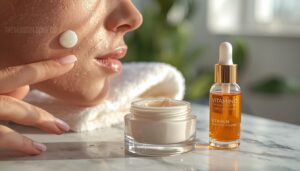
Once that vitamin C has settled in, seal it with moisturizer on damp skin. This locks in hydration and rebuilds barrier support, easing dryness from active ingredients.
Look for:
- Fragrance-free formula
- Non-comedogenic label
- Ceramide content
- Lightweight, non-greasy feel
A strong barrier means fewer fine lines and firmer, more resilient skin.
Always Finish With Sunscreen

Skip sunscreen and you’re undoing everything the vitamin C just did. UV rays break down collagen faster than any serum can rebuild it, so this step isn’t optional.
Choose broad spectrum SPF 30+, apply 15-20 minutes before heading out. Reapply every two hours, or right after sweating or swimming. It’s the last layer in your morning routine, and the one guarding your progress against wrinkles.
Introduce Retinol on Alternate Nights
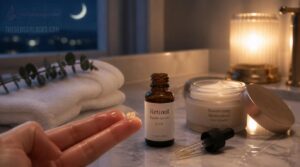
Once your skin tolerates vitamin C and sunscreen, layer in retinol at night to boost collagen formation further. Start slowly: 2-3 nights weekly, always to dry skin, pea-sized amount.
- Apply retinol on dry skin
- Use a pea-sized dose
- Pair with moisturizer after
- Build tolerance before nightly use
Expect 6-8 weeks of adjustment as your skin barrier repairs itself.
Prevent Irritation and Serum Oxidation

Vitamin C works hard for your skin, but it can also be a little fussy if you don’t treat it right. Irritation and oxidation are the two most common ways a good routine goes sideways. Here’s how to keep your serum stable and your skin happy.
Patch Test Before Use
A new bottle shouldn’t touch your whole face until it’s proven itself on a small patch. Dab serum inside your elbow, wait 24 hours, and check for redness or bumps. This confirms your skin tolerates the formula before wider application, protecting your skin barrier during transdermal absorption. Skipping this step risks irritation that undermines wrinkle-fighting results entirely.
Start With Lower Strength
Because ascorbic acid can sting sensitive skin, ease in at 10% concentration first. Apply 1-2 drops every other day for two weeks, watching for redness lasting past 24 hours. Gentler options like ascorbyl glucoside or sodium ascorbyl phosphate work too:
- Lower irritation risk
- Still boost antioxidants
- Support hydration
- Fit sensitive skin
- Allow gradual buildup
Avoid Overusing Exfoliating Acids
Chemical exfoliants break the bonds holding dead skin cells together, and that’s useful, but over-exfoliating stacks irritation right on top of your vitamin C routine. Stick to one to two sessions weekly.
Using AHAs or BHAs daily invites a damaged barrier, undoing the hydration and firmness you’re working for. Notice redness? Pause exfoliation completely and let skin recover before resuming.
Choose Opaque Airtight Packaging
Your serum’s worst enemies are light and air, so opaque airtight packaging matters as much as the formula inside.
- Dark amber glass or opaque plastic blocks light
- Airtight pumps limit oxygen exposure
- UV-resistant coatings guard against degradation
- Store bottles away from sunlight, in a cool spot
Good packaging keeps ascorbic acid stable near pH below 3.5, so it actually works.
Discard Darkened Serum
Color tells you everything. Fresh vitamin C serum looks clear or pale yellow; dark yellow or brown means it’s oxidized and useless.
Discard darkened serum immediately, no exceptions. Oxidized formulas lose antioxidant power and can irritate skin.
Store bottles below pH 3.5, away from heat and light, to extend potency. Check color monthly, replace promptly, and always wash hands before application to prevent contamination.
Frequently Asked Questions (FAQs)
Which is better for anti-aging, retinol or vitamin C?
Neither wins outright.
Retinol drives skin renewal and fine-line smoothing; vitamin C delivers antioxidant defense, collagen boost, and pigmentation fade.
Pair retinol at night with a vitamin C serum each morning for complete anti-aging coverage against wrinkles.
Is there any downside to vitamin C serum?
Downsides do exist: irritation risk rises with strength, showing up as redness, itching, or dryness. Oxidized serum loses potency too. Patch test first, respect pH below 5, and adjust your routine to avoid ingredient conflicts.
What should you not mix with vitamin C serum?
Keep vitamin C away from benzoyl peroxide, retinol, and exfoliating acids like salicylic acid or AHAs. Layering these oxidizes or destabilizes the formula, raising irritation risk.
Use niacinamide cautiously too, and stick to separate routines: mornings for vitamin C, nights for actives.
Can vitamin C serum be used during pregnancy safely?
Yes, topical vitamin C is generally considered pregnancy-safe. Choose ascorbic acid at 5-10%, patch test first, pair with sunscreen, and check trimester-specific guidance with your OB, especially if you have sensitive skin.
What happens if you stop using vitamin C serum?
Stopping causes gradual skin tone fading, collagen support loss, and reduced oxidative stress defense.
Fine lines may rebound, elasticity softens, and your routine’s consistency change means prior wrinkle and firmness improvements slowly reverse without ongoing vitamin C serum support.
Conclusion
Think of your skin like a garden: vitamin C won’t fix a fallen tree, but it feeds the soil so new growth stays strong. That’s the honest answer to does vitamin c serum help with wrinkles: it softens fine lines, brightens dull patches, and builds real strength over time.
Pair it with sunscreen and patience. Deep grooves need other tools, but daily consistency gives your skin its best fighting chance.