This site is supported by our readers. We may earn a commission, at no cost to you, if you purchase through links. This content is for general informational and educational purposes only and is not a substitute for professional medical, dermatological, or nutritional advice.

Witch hazel has a long history in post-shave routines, and the logic behind using it is sound. Its tannins and phenolic compounds reduce inflammation and calm the irritated follicles that trigger raised, tender razor bumps. That makes it a reasonable first step after a close shave.
But does witch hazel help with razor bumps in every case? Not entirely. It grips surface inflammation well, and it limits bacterial activity, but it can’t free a hair that’s already curled back into your skin.
Knowing exactly what it can and can’t do helps you use it correctly and reach for something stronger when you need to.
Table Of Contents
- Key Takeaways
- Does Witch Hazel Help With Razor Bumps?
- Why Razor Bumps Form and How Witch Hazel Helps
- How to Use Witch Hazel for Razor Bumps Safely
- Choosing The Best Witch Hazel for Shaved Skin
- When Witch Hazel Isn’t Enough for Razor Bumps
- Frequently Asked Questions (FAQs)
- Can witch hazel treat razor bumps?
- Is witch hazel good for after shaving?
- What kills razor bumps fast?
- Is witch hazel good for down there after shaving?
- Is Razor Burn the Same as Razor Bumps?
- Is Witch Hazel the Best Solution for Razor Burn?
- Does Witch Hazel Treat Razor Bumps?
- How Can You Get Rid of Razor Bumps Quickly?
- How Long Do Razor Bumps Last?
- Can witch hazel be used for other skin conditions?
- Conclusion
Key Takeaways
- Witch hazel’s tannins and phenolic compounds calm the redness and swelling of razor bumps, but they can’t free a hair that’s already trapped under your skin.
- For safe use, choose an alcohol-free, fragrance-free formula with a short ingredient list, pat it on with a cotton pad once daily, and never apply it to broken or freshly exfoliated skin.
- If bumps persist, salicylic acid, benzoyl peroxide, or topical retinoids like adapalene work at a deeper level than witch hazel can reach.
- See a dermatologist if bumps last beyond two to three weeks, spread, or show signs of infection like pus, crusting, or increasing warmth. Since a healthy scalp keeps just enough oil to stay protected, common signs of an unhealthy scalp can help you tell normal changes from problems worth checking.
Does Witch Hazel Help With Razor Bumps?

How well does witch hazel work for razor bumps? The extract contains tannins and phenolic compounds with anti-inflammatory and astringent properties that reduce redness and swelling around irritated follicles.
Pairing witch hazel with other calming botanicals amplifies these benefits, as explored in this guide to post-shave products for dry, irritated skin.
Razor bumps, or pseudofolliculitis barbae, develop when ingrown hairs trigger localized inflammation. Witch hazel won’t reverse an established ingrown, but it can calm that response and limit the bacterial activity making bumps persist.
Why Razor Bumps Form and How Witch Hazel Helps
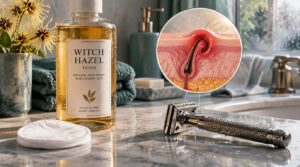
When you shave, the blade cuts hair below the skin surface. Regrowing hair can curl back into the follicle or grow sideways under the skin, and that trapped strand triggers the immune response driving pseudofolliculitis barbae. Your body treats it as a foreign body, generating localized inflammation that produces raised, tender bumps.
Several factors intensify this response:
- Dull blades creating micro-cuts along the follicle wall
- Curled hair texture angling back toward the skin
- Tight clothing adding friction to irritated follicles
- Keratin plugs blocking the follicular opening, trapping ingrown hairs deeper
Witch hazel’s anti-inflammatory and astringent properties work to calm that surface immune reaction. It won’t free a trapped hair, but it reduces the swelling that keeps bumps visible and reactive.
How to Use Witch Hazel for Razor Bumps Safely
Knowing witch hazel calms surface inflammation is useful, but applying it correctly matters just as much. Done poorly, you can add irritation rather than reduce it.
For best results, look for formulas that pair it with chamomile, like these post-shave balms formulated for sensitive skin that balance tone and hydration in one step.
For effective post-shave care, follow this sequence: Starting with a post-shave lotion for razor bumps that’s alcohol-free helps calm irritation without disrupting the steps that follow.
- Cleanse the area gently with lukewarm water and a mild cleanser before applying anything.
- Dampen a cotton pad with alcohol-free witch hazel and pat, don’t rub, directly over razor bumps.
- Let skin dry completely before layering a fragrance-free moisturizer on top.
- Repeat once daily until skin irritation relief improves, stopping if burning or redness worsens.
Avoid witch hazel on freshly cut or bleeding skin. And skip it entirely if you’ve just used an exfoliating acid, since combining strong actives compounds irritation and obscures whether either is helping.
Choosing The Best Witch Hazel for Shaved Skin
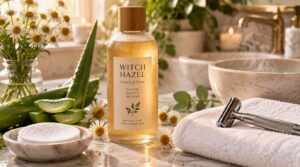
Not all witch hazel products are equal, and the formula you choose can make a real difference for freshly shaved skin. Some ingredients that seem harmless can actually worsen irritation or slow recovery. Here’s what to look for before you buy.
Alcohol-Free Formulas
Stinging on contact is the most common complaint after applying standard witch hazel. If that’s you, alcohol-free witch hazel reduces skin irritation during post-shave care by replacing the harsh solvent with a gentler base that won’t worsen razor bumps.
| Type | Effect |
|---|---|
| Alcohol-based | Stings, worsens razor bumps |
| Alcohol-free | Calms anti-inflammatory response |
| Glycerin vehicle | Hydrates skin barrier |
| Tannin extract | Reduces skin irritation |
Fragrance-Free Options
Fragrance is a leading trigger for skin irritation after shaving. Your skin barrier is disrupted, so added scent ingredients are more likely to cause contact dermatitis.
Opting for a fragrance-free post-shave oil can make a real difference, as outlined in this post-shave routine for smooth, irritation-free legs—especially if your skin tends to react with redness or burning.
Choose alcohol-free witch hazel that’s labeled fragrance-free. Look for:
- No added essential oils
- No botanical extracts or masking agents
- A fragrance-free moisturizer as post-shave care
- Short, verifiable ingredient labels
- Formulas suited for dermatological care
Minimal Ingredient Lists
When you’re dealing with razor bumps, minimal ingredient lists make a real difference. Freshly shaved skin has microtrauma, making it reactive to almost anything it contacts. An alcohol-free witch hazel with a short INCI list limits your exposure to preservatives and colorants.
For sensitive skin, this simpler approach helps with skin barrier repair by removing unnecessary chemical triggers from the equation.
Skin Type Compatibility
Picture your skin barrier the day after a close shave: stripped, reactive, and unguarded.
- Oily skin does best with astringents
- Dry skin risks flaking and tightness
- Sensitive skin isn’t immune to skin irritation
- Eczema-prone skin reacts most unpredictably
- Postshave irritation worsens with any skin barrier disruption
Your skin type and skin pH balance together determine whether witch hazel helps or harms.
Patch Testing Products
Say you try a new witch hazel toner and notice redness after a few uses. A patch test can reveal whether a specific ingredient is responsible. For a more controlled approach, skin patch test strips let you test multiple ingredients side by side, making it easier to pinpoint the exact culprit.
Apply a small amount to your inner forearm and wait 48 hours. If you have sensitive skin or a history of contact dermatitis, this step is essential for dermatological safety and skin sensitivity management.
When Witch Hazel Isn’t Enough for Razor Bumps
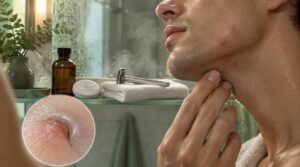
Witch hazel can calm irritated skin after shaving, but it doesn’t get to the bottom of razor bumps — ingrown hairs growing back into the follicle. If your bumps persist or worsen, more targeted treatments exist that work at a deeper level. Here’s what dermatologists usually recommend when witch hazel falls short.
Witch hazel soothes razor bumps, but persistent ingrown hairs often demand stronger, dermatologist-recommended treatments
More Effective Treatment Options
Witch hazel soothes, but it won’t clear blocked follicles on its own. For persistent bumps, these dermatological remedies perform more reliably: A targeted razor bump and ingrown hair serum can bridge the gap, delivering active ingredients directly where witch hazel falls short.
- Salicylic acid penetrates follicles for gentle exfoliation and ingrown hair removal
- Benzoyl peroxide targets bacteria driving folliculitis treatment in bump-prone skin
- Topical retinoids like adapalene support prevention techniques by boosting cell turnover
Consistent use across shave cycles matters most.
When to See a Dermatologist
Some bumps need more than postshave care alone. If your razor bumps persist beyond two to three weeks, spread, or show signs of infection like pus, crusting, or increasing warmth, it’s time to see a dermatologist.
Deep, painful nodules or recurring flares in friction-prone areas can signal chronic skin irritation or folliculitis treatment needs that go beyond simple home remedies.
Frequently Asked Questions (FAQs)
Can witch hazel treat razor bumps?
It can, but only to a point. Witch hazel’s astringent tannins may temporarily reduce visible redness and swelling around irritated follicles, though the clinical evidence supporting it as a standalone razor bump treatment remains limited.
Is witch hazel good for after shaving?
Many patients swear by it after shaving. It’s a solid fit for your postshave routine; witch hazel’s mild astringent properties can ease shaving irritation, provided you pick an alcohol-free formula to protect against razor bumps.
What kills razor bumps fast?
Research shows up to 60% of people who shave regularly will develop razor bumps. Salicylic acid clears surface blockage and releases ingrown hairs fastest; witch hazel’s anti-inflammatory properties then calm surrounding redness without over-drying skin.
Is witch hazel good for down there after shaving?
Down there, the skin is a far more delicate landscape than your legs or face. Alcohol-free witch hazel can provide gentle anti-inflammatory shaving rash relief, but patch test it first and avoid open cuts.
Is Razor Burn the Same as Razor Bumps?
Think of them as neighbors, not identical twins. Razor burn hits fast, with redness and stinging right after shaving. Razor bumps arrive later, when cut hairs curl back into the follicle and trigger persistent inflammation.
Is Witch Hazel the Best Solution for Razor Burn?
Is witch hazel really your best option for razor burn? Its anti-inflammatory properties provide temporary relief, but aloe vera or salicylic acid often outperform it, especially when ingrown hairs are actually causing your razor bumps.
Does Witch Hazel Treat Razor Bumps?
Calling witch hazel a treatment is like calling an ice pack a cure for a sprain. Its anti-inflammatory and astringent properties calm razor bumps and reduce redness, but they don’t resolve the ingrown hairs underneath.
How Can You Get Rid of Razor Bumps Quickly?
There’s no instant fix, but you can calm inflammation quickly. Apply a cold compress first, then use witch hazel or salicylic acid. Gentle exfoliation helps, and shaving with the grain always prevents new razor bumps.
How Long Do Razor Bumps Last?
On healthy skin, razor bumps usually last 3 to 14 days. But if you’re shaving the same area repeatedly, follicular inflammation stalls the skin healing process, extending how long razor bumps last past three weeks.
Can witch hazel be used for other skin conditions?
Wondering what else this natural skincare ingredient can do? Witch hazel also soothes mild eczema, oily skin, insect bites, and sunburn discomfort. Its antiinflammatory astringent effects calm skin inflammation, though it won’t treat infections.
Conclusion
A patient once told me she applied witch hazel daily for two weeks and watched her bumps shrink, though one stubborn ingrown remained. That’s the honest picture.
The answer to does witch hazel help with razor bumps is yes, for the redness and irritation it can reach, and no, for hairs already trapped beneath the skin. Use it as your first line of defense, escalate when needed, and see a dermatologist if bumps persist.