This site is supported by our readers. We may earn a commission, at no cost to you, if you purchase through links. This content is for general informational and educational purposes only and is not a substitute for professional medical, dermatological, or nutritional advice.
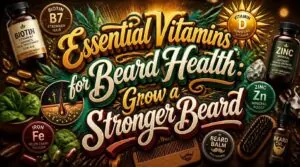
Most men blame genetics the moment their beard grows in patchy or stalls out. Genetics plays a role, sure—but nutrient deficiencies cause more beard problems than most people realize, and they’re fixable.
Biotin, vitamin D, zinc, and iron all feed your follicles at a cellular level, driving the keratin production and tissue repair that determine how your beard grows, feels, and holds pigment.
When those levels drop, your beard tells you—through dry strands, shedding, or dull texture, that no grooming product can mask.
The essential vitamins for beard health aren’t complicated to get right once you know what your follicles actually need.
Table Of Contents
- Key Takeaways
- Best Vitamins for Beard Health
- Key Minerals for Stronger Beards
- Best Foods for Beard Nutrients
- Signs Your Beard Needs Nutrients
- Choosing Beard Vitamin Supplements
- Frequently Asked Questions (FAQs)
- What vitamins are best for beard growth?
- What vitamins are good for a full beard?
- What is the 3 month beard rule?
- Which nutrient is essential for beard growth?
- Can supplements replace natural beard growth genetics?
- Which vitamins interact negatively with beard medications?
- How long before vitamins show beard results?
- Are topical vitamins more effective than oral?
- Do seasonal changes affect vitamin beard needs?
- Can stress hormones slow down beard growth significantly?
- Conclusion
Key Takeaways
- Nutrient deficiencies — especially in biotin, vitamin D, zinc, and iron — are behind more beard problems than genetics, and the good news is they’re fixable.
- Your beard signals trouble early: dry, brittle strands, patchy spots, and excess shedding are your follicles asking for specific vitamins and minerals, not better grooming products.
- Zinc and copper need to stay balanced at roughly a 12:1 ratio — push zinc too high without copper, and you trade one deficiency for another.
- Supplements help, but they can’t build what genetics didn’t give you — they support your ceiling, they don’t raise it.
Best Vitamins for Beard Health
Your beard’s growth starts at the cellular level, and the right vitamins are what keep those cells firing. What you eat — and what you supplement — directly affects how full, strong, and healthy your beard looks. Here are the key vitamins your follicles actually need.
Think of nutrition as the foundation — and if you’re also working on your look, pairing it with beard styling techniques that skip heat damage helps you grow and style smarter.
Biotin for Keratin Support
Biotin, or vitamin B7, is one of the most talked-about nutrients for beard growth — and for good reason. It acts as a cofactor for carboxylase enzymes, which drive the amino acid metabolism your follicle cells depend on to produce keratin. Without enough biotin, that production line slows down. Ensuring you get enough biotin promotes keratin formation, as adequate biotin enables keratin synthesis.
Here’s what biotin actually does for your beard:
- Promotes keratin synthesis by keeping enzyme reactions running smoothly
- Fuels cellular turnover in fast-dividing follicle tissue
- Helps maintain fatty acid metabolism, protecting cell membranes in your skin
- Corrects deficiency-driven brittleness with a daily dose of 3–5 mg
- May interfere with certain lab tests, so mention your supplement use to your doctor
That last point matters if you’re getting bloodwork done. Biotin can skew results in assays that use biotin-based detection systems, so stopping it before testing is sometimes recommended.
Vitamin D for Follicles
Keratin gets your beard growing, but Vitamin D keeps your follicles alive and cycling.
Your follicle cells carry vitamin D receptors that respond directly to vitamin D signals. When those receptors fire properly, they push follicles into the anagen phase — active growth — and prevent them from stalling in telogen, the resting stage behind patchy, slow-growing beards.
| Vitamin D Status | Follicle Effect |
|---|---|
| Sufficient | Promotes anagen phase cycling |
| Deficient | Prolonged telogen, shedding risk |
| Supplemented (2,000 IU) | Reduced oxidative stress in follicles |
Low vitamin D also raises oxidative stress inside follicles. It does this by reducing antioxidant enzyme activity, which disrupts follicle cell proliferation and can trigger telogen effluvium — sudden, diffuse shedding. Getting your 25-hydroxyvitamin D levels checked gives you a clear starting point before supplementing.
Vitamin a for Skin Renewal
Vitamin D keeps your follicles cycling — but none of that matters if the skin beneath your beard is unhealthy. That’s where vitamin A steps in.
Vitamin A drives skin cell regeneration by signaling keratinocytes to mature and shed in an orderly cycle. This epidermal barrier renewal keeps follicle pathways clear, supporting consistent beard growth from the base up.
Vitamin C for Collagen
Once your skin barrier is solid, the next building block is collagen — and that’s where vitamin C earns its place.
Your body needs vitamin C to activate prolyl and lysyl hydroxylase, two enzymes that shape procollagen into stable, cross-linked fibers. Without enough, your follicle connective tissue weakens. Its antioxidant properties also shield those fibers from oxidative stress before they break down.
Vitamin E for Protection
Think of vitamin E as your beard’s cellular bodyguard. As a fat-soluble antioxidant, it embeds directly into cell membranes and stops lipid peroxidation before it spreads — neutralizing free radicals that would otherwise weaken your follicles.
For a deeper look at how antioxidant-rich oils keep your follicles resilient, fragrance-free beard oil benefits for sensitive skin breaks down exactly what to look for in a protective formula.
Alpha-tocopherol, the form your body actually uses, works inside an antioxidant network alongside vitamins C and D. Together, they keep environmental stressors like UV and pollution from quietly sabotaging your growth.
Key Minerals for Stronger Beards
Vitamins get a lot of the spotlight, but minerals do just as much heavy lifting for your beard. A few key ones directly affect how your follicles grow, repair, and hold pigment. Here’s what you actually need to know.
Zinc for Follicle Repair
Zinc is one of the most underrated minerals for beard growth and follicle health. It acts as a cofactor in enzymes that drive keratin synthesis — the protein your beard hair is literally built from. Without enough zinc, those pathways slow down, and you’ll notice weaker, thinner strands.
Here’s what zinc does for your beard:
- Repairs follicle tissue by supporting normal cell division and wound-healing processes in the skin
- Regulates sebum production, keeping your scalp environment stable and reducing inflammation that can trigger shedding
- Fuels keratin-building pathways, so each strand grows in stronger and less prone to breakage
The sweet spot for supplementation is around 15 mg daily — enough to support zinc and hair loss prevention without pushing past the 40 mg upper limit, which can disrupt copper absorption and create new problems.
Iron for Oxygen Delivery
Iron is the quiet engine behind every hair your body grows. When iron levels drop, your blood can’t carry enough oxygen — hemoglobin oxygen binding falls short, and follicles outright starve.
Transferrin shuttles iron to cells for red blood cell production, while myoglobin stores oxygen locally in tissue.
Low iron means poor nutrient delivery, patchy growth, and shedding.
Copper for Beard Pigment
Copper quietly controls your beard’s color. It activates tyrosinase, the enzyme that drives melanin production in your follicles. Without enough copper, tyrosinase slows down, melanin drops, and your beard can shift lighter or gray early.
- Copper fuels hair pigment chemistry through tyrosinase
- Low copper accelerates copper-induced graying
- Helps oxidative stress protection via superoxide dismutase
- Copper peptides improve follicle environment and beard thickness
- Impacts dye color kinetics when coloring facial hair
Balanced Zinc and Copper
Most people don’t realize that zinc and copper are rivals at the absorption level — and that rivalry directly affects your beard. When you take high-dose zinc without copper, your body absorbs less copper over time.
Aim for a zinc-to-copper ratio between 8:1 and 12:1 — roughly 15 mg zinc paired with 1–2 mg copper daily.
Deficiency and Beard Shedding
Nutrient gaps hit harder than most guys expect.
Iron deficiency anemia cuts oxygen delivery to follicles, triggering diffuse shedding across your beard. Low vitamin D disrupts immune regulation, raising your risk for patchy beard loss. Weak protein intake starves keratin production, leaving strands brittle and thin.
Iron, vitamin D, and protein deficiencies stack against your beard — starving follicles, disrupting immunity, and leaving strands brittle
These deficiencies don’t always show up alone — they stack.
Best Foods for Beard Nutrients
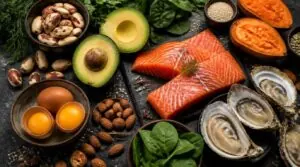
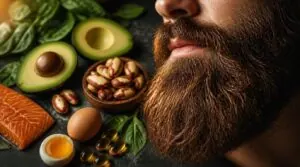
What you eat directly shapes how your beard grows. The right foods pack the vitamins and minerals your follicles need to stay strong and healthy. Here are the best ones to add to your plate.
Eggs and Lean Protein
Eggs are one of the best things you can eat for your beard. Each large egg delivers 6 grams of complete protein, packed with all the essential amino acids your follicles need to build keratin.
If you’re watching fat intake, egg whites give you 3.6 grams of lean protein with virtually no fat or cholesterol.
Salmon and Fatty Fish
Eggs cover your protein base well, but salmon takes beard nutrition a step further.
- Omega-3 fatty acids (EPA and DHA) reduce follicle inflammation
- Vitamin D promotes keratinocyte activity where hair emerges
- Selenium fights oxidative stress around follicles
- Complete protein supplies amino acids for keratin building
Since vitamin D is fat-soluble, salmon’s natural fats boost its absorption automatically.
Leafy Greens and Legumes
Salmon handles the fat-soluble vitamins well, but leafy greens and legumes cover what fish can’t.
Spinach and kale deliver vitamins A, C, iron, and folate — everything from collagen support to red blood cell formation. Folate drives cell division, which keeps follicles actively producing hair. Their fiber also supports gut absorption, so nutrients actually reach your follicles instead of passing through unused.
Nuts, Seeds, Whole Grains
Think of nuts, seeds, and whole grains as your beard’s daily insurance policy. Almonds and sunflower seeds pack vitamin E and zinc into small portions — minerals that strengthen follicle repair and antioxidant protection.
Whole grains keep the bran and germ intact, preserving B vitamins and healthy fats that refined grains simply can’t offer. Their fiber also strengthens gut absorption, so those nutrients actually reach your follicles.
Hydration for Nutrient Transport
Water is the unsung hero of beard nutrition. Water-soluble absorption of vitamins like C and B-complex depends on having enough digestive fluid volume.
Once absorbed, nutrients travel through blood plasma delivery to reach your follicles. Without steady hydration, that delivery system slows down, leaving your beard starved — no matter how clean your diet is.
Signs Your Beard Needs Nutrients

Your beard is often the first to signal that something’s off nutritionally. Before you blame genetics or your grooming routine, it’s worth checking whether your body is getting what it needs. Here are the key signs to watch for.
Patchy Beard Growth
Patchy spots aren’t always just genetics. Sometimes your beard is sending a distress signal.
Low vitamin D or B-complex vitamins can slow follicle activity and create uneven growth.
But if you notice circular bald patches, that could point to alopecia barbae — an autoimmune condition where white blood cells attack your own follicles.
Psoriasis and seborrheic dermatitis can also cause patchy beard loss, often paired with redness, flaking, or greasy scales on the skin beneath.
Before reaching for beard vitamin supplements or biotin, it’s worth ruling out these underlying causes with a dermatologist.
Dry or Brittle Hair
When your beard feels rough and snaps instead of bending, that’s a clear sign something’s off internally.
Biotin deficiency weakens keratin production, leaving strands brittle. Cuticle moisture loss makes hair dull and frizzy. Heat styling and chemical processing speed up damage.
Use beard oil post-shower to seal moisture and support skin barrier health.
Itchy Skin Under Beard
That itch under your beard isn’t just annoying — it’s your skin sending a signal.
Inadequate vitamin A or C can leave skin dry and inflamed beneath the hair. After washing, apply a beard oil with natural carrier oils to restore moisture. Avoid fragrance-heavy products, which trigger irritation. Seborrheic dermatitis, ingrown hairs, and even psoriasis flares can also be the culprit.
Excess Beard Shedding
Losing more beard hairs than usual is worth paying attention to. Telogen cycle shifts are a common culprit — stress, illness, or rapid weight loss can push follicles into the resting phase, triggering sudden shedding without causing smooth bald patches.
Three things that drive excess beard shedding:
- Iron or zinc deficiency disrupts follicle repair and oxygen delivery
- Hormonal or thyroid changes alter growth cycle timing
- Medication side effects can trigger diffuse hair loss
If you notice irregular smooth patches, that’s a different signal — possibly alopecia barbae, not a nutrient gap. Blood work helps distinguish the cause.
Dull Texture and Shine
A dull beard is often a nutrient signal. When antioxidant intake drops, cuticle surface irregularities increase, scattering light diffusely instead of reflecting it cleanly.
Add product residue buildup or hard water deposits, and shine fades fast.
After washing, apply a few drops of argan or jojoba oil — both restore moisture and smooth the cuticle, bringing back that healthy luster.
Choosing Beard Vitamin Supplements
Not all beard supplements are created equal, and picking the wrong one can actually do more harm than good. Before you add anything to your routine, there are a few key things worth checking on the label. Here’s what to look for.
Check Exact Dosages
Flip a bottle over before you buy it. The label tells you exactly how much of each nutrient one serving delivers — but serving size matters.
Some products list two or three capsules as one serving, so your total daily intake shifts fast.
Target biotin at 3–5 mg daily, vitamin D at 2,000 IU, and zinc around 15 mg — no guessing.
Avoid Proprietary Blends

Once you know the right doses, the next hurdle is actually finding them on the label.
Proprietary blends hide each ingredient behind one combined total — say "Beard Blend: 1,200 mg" — without telling you how much of each nutrient sits inside. You can’t verify whether you’re getting a meaningful dose of biotin or just a token sprinkle.
Watch for Megadoses

Knowing what’s in your supplement is only half the battle — the dose matters just as much. More isn’t always better.
Vitamin A megadoses can cause liver injury and hair loss. Excess vitamin D raises blood calcium. High vitamin C increases kidney stone risk. And too much zinc blocks copper absorption.
Stick to calibrated, evidence-based doses.
Ask a Dermatologist First

Before reaching for a supplement stack, see a dermatologist. Patchy growth or shedding might not be a vitamin gap — it could be folliculitis, fungal infection, or a medication side effect.
A clinical evaluation of hair loss also factors in your family history and skin inflammation.
Distinguishing nutritional causes from medical ones means you treat the right problem.
Frequently Asked Questions (FAQs)
What vitamins are best for beard growth?
Biotin, vitamin D, vitamin A, and vitamin C top the list. They support keratin structure, follicle cell proliferation, collagen synthesis, and antioxidant defense — all critical for consistent, healthy beard growth.
What vitamins are good for a full beard?
A full beard needs five key vitamins: Biotin drives keratin synthesis, Vitamin D regulates follicle cycling, Vitamin A promotes skin renewal, Vitamin C boosts collagen synthesis, and Vitamin E delivers antioxidant hair protection.
What is the 3 month beard rule?
The 3-month beard rule is simple: let your facial hair grow for 90 days without trimming. It reveals your beard’s true growth pattern, thickness, and natural density before you shape anything.
Maintain healthy skin throughout the process with beard grooming and hygiene practices that prevent irritation and buildup.
For easier shaping during the grow-out, use a heat-resistant beard brush for thick beards while blow-drying.
Once the 90 days are up, understanding the difference between trimming and shaving your beard helps you make smarter decisions about shaping what you’ve grown.
Which nutrient is essential for beard growth?
No single nutrient wins alone, but biotin leads the pack — it drives keratin production, which is the actual protein your beard is made of. Pair it with vitamin D, zinc, and iron for real results.
Can supplements replace natural beard growth genetics?
No, supplements can’t override your genetic growth ceiling. Androgen signaling and follicle density are set by your DNA. Nutrients only support what’s already there — they don’t create new follicles.
Which vitamins interact negatively with beard medications?
Some beard supplements can quietly work against your medications. Biotin interferes with lab tests, while vitamin E raises bleeding risk if you’re on blood thinners. Always tell your doctor before starting anything new.
How long before vitamins show beard results?
Most vitamins take 4 to 6 weeks for early changes and 3 to 4 months for visible beard thickness. Consistency matters more than speed.
Are topical vitamins more effective than oral?
Both have their place. Topical boosters work at skin level but can’t fix what’s missing inside. Oral dietary supplements correct deficiency at the source — making them the stronger choice for real beard growth.
Do seasonal changes affect vitamin beard needs?
Yes, they can. Winter UVB levels drop, limiting your skin’s ability to make vitamin D. And if your diet shifts with the seasons — less fresh produce, fewer nutrient-dense foods — your beard growth can take a hit.
Can stress hormones slow down beard growth significantly?
Like a storm cutting off a river’s flow, stress hormones can genuinely slow your beard. Elevated cortisol disrupts androgens, shifts follicles into telogen effluvium, and stalls growth — sometimes for months.
Conclusion
ball is in your court now. Your beard doesn’t grow in the mirror—it grows in your bloodstream, your cells, and your daily food choices.
essential vitamins for beard health you’ve learned about aren’t shortcuts; they’re the actual mechanics behind stronger, fuller growth. Fix the deficiencies, feed the follicles, and your beard will reflect what’s happening on the inside.
Genetics sets the ceiling, but your nutrition determines how close you get to it.
Understanding how to stimulate hair growth through targeted nutrition and scalp care can meaningfully close the gap between your genetic potential and your actual results.
If your beard growth still seems stuck, this guide on growing a thicker beard faster breaks down the everyday habits that actually move the needle.