This site is supported by our readers. We may earn a commission, at no cost to you, if you purchase through links.
Your skin loses roughly 1% of its collagen every year after your mid‑twenties—a slow, quiet shift that eventually shows up in the mirror as a softer jawline, deeper creases, or skin that no longer bounces back the way it once did. Most people notice these changes and assume their options are limited to expensive surgery or accepting what time delivers.
That gap between resignation and the operating room is where modern dermatology has done its most interesting work. Today, the range of facial skin rejuvenation techniques spans everything from a lunchtime neurotoxin appointment to precision laser resurfacing and surgical repositioning—each targeting a different layer of the aging process.
Knowing which approach fits your skin means understanding what’s actually changing beneath the surface.
Table Of Contents
- Key Takeaways
- Common Signs of Facial Skin Aging
- Non-Surgical Facial Rejuvenation Techniques
- Surgical Facial Rejuvenation Options
- Step-by-Step Guide to Choosing a Technique
- Maintaining Results After Rejuvenation
- Frequently Asked Questions (FAQs)
- What takes 10 years off your face?
- What is skin rejuvenation treatment?
- What is the best way to get rid of face spots?
- What are the different types of skin rejuvenation treatments?
- What are the most common goals for facial rejuvenation?
- What modalities are used in facial rejuvenation?
- What is a nonsurgical facial rejuvenation treatment?
- What are the methods of face rejuvenation?
- How can I rejuvenate my facial skin?
- What procedure makes your face look younger?
- Conclusion
Key Takeaways
- Your skin loses about 1% of its collagen every year after your mid‑twenties, which gradually causes sagging, wrinkles, and volume loss that no amount of good moisturizer can fully reverse.
- Non‑surgical options like Botox, dermal fillers, microneedling, and laser resurfacing can deliver real, visible results without surgery — and for many people, that’s all they’ll ever need.
- Surgical procedures like facelifts, blepharoplasty, and fat grafting go deeper by physically repositioning tissue, making them the stronger choice when non‑surgical treatments can’t deliver the structural change you’re after.
- Long‑term results depend less on the treatment itself and more on what you do after — daily SPF, consistent skincare, and regular touch‑ups are what keep the clock from catching back up.
Common Signs of Facial Skin Aging
Facial aging doesn’t happen all at once — it shows up gradually, in ways that are easy to miss until they’re hard to ignore. Your skin starts sending signals long before you notice them in the mirror.
Catching those early signs — and knowing how to respond — is exactly what facial care and skin rejuvenation is all about.
Here are the most common signs to watch for.
Thinning and Sagging Skin
As you age, your skin loses its scaffolding.
Elastin degradation drops elastin levels roughly 1% each year, while slowing collagen production thins the epidermis by up to 10% per decade.
The skin aging process also involves bone resorption and shifting fat pads, causing sagging along the jawline and cheeks.
Fortunately, nonsurgical rejuvenation options like radiofrequency and skin tightening treatments can meaningfully restore structure.
This process contributes to skin thinning due to collagen loss.
Wrinkles and Fine Lines
Skin thinning sets the stage for what shows up next: wrinkles and fine lines. These form when collagen stimulation slows and repeated muscle movement creases the skin. Genetic factors determine how early they appear, while lifestyle impact — sun exposure, smoking, diet — speeds the process.
Preventive sun care and nutritional support help, and nonsurgical anti-aging solutions like laser resurfacing offer effective wrinkle reduction for visible fine lines.
Loss of Facial Volume
Beyond volume loss quietly reshapes your face. Fat compartments shrink and shift with age, hollowing the cheeks and deepening folds.
Volume-enhancing fillers and Sculptra bio-stimulator rebuild structure by triggering collagen production. Fat grafting and fat transfer offer longer‑lasting facial contouring.
Platelet-rich plasma and AI-driven volume mapping now personalize nonsurgical rejuvenation, while dermal fillers remain a reliable first step.
Changes in Skin Texture and Tone
Volume loss isn’t the only change happening beneath the surface. Collagen degradation and elastin breakdown quietly alter your skin texture, leaving it rougher and uneven. Hydration loss and sebum imbalance shift your skin’s pH variability, dulling your natural radiance. Elasticity reduction makes pores appear larger.
Treatments like microneedling and laser resurfacing stimulate collagen production, restoring smoother, firmer skin.
Pigmentation and Dark Circles
Uneven skin tone and dark circles often tell two different stories.
Melanin overproduction from sun damage drives stubborn pigmentation, while vascular congestion and iron deposits create that persistent shadowing under your eyes.
Skin barrier repair is your foundation — then topical brighteners, chemical peels, laser resurfacing, or microneedling can meaningfully fade discoloration.
Platelet-rich plasma enhances skin rejuvenation by accelerating cellular turnover where pigmentation runs deepest.
Non-Surgical Facial Rejuvenation Techniques
Not every rejuvenation journey has to start with surgery — and for many people, it doesn’t need to at all.
Small, consistent habits — like following a daily beard styling and growth routine — can make a noticeable difference without any drastic measures.
Non-surgical treatments have come a long way, offering real, visible results with little to no downtime.
Here’s a closer look at the options most commonly used today.
Botox and Neurotoxins for Wrinkle Reduction

Botox remains one of the most trusted nonsurgical antiaging solutions available today. Its mechanism of action is straightforward — it blocks acetylcholine at neuromuscular junctions, relaxing the muscles that create movement wrinkles.
Primary treatment areas include forehead lines, crow’s feet, and glabellar frown lines.
Duration and onset vary by brand: Botox, Dysport, and Daxxify each differ in speed and longevity.
Side effects are generally mild and temporary.
bunny line treatment requires 5-10 units to smooth wrinkles on the side of the nose.
Dermal Fillers for Volume Restoration
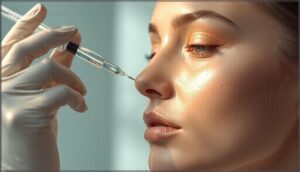
As faces lose volume with age, dermal fillers — particularly those based on Hyaluronic Acid — offer one of the most effective NonSurgical Rejuvenation approaches available.
Precise Injection Techniques determine natural-looking results, and Longevity Factors like metabolism and placement affect how long they last.
- Choosing board-certified providers
- Discussing Combination Therapies with your doctor
- Reviewing your full medical history beforehand
Chemical Peels for Texture and Pigmentation
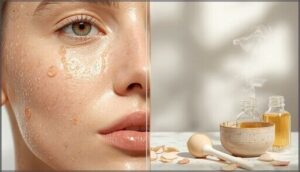
Chemical peels work by dissolving the bonds holding dull, damaged cells together — revealing fresher skin underneath.
Peel Depth Selection matters: superficial acids like glycolic or salicylic handle mild skin texture issues, while medium-depth TCA targets deeper pigmentation.
Fitzpatrick Considerations guide your acid types choice, since darker skin tones carry higher pigmentation risks.
Post‑Peel Skincare — gentle cleansing, moisturizer, sunscreen — is non‑negotiable for safe skin rejuvenation.
Laser and Light-Based Therapies

Lasers aren’t one-size-fits-all — your skin type determines everything.
Ablative Laser Types like CO2 and Erbium YAG handle laser resurfacing by vaporizing damaged layers, while Non-Ablative Fractional options preserve the surface and reduce downtime.
IPL Pigment Treatment targets sunspots without breaking skin.
LED Collagen Boost facilitates healing through red and near-infrared light.
Skin-Type Safety always guides energy selection first.
Microneedling and Radiofrequency Treatments
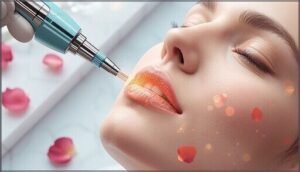
Think of microneedling and radiofrequency as your skin’s reset button. Tiny needles create controlled micro‑injuries, triggering collagen remodeling that builds over six months. When combined with radiofrequency energy — delivered at 67°C for three to four seconds — the results deepen considerably.
Microneedling with radiofrequency acts like a reset button, sparking collagen growth for smoother, firmer skin over six months
Needle depth varies by zone, from 0.5 mm around the mouth to 4 mm with devices like Morpheus8. Post‑treatment care means avoiding sun and makeup for 48 hours.
Surgical Facial Rejuvenation Options

When non-surgical options aren’t enough, surgery can deliver more dramatic and lasting results.
These procedures work by physically repositioning tissues, removing excess skin, and restoring facial structure in ways that injectables simply can’t replicate.
Here’s a look at the main surgical options worth knowing about.
Facelift Procedures
A facelift — one of the most significant surgical facial rejuvenation options — repositions facial muscles and removes excess skin to restore definition. Here’s what the procedure generally involves:
- Anesthesia options range from local sedation to general anesthesia
- Incision placement follows natural hairlines for scar minimization
- Recovery timeline spans two to four weeks
Combined with a neck lift, facelift results can be thorough and lasting.
Eyelid Surgery (Blepharoplasty)
Your eyes often show age first — drooping lids and under‑eye hollows can make you look tired even when you’re not. Blepharoplasty, a targeted eyelid surgery within your facial rejuvenation options, corrects exactly that.
| Phase | Upper Eyelid | Lower Eyelid |
|---|---|---|
| Pre‑op Evaluation | Assess excess skin/hooding | Check fat herniation |
| Anesthesia Options | Local or sedation | Local or general |
| Recovery Timeline | 7–10 days | 10–14 days |
Incision techniques follow natural lid creases, minimizing visible scarring. Complication management is straightforward when performed by a qualified facial plastic or cosmetic surgery specialist.
Neck and Brow Lifts
Moving down the face, a neck lift addresses sagging jowls, double chin, and platysma banding — incision placement generally runs behind the ear into the posterior hairline, with a small chin incision for fat removal.
Brow lifts use endoscopic or coronal approaches, depending on your candidate criteria.
Recovery timeline runs four to six weeks, with final results lasting a decade or more.
Fat Grafting for Facial Contours
Fat grafting takes your own fat — usually harvested from donor site selection areas like the abdomen or thighs — and redistributes it to restore lost facial volume.
Surgeons use a multi-plane injection technique to place fat across tissue layers, targeting cheeks, temples, and tear troughs precisely.
With proper fat viability enhancement through PRP, roughly 60% of transferred volume offers long-term volume retention.
Combination Surgical Approaches
Combining procedures — like a facelift with blepharoplasty or a neck lift — is where synergistic procedure planning really pays off. Instead of staged anesthesia benefits spread across multiple sessions, you recover once and save 20–30% in facility costs.
Key advantages of combination surgical facial rejuvenation:
- Incision placement strategy hides scars in natural creases and hairlines
- Post-op swelling management peaks around day three, then steadily improves
- Outcome visualization tools like computer imaging clarify realistic expectations
- Facelift plus blepharoplasty refreshes the full face cohesively in 4–6 hours
- Reconstructive surgery principles guide tissue repositioning for balanced, natural harmony
Step-by-Step Guide to Choosing a Technique

Choosing the right rejuvenation technique isn’t a one-size-fits-all decision — it takes a clear look at your skin, your goals, and what you’re realistically willing to go through.
The good news is that with the right approach, you can make a confident, informed choice. Here’s what the process actually looks like, step by step.
Assessing Your Aging Concerns
Before you book a single appointment, take stock of what’s actually happening on your face.
Wrinkle depth measurement, skin elasticity testing, and volume loss mapping give you a clear baseline. Try the cheek pinch test — if your skin takes over two seconds to flatten, elasticity is already declining. Pigmentation analysis and facial contour assessment help pinpoint whether aging signs like fine lines, skin texture changes, or deeper wrinkles are your primary concern.
| Aging Sign | Self-Assessment Test | What It Signals |
|---|---|---|
| Wrinkles & Fine Lines | Pinch skin near crow’s feet for 5 seconds | Loss of collagen and skin elasticity |
| Volume Loss | Check for hollow temples or flattened cheeks | Fat pad descent and facial contour shift |
| Pigmentation | Blanch dark spots — do they fade? | Vascular cause vs. melanin buildup |
Consulting Qualified Providers
Choosing the right provider is as important as choosing the right treatment. Look for board certification in dermatology, plastic surgery, or oculplastic surgery — and verify facility accreditation through bodies like AAAASF or The Joint Commission.
Your consultation checklist should cover provider experience with specific dermatological procedures and nonsurgical facial treatments, informed consent, and a clear follow-up protocol. That’s where safe, effective facial rejuvenation truly begins.
Comparing Non-Surgical Vs. Surgical Options
Think of it as a spectrum, not a binary choice. NonSurgical Procedures like Dermal Fillers and Laser Resurfacing offer minimal Recovery time and lower Cost considerations, but Longevity results usually range from months to two years.
Surgical Facial Rejuvenation delivers more lasting structural change, though Risk profiles and downtime increase considerably. Patient suitability — your skin condition, goals, and health history — determines where you fall on that spectrum.
Customizing Treatment Plans
Tailoring your facial rejuvenation plan starts with Skin Type Assessment and Ethnicity Considerations, ensuring treatments match your unique biology. Prioritize goals—are you seeking smoother skin or restored volume?
Then, sequence modalities like fillers before lasers, and schedule maintenance for lasting results. Tailored skincare anchors your regimen, supporting NonSurgical Treatments and progressive Rejuvenation Techniques for ideal Skin Health.
Understanding Risks and Recovery
Every procedure carries a price of entry — knowing it upfront makes recovery far smoother.
- Post‑Procedure Swelling peaks within 48 hours; cold compresses and head elevation reduce it fast.
- Bruising Mitigation Strategies like arnica supplements, started 5 days before, visibly shorten healing time.
- Infection Warning Signs — fever above 101°F, worsening redness, foul discharge — demand immediate attention.
- Nerve Injury Management after Surgical Facial Rejuvenation affects 2–5% of patients, usually resolving gradually.
NonSurgical Treatments and Minimally Invasive Procedures carry lighter risks, but Skin Health and Wellness still depends on following post‑care instructions precisely.
Maintaining Results After Rejuvenation

Getting a treatment is the easy part — keeping those results is where the real work begins.
The good news is that with the right habits and follow‑up care, your skin can stay looking refreshed far longer than you’d expect. Here’s what actually matters in the long run.
Skincare Routines and Sun Protection
Once your results are in, your daily skin care routine becomes the frontline defense. Start with a morning cleanse using a gentle, pH-balanced cleanser, then layer on an antioxidant serum — vitamin C works best here. Follow with broad-spectrum SPF 30 or higher.
At night, a barrier-repairing nighttime moisturizer locks in hydration. Physical sun barriers like hats add extra protection against sun damage.
Touch-Up Treatments and Follow-Up Care
Your skincare routine sets the stage, but staying consistent with scheduling intervals for touch-ups keeps results sharp. Botox generally needs renewing every three to four months; fillers, every six to eighteen months depending on location.
Follow-up care includes post-treatment imaging, side effect monitoring, and patient satisfaction scales.
maintenance budget planning conversation with your provider helps you manage noninvasive treatments, skin tightening, and anti-aging solutions without surprises.
Lifestyle Factors for Long-Term Results
Beyond daily habits, your daily habits quietly determine how long results actually last.
UV protection is non‑negotiable — UV exposure drives 80 percent of visible facial aging.
Pair that with smoking cessation, sleep hygiene of seven to nine hours nightly, nutrition optimization rich in antioxidants, and regular exercise.
These aren’t bonuses; they’re the foundation that keeps your skin health and anti‑aging investment working.
Emerging Trends in Facial Rejuvenation Maintenance
Science is reshaping how you maintain results.
Exosome therapy accelerates post‑treatment healing and reduces melanin by 31 percent when paired with microneedling. Bio‑stimulator injectables like Sculptra sustain collagen for up to two years.
At‑home radiofrequency devices support non‑invasive skin treatments between clinic visits. AI‑guided monitoring individualized your plan in real time, while regenerative medicine and gene‑based rejuvenation are the next frontier in individualized skincare.
Frequently Asked Questions (FAQs)
What takes 10 years off your face?
A facelift takes the most years off — research shows patients look an average of 2 years younger post-surgery. Pair it with Botox or Dermal Fillers for results closer to a decade.
What is skin rejuvenation treatment?
Skin rejuvenation treatment is a set of medical and cosmetic procedures designed to make your skin look smoother, clearer, and more youthful by targeting visible aging signs like wrinkles, dullness, and uneven tone.
What is the best way to get rid of face spots?
Daily Sunscreen (SPF 30+) combined with prescription lighteners, vitamin C brightening serums, and targeted topicals like retinoids fades spots effectively. Chemical peels, laser resurfacing, or microneedling accelerate results for stubborn pigmentation.
What are the different types of skin rejuvenation treatments?
From injectables and Chemical Peels to Microneedling, Laser Resurfacing, and Radiofrequency devices, your options span a wide spectrum — each targeting specific aging concerns with precision customized to your skin’s unique needs.
What are the most common goals for facial rejuvenation?
Most people come in wanting to restore volume, smooth wrinkles, lift sagging skin, and improve skin tone.
Basically, the goal is a refreshed, youthful appearance — not a different face, just a better version of yours.
What modalities are used in facial rejuvenation?
facial rejuvenation as a toolkit — Botox, Dermal Fillers, Laser Resurfacing, Microneedling, Radiofrequency Thread Lifts, Bio‑stimulators, Platelet‑Rich Plasma, AI‑assisted Mapping, and emerging Gene Therapy, each target specific aging concerns with precision.
What is a nonsurgical facial rejuvenation treatment?
Nonsurgical rejuvenation uses Botox, Dermal Fillers, Microneedling, and Platelet-Rich Plasma to refresh your appearance without going under the knife — no incisions, no downtime, just targeted treatments that work with your skin’s own biology.
What are the methods of face rejuvenation?
Every face tells a story — and modern rejuvenation methods help you shape that narrative.
Options range from Botox and Dermal Fillers to Microneedling, Thread Lifts, and surgical procedures customized to your unique needs.
How can I rejuvenate my facial skin?
Rejuvenating your facial skin starts with understanding what’s changed — and why.
From daily retinoids and Chemical Peels to Microneedling and targeted Anti-Aging Treatments, the right approach depends entirely on your skin’s unique needs.
What procedure makes your face look younger?
Botox smooths active lines, Dermal Fillers restore lost volume, and Laser Skin Resurfacing tightens texture, collectively turning back the clock on your face’s visible aging.
Conclusion
Like a well‑calibrated treatment plan, the best results come when each step builds deliberately on the last. Your skin’s story isn’t written in a single appointment—it unfolds through informed choices, consistent care, and the right provider guiding your path.
These facial skin rejuvenation techniques exist on a spectrum, and knowing where you stand on that spectrum makes all the difference.
The mirror doesn’t have to feel like a verdict. It can feel like a checkpoint.
- https://my.clevelandclinic.org/health/treatments/11015-laser-skin-resurfacing
- https://www.mayoclinic.org/tests-procedures/laser-resurfacing/about/pac-20385114
- https://skinspanewyork.com/blogs/news/how-to-choose-the-right-chemical-peel-depth-superficial-medium-and-deep-peels-explained
- https://www.drmmacdonald.com/blog/chemical-peels-superficial-vs-deeper-treatments
- https://pubmed.ncbi.nlm.nih.gov/35934440/